Category: Clinical Research

Evidence-based analysis of psychiatric studies, trials, and clinical data.

  • Is Antidepressant Withdrawal Overhyped? What the Evidence Really Says

    Is Antidepressant Withdrawal Overhyped? What the Evidence Really Says

    In my clinical practice, I’ve often found myself scratching my head over the narrative surrounding antidepressant withdrawal.

    I’m not denying that withdrawal is real—it is. And for a small subset of patients, it can be quite distressing. But what I am saying is this: it’s not nearly as common, dramatic, or dangerous as some online circles and sensational stories would have you believe.

    I’ve seen countless patients abruptly stop antidepressants and experience no withdrawal symptoms. I’ve also aggressively tapered antidepressants in patients with bipolar disorder to prevent mood destabilization—again, with little to no evidence of withdrawal. This isn’t a one-off observation. It’s a consistent clinical pattern I’ve noted for years. So, I asked myself: What does the data actually say?

    The Evidence

    A 2024 meta-analysis published in JAMA Psychiatry examined 49 randomized controlled trials and finally gave us some clarity.

    The results?
    ✅ People discontinuing antidepressants reported on average just one more symptom than those who either continued medication or discontinued a placebo.
    ✅ The most commonly reported symptoms in the first two weeks were dizziness, nausea, vertigo, and nervousness—exactly what I’ve seen clinically.
    ✅ Critically, the average number of symptoms fell below the threshold for what’s considered a clinically significant discontinuation syndrome.
    ✅ There was no link between discontinuation and worsening depression, suggesting that if mood symptoms return, it’s likely a relapse—not withdrawal.

    Why This Matters

    There are vocal groups online—often with clear anti-psychiatry agendas—who focus exclusively on rare, severe cases of withdrawal and present them as the norm. The goal is simple: to scare people away from psychiatry and evidence-based treatment using emotional testimonials instead of clinical reality.

    Let’s be honest—those cases do exist, but they are not representative of what most patients experience.

    As clinicians, we should remain cautious and responsible. Yes, we should taper medications thoughtfully. Yes, we should prepare patients for the possibility of withdrawal symptoms. But we also shouldn’t scare them into avoiding treatment—or make them feel trapped on medications for life.

    Bottom Line

    Antidepressant withdrawal can happen. It can be uncomfortable. But it’s rarely severe and almost never dangerous. The fear around it has been overstated by those with an ax to grind. We owe it to our patients to treat based on evidence, not anecdotes.


  • Brexpiprazole + Sertraline: A New Hope for PTSD Treatment

    Brexpiprazole + Sertraline: A New Hope for PTSD Treatment

    We’ve all seen it: PTSD that won’t budge. Patients try sertraline or paroxetine—the so-called “gold standards”—and walk away with little more than side effects and a sense of failure.

    Enter a new contender: brexpiprazole + sertraline.

    A recent Phase 3 randomized controlled trial might finally offer something real for those stuck in the PTSD trenches.

    🚨 The Results

    In a study across 86 sites with over 550 adults, adding brexpiprazole (2–3 mg) to sertraline (150 mg) led to a 5.6-point greater reduction on the CAPS‑5 (the gold-standard PTSD measure) compared to sertraline + placebo. That’s not a marginal win—it’s a clinically significant shift, especially in a treatment-resistant population.

    Responder rates tell the story even clearer:

    • 68.5% of patients on the combo had ≥30% reduction in symptoms
    • Compared to 48.2% on sertraline alone
    • That’s a +20% absolute response rate boost

    And the improvements weren’t just short-lived. Benefits held through 12 weeks, even during a post-treatment observation period. No relapse, no rebound—just stability.

    🧩 More Than Symptom Checklists

    It wasn’t just about PTSD symptoms. This combo also:

    • Improved psychosocial functioning (B-IPF scores)
    • Reduced anxiety and depression (HADS)
    • Lowered global illness severity (CGI-S)
    • Helped with all symptom clusters, including reexperiencing, avoidance, and hyperarousal

    That’s rare. Most meds in psychiatry hit one or two domains and leave the rest hanging. This one made a dent where it counts: function, resilience, and real-world relief.

    ⚠️ What About Side Effects?

    Brexpiprazole is still an atypical antipsychotic, so there’s baggage. But the trial data suggest it’s relatively well-tolerated:

    • Fatigue: 6.8%
    • Weight gain: 5.9%
    • Somnolence: 5.4%
    • Discontinuation due to AEs? Just 3.9%, vs 10.2% in placebo.

    No new safety signals. No psychosis worsening. Not perfect, but not the metabolic disaster zone we see with other agents.

    🚀 What’s Next?

    The FDA is reviewing this combo

    For those of us treating chronic PTSD, this may be a real tool—not just a shiny new molecule with good marketing.

    Until then, it’s worth paying attention. Because when sertraline alone doesn’t cut it—and we know it often doesn’t—this combo could offer a lifeline.

  • New JAMA Study Challenges Previous Concerns About Valproate and Paternal Risk

    New JAMA Study Challenges Previous Concerns About Valproate and Paternal Risk

    What we thought we knew may not hold up under scrutiny.

    A recent JAMA Psychiatry study titled “Disorders and Paternal Use of Valproate During Spermatogenesis” has delivered surprising news:

    There was no increased risk of neurodevelopmental disorders in children whose fathers were taking valproic acid around the time of conception.

    This finding directly challenges earlier observational data that suggested a possible link, leading to cautionary guidance against prescribing valproate to men of reproductive age. But now, with a large, well-conducted study showing no signal of harm, we’re left reconsidering that initial recommendation.

    As clinicians, we must remember:
    🔍 Association is not causation.
    🚧 Observational studies, while valuable, can mislead when confounding variables aren’t fully accounted for.
    📚 Evidence evolves—and so must our clinical guidance.

    This study not only impacts how we think about valproate use in men but also serves as a critical reminder about the limits of inference from non-randomized data.

    👉 For patients with bipolar disorder or epilepsy who benefit from valproate, this offers some reassurance. We may not need to withhold an effective treatment based on unconfirmed reproductive risks.

    📌 Bottom line: Always be skeptical. Always be curious. Always be willing to revise your practice when the data say it’s time.

    link to the study: https://jamanetwork.com/journals/jamanetworkopen/fullarticle/2834363

  • Suicide is a tragically common outcome in schizophrenia

    🔹 Up to 50% of patients attempt suicide
    🔹 Around 10% die by suicide

    The InterSePT trial directly addressed this crisis by comparing clozapine vs olanzapine in high-risk patients—all with recent suicidal ideation or attempts. Notably, only 27% were treatment-resistant.

    ✅ Clozapine led to a 25% reduction in suicidal behaviors—a game-changer.
    📌 This led to FDA approval for clozapine in reducing suicidality in schizophrenia.

    Let’s stop thinking of clozapine only as a last resort. Sometimes, it’s exactly what’s needed—not later, but now.

  • New Mechanism, Promising Results: Novel PDE10A Inhibitor for Acute Schizophrenia

    New Mechanism, Promising Results: Novel PDE10A Inhibitor for Acute Schizophrenia

    A novel PDE10A inhibitor just showed safety and efficacy in a large Phase 2 trial for acute schizophrenia. 👏

    📌 PDE10A inhibitors represent a non-dopaminergic approach—targeting phosphodiesterase 10A to modulate both D1 and D2 pathways indirectly. This could be a game-changer for patients who don’t respond to or can’t tolerate traditional D2 blockers.

    🔍 The trial demonstrated:
    ✅ Significant reduction in PANSS total scores
    ✅ Favorable side effect profile (no EPS or prolactin elevation)
    ✅ Oral formulation, once daily

    This reinforces the urgent need to diversify our treatment mechanisms beyond dopamine antagonism. As treatment-resistant schizophrenia remains a major challenge, we’ll take all the innovation we can get.

    🧠 Stay tuned—PDE10A could join the ranks of TAAR1 agonists and muscarinic agents in reshaping how we treat serious mental illness.

  • 📉 Overdose Deaths in the U.S. Dropped Nearly 27% in 2024 – A Sign of Hope 🇺🇸

    📉 Overdose Deaths in the U.S. Dropped Nearly 27% in 2024 – A Sign of Hope 🇺🇸

    📉 Overdose Deaths in the U.S. Dropped Nearly 27% in 2024 – A Sign of Hope 🇺🇸

    According to newly released CDC data, the U.S. experienced a nearly 27% decline in overdose deaths last year — the first major drop in over five years. While the crisis is far from over, this marks a critical turning point and a reason for cautious optimism.

    Key contributors to this progress include:

    ✅ Expansion of harm reduction strategies

    ✅ Increased access to naloxone and medications for opioid use disorder

    ✅ Shifts in drug supply dynamics and targeted public health interventions

    As someone on the front lines caring for patients every day, I’ve witnessed firsthand the devastating toll of opioid addiction. I’ve lost patients to this crisis — and I’ve also seen close friends and family fight their way back from the brink. Their recovery wouldn’t have been possible without access to critical resources, especially life-saving medications and sustained support.

    This progress didn’t happen by chance — it’s the result of continued investment in prevention, treatment, and recovery. We cannot afford to lose momentum now. If anything, this is the moment to double down.

    Let’s keep the pressure on. Reach out to your representatives. Push for increased funding. Our collective commitment has brought us this far — now let’s go even further. Lives depend on it.

    Let’s build on this progress with compassion, science, and unwavering commitment.

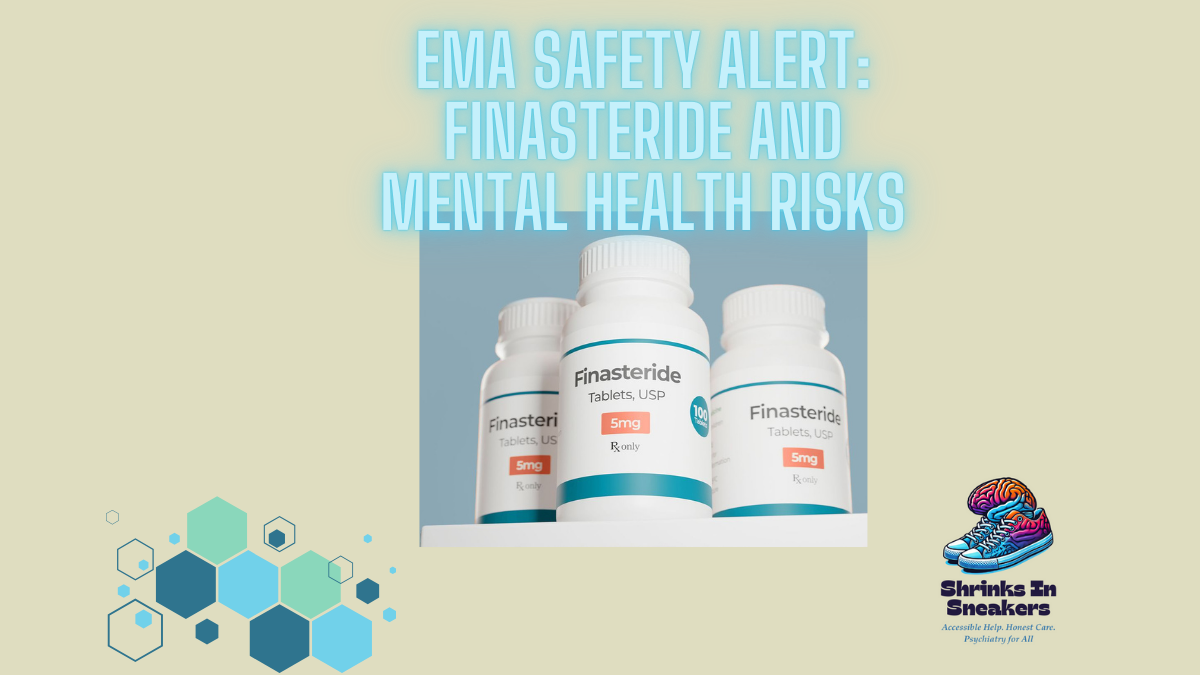
  • EMA Warns of Suicidal Ideation from Finasteride

    EMA Warns of Suicidal Ideation from Finasteride

    In a significant update to its safety guidance, the European Medicines Agency (EMA) has officially recognized suicidal ideation as a potential side effect of finasteride. The EMA is urging healthcare professionals to advise patients to stop treatment and seek medical help if they experience depressed mood, depression, or suicidal thoughts while taking the drug.

    This decision follows a growing number of reports linking finasteride, particularly in younger men using it for androgenic alopecia (male pattern baldness), to neuropsychiatric side effects. While previous warnings have addressed sexual dysfunction, this marks a critical shift in regulatory focus to mental health.

    💊 What Is Finasteride?

    Finasteride is a 5α-reductase inhibitor used to treat:

    • Benign prostatic hyperplasia (BPH) in a 5 mg daily dose (Proscar)
    • Male pattern baldness (androgenic alopecia) in a 1 mg daily dose (Propecia)

    It works by inhibiting the conversion of testosterone to dihydrotestosterone (DHT)—a potent androgen implicated in hair loss and prostate growth.

    ⚠️ The EMA’s Updated Warning

    The EMA’s Pharmacovigilance Risk Assessment Committee (PRAC) reviewed post-marketing surveillance data and published literature and concluded that:

    “There is sufficient evidence to support a causal relationship between finasteride and the risk of suicidal ideation.”

    Key recommendations:

    • Suicidal ideation will be added to the drug’s product information as a potential adverse effect.
    • Healthcare professionals should proactively inform patients about this risk.
    • Patients should be advised to discontinue treatment immediately and seek medical advice if they experience changes in mood or mental health.

    🧠 Possible Mechanisms Behind Finasteride’s Psychiatric Effects

    The exact mechanisms linking finasteride to depression and suicidality remain unclear, but several biological hypotheseshave been proposed:

    1. Neurosteroid Depletion

    Finasteride inhibits 5α-reductase, which not only converts testosterone to DHT but also helps produce neurosteroids like allopregnanolone and tetrahydrodeoxycorticosterone (THDOC).

    • These neurosteroids have potent GABAergic activity, contributing to anxiolytic and antidepressant effects.
    • Inhibition leads to decreased GABA-A receptor modulation, potentially increasing anxiety, depression, and suicidal thoughts.

    2. Hypothalamic-Pituitary-Adrenal (HPA) Axis Dysregulation

    Altered steroid metabolism may dysregulate the HPA axis, increasing cortisol levels, a well-known biomarker of depression and suicidal behavior.

    3. Persistent Epigenetic Changes

    Some animal and human data suggest that finasteride may induce long-lasting changes in gene expression related to stress response and mood regulation, even after discontinuation—supporting the idea of post-finasteride syndrome (PFS).

    4. Neuroinflammation

    Reduced neurosteroids may increase neuroinflammatory signaling, a growing area of interest in the neurobiology of depression and suicidality.

    🧾 Final Thoughts

    The EMA’s announcement is a sobering reminder that drugs affecting hormonal pathways can have wide-reaching systemic effects, including on the brain. With better awareness, screening, and patient education, we can minimize harm and support individuals who may be at risk.

  • ARISE Study Phase 3 Results: Understanding Xanomeline’s Setback

    ARISE Study Phase 3 Results: Understanding Xanomeline’s Setback

    What Was the ARISE Study?

    The ARISE trial was a Phase 3 clinical study evaluating Cobenfy — a combination of xanomeline (a muscarinic receptor agonist) and trospium chloride (a peripheral anticholinergic) — as an adjunctive treatment for adults with schizophrenia who continued to experience symptoms despite taking an atypical antipsychotic.

    What Is a Primary Endpoint, and Why Does It Matter?

    In clinical trials, the primary endpoint is the most important outcome researchers are trying to affect — it’s how a drug’s success or failure is officially judged.
    In ARISE, the primary endpoint measured the change in symptom severity compared to placebo using a standardized scale for schizophrenia. Meeting this endpoint would have demonstrated clear, statistically significant symptom improvement attributable to Cobenfy.

    The Outcome: No Statistically Significant Benefit

    According to topline results, Cobenfy did not show a statistically significant improvement compared to placebo when added to atypical antipsychotics. This means the observed difference could have been due to chance and did not meet the pre-set threshold for success.

    However, Cobenfy did show a numerical improvement — the group receiving the drug combination performed betterthan placebo in symptom reduction, just not to a statistically convincing degree.

    Could Anticholinergic Effects Be to Blame?

    One possible explanation for this outcome lies in the mechanism of action of both Cobenfy and many commonly used atypical antipsychotics.

    • Xanomeline is designed to activate muscarinic receptors in the brain (specifically M1 and M4), which may help regulate dopamine and reduce psychosis.
    • But many atypical antipsychotics — like olanzapine, clozapine, and quetiapine — also have anticholinergic properties, meaning they block these same receptors.

    This sets up a pharmacological tug-of-war: Cobenfy tries to stimulate muscarinic activity, while the background antipsychotic may be dampening it. This conflict could blunt the therapeutic signal, explaining why the benefit didn’t reach statistical significance.

    What This Means for the Future

    The failure to meet the primary endpoint is a setback, but not the end of the road. The numerical improvements suggest a potential signal, and with refined trial design — perhaps using background medications with lower anticholinergic load — future studies may better reveal Cobenfy’s potential.

    Additionally, this trial underscores the importance of considering mechanism compatibility in combination therapies. It’s not just about adding drugs — it’s about how they interact at the receptor level.

    Conclusion

    While the ARISE study didn’t deliver the result many hoped for, it raised critical questions that will shape future research. A deeper understanding of anticholinergic burden, drug synergy, and precision pharmacology is essential as we continue the search for more effective treatments for schizophrenia.

  • Adult ADHD: Current Trends and Emerging Research (2025 Update)

    Adult ADHD: Current Trends and Emerging Research (2025 Update)

    Attention-deficit/hyperactivity disorder (ADHD) has traditionally been seen as a childhood condition — but in recent years, there has been an explosion of interest in ADHD among adults. As awareness grows, so does research. New studies are reshaping how we diagnose, treat, and understand ADHD in the adult population.

    1. 🔥 Rising Rates of Adult ADHD Diagnosis

    Recent studies show that adult ADHD diagnoses have sharply increased over the past decade. According to a 2023 analysis published in JAMA Psychiatry, the diagnosis rate for adults aged 18–45 rose by more than 80% between 2011 and 2022.

    Why the surge?

    • Greater public awareness
    • Better screening tools for adults
    • A cultural shift toward recognizing executive dysfunction in adulthood

    However, there are concerns that overdiagnosis is also happening, particularly when ADHD is diagnosed after brief evaluations without thorough history-taking.

    2. 🧠 Expanded Understanding of Adult ADHD Symptoms

    The symptom profile in adults differs significantly from children. While hyperactivity often fades, issues like emotional dysregulationdisorganization, and executive dysfunction persist.

    Recent research emphasizes that adult ADHD often presents as:

    • Chronic procrastination
    • Low frustration tolerance
    • Difficulty managing responsibilities (work, home, finances)
    • Persistent inner restlessness

    A 2024 review in The American Journal of Psychiatry noted that emotional impulsivity may actually be a core symptomin adults, not just a secondary feature.

    3. 💊 Treatment Shifts: Caution Around Stimulants

    While stimulant medications (like amphetamines and methylphenidate) remain the gold standard, new studies highlight the importance of careful prescribing, especially in adults with:

    • Comorbid substance use disorders
    • Cardiovascular risk factors
    • Poor diagnostic workups

    Non-stimulant treatments are gaining ground:

    • Atomoxetine (Strattera) remains a mainstay.
    • Viloxazine (Qelbree) was approved for adult ADHD in 2024 and shows promise with lower abuse potential.
    • Bupropion (Wellbutrin) continues to be an important off-label option, especially when depression coexists with ADHD.

    According to a 2024 meta-analysis in Lancet Psychiatrynon-stimulants now account for about 30% of new ADHD prescriptions in adults — a significant jump compared to previous years.

    4. 🧬 Precision Psychiatry and Biomarkers on the Horizon

    Emerging studies are exploring neuroimaging and genetic markers to better understand adult ADHD subtypes.

    • A 2023 study using fMRI found distinct prefrontal cortex dysfunction patterns in adults with ADHD compared to controls.
    • Genetic research continues to implicate genes related to dopamine transmission and synaptic plasticity.

    Although these findings are not yet ready for clinical application, the future of ADHD diagnosis may involve biomarkers, moving beyond subjective questionnaires alone.

    5. 🌿 Lifestyle Interventions Are Getting More Attention

    There’s a growing body of evidence supporting complementary approaches:

    • Cognitive-behavioral therapy (CBT) for ADHD-specific skills
    • Exercise as a way to enhance executive function and mood
    • Mindfulness practices to improve emotional regulation

    A 2024 RCT published in Behavior Therapy showed that an 8-week mindfulness-based intervention led to significant improvements in attention and working memory in adults with ADHD — with effect sizes comparable to pharmacotherapy in some cases.

    Final Thoughts

    Adult ADHD is real, complex, and often misunderstood.
    The field is evolving rapidly, with a push toward better diagnosticssafer treatments, and a broader understanding of how ADHD affects life across the lifespan.

    As research continues to grow, clinicians are challenged not only to treat ADHD effectively but to do so thoughtfully — avoiding both underdiagnosis and overdiagnosis.

    Stay tuned — the future of ADHD care is just getting started.

  • Why CBT Reigns as the Top Therapy for Mental Health

    Why CBT Reigns as the Top Therapy for Mental Health

    🧠💡 CBT Confirmed—Again: Landmark Meta-Analysis Reinforces Clinical Value Across Diagnoses
    A massive meta-analysis in JAMA Psychiatry (2025) reaffirms what many of us observe in day-to-day care: Cognitive Behavioral Therapy (CBT) is one of the most effective, versatile, and enduring treatments for adult psychiatric conditions.

    🔬 Study at a Glance

    • Pooled data from hundreds of RCTs
    • Assessed CBT’s efficacy across depression, anxiety disorders, PTSD, and eating disorders
    • Found significant, lasting effects across diagnostic categories
    • Highlighted condition-specific variation in effect sizes, but overall CBT consistently outperformed inactive controls

    📚 Real-World Relevance
    Imagine a patient with chronic panic disorder who’s failed two SSRI trials and prefers non-pharmacologic interventions. CBT remains a frontline solution—equally relevant for the young adult with bulimia or the veteran with PTSD. These aren’t just data points—they’re the cases we see every day.

    🔄 How Does CBT Stack Up Against Other Therapies?
    While the study primarily focused on CBT, it reinforces existing literature suggesting that CBT often matches or outperforms alternative modalities like psychodynamic therapy or interpersonal therapy in short-term efficacy—especially when structure, time-limited treatment, and measurable goals are critical.

    🛠 Implications for Clinical Practice
    ✅ Why prioritize CBT?

    • It’s highly adaptable
    • Supported across diverse populations
    • Scalable via group therapy, digital tools, and telehealth

    🚧 Barriers to Access:

    • Limited availability of trained therapists
    • Insurance coverage gaps
    • Patient preference for “talk therapy” without structure

    ✅ Strategies to Overcome Them:

    • Integrate CBT-informed principles into brief med management visits
    • Refer to digital CBT platforms when face-to-face access is limited
    • Advocate for reimbursement parity and expanded training programs

    📎 Bottom Line
    This study isn’t just academic—it’s a call to action. Prioritizing CBT in treatment planning can lead to better outcomes, broader reach, and more durable recovery. As clinicians, it’s on us to ensure our systems support its accessibility.

    📖 Full Article:
    https://jamanetwork.com/journals/jamapsychiatry/article-abstract/2832696