Category: Psychopharmacology

Deep dives into psychiatric medications, prescribing practices, and pharmacological evidence.

  • Mirtazapine: A unique tool in the antidepressant toolbox

    Mirtazapine isn’t your typical SSRI—and that’s exactly why it can be useful in the right context.

    ✅ When to consider mirtazapine:

    • Depression with insomnia
    • Poor appetite or weight loss
    • Concern about sexual side effects
    • Patients struggling with GI intolerance to SSRIs

    ⚠️ When to avoid it:

    • Obesity or metabolic syndrome
    • Risk of daytime sedation
    • Orthostatic hypotension history

    Mechanistically, it’s a noradrenergic and specific serotonergic antidepressant (NaSSA). It works via alpha-2 autoreceptor blockade, enhancing 5-HT1A transmission while avoiding 5-HT2/3 activity—translating to fewer GI and sexual side effects.

    💡 Pro tip:
    Sedation is dose-dependent and paradoxical:
    Lower doses (7.5–15 mg) = more sedation
    Higher doses (30–45 mg) = less sedation

    In short, mirtazapine shines in cases where sleep, appetite, or tolerability limit other antidepressants—but use it strategically.

  • 💥 Time to Rethink Valproate in Acute Mania

    Valproate continues to be overvalued in the treatment of acute mania—and it doesn’t work as well as many assume.

    Part of the problem? A single overhyped study, cleverly marketed by the pharmaceutical company, has shaped decades of prescribing habits and continues to be taught to psychiatry residents as gold-standard evidence.

    But the data tells a different story.
    The BALANCE study (British study of Lithium +/− Valproate) showed no significant long-term benefit to adding valproate to lithium over a 2-year period in bipolar disorder.

    It’s time we stop relying on outdated assumptions and start practicing based on robust, long-term outcomes—not industry narratives.

    📚 Evidence over tradition.
    🧠 Teach residents the full picture.
    💊 Prescribe with precision.

  • Is olanzapine overrated for acute mania?

    🧠 Olanzapine has built a reputation as a heavy-hitter for treating acute manic episodes—but the data tells a more modest story.

    In one key study comparing olanzapine vs. placebo over 3 weeks:

    • Response rate: 55% (olanzapine) vs. 30% (placebo)
    • Remission rate: 18% (olanzapine) vs. 7% (placebo)

    That’s a 25% absolute difference in response and just an 11% difference in remission—not exactly blockbuster results.

    This doesn’t mean olanzapine has no role in mania treatment. But it’s time to recalibrate our expectations and remain clear-eyed about what the data shows.

    💊 Efficacy matters. So does the narrative we build around our tools.

  • Rapid cycling ≠ lithium failure

    There’s a persistent myth in psychiatry that lithium doesn’t work for bipolar disorder with rapid cycling.

    🧠 But here’s the truth:
    Multiple literature reviews show lithium performs just as well as other antimanic agents in rapid cyclers. The issue isn’t lithium—it’s that rapid cycling is simply harder to treat overall.

    Let’s stop excluding one of our most effective mood stabilizers based on outdated or anecdotal thinking. Patients with rapid cycling deserve full access to evidence-based treatment options—including lithium.

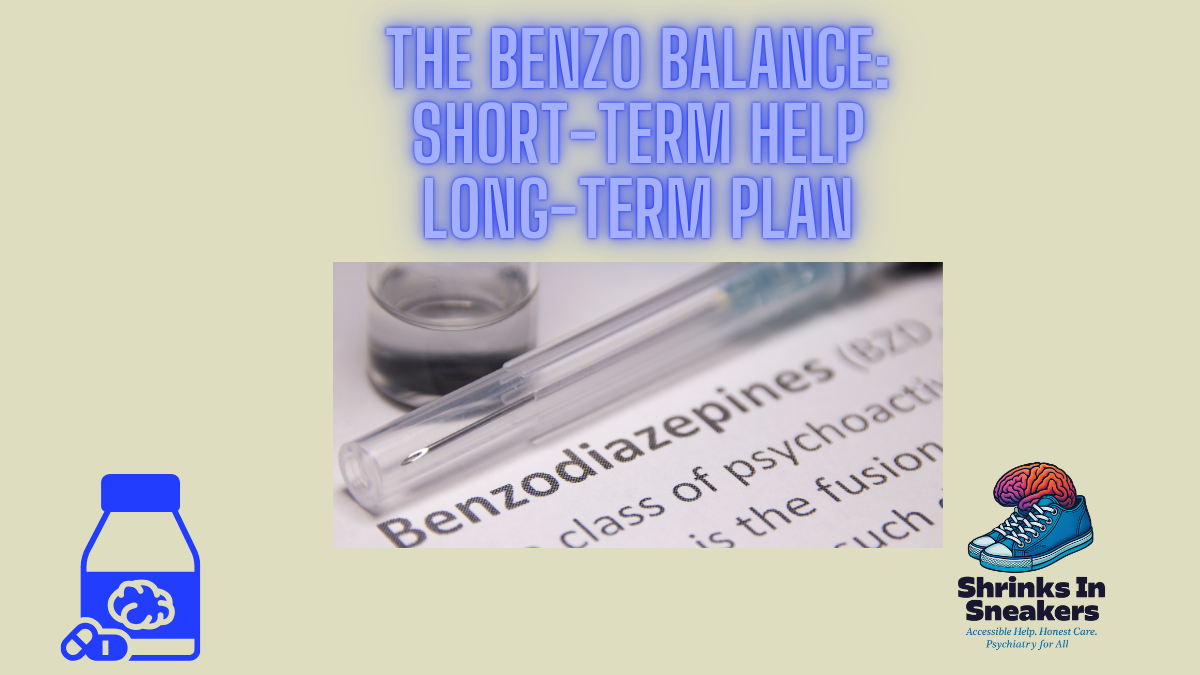
  • The Benzo Balance: Short-Term Help, Long-Term Plan

    The Benzo Balance: Short-Term Help, Long-Term Plan

    1. Clarity and upfront expectations reduce long-term problems

    “I’m prescribing this for 4–6 weeks. After that, we taper.”
    We give the patient a clear framework and prevent long-term dependency from becoming the default trajectory. It builds trust while still honoring clinical caution. Patients usually appreciate this transparency.

    2. Dose low. Time-limit strictly

    This really is the heart of rational benzo use. When used short-term for acute anxiety, panic, alcohol withdrawal, catatonia, etc., they can be valuable. But once we drift into long-term, open-ended prescribing, the benefits decline and risks (dependence, cognitive impairment, falls, tolerance) mount.

    3. Cold-turkey tapers can be dangerous

    “Some well-meaning physician decides to pull someone off benzodiazepines in 2 weeks…”
    And suddenly the patient is in crisis — not because the drug was inherently evil, but because the withdrawal was mishandled. Abrupt tapers, especially in someone on high doses or for years, can trigger rebound anxiety, insomnia, panic, even seizures or suicidality.

    4. We need to hold both truths at once

    • Benzos are not long-term solutions for anxiety.
    • But abrupt discontinuation without a tailored plan is often worse than the original problem.

    It’s not a complex principle, but it takes nuanced execution. You’re advocating for that middle path: compassionate, firm, individualized.

  • Dexmedetomidine for Acute Agitation in Bipolar and Schizophrenia: Worth the Hype?

    I recently received a great question about the use of dexmedetomidine for acute agitation. With its recent FDA approval for agitation associated with bipolar disorder and schizophrenia, it’s only natural to wonder: is this the new go-to treatment, or just another overhyped medication?

    Let’s start with the obvious. New medications almost always come with a hefty price tag. That cost is only justifiable if they outperform existing options in either efficacy or safety—and in this case, dexmedetomidine falls short on both fronts.

    Current data suggest it does not provide superior outcomes when compared to existing, well-established medications like lorazepam, haloperidol, or olanzapine. And it brings along its own baggage: bradycardia, hypotension, and sedation-related complications that can be clinically significant, especially in medically complex patients.

    When you combine the high cost with a safety profile that raises some red flags—and no clear advantage in efficacy—it becomes hard to justify widespread use.

    For now, I’d place dexmedetomidine in the “hype” category. We already have effective, affordable options with strong track records in managing acute agitation. Until further data prove otherwise, there’s little reason to switch.

  • Avoid Tianeptine: FDA Alerts Consumers to Risks

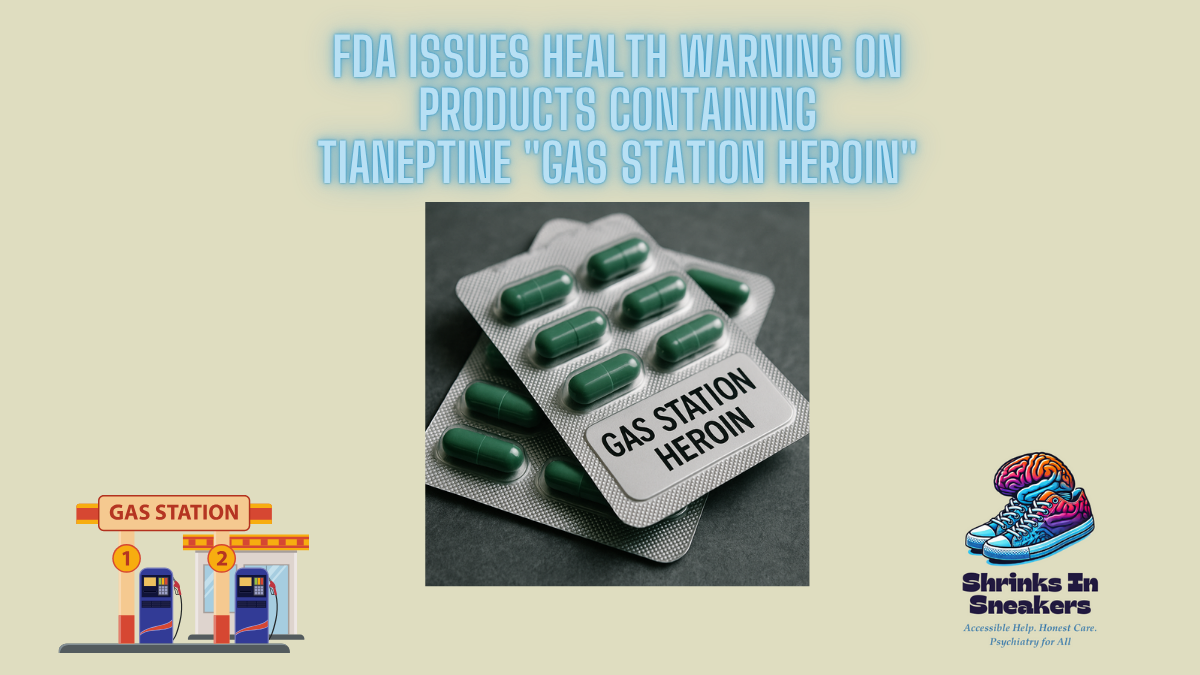
    Avoid Tianeptine: FDA Alerts Consumers to Risks

    The U.S. Food and Drug Administration (FDA) has issued a critical health warning about the growing availability of tianeptine, a dangerous, unapproved substance being sold as a dietary supplement under names like Zaza, Tianna Red, Pegasus, and others.

    Commonly referred to as “gas station heroin”, tianeptine mimics opioid-like effects and is being sold in convenience stores, gas stations, smoke shops, and online—posing serious health risks to the public.

    ⚠️ Why This Matters:

    Tianeptine is not approved for any medical use in the U.S. Despite this, it is widely marketed for supposed benefits like mood enhancement, anxiety relief, or cognitive boost. These claims are not supported by clinical evidence, and the risks are significant.

    🩺 Serious Health Risks Associated With Tianeptine:

    ⚠️ Death, particularly when combined with alcohol or other substances

    ⚠️ Respiratory depression (slow or stopped breathing)

    ⚠️ Seizures

    ⚠️ Loss of consciousness

    ⚠️ Confusion and agitation

    ⚠️ Opioid-like withdrawal symptoms

    🛑 What You Can Do:

    Report adverse reactions to the FDA via MedWatch: https://www.fda.gov/medwatch

    Avoid any products labeled as containing tianeptine.

    Do not trust unregulated supplements marketed for mental clarity or energy.

    📌 Quick Summary:

    • Tianeptine = dangerous, unapproved opioid-like drug
    • Sold as a supplement under names like Zaza or Tianna Red
    • Linked to seizures, coma, and death
    • Avoid these products and warn others
    • Report side effects to the FDA MedWatch Program
  • Substance-Induced Psychosis vs. Primary Psychosis: Treatment, Prognosis, and the Cannabis Connection

    Substance-Induced Psychosis vs. Primary Psychosis: Treatment, Prognosis, and the Cannabis Connection

    Psychosis can emerge from a range of causes, but distinguishing between substance-induced psychosis (SIP) and primary psychotic disorders like schizophrenia is critical for effective treatment and prognosis. While the clinical presentation often overlaps—hallucinations, delusions, disorganized thinking—the underlying etiology, treatment approach, and long-term outcomes can diverge significantly.

    Defining the Two

    Substance-Induced Psychosis (SIP) occurs when symptoms of psychosis are directly caused by intoxication with or withdrawal from substances such as cannabis, amphetamines, alcohol, hallucinogens, or synthetic cannabinoids (e.g., spice or K2). The psychosis typically emerges during or shortly after substance use and resolves with abstinence.

    Primary Psychosis, on the other hand, refers to psychotic disorders that are not directly attributable to substances or medical conditions. This includes schizophreniaschizoaffective disorder, and brief psychotic disorder, among others.

    Treatment: Overlapping Tools, Different Emphasis

    1. Acute Management
    Both SIP and primary psychosis are often treated with antipsychotic medications during acute episodes. The initial goals are the same: reduce agitation, manage delusions or hallucinations, and ensure safety.

    • Commonly used antipsychotics include risperidone, olanzapine, haloperidol, and quetiapine. In SIP, short-term use is typically sufficient.
    • In cases involving severe agitation or aggression, benzodiazepines (like lorazepam) may be used adjunctively, especially if stimulant intoxication is suspected.

    2. Long-Term Strategy

    • SIP: After stabilization, the primary strategy is abstinence from the offending substance and psychosocial support (e.g., CBT, motivational interviewing, relapse prevention).
    • Primary psychosis: Typically requires ongoing antipsychotic treatment, often for life. Psychosocial interventions, supported employment, and cognitive remediation are also central to recovery.

    Conversion to Schizophrenia: What’s the Risk?

    One of the key concerns with SIP is whether the episode is a harbinger of an underlying primary psychotic disorder.

    • Approximately 20–50% of individuals with substance-induced psychosis later develop a primary psychotic disorder, such as schizophrenia.
    • Amphetamine- and cannabis-induced psychosis carry the highest risk of conversion, particularly when psychosis occurs in adolescence or early adulthood.
    • meta-analysis by Niemi-Pynttäri et al. (2013) found that 46% of people with SIP later developed schizophrenia-spectrum disorders over a follow-up of 8 years.

    Predictors of conversion include:

    • Younger age at first psychotic episode
    • Family history of psychotic illness
    • Persistent psychotic symptoms after substance clearance
    • Poor premorbid functioning

    Do Antipsychotics Work in SIP?

    Antipsychotics reduce acute psychotic symptoms in SIP, but their long-term utility is less clear.

    • Studies show rapid resolution of psychosis within days to weeks in most SIP cases when abstinence is achieved.
    • Long-term antipsychotic treatment does not reduce the conversion rate to schizophrenia in confirmed SIP, suggesting their role should be time-limited unless ongoing symptoms or risk factors emerge.
    • A 2020 review in Psychological Medicine emphasized that monitoring over the 6–12 months post-episode is essential for risk stratification and avoiding premature chronic medication exposure.

    Cannabis: A Powerful Catalyst

    Cannabis has become the most studied and most controversial substance linked to psychosis. Here’s what the evidence says:

    • Daily cannabis users are 3–5 times more likely to develop a psychotic disorder compared to non-users, especially with high-THC strains (≥10% THC).
    • A 2019 Lancet Psychiatry study by Di Forti et al. showed that strong cannabis use accounts for 12% of new psychosis cases in Amsterdam, and 30% in London.
    • Adolescents who use cannabis, particularly those with a family history of psychosis, are at dramatically increased risk.

    Mechanistically, THC may dysregulate the dopamine system in vulnerable brains, tipping the balance toward psychosis. Cannabidiol (CBD), in contrast, may be protective, but commercial cannabis typically contains very little CBD.

    Final Thought: Clinicians must balance vigilance and restraint—treating psychosis aggressively when needed but also avoiding unnecessary chronic antipsychotic exposure in what may be a reversible, substance-driven episode.
  • Natural ADHD Treatments: Evidence-Based Options

    Natural ADHD Treatments: Evidence-Based Options

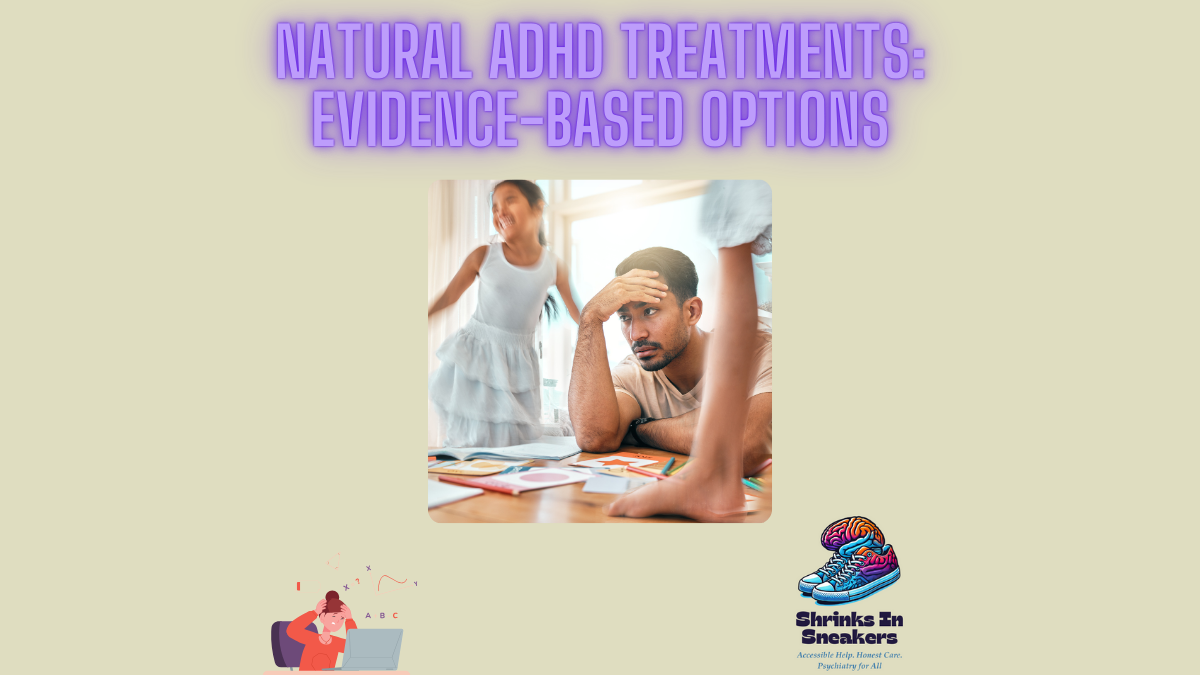
    The search for natural alternatives to pharmaceutical treatments is a growing trend across many medical conditions, and ADHD is no exception. Although stimulant medications remain the gold standard for ADHD management, boasting large effect sizes, they are not without potential risks and side effects. This raises an important clinical question: are there evidence-based natural options that could serve either as primary therapies or as adjunctive treatments in ADHD? Exploring these alternatives could offer valuable strategies for patients and families seeking safer, well-tolerated interventions.

    1. Hirayama et al., 2014 (Phosphatidylserine alone)

    • Population: 36 children (6–12 years) with ADHD
    • Dose: 200 mg/day PS
    • Duration: 15 weeks
    • Main outcomes: ADHD symptoms (teacher ratings), auditory memory

    Reported effect:

    • They did not directly report Cohen’s d, but they reported statistically significant differences between PS and placebo groups on ADHD symptom scores.
    • Based on the mean differences and standard deviations reported:

    Estimated effect size:
    → Cohen’s d ≈ 0.5–0.6 (moderate effect size)

    ✅ Interpretation: A medium, meaningful clinical effect, but not huge like you’d expect with stimulants (where d ~0.8–1.2).

    2. Manor et al., 2012 (Phosphatidylserine + Omega-3 Fatty Acids)

    • Population: 200 children with ADHD symptoms (formal diagnosis not always required)
    • Dose: 300 mg PS + 120 mg EPA + 80 mg DHA daily
    • Duration: 15 weeks
    • Main outcomes: ADHD symptomatology, impulsivity, emotional regulation

    Reported effect:

    • Statistically significant improvements over placebo.
    • Again, they didn’t directly report Cohen’s d, but they provided enough statistical info to estimate.

    Estimated effect size:
    → Cohen’s d ≈ 0.3–0.5 depending on the specific symptom cluster.

    ✅ Interpretation: Small to moderate effect. (Closer to small-to-medium than medium.)

    StudyPopulationInterventionKey Outcome
    Hirayama 2014ADHD kids (n=36)200 mg PS/dayImproved attention & memory
    Manor 2012Kids with ADHD symptoms (n=200)300 mg PS + 200 mg omega-3sReduced impulsivity, improved emotional regulation

    🧠 Clinical Bottom Line:

    • Phosphatidylserine alone → moderate effect on ADHD symptoms (especially attention and memory).
    • PS + Omega-3 → small to moderate effect, mainly helping impulsivity and emotional regulation.
    • Better tolerated than traditional ADHD meds but obviously less potent.

    👉 They could be considered in mild ADHD cases, in parents preferring “natural” options, or as adjuncts to other therapies.

  • 🧠 Esketamine + Antidepressants in TRD: Does the Combo Matter?

    🧠 Esketamine + Antidepressants in TRD: Does the Combo Matter?

    📢 New data from a real-world study of 50,000+ patients with treatment-resistant depression (TRD) published in JAMA Psychiatry:

    📌 Study Question:
    Does combining esketamine with an SSRI or SNRI affect long-term outcomes in TRD?

    📊 Key Findings (5-Year Follow-Up):

    • ✅ Esketamine + SNRI:
       ↘️ Lower all-cause mortality
       ↘️ Fewer hospitalizations
       ↘️ Reduced depressive relapse
    • ✅ Esketamine + SSRI:
       ↘️ Lower incidence of suicide attempts
    • 🔒 Overall: Low rates of adverse outcomes in all groups

    💡 Clinical Implications:

    • Not all combinations are equal—pairing matters.
    • Esketamine + SNRI may be preferred for reducing relapse/mortality
    • Esketamine + SSRI may be considered in patients at risk for suicide
    • Personalized treatment decisions can enhance outcomes in TRD

    🔍 More than symptom relief—it’s about survival, stability, and safety.