Category: Psychiatry

  •    Why It’s Important to Thrive and Not Just Survive

       Why It’s Important to Thrive and Not Just Survive

    We Spend a significant amount of time as doctors monitoring for adverse outcomes. 

    We use the absence of disease as an indicator of health. 

    But the mere absence of disease is not enough to proclaim good health. 

    If we only monitor for the absence of disease, we miss the things that are most important in our patients’ daily lives. 

    The things I’ve found to be most important in my life, and often lacking in my patient’s lives are…

    Being happy, having a sense of purpose and meaning, and having good relationships which are sometimes ignored if overt signs and symptoms of disease are not present. 

    Being “well” is a state of complete mental, physical, and social wellbeing. 

    Having a purpose in life is associated with reduced mortality risk, so is life satisfaction. Things like loneliness and social isolation are associated with increased mortality.

    When these needs are met people not only live longer but they live with intention. 

    Let’s Look beyond the absence disease 

  • Guide To Viewing My Content

    Guide To Viewing My Content

    If you are new to the blog and my social media content, we should start with a brief introduction. 

    My name is Dr. Garrett Rossi, I’m a medical doctor who specializes in adult psychiatry. I’m board certified by the American Board of Psychiatry and Neurology. I’ve practiced in multiple settings including inpatient, outpatient, partial care, assertive community treatment teams, and I provide ECT services.

    I make mental health content on multiple social media platforms and each one has a specific style and type of content. 

    Shrinks In Sneakers YouTube Click Here

    This is where you can find the deep dives on mental health topics including medication reviews, psychiatric diagnosis, and various other topics. Videos can range anywhere from 5-20 minutes and time stamps are available in the descriptions for longer content. 

    Shrinks In Sneakers Instagram Click Here:

    This is where you can find shorter videos and posts on mental health topics. The focus on Instagram is more on mental health advocacy, and myths about psychiatry and mental illness. The content here is shorter but still has a lot of educational value. 

    Shrinks In Sneakers LinkedIn:

    This is where you can find more information about my professional activities. I have information about my advocacy work, professional memberships, publications, and is another good place to follow my work. I make frequent posts here as well. 

    Shrinks In Sneakers Twitter

    Here I’m not very active and haven’t spent much time but I do update blog posts and other relevant information here as well. 

    If you have a question or want to get in touch with me, I am most active on YouTube, LinkedIn, and Instagram. 

    We are building a community where empathy is a central part of the content. The goal is to make psychiatry more accessible, provide education, and reduce stigma associated with mental health treatment. 

  • Shrinks In Sneakers Reunite: Bound by Love for Psychiatry

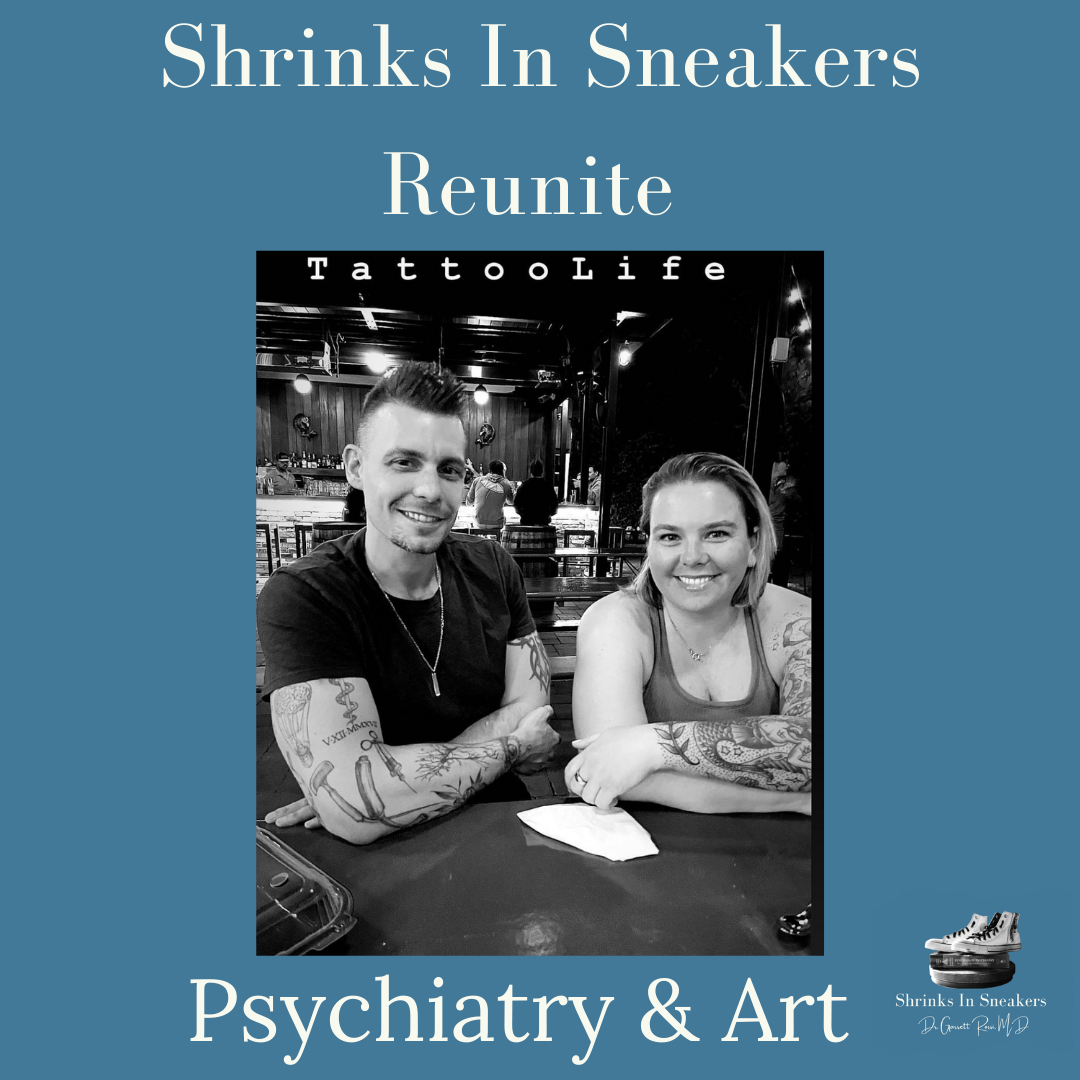
    Shrinks In Sneakers Reunite: Bound by Love for Psychiatry

    I think everyone needs a person in their medical training that they bond with and lean on during this difficult period. 

    Medical training has its ups and downs, the process is filled with highest highs and the lowest lows. There were moments that I loved training and there were moments where I hated training. 

    I was lucky enough to find a great person to share these experiences with.  

    We spent many hours discussing psychiatry, what excited us about the field and what worried us about the future. We discussed difficult cases and the drama of residency training. If I ever needed help or someone to cover a call shift last minute, I knew who I could count on.

    I could trust this person to have my back and I would do the same no matter what. 

     I would encourage anyone who is going through this process to find someone who can help them grow as both a physician and a person. 

    It’s always comforting knowing we can all get by with a little help from our friends. 

  •  


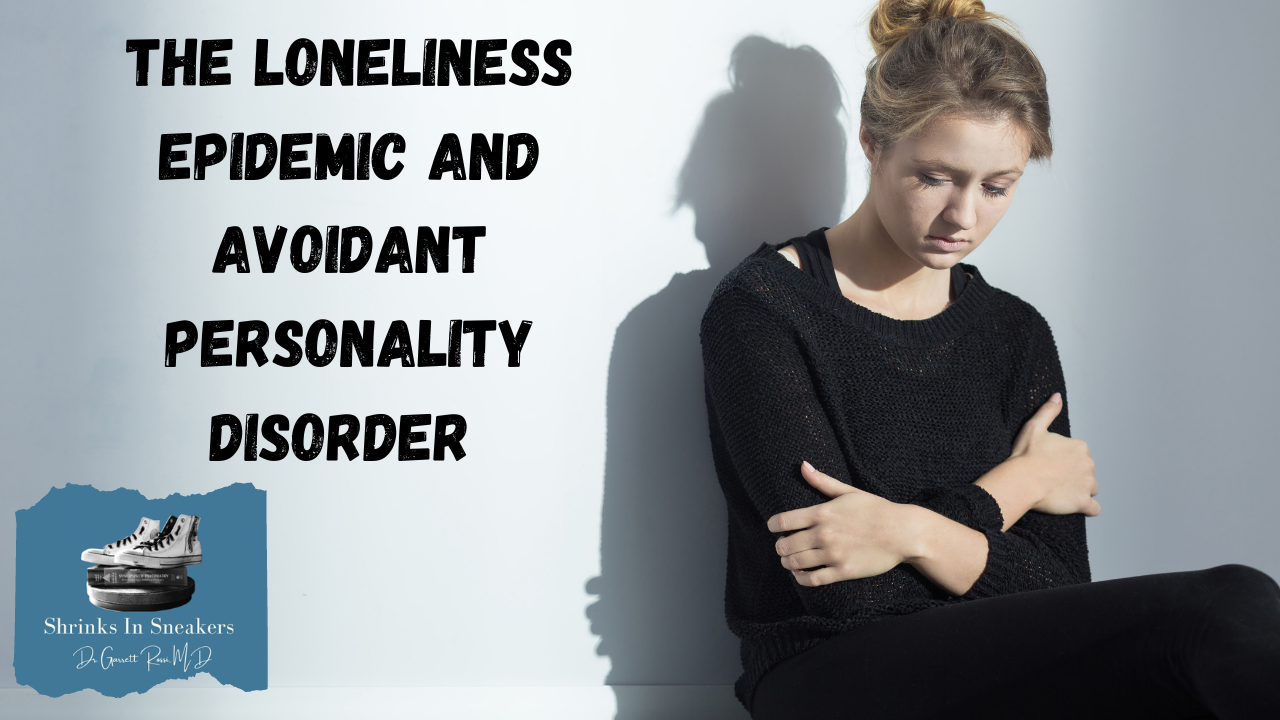
    The Loneliness Epidemic and Avoidant Personality Disorder 

    Although loneliness has always been a friend of mine (Backstreet boys 1997), there is an epidemic of loneliness across all age groups. 

    We live in a world where we are all more connected with each other through technological advances and social media, yet people feel more disconnected than ever. 

    The COVID-19 pandemic did make this any better, 36% of all Americans, including 61% of young adults and 51% of mothers with young children feel loneliness is a significant problem in their lives. 

    The question is are people feeling lonely because they are suffering from avoidant personality disorder?

    Epidemiology

    The prevalence of APD is 2.36% in the general population, and it appears to occur equally in males and females. 

    Definitions and Criteria for diagnosis

    Let’s start with a definition of what avoidant personality disorder is and how it can impact a person’s life. 

    This is part of the cluster C personality disorders often thought of as the anxious/fearful personality disorders. These individuals experience excessive social anxiety, severe feelings of inferiority and inadequacy, and while they desire close relationships, they avoid the feared stimulus instead living in self-imposed social isolation. 

    Other key criteria include: 

    -patterns of social inhibition 

    -hypersensitivity to rejection or criticism 

    -it must be present by early adulthood 

    This affects all areas of life and should be a pervasive pattern. It’s not something that is isolated or situational.  

    DSM-5 Criteria: 4 out of 7 are required to make a diagnosis 

    1. Avoids occupational activities that involve significant interpersonal contact because of fears of criticism, disapproval, or rejection. 
    2. Unwilling to engage in relationships unless they are certain of being liked. (They will look for social cue or indicators of interest before committing and often attempt to read other minds) 
    3. Shows restraint in relationships for fear of being ridiculed or shamed 
    4. You are preoccupied with being criticized or rejected 
    5. The person is inhibited in new interpersonal situations because of feelings of inadequacy 
    6. The person will view themselves as socially inept, inferior to others, or unappealing to others. 
    7. The person is reluctant to take personal risks for fear of embarrassment 

    It’s important to keep in mind this diagnosis is largely unchanged since DSM-III and are primarily viewed through a psychoanalytic lens. The key difference between avoidant personality disorder and social anxiety is these feelings are pervasive throughout the person’s life, where in social anxiety they are limited to social situations. Although some believe these are the same disorder with many of the criteria overlapping. Avoidant patients tend to read more into things and are constantly looking for any indication from others that supports their theory that they are defective or inadequate. 

    Other personality disorders can have rejection sensitivity and sensitivity to criticism, this is often seen in narcissistic personality disorder. We are all sensitive to criticism in certain situations it’s not necessarily pathological. 

    Treatment: 

    This largely focuses on psychotherapy and sometimes medication if other comorbid psychiatric disorders are identified. Some of the psychotherapy techniques that are effective include social skills training, cognitive behavioral therapy, and exposure therapy. These are also good cases for psychoanalysis if the person can commit to that form of therapy. 

    Conclusion :

    Could Some of the Loneliness people are experiencing be due to avoidant personality disorder?

    -Possibly, but it’s only going to be a small percentage considering the prevalence of avoidant personality disorder is 2.36%. 

    -Loneliness has many contributing factors and encouraging people to spend less time connecting digitally and more time connecting face to face is a good place to start. 

  • How to Manage Aggression with Psychopharmacology in an Inpatient Setting

    How to Manage Aggression with Psychopharmacology in an Inpatient Setting

    I’m very careful about the content I consume and the resources I use to grow as a psychiatrist.

    When I endorse something like The Psychiatry & Psychotherapy Podcast, you know it’s something I personally use and trust. 


    I had the opportunity to work with Dr. Puder on a recent episode How to manage aggression with psychopharmacology in an inpatient setting. Unfortunately, I got caught up taking care of patients on my inpatient service on the day of the recording and did not get to talk with Dr. Puder and Dr. Cummings.

    I would encourage you to listen to all the episodes, but my personal favorites are the ones with Dr. Cummings. He has a wealth of knowledge and I’ve learned some amazing clinical pearls that I apply in my daily practice. 

    Check out the episode, you will not be disappointed

    https://www.psychiatrypodcast.com/psychiatry-psychotherapy-podcast/episode-145-how-to-manage-aggression-with-psychopharmacology-in-an-inpatient-setting

  • What is Aphasia?

    What is Aphasia?

    Aphasia is an inability to comprehend or formulate language usually due to damage to specific brain regions responsible for these processes. 

    There are two important points here to note: 

    1. Aphasia is the consequence of another brain disorder such as stroke, brain tumor, traumatic brain injury, viral infections like HSV or neurovegetative process (think dementia here). 

    2. There are different types of aphasias, most notably they can be broken down into expressive and receptive aphasia

    To be diagnosed the person must have significant impairment in one or more of the following

    1. Auditory comprehension

    2. Verbal expression

    3. Reading and writing

    4. Functional communication

    About 2 million people are affected by this disorder in the U.S. and strokes account for most of the documented cases. 

    One of the most common presentations is anomic aphasias where individuals have word retrieval failures and cannot express the words they want to say (usually nouns and verbs). Some level of this is seen in all types of aphasia.

    There can be many other presentations including: 

    -inability to comprehend language 

    -inability to pronounce words

    -inability to speak spontaneously

    -inability to read 

    -inability to write 

    The two most common examples: 

    Receptive aphasia (Wernicke’s):

    This is a fluent aphasia where the person can speak in sentences but there is no meaning, unnecessary words, and possibly the creation of new words called neologisms. 

    -They have poor auditory and reading comprehension.

    -There is fluent but nonsensical written or oral expression.

    -Since thy do not comprehend language well they are often unaware of their mistakes. 

    -The area of the brain affected is well known and established it’s the left temporal lobe as indicated in the picture. 

    Expressive aphasia: Broca’s 

    -These individuals will speak in short, meaningful phrases with great effort. It will be noticeable how much effort they are putting into speaking. 

    -They are usually able to understand the speech of others and are aware of the difficulties they are having leading to frustration. 

    -The location of the brain injury is well established, damage to the frontal lobe causes this presentation 

    Primary progressive aphasia 

    -This is a form of dementia 

    -Characterized by gradual loss of language functioning while other cognitive domains such as personality and memory are mostly preserved 

    -It usually starts with sudden word finding difficulties and progresses to reduced ability to form grammatically correct sentences, and impaired comprehension 

  • 

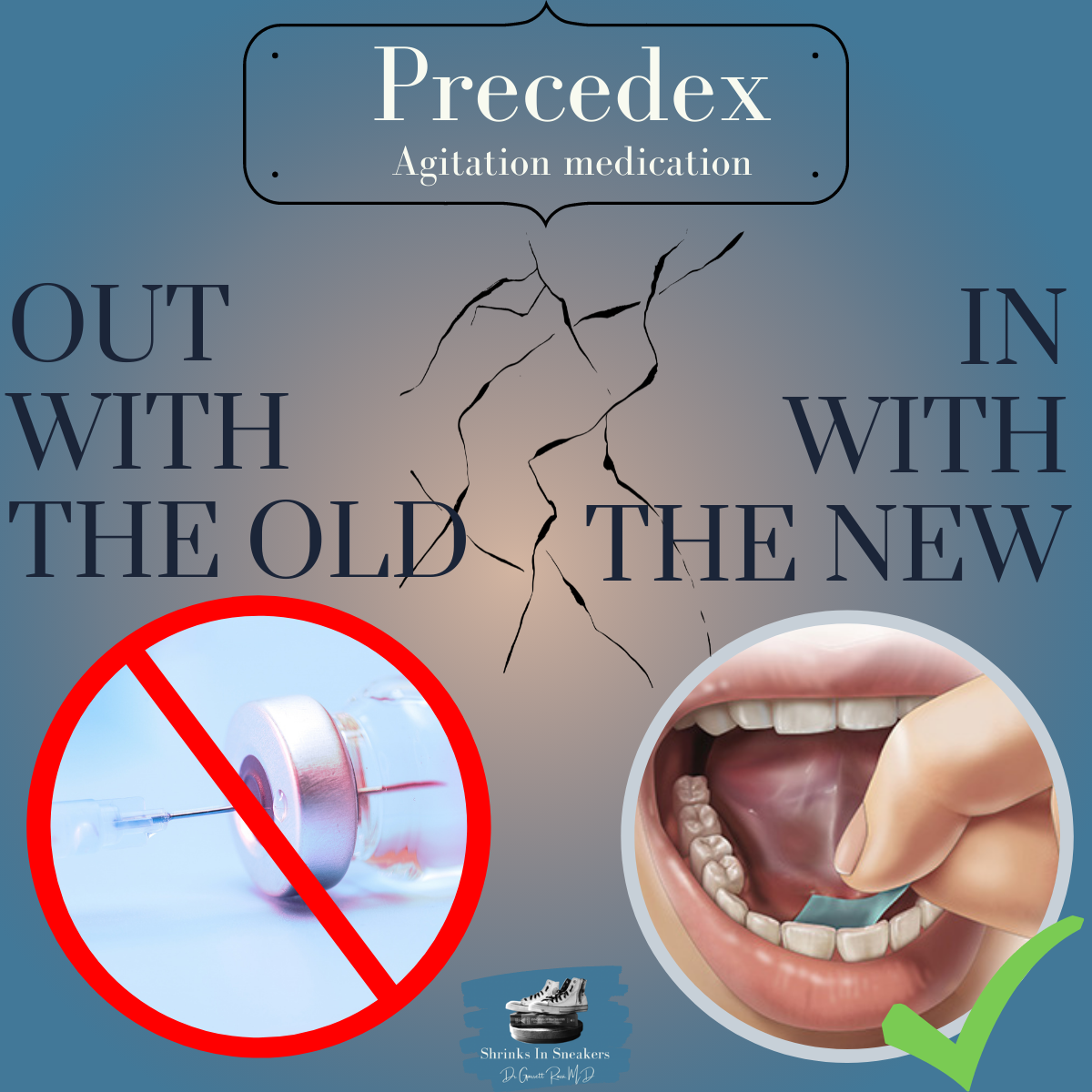
    New Treatment for Acute Agitation

    The FDA has approved dexmedetomidine sublingual film for the treatment of agitation associated with schizophrenia or Bipolar I/II disorder in adults.  

    When agitation and aggression are severe, swift resolution of the situation is required.

    Introduction:

    Since the advent of chlorpromazine in the 1950’s pharmacological intervention has been a mainstay in these acute situations. In many cases the combination of haloperidol, lorazepam, and diphenhydramine, the so called B-52 are administered intramuscularly when quick resolution of agitation is required for the safety of the person and staff. 

    But what happens when these methods fail to provide adequate relief and person remains agitated?

    There are few options available outside of the dopamine blocking medications and benzodiazepines. 

    I’ve been in situations as an early career psychiatrist where I’ve had to treat severe agitation that is unresponsive to the traditional methods of treating agitation. 

    After multiple medications failed to adequately treat the agitation, I called the medical floor to transfer the person for a Dexmedetomidine (precedex) drip. This is a medication I’ve seen work well in the ICU setting with agitated delirium. 

    But drips are complicated to use and require careful monitoring on the medical floor. I was thinking it would be great if there was an option that did not require IV placement or transfer to the medical floor. 

    Mechanism of Action:

    Recent studies have looked at sublingual Dexmedetomidine as a potential new treatment for agitation. 

    Dexmedetomidine is an alpha-2 noradrenergic agonist approved by the FDA for IV sedation and analgesia and limitted to 24 hours. It induces sleep by activating alpha-2 presynaptic receptors reducing norepinephrine release. Both sedation and awakening are rapid, and the medication is safe but does require monitoring of blood pressure and heart rate. 

    Phase 3 Clinical Trial Results:

    A phase 3 clinical trial of 120 micrograms and 180 micrograms of sublingual dexmedetomidine was compared to placebo in patients with bipolar disorder. They used the excited portion (PEC) of the PANSS to measure efficacy and found a response beginning at 20 minutes and continuing to 120 minutes at both doses. 90% of participants in the 180 microgram and 76% in the 120 microgram groups achieved a response. No significant adverse events occurred in the treatment groups.  

    Hsiao JK. Sublingual Dexmedetomidine as a Potential New Treatment for Agitation. JAMA. 2022;327(8):723–725. doi:10.1001/jama.2021.21313

  • Did I choose the Wrong Specialty?

    Did I choose the Wrong Specialty?

    Oh, wait a minute I love everything about my work. In fact, I spend a great deal of time doing things outside of clinical practice related to psychiatry. Things like writing on this blog. I love doing therapy and even started psychoanalytic training. I even like being able to prescribe medications and have done enough clinical work and reading to know they are effective. Basically, this seems like the right place for me, to think I initially thought I wanted to be a surgeon. 

    When I entered college, I treated it like high school and never thought medicine had a place for me. I was actually in training to be a police officer and figured that would be a good enough life. I started in community college and by chance took an introductory biology course with a professor who I clicked with right away. As I moved on from the community college setting, I knew I had to decide, did I want to do basic science research, or was I going to continue on the premedical path with intentions of being a doctor. This was all very shocking for me, a person who barely graduated high school, and scored almost as low as you can on the SAT. I really did not understand anything about getting into medical school, and after transferring to a small college near my hometown that lacked a true premedical curriculum, I was defiantly at a disadvantage. I then dabbled in the possibility of studying naturopathic medicine but was convinced by my research supervisor that a traditional medical school would offer me more opportunities and I could still do many of the lifestyle medicine things I wanted to. Given my lack of understanding about building a medical school application, I did not get any offers to attend a U.S. MD program. At least I had gained acceptance to St. George’s University, and I was determined to prove every U.S. school wrong about their assessment of my abilities. 

    I honestly had no idea psychiatry would be my choice of specialty. In the whole 2 weeks of teaching, I received in the first two years of medical school about the subject, it did not seem very appealing. However, I was sold after my third-year clerkship in psychiatry and have since dedicated my life to the field. 

    So, what does all this have to do with making the wrong choice? Well, if you truly understand psychiatry you will know that what passes as psychiatric care these days is far from ideal. I never thought the majority of my time would be reviewing screening scales, asking about side effects of medication, and writing notes mostly filled with legal jargon. I feel like I’m longing for the good old days when you could spend an hour with a patient and really understand what the problem is. Sometimes I feel stuck in this situation, but I always remember I could have been a surgeon. 

  • Lamotrigine/Lamictal is It Really Effective in Bipolar Disorder?

    Lamotrigine/Lamictal is It Really Effective in Bipolar Disorder?

    There are a lot of good things about lamotrigine, and it’s commonly used in both the adult and child adolescent population. The question is how effective is lamotrigine at treating mania, and bipolar depression? I will answer this and provide an in-depth overview of the medication here in this video. Timestamps

    Introduction: 00:00 to 00:35

    Indications and a discussion on negative studies: 00:36 to 04:55

    Mechanism of Action: 04:56 to 06:10

    Dosing: 06:11 to 08:19

    Side Effects: 08:20 to 12:48

    Final Comments: 12:49 to 15:38

  • Attention Deficit Hyperactivity Disorder ADHD: Treatment

    Attention Deficit Hyperactivity Disorder ADHD: Treatment

    -This is one of the only disorders where medication is the first line treatment in children and adolescents.

    -There is a 70%-80% response rate to psychostimulants, and medication consistently outperforms behavioral interventions in RCTs.

    -For preschool age children, behavioral interventions are first line and medications are considered if there is a poor response to behavioral intervention and functional impairment. 

    Psychostimulants 

    Methylphenidate (MPH or Ritalin) should be started at 2.5 to 5 mg twice daily (before breakfast and lunch). It can be increased by 2.5 to 5 mg/day reaching an optimal dose of 1 mg/kg/day and a maximum dose of 2 mg/kg/day. 

    Side effects include insomnia, decreased appetite, mood disturbance, tics, headaches, GI distress, and rarely psychosis. 

    -There are several long-acting preparations including Ritalin XR, Ritalin LA, metadate, Concerta, Daytrana, Focalin XR and several others. The important point about long-acting preparation is they provide a sustained second release with resulting plasma levels lasting 4-12 hours depending on the preparation. 

    Amphetamine sulfate (Adderall): should be started at 2.5-5 mg once or twice per day. It can be increased by 5 mg per week with an optimal dose of 0.5-1 mg/kg/day. Dextroamphetamine is twice as potent as amphetamine. The side effect profile is similar to MPH. 

    Longer-acting amphetamine preparations include Adderall XR, Dexedrine, Dyanavel XR, and Vyvanse (formulated as a prodrug to reduce the risk of abuse). These will provide coverage for about 12 hours. 

    -There is a black box warning for the risk of abuse and dependence. In addition, there is a cardiovascular safety warning regarding the risk of sudden cardiac death in children and adolescents with structural heart defects or other severe cardiac conditions. Patients should be screened for any cardiovascular disorders, family history of sudden cardiac death, and an EKG should be performed.