Tag: Anxiety

  • The Benzo Balance: Short-Term Help, Long-Term Plan

    The Benzo Balance: Short-Term Help, Long-Term Plan

    1. Clarity and upfront expectations reduce long-term problems

    “I’m prescribing this for 4–6 weeks. After that, we taper.”
    We give the patient a clear framework and prevent long-term dependency from becoming the default trajectory. It builds trust while still honoring clinical caution. Patients usually appreciate this transparency.

    2. Dose low. Time-limit strictly

    This really is the heart of rational benzo use. When used short-term for acute anxiety, panic, alcohol withdrawal, catatonia, etc., they can be valuable. But once we drift into long-term, open-ended prescribing, the benefits decline and risks (dependence, cognitive impairment, falls, tolerance) mount.

    3. Cold-turkey tapers can be dangerous

    “Some well-meaning physician decides to pull someone off benzodiazepines in 2 weeks…”
    And suddenly the patient is in crisis — not because the drug was inherently evil, but because the withdrawal was mishandled. Abrupt tapers, especially in someone on high doses or for years, can trigger rebound anxiety, insomnia, panic, even seizures or suicidality.

    4. We need to hold both truths at once

    • Benzos are not long-term solutions for anxiety.
    • But abrupt discontinuation without a tailored plan is often worse than the original problem.

    It’s not a complex principle, but it takes nuanced execution. You’re advocating for that middle path: compassionate, firm, individualized.

  • Understanding Social Anxiety Disorder: Key Insights and Treatments

    Understanding Social Anxiety Disorder: Key Insights and Treatments

    What if your biggest fear was simply being seen?
    For millions living with Social Anxiety Disorder (SAD), everyday interactions—like answering a question in class or speaking up at work—can feel terrifying. Despite being one of the most prevalent and impairing anxiety conditions, SAD remains widely under-recognized.

    📊 Up to 8.4% of people meet criteria for SAD in a given year, yet only 20–40% recover after 20 years without treatment (Ruscio et al., 2008). Median age of onset? Just 13 years old.

    👤 Case Vignette: When Fear Takes Over

    At 15, “Jenna” stopped raising her hand in class—not because she didn’t know the answers, but because she was terrified of being laughed at. By college, she avoided presentations, skipped networking events, and turned down internships. Her friends thought she was shy. One professor suggested depression. But underneath was a paralyzing fear of judgment: classic Social Anxiety Disorder.

    🤝 What Is Social Anxiety Disorder?

    SAD is more than introversion or shyness. It’s a persistent, intense fear of being judged, embarrassed, or negatively evaluated in social or performance situations. This fear leads to avoidance behaviors that impair social, academic, and occupational functioning.

    ⚠️ Why Is It So Often Missed?

    SAD is frequently overshadowed by overlapping symptoms seen in:

    • Major Depressive Disorder (social withdrawal, low self-esteem)
    • Generalized Anxiety Disorder (excessive worry)
    • Avoidant Personality Disorder (longstanding social inhibition)
    • Body Dysmorphic Disorder (fear of negative evaluation tied to appearance)

    Because of this diagnostic overlap, many individuals go undiagnosed—or misdiagnosed—for years.

    🧠 Clinical Considerations

    1. SAD Is Not “Just Shyness”

    Shyness is a personality trait; SAD is a clinical condition. The difference lies in impairment: SAD interferes with daily life, relationships, academic goals, and career opportunities.

    2. Early Onset, Long Course

    Most individuals report symptoms starting in early adolescence. Without intervention, SAD often persists into adulthood and increases the risk of depressionsubstance use, and functional disability.

    3. Functional Impairment Is Significant

    SAD can lead to:

    • Academic underachievement
    • Avoidance of job interviews or public speaking
    • Social isolation
    • Delayed life milestones (e.g., dating, career advancement)

    4. Evidence-Based Treatments Exist

    🧠 Cognitive Behavioral Therapy (CBT):

    • Gold-standard psychotherapy
    • Targets negative thought patterns and avoidance behaviors
    • Often includes exposure exercises to feared situations
    • Group CBT is especially effective for SAD

    💊 Pharmacologic Options:

    • First-line: SSRIs (e.g., sertraline, paroxetine)
    • SNRIs: Like venlafaxine, also effective
    • Beta-blockers: May help with performance-only SAD (e.g., public speaking)
    • BenzodiazepinesNot recommended due to dependence risks and avoidance reinforcement

    🔄 Combined Therapy

    Some individuals benefit most from CBT + medication, particularly those with moderate-to-severe or treatment-resistant symptoms.

    📣 Call to Action

    Too many individuals live in silence with Social Anxiety Disorder. If you or someone you know avoids social situations due to fear of judgment, don’t ignore it. SAD is real. It’s common. And—most importantly—it’s treatable.

    👉 Talk to a mental health professional
    👉 Share this post to raise awareness
    👉 Start the conversation

  • Avoid Tianeptine: FDA Alerts Consumers to Risks

    Avoid Tianeptine: FDA Alerts Consumers to Risks

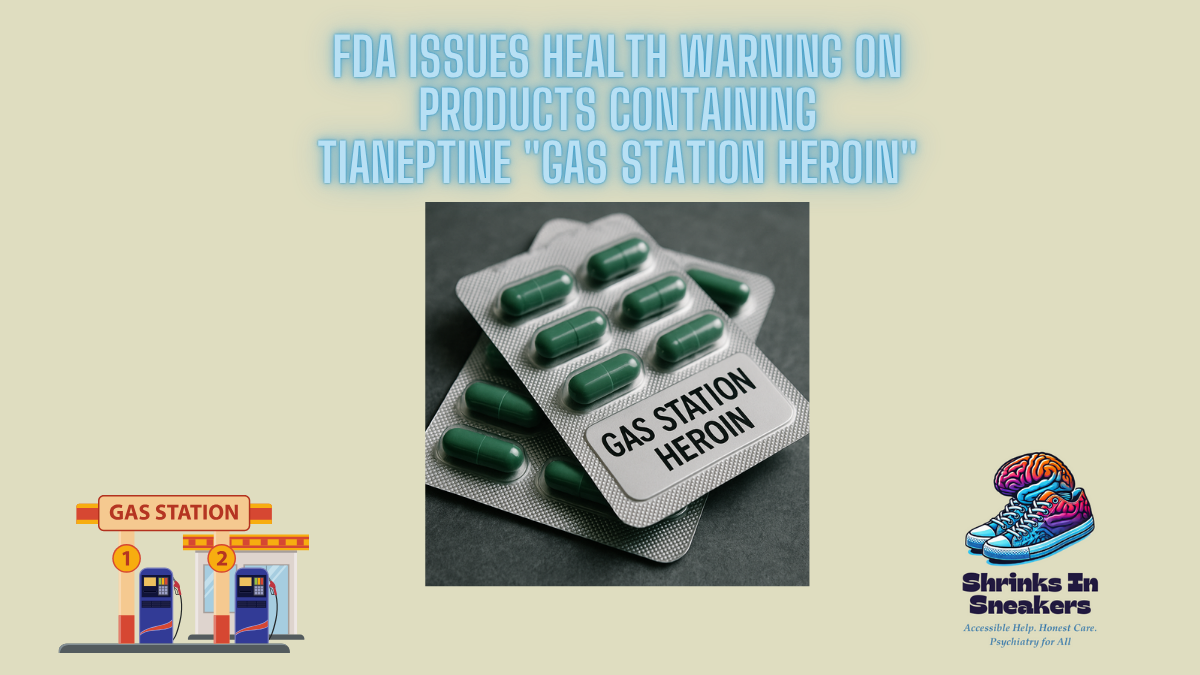
    The U.S. Food and Drug Administration (FDA) has issued a critical health warning about the growing availability of tianeptine, a dangerous, unapproved substance being sold as a dietary supplement under names like Zaza, Tianna Red, Pegasus, and others.

    Commonly referred to as “gas station heroin”, tianeptine mimics opioid-like effects and is being sold in convenience stores, gas stations, smoke shops, and online—posing serious health risks to the public.

    ⚠️ Why This Matters:

    Tianeptine is not approved for any medical use in the U.S. Despite this, it is widely marketed for supposed benefits like mood enhancement, anxiety relief, or cognitive boost. These claims are not supported by clinical evidence, and the risks are significant.

    🩺 Serious Health Risks Associated With Tianeptine:

    ⚠️ Death, particularly when combined with alcohol or other substances

    ⚠️ Respiratory depression (slow or stopped breathing)

    ⚠️ Seizures

    ⚠️ Loss of consciousness

    ⚠️ Confusion and agitation

    ⚠️ Opioid-like withdrawal symptoms

    🛑 What You Can Do:

    Report adverse reactions to the FDA via MedWatch: https://www.fda.gov/medwatch

    Avoid any products labeled as containing tianeptine.

    Do not trust unregulated supplements marketed for mental clarity or energy.

    📌 Quick Summary:

    • Tianeptine = dangerous, unapproved opioid-like drug
    • Sold as a supplement under names like Zaza or Tianna Red
    • Linked to seizures, coma, and death
    • Avoid these products and warn others
    • Report side effects to the FDA MedWatch Program
  • The Importance of Distinguishing Suicidal Behaviors

    The Importance of Distinguishing Suicidal Behaviors

    This is the subject of a recent discussion I had with a colleague regarding the differences between a suicide attempt and a suicide gesture. Though these terms are sometimes used interchangeably in casual conversation or even in clinical documentation, they carry fundamentally different meanings—both in terms of patient risk and in how we, as clinicians, should respond.

    Our conversation emerged from a case involving a patient with borderline personality disorder who presented to the emergency department after ingesting a small quantity of over-the-counter medication. The intent was unclear. Was this a serious attempt to end her life? Or was it a gesture—an act of desperation without the intention to die, but rather to communicate emotional distress?

    The question is not academic. Our interpretation of the event determines our risk formulation, our documentation, our treatment planning, and even how we communicate with the patient and their support system. Yet, it is precisely in these gray areas that clinicians often struggle, and where outdated or stigmatizing language can do real harm.

    Defining the Terms: Clinical and Functional Differences

    suicide attempt refers to an act of self-harm with at least some intent to die. The degree of lethality may vary, but what distinguishes an attempt is that the individual believed the act could result in death and engaged in it with that goal in mind—even if ambivalence was present. The National Institute of Mental Health (NIMH) and the Columbia-Suicide Severity Rating Scale (C-SSRS) define this with some specificity: any potentially self-injurious behavior with non-zerointent to die, regardless of outcome.

    In contrast, a suicidal gesture is a behavior that mimics suicidal behavior or appears life-threatening but is typically not intended to be fatal. The function is often communicative or affect-regulating rather than aimed at death. Classic examples include superficial wrist-cutting, ingesting a sub-lethal dose of medication, or tying a noose but not tightening it. These acts often occur in interpersonal contexts and can be seen as efforts to signal pain, elicit help, or assert control in the face of perceived abandonment.

    Why the Distinction Matters

    It might be tempting to dismiss suicidal gestures as “attention-seeking” or “manipulative,” but this framing is both clinically dangerous and ethically fraught. Individuals who engage in gestures often experience intense psychological suffering, and repeated gestures are a well-established risk factor for future suicide attempts and completed suicide.

    From a risk assessment standpoint, gestures should be taken seriously, especially when they become part of a pattern. While the intent to die may not be present in a given gesture, intent can shift quickly, particularly in individuals with mood disorders, personality pathology, or under the influence of substances.

    From a treatment perspective, understanding the function of the behavior—whether it is to relieve affective tension, to communicate distress, or to punish oneself—is crucial to tailoring interventions. For instance, dialectical behavior therapy (DBT) explicitly targets self-harm and suicidal gestures as part of its hierarchy of treatment priorities, recognizing the urgency and potential danger of these behaviors even when lethality is low.

    Conclusion: Clarify, Don’t Categorize

    Ultimately, the conversation with my colleague reminded me that the real clinical challenge is not to label a behavior as a suicide attempt or a gesture, but to understand its meaning in the life of the patient. Both require empathy, structure, and a willingness to engage with complexity. Whether a patient wants to die or wants their suffering to be seen and acknowledged, both deserve serious clinical attention.

    By sharpening our definitions and approaching these behaviors with nuance, we can better serve patients in crisis and avoid the pitfalls of assumptions—especially in emotionally charged clinical environments like emergency rooms, inpatient units, or high-acuity outpatient settings.
  • EMA Warns of Suicidal Ideation from Finasteride

    EMA Warns of Suicidal Ideation from Finasteride

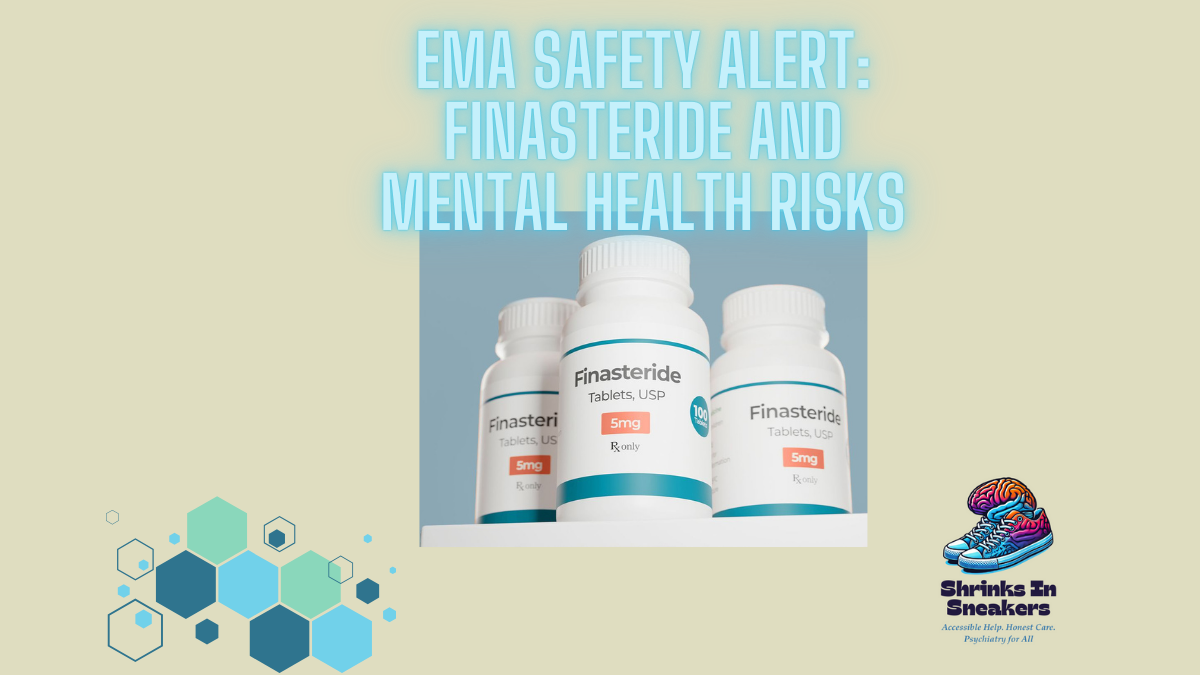
    In a significant update to its safety guidance, the European Medicines Agency (EMA) has officially recognized suicidal ideation as a potential side effect of finasteride. The EMA is urging healthcare professionals to advise patients to stop treatment and seek medical help if they experience depressed mood, depression, or suicidal thoughts while taking the drug.

    This decision follows a growing number of reports linking finasteride, particularly in younger men using it for androgenic alopecia (male pattern baldness), to neuropsychiatric side effects. While previous warnings have addressed sexual dysfunction, this marks a critical shift in regulatory focus to mental health.

    💊 What Is Finasteride?

    Finasteride is a 5α-reductase inhibitor used to treat:

    • Benign prostatic hyperplasia (BPH) in a 5 mg daily dose (Proscar)
    • Male pattern baldness (androgenic alopecia) in a 1 mg daily dose (Propecia)

    It works by inhibiting the conversion of testosterone to dihydrotestosterone (DHT)—a potent androgen implicated in hair loss and prostate growth.

    ⚠️ The EMA’s Updated Warning

    The EMA’s Pharmacovigilance Risk Assessment Committee (PRAC) reviewed post-marketing surveillance data and published literature and concluded that:

    “There is sufficient evidence to support a causal relationship between finasteride and the risk of suicidal ideation.”

    Key recommendations:

    • Suicidal ideation will be added to the drug’s product information as a potential adverse effect.
    • Healthcare professionals should proactively inform patients about this risk.
    • Patients should be advised to discontinue treatment immediately and seek medical advice if they experience changes in mood or mental health.

    🧠 Possible Mechanisms Behind Finasteride’s Psychiatric Effects

    The exact mechanisms linking finasteride to depression and suicidality remain unclear, but several biological hypotheseshave been proposed:

    1. Neurosteroid Depletion

    Finasteride inhibits 5α-reductase, which not only converts testosterone to DHT but also helps produce neurosteroids like allopregnanolone and tetrahydrodeoxycorticosterone (THDOC).

    • These neurosteroids have potent GABAergic activity, contributing to anxiolytic and antidepressant effects.
    • Inhibition leads to decreased GABA-A receptor modulation, potentially increasing anxiety, depression, and suicidal thoughts.

    2. Hypothalamic-Pituitary-Adrenal (HPA) Axis Dysregulation

    Altered steroid metabolism may dysregulate the HPA axis, increasing cortisol levels, a well-known biomarker of depression and suicidal behavior.

    3. Persistent Epigenetic Changes

    Some animal and human data suggest that finasteride may induce long-lasting changes in gene expression related to stress response and mood regulation, even after discontinuation—supporting the idea of post-finasteride syndrome (PFS).

    4. Neuroinflammation

    Reduced neurosteroids may increase neuroinflammatory signaling, a growing area of interest in the neurobiology of depression and suicidality.

    🧾 Final Thoughts

    The EMA’s announcement is a sobering reminder that drugs affecting hormonal pathways can have wide-reaching systemic effects, including on the brain. With better awareness, screening, and patient education, we can minimize harm and support individuals who may be at risk.

  • Why CBT Reigns as the Top Therapy for Mental Health

    Why CBT Reigns as the Top Therapy for Mental Health

    🧠💡 CBT Confirmed—Again: Landmark Meta-Analysis Reinforces Clinical Value Across Diagnoses
    A massive meta-analysis in JAMA Psychiatry (2025) reaffirms what many of us observe in day-to-day care: Cognitive Behavioral Therapy (CBT) is one of the most effective, versatile, and enduring treatments for adult psychiatric conditions.

    🔬 Study at a Glance

    • Pooled data from hundreds of RCTs
    • Assessed CBT’s efficacy across depression, anxiety disorders, PTSD, and eating disorders
    • Found significant, lasting effects across diagnostic categories
    • Highlighted condition-specific variation in effect sizes, but overall CBT consistently outperformed inactive controls

    📚 Real-World Relevance
    Imagine a patient with chronic panic disorder who’s failed two SSRI trials and prefers non-pharmacologic interventions. CBT remains a frontline solution—equally relevant for the young adult with bulimia or the veteran with PTSD. These aren’t just data points—they’re the cases we see every day.

    🔄 How Does CBT Stack Up Against Other Therapies?
    While the study primarily focused on CBT, it reinforces existing literature suggesting that CBT often matches or outperforms alternative modalities like psychodynamic therapy or interpersonal therapy in short-term efficacy—especially when structure, time-limited treatment, and measurable goals are critical.

    🛠 Implications for Clinical Practice
    ✅ Why prioritize CBT?

    • It’s highly adaptable
    • Supported across diverse populations
    • Scalable via group therapy, digital tools, and telehealth

    🚧 Barriers to Access:

    • Limited availability of trained therapists
    • Insurance coverage gaps
    • Patient preference for “talk therapy” without structure

    ✅ Strategies to Overcome Them:

    • Integrate CBT-informed principles into brief med management visits
    • Refer to digital CBT platforms when face-to-face access is limited
    • Advocate for reimbursement parity and expanded training programs

    📎 Bottom Line
    This study isn’t just academic—it’s a call to action. Prioritizing CBT in treatment planning can lead to better outcomes, broader reach, and more durable recovery. As clinicians, it’s on us to ensure our systems support its accessibility.

    📖 Full Article:
    https://jamanetwork.com/journals/jamapsychiatry/article-abstract/2832696

  • RFK Jr. Claims He’ll Identify the Cause of Autism by September

    RFK Jr. Claims He’ll Identify the Cause of Autism by September

    In a bold statement this week, Robert F. Kennedy Jr. announced that he will reveal the definitive cause of autism by September. Kennedy, a longtime critic of childhood vaccine programs, did not provide specific scientific details or a research plan, but implied that his administration would prioritize transparency and independent investigations into the condition’s origins.

    The claim has sparked immediate controversy. Autism is a complex neurodevelopmental condition with a strong genetic foundation and a wide range of potential environmental influences—none of which have yielded a singular, definitive cause. The scientific consensus, built over decades of rigorous research, continues to support a multifactorial model rather than a simplistic explanation.

    Many highly intelligent and dedicated scientists have spent years studying autism without identifying a single, unifying cause. One of the recurring issues that arises when politics intersects with science is a resistance to the idea that these are nuanced, multifaceted conditions. It’s not the most satisfying explanation—but it is consistent with the best evidence we have. My fear is that this type of investigation, under political pressure, could prematurely identify a false causal agent—such as vaccines—and reignite a harmful narrative that has already been thoroughly debunked.

    Kennedy’s history of promoting vaccine-autism links adds further concern. The CDC, WHO, and a vast body of peer-reviewed research have all concluded there is no credible evidence connecting vaccines to autism. Suggesting otherwise not only undermines public trust in science and medicine—it risks the health of entire communities by fueling vaccine hesitancy.

    For families and individuals affected by autism, the promise of discovering its origins is understandably compelling. But it’s critical that we approach that pursuit with scientific integrity, not political expediency.

  • 🧠 Esketamine + Antidepressants in TRD: Does the Combo Matter?

    🧠 Esketamine + Antidepressants in TRD: Does the Combo Matter?

    📢 New data from a real-world study of 50,000+ patients with treatment-resistant depression (TRD) published in JAMA Psychiatry:

    📌 Study Question:
    Does combining esketamine with an SSRI or SNRI affect long-term outcomes in TRD?

    📊 Key Findings (5-Year Follow-Up):

    • ✅ Esketamine + SNRI:
       ↘️ Lower all-cause mortality
       ↘️ Fewer hospitalizations
       ↘️ Reduced depressive relapse
    • ✅ Esketamine + SSRI:
       ↘️ Lower incidence of suicide attempts
    • 🔒 Overall: Low rates of adverse outcomes in all groups

    💡 Clinical Implications:

    • Not all combinations are equal—pairing matters.
    • Esketamine + SNRI may be preferred for reducing relapse/mortality
    • Esketamine + SSRI may be considered in patients at risk for suicide
    • Personalized treatment decisions can enhance outcomes in TRD

    🔍 More than symptom relief—it’s about survival, stability, and safety.

  • 🧠 New Research Alert! 🧠

    🧠 New Research Alert! 🧠

    A study in JAMA Psychiatry explores how functional MRI (fMRI) biomarkers can help distinguish major depressive disorder (MDD) 😔 from healthy individuals. Researchers found that regional homogeneity (ReHo) patterns in the brain are a more reliable marker for MDD than traditional structural MRI 🏗️.

    🔬 Why does this matter?
    👉 Better Diagnostics: fMRI could lead to more objective ways to diagnose depression, reducing reliance on self-reporting.
    👉 Early Detection: One day, brain scans 🏥 might help identify people at risk before symptoms fully develop.
    👉 Personalized Treatment: Understanding individual brain patterns could help guide targeted interventions like therapy or medication.

    Could brain scans be the future of depression diagnosis? 🤔 Drop your thoughts below! ⬇️

    📖 Read more: jamanetwork.com

  • 🚨 New Study Links Antidepressant Use to Significant Weight Gain Over 6 Years! 

    🚨 New Study Links Antidepressant Use to Significant Weight Gain Over 6 Years! 

    A recent study published in Frontiers in Psychiatry reveals that individuals using antidepressants experienced notable weight gain over a six-year period.​

    Key Findings:

    • Increased Weight Gain:
      • Participants who used antidepressants showed an average weight increase of approximately 2% of their baseline body weight compared to non-users.​
    • Higher Obesity Risk:
      • Those without obesity at the study’s start had double the risk of becoming obese if they used antidepressants throughout the six years.​

    Implications:

    With the widespread use of antidepressants and the global obesity epidemic, integrating weight management and metabolic monitoring into depression treatment plans is crucial.​

    link: https://www.frontiersin.org/journals/psychiatry/articles/10.3389/fpsyt.2024.1464898/full