Tag: attention deficit disorder

  • Adult ADHD: Current Trends and Emerging Research (2025 Update)

    Adult ADHD: Current Trends and Emerging Research (2025 Update)

    Attention-deficit/hyperactivity disorder (ADHD) has traditionally been seen as a childhood condition — but in recent years, there has been an explosion of interest in ADHD among adults. As awareness grows, so does research. New studies are reshaping how we diagnose, treat, and understand ADHD in the adult population.

    1. 🔥 Rising Rates of Adult ADHD Diagnosis

    Recent studies show that adult ADHD diagnoses have sharply increased over the past decade. According to a 2023 analysis published in JAMA Psychiatry, the diagnosis rate for adults aged 18–45 rose by more than 80% between 2011 and 2022.

    Why the surge?

    • Greater public awareness
    • Better screening tools for adults
    • A cultural shift toward recognizing executive dysfunction in adulthood

    However, there are concerns that overdiagnosis is also happening, particularly when ADHD is diagnosed after brief evaluations without thorough history-taking.

    2. 🧠 Expanded Understanding of Adult ADHD Symptoms

    The symptom profile in adults differs significantly from children. While hyperactivity often fades, issues like emotional dysregulationdisorganization, and executive dysfunction persist.

    Recent research emphasizes that adult ADHD often presents as:

    • Chronic procrastination
    • Low frustration tolerance
    • Difficulty managing responsibilities (work, home, finances)
    • Persistent inner restlessness

    A 2024 review in The American Journal of Psychiatry noted that emotional impulsivity may actually be a core symptomin adults, not just a secondary feature.

    3. 💊 Treatment Shifts: Caution Around Stimulants

    While stimulant medications (like amphetamines and methylphenidate) remain the gold standard, new studies highlight the importance of careful prescribing, especially in adults with:

    • Comorbid substance use disorders
    • Cardiovascular risk factors
    • Poor diagnostic workups

    Non-stimulant treatments are gaining ground:

    • Atomoxetine (Strattera) remains a mainstay.
    • Viloxazine (Qelbree) was approved for adult ADHD in 2024 and shows promise with lower abuse potential.
    • Bupropion (Wellbutrin) continues to be an important off-label option, especially when depression coexists with ADHD.

    According to a 2024 meta-analysis in Lancet Psychiatrynon-stimulants now account for about 30% of new ADHD prescriptions in adults — a significant jump compared to previous years.

    4. 🧬 Precision Psychiatry and Biomarkers on the Horizon

    Emerging studies are exploring neuroimaging and genetic markers to better understand adult ADHD subtypes.

    • A 2023 study using fMRI found distinct prefrontal cortex dysfunction patterns in adults with ADHD compared to controls.
    • Genetic research continues to implicate genes related to dopamine transmission and synaptic plasticity.

    Although these findings are not yet ready for clinical application, the future of ADHD diagnosis may involve biomarkers, moving beyond subjective questionnaires alone.

    5. 🌿 Lifestyle Interventions Are Getting More Attention

    There’s a growing body of evidence supporting complementary approaches:

    • Cognitive-behavioral therapy (CBT) for ADHD-specific skills
    • Exercise as a way to enhance executive function and mood
    • Mindfulness practices to improve emotional regulation

    A 2024 RCT published in Behavior Therapy showed that an 8-week mindfulness-based intervention led to significant improvements in attention and working memory in adults with ADHD — with effect sizes comparable to pharmacotherapy in some cases.

    Final Thoughts

    Adult ADHD is real, complex, and often misunderstood.
    The field is evolving rapidly, with a push toward better diagnosticssafer treatments, and a broader understanding of how ADHD affects life across the lifespan.

    As research continues to grow, clinicians are challenged not only to treat ADHD effectively but to do so thoughtfully — avoiding both underdiagnosis and overdiagnosis.

    Stay tuned — the future of ADHD care is just getting started.
  • Natural ADHD Treatments: Evidence-Based Options

    Natural ADHD Treatments: Evidence-Based Options

    The search for natural alternatives to pharmaceutical treatments is a growing trend across many medical conditions, and ADHD is no exception. Although stimulant medications remain the gold standard for ADHD management, boasting large effect sizes, they are not without potential risks and side effects. This raises an important clinical question: are there evidence-based natural options that could serve either as primary therapies or as adjunctive treatments in ADHD? Exploring these alternatives could offer valuable strategies for patients and families seeking safer, well-tolerated interventions.

    1. Hirayama et al., 2014 (Phosphatidylserine alone)

    • Population: 36 children (6–12 years) with ADHD
    • Dose: 200 mg/day PS
    • Duration: 15 weeks
    • Main outcomes: ADHD symptoms (teacher ratings), auditory memory

    Reported effect:

    • They did not directly report Cohen’s d, but they reported statistically significant differences between PS and placebo groups on ADHD symptom scores.
    • Based on the mean differences and standard deviations reported:

    Estimated effect size:
    → Cohen’s d ≈ 0.5–0.6 (moderate effect size)

    ✅ Interpretation: A medium, meaningful clinical effect, but not huge like you’d expect with stimulants (where d ~0.8–1.2).

    2. Manor et al., 2012 (Phosphatidylserine + Omega-3 Fatty Acids)

    • Population: 200 children with ADHD symptoms (formal diagnosis not always required)
    • Dose: 300 mg PS + 120 mg EPA + 80 mg DHA daily
    • Duration: 15 weeks
    • Main outcomes: ADHD symptomatology, impulsivity, emotional regulation

    Reported effect:

    • Statistically significant improvements over placebo.
    • Again, they didn’t directly report Cohen’s d, but they provided enough statistical info to estimate.

    Estimated effect size:
    → Cohen’s d ≈ 0.3–0.5 depending on the specific symptom cluster.

    ✅ Interpretation: Small to moderate effect. (Closer to small-to-medium than medium.)

    StudyPopulationInterventionKey Outcome
    Hirayama 2014ADHD kids (n=36)200 mg PS/dayImproved attention & memory
    Manor 2012Kids with ADHD symptoms (n=200)300 mg PS + 200 mg omega-3sReduced impulsivity, improved emotional regulation

    🧠 Clinical Bottom Line:

    • Phosphatidylserine alone → moderate effect on ADHD symptoms (especially attention and memory).
    • PS + Omega-3 → small to moderate effect, mainly helping impulsivity and emotional regulation.
    • Better tolerated than traditional ADHD meds but obviously less potent.

    👉 They could be considered in mild ADHD cases, in parents preferring “natural” options, or as adjuncts to other therapies.

  • Mindfulness and Meditation for ADHD: A Natural Boost for Focus and Calm

    Mindfulness and Meditation for ADHD: A Natural Boost for Focus and Calm

    ADHD often brings challenges like racing thoughts, impulsivity, and difficulty staying focused. Mindfulness and meditation are powerful tools that can help individuals with ADHD calm their minds, enhance focus, and reduce stress. Backed by research, these practices are accessible and adaptable to everyday life.

    What is Mindfulness?

    Mindfulness is the practice of paying attention to the present moment without judgment. It involves observing your thoughts, feelings, and surroundings with curiosity and acceptance.

    For individuals with ADHD, mindfulness can help manage the constant stream of thoughts and improve attention regulation.

    Benefits of Mindfulness and Meditation for ADHD

    1. Improved Focus: Regular mindfulness practice helps train the brain to redirect attention back to the task at hand.
    2. Reduced Impulsivity: Mindfulness strengthens self-awareness, helping individuals pause before reacting.
    3. Lower Stress Levels: Deep breathing and meditation activate the relaxation response, countering ADHD-related anxiety.
    4. Better Emotional Regulation: Mindfulness helps identify and manage strong emotions before they escalate.

    The Evidence: Mindfulness for ADHD

    Research supports mindfulness and meditation as effective interventions for ADHD:

    • 2018 meta-analysis found that mindfulness-based interventions significantly improved attention, impulsivity, and emotional regulation in children and adults with ADHD.
    • 2016 RCT published in Journal of Attention Disorders reported that mindfulness training reduced ADHD symptoms and improved executive functioning in adults.

    How to Start a Mindfulness Practice for ADHD

    1. Breathing Exercises

    • What to Do:
      • Sit comfortably.
      • Focus on your breath as it flows in and out.
      • If your mind wanders, gently bring your focus back to your breath.
    • Duration: Start with 2–5 minutes and gradually increase to 10–15 minutes.
    • Why it Works: Deep breathing calms the nervous system and anchors attention.

    2. Body Scan Meditation

    • What to Do:
      • Lie down or sit comfortably.
      • Close your eyes and focus on each part of your body, starting from your toes and moving upward.
      • Notice sensations, tension, or relaxation.
    • Duration: 5–10 minutes.
    • Why it Works: Increases body awareness and reduces physical restlessness.

    3. Mindful Walking

    • What to Do:
      • Walk slowly and focus on the sensations of your feet touching the ground.
      • Pay attention to the rhythm of your steps and the sounds around you.
    • Duration: 5–10 minutes during breaks or daily walks.
    • Why it Works: Combines movement with mindfulness, making it ADHD-friendly.

    4. Guided Meditations

    • What to Do: Use mindfulness apps like CalmHeadspace, or Insight Timer for ADHD-specific guided sessions.
    • Duration: Sessions range from 5 to 30 minutes.
    • Why it Works: Guided meditations provide structure, making it easier to stay engaged.

    5. One-Minute Check-Ins

    • What to Do:
      • Pause for one minute during the day to notice your breath, thoughts, or surroundings.
      • Ask yourself, “What’s happening right now?”
    • Why it Works: Quick mindfulness breaks ground your attention and reduce overwhelm.

    Tips for Success

    • Start Small: Begin with short sessions and gradually increase as your comfort grows.
    • Be Patient: It’s normal for the ADHD mind to wander. The goal is to notice and gently refocus.
    • Practice Consistently: Aim for 3–5 sessions per week to build the habit.
    • Integrate into Daily Life: Use mindfulness during daily tasks, like eating or brushing your teeth, to stay present.
  • Evidence-Based Strategies to Reduce Distractions in ADHD

    Evidence-Based Strategies to Reduce Distractions in ADHD

    Managing distractions is a core challenge for individuals with ADHD and even for those without. Research-backed strategies, including environmental adjustments, behavioral techniques, and technological tools, have shown promise in helping individuals stay focused and minimize interruptions

    1. Environmental Modifications

    Declutter and Organize Your Space

    • Why: Visual clutter increases cognitive load and distractibility in ADHD.
    • Evidence: Studies show that simplified, organized environments improve task performance and reduce overwhelm.
    • Implementation:
      • Create a designated workspace with minimal visual and auditory distractions.
      • Use storage bins or labeled organizers to keep items out of sight.

    Sound Management

    • Why: Background noise can be highly distracting for individuals with ADHD.
    • Evidence: RCTs indicate that white noise or low-level background music can enhance focus in some ADHD individuals.
    • Implementation:
      • Use white noise machines or apps (e.g., “Noisli”).
      • Experiment with instrumental music or nature sounds to find what works best.

    2. Structured Task Management

    The Pomodoro Technique

    • Why: Short, timed intervals of work followed by breaks improve sustained attention.
    • Evidence: Studies show that structured time management strategies reduce procrastination and improve productivity in ADHD.
    • Implementation:
      • Work for 25 minutes, then take a 5-minute break. Adjust intervals based on your focus capacity.
      • Use timers or apps like “Forest” to track intervals.

    Chunking Tasks

    • Why: Breaking tasks into smaller steps prevents overwhelm and promotes task completion.
    • Evidence: Behavioral interventions involving task segmentation show significant benefits in ADHD.
    • Implementation:
      • Divide projects into 3–5 actionable steps.
      • Write each step on a checklist and celebrate small wins.

    3. Technology-Based Interventions

    Digital Focus Tools

    • Why: Apps that block distractions and guide focus provide real-time support.
    • Evidence: RCTs on apps like “Focus@Will” and browser extensions like “Freedom” show improvements in task engagement for ADHD.
    • Implementation:
      • Use website blockers to eliminate access to social media or other distractions during work.
      • Try ADHD-specific productivity apps like “TaskTuner” or “Asana.”

    Timed Alerts and Reminders

    • Why: Timers and reminders keep individuals on track and prevent attention drift.
    • Evidence: Digital prompts have been shown to improve task adherence in ADHD.
    • Implementation:
      • Use phone alarms or apps like “Remember The Milk” for task reminders.
      • Schedule alerts for transitions or breaks.

    4. Behavioral Techniques

    Mindfulness Training

    • Why: Mindfulness helps individuals recognize and redirect wandering attention.
    • Evidence: RCTs show that mindfulness-based interventions improve sustained attention and reduce impulsivity in ADHD.
    • Implementation:
      • Practice 5–10 minutes of mindfulness meditation daily using guided apps like “Headspace.”
      • Incorporate brief mindfulness exercises before starting tasks.

    Behavioral Reinforcement

    • Why: Positive reinforcement encourages task focus and reduces distractions.
    • Evidence: Token systems and reward strategies have proven effective in ADHD-focused behavioral studies.
    • Implementation:
      • Set up a reward system (e.g., complete 3 tasks to earn 15 minutes of free time).
      • Track progress with visual aids like charts or checklists.

    5. Workplace or School Accommodations

    Flexible Seating and Movement Breaks

    • Why: ADHD individuals focus better when they can move or choose a seating arrangement.
    • Evidence: Studies on flexible classroom setups and “active learning environments” report improvements in ADHD engagement.
    • Implementation:
      • Use standing desks or fidget tools to incorporate movement.
      • Take brief movement breaks every 20–30 minutes.

    Noise-Canceling Headphones

    • Why: Blocking environmental noise improves focus on tasks.
    • Evidence: RCTs demonstrate that noise-canceling headphones significantly reduce distractions in ADHD.
    • Implementation:
      • Use headphones during work or study sessions to minimize auditory interruptions.

    6. Diet and Lifestyle Adjustments

    Nutrition for Focus

    • Why: Stable blood sugar and adequate nutrition reduce mental fatigue and improve concentration.
    • Evidence: Studies suggest that diets high in protein and low in refined sugar reduce distractibility in ADHD.
    • Implementation:
      • Eat balanced meals with complex carbs, proteins, and healthy fats.
      • Avoid high-sugar snacks during focus-intensive tasks.

    Exercise and Movement

    • Why: Physical activity improves attention and executive function in ADHD.
    • Evidence: A 2018 RCT found that 20 minutes of moderate aerobic exercise improved focus in children with ADHD.
    • Implementation:
      • Schedule exercise breaks or mini workouts during the day.
      • Use movement as a tool to reset focus between tasks.

    7. Cognitive Behavioral Therapy (CBT) for ADHD

    Why: CBT addresses thought patterns and behaviors contributing to distractibility.

    Evidence: Multiple RCTs demonstrate the efficacy of CBT in improving attention and task persistence in ADHD.

    Implementation:Work with a therapist trained in ADHD-specific CBT.Practice CBT strategies like identifying and reframing negative thoughts about distractions.

    Conclusion

    Reducing distractions in ADHD involves a combination of environmental modifications, structured strategies, and personalized interventions. These evidence-based approaches can help individuals focus, complete tasks, and thrive in daily life. By experimenting with these methods and tailoring them to your needs, you can find a system that works best for you.

  • Mindfulness and Meditation for ADHD: A Natural Boost for Focus and Calm

    Mindfulness and Meditation for ADHD: A Natural Boost for Focus and Calm

    ADHD often brings challenges like racing thoughts, impulsivity, and difficulty staying focused. Mindfulness and meditation are powerful tools that can help individuals with ADHD calm their minds, enhance focus, and reduce stress.

    What is Mindfulness?

    Mindfulness is the practice of paying attention to the present moment without judgment. It involves observing your thoughts, feelings, and surroundings with curiosity and acceptance.

    For individuals with ADHD, mindfulness can help manage the constant stream of thoughts and improve attention regulation.

    Benefits of Mindfulness and Meditation for ADHD

    1. Improved Focus: Regular mindfulness practice helps train the brain to redirect attention back to the task at hand.
    2. Reduced Impulsivity: Mindfulness strengthens self-awareness, helping individuals pause before reacting.
    3. Lower Stress Levels: Deep breathing and meditation activate the relaxation response, countering ADHD-related anxiety.
    4. Better Emotional Regulation: Mindfulness helps identify and manage strong emotions before they escalate.

    The Evidence: Mindfulness for ADHD

    Research supports mindfulness and meditation as effective interventions for ADHD:

    • 2018 meta-analysis found that mindfulness-based interventions significantly improved attention, impulsivity, and emotional regulation in children and adults with ADHD.
    • 2016 RCT reported that mindfulness training reduced ADHD symptoms and improved executive functioning in adults.

    How to Start a Mindfulness Practice for ADHD

    1. Breathing Exercises

    • What to Do:
      • Sit comfortably.
      • Focus on your breath as it flows in and out.
      • If your mind wanders, gently bring your focus back to your breath. Allow thoughts to come and go, don’t hold onto them
    • Duration: Start with 2–5 minutes and gradually increase to 10–15 minutes.
    • Why it Works: Deep breathing calms the nervous system and anchors attention.

    2. Body Scan Meditation

    • What to Do:
      • Lie down or sit comfortably.
      • Close your eyes and focus on each part of your body, starting from your toes and moving upward.
      • Notice sensations, tension, or relaxation.
    • Duration: 5–10 minutes.
    • Why it Works: Increases body awareness and reduces physical restlessness.

    3. Mindful Walking

    • What to Do:
      • Walk slowly and focus on the sensations of your feet touching the ground.
      • Pay attention to the rhythm of your steps and the sounds around you.
    • Duration: 5–10 minutes during breaks or daily walks.
    • Why it Works: Combines movement with mindfulness, making it ADHD-friendly.

    4. Guided Meditations

    • What to Do: Use mindfulness apps like CalmHeadspace, or Insight Timer for ADHD-specific guided sessions.
    • Duration: Sessions range from 5 to 30 minutes.
    • Why it Works: Guided meditations provide structure, making it easier to stay engaged.

    5. One-Minute Check-Ins

    • What to Do:
      • Pause for one minute during the day to notice your breath, thoughts, or surroundings.
      • Ask yourself, “What’s happening right now?”
    • Why it Works: Quick mindfulness breaks ground your attention and reduce overwhelm.

    Tips for Success

    • Start Small: Begin with short sessions and gradually increase as your comfort grows.
    • Be Patient: It’s normal for the ADHD mind to wander. The goal is to notice and gently refocus.
    • Practice Consistently: Aim for 3–5 sessions per week to build the habit.
    • Integrate into Daily Life: Use mindfulness during daily tasks, like eating or brushing your teeth, to stay present.
  • Crush Long Hours: The Ultimate Hack for Demanding Jobs!

    Crush Long Hours: The Ultimate Hack for Demanding Jobs!

    It seems like ADHD medication is following me this week—or maybe it’s the law of attraction at work as I keep coming across articles aligned with the key points I’ve been reflecting on recently.

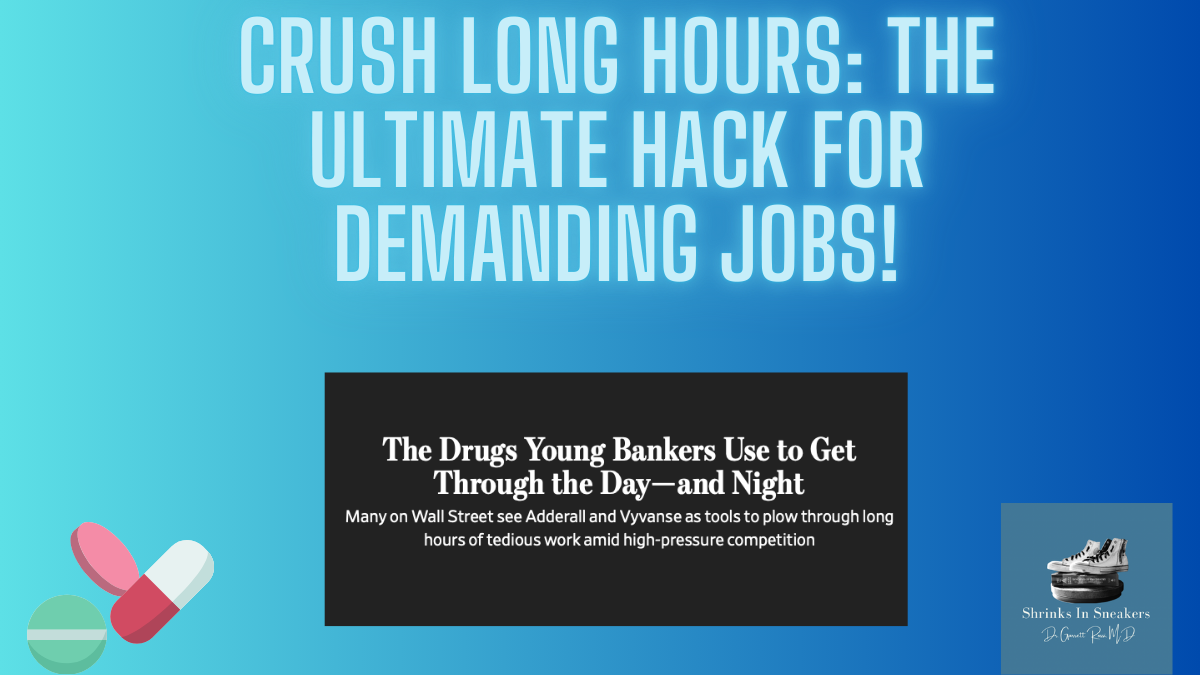
    A recent Wall Street Journal article highlights the growing use of prescription stimulants like Adderall and Vyvanse among young investment bankers, helping them manage the grueling demands of 90-hour workweeks. While the prevalence of substances to enhance performance isn’t new (cocaine was once the drug of choice), it’s become much easier to obtain legal alternatives. A quick five-minute online questionnaire can now yield a prescription, no shady drug dealers required.

    The article centers on a young professional who, despite his own skepticism about having ADHD, found the medication transformative for surviving the intense pace of his job. Predictably, dependency followed.

    This isn’t an isolated issue, nor is it exclusive to investment banking. We’ve seen a marked increase in adult ADHD diagnoses, likely tied to the expansion of telehealth and more relaxed prescribing practices.

    While the article rightly calls for reevaluating workplace expectations and support systems, let’s be honest—this phenomenon isn’t going anywhere soon. The stakes are too high: major profits for companies and career-defining opportunities for individuals.

    We need to acknowledge this for what it really is: the use of performance-enhancing drugs (PEDs) to gain an edge in professional life. In many ways, it’s no different from using steroids in sports. Maybe the real question isn’t how to stop it, but whether we should allow informed adults to use PEDs under careful medical supervision.

    I’ll let you all weigh in on that one.

    Cheers,
    Dr. G

    LInk: https://www.wsj.com/finance/banking/young-banker-finance-adhd-medication-adderall-d578a16f

  • How to Create a Routine for ADHD: A Step-by-Step Guide

    How to Create a Routine for ADHD: A Step-by-Step Guide

    Creating a structured routine is one of the most effective ways to manage ADHD symptoms. The goal is to provide consistency and reduce decision fatigue, which can make daily tasks feel overwhelming.

    Step 1: Assess Your Current Habits

    • Track your time: Spend a few days writing down how you currently spend your time. Identify patterns, distractions, and areas where you struggle with productivity.
    • Note energy levels: Pay attention to when you feel most focused and energetic, as this will help in scheduling demanding tasks during peak times.

    Step 2: Define Your Priorities

    • Identify the most important activities in your day (e.g., work, exercise, family time).
    • Rank these priorities, so you focus on what truly matters and avoid overloading your schedule.

    Step 3: Break Down Your Day

    • Morning Routine: Start the day with consistent habits like making your bed, brushing your teeth, and eating breakfast. Keep it simple to reduce stress.
    • Work/School Blocks: Break tasks into smaller chunks with scheduled breaks. For example, use the Pomodoro Technique (25 minutes of focused work followed by a 5-minute break).
    • Afternoon Wind-Down: Use this time for less mentally taxing tasks like errands or light chores.
    • Evening Routine: Establish a calming routine to prepare for bed, such as reading, meditating, or journaling.

    Step 4: Use Visual Aids and Tools

    • Calendars/Planners: Write down your schedule. Use color-coding for different types of tasks (e.g., green for work, blue for leisure).
    • Digital Apps: Tools like Google Calendar, Todoist, or Notion can send reminders and help you stay organized.
    • Visual Timers: Use timers or clocks to track tasks and breaks visually.

    Step 5: Set Alarms and Reminders

    • Set alarms for key transitions (e.g., starting work, eating lunch, or ending the workday).
    • Use apps like Habitica or Forest to gamify task completion and make sticking to your routine more fun.

    Step 6: Build Flexibility into Your Routine

    ADHD often brings spontaneity or unexpected distractions.

    • Leave buffer time between tasks to account for delays.
    • Prioritize your top 3 tasks each day, so even if you deviate, the essentials get done.

    Step 7: Simplify Transitions

    Transitioning between activities can be challenging with ADHD.

    • Use auditory or visual cues to signal it’s time to switch tasks.
    • Prepare for the next activity in advance (e.g., set out clothes for the gym or prep your workspace for the next day).

    Step 8: Keep Your Environment ADHD-Friendly

    • Declutter regularly to minimize distractions.
    • Use bins, labels, or baskets to keep essentials easily accessible.

    Step 9: Reflect and Adjust

    • At the end of each day or week, review your routine. What worked? What didn’t?
    • Be flexible and tweak your schedule to fit your needs and energy levels.

    Step 10: Start Small and Build Gradually

    • Focus on one or two parts of your routine at first, like improving your morning habits.
    • Celebrate small wins to build confidence and motivation.

    Example Routine:

    Morning:

    • 7:00 AM: Wake up and drink water
    • 7:15 AM: Quick workout or stretching
    • 7:30 AM: Shower and get dressed
    • 7:45 AM: Eat breakfast and review the day

    Work/School Blocks:

    • 9:00 AM – 12:00 PM: Focused work (Pomodoro cycles)
    • 12:00 PM – 1:00 PM: Lunch and light activity
    • 1:00 PM – 4:00 PM: Afternoon tasks (easier or creative work)

    Evening:

    • 6:00 PM: Dinner
    • 7:00 PM: Relaxation (reading, hobbies)
    • 9:00 PM: Prep for tomorrow (pack bag, set clothes out)
    • 10:00 PM: Lights out

  • Improving ADHD Symptoms Without Medication

    Improving ADHD Symptoms Without Medication

    Medication is a cornerstone of ADHD management, but combining it with complementary strategies can significantly enhance focus, organization, and overall functioning. This post offers a high-level overview of these approaches, setting the stage for a series of actionable, in-depth posts later this week.

    1. Establish a Routine

    Creating a structured daily routine provides predictability and reduces distractions. Use planners, calendars, or apps to break your day into manageable chunks with clear priorities.

    2. Practice Mindfulness and Meditation

    Mindfulness can improve attention regulation and emotional control. Apps like Headspace or Calm offer guided practices tailored to ADHD, helping you build focus over time.

    3. Exercise Regularly

    Aerobic exercise boosts dopamine and norepinephrine levels, enhancing focus and motivation. Aim for 30-60 minutes of activity daily, whether it’s running, swimming, or dancing.

    4. Improve Sleep Hygiene

    ADHD often disrupts sleep, which worsens symptoms. Establish a consistent bedtime, avoid screens before bed, and create a calming nighttime routine to promote better rest.

    5. Optimize Nutrition

    Balanced meals with protein, complex carbs, and omega-3 fatty acids can stabilize energy levels and improve concentration. Consider foods like salmon, eggs, nuts, and leafy greens.

    6. Break Tasks into Smaller Steps

    Large tasks can feel overwhelming. Break them down into smaller, manageable steps, and use tools like timers to focus on one step at a time (e.g., the Pomodoro Technique).

    7. Minimize Distractions

    Create an ADHD-friendly environment by limiting noise, clutter, and interruptions. Noise-canceling headphones and tidy workspaces can significantly enhance focus.

    8. Cognitive Behavioral Therapy (CBT)

    CBT can help you develop coping strategies for ADHD-related challenges, such as procrastination, impulsivity, and emotional regulation.

    9. Leverage ADHD-Friendly Technology

    Apps like Todoist, Notion, or Forest can assist with time management, task prioritization, and focus-building. Explore tools that align with your personal workflow.

    10. Foster Strong Social Connections

    Supportive relationships with family, friends, or ADHD communities can provide motivation, accountability, and understanding, reducing feelings of isolation.

    By implementing these strategies, individuals with ADHD can enhance their quality of life, productivity, and emotional well-being. Remember, each person’s ADHD experience is unique, so experiment with different approaches to find what works best for you!

    What has worked for you or someone you know? Share your experiences below!

  • Is ADHD A Real Psychiatric Disorder: This Will Blow Your Mind 

    Is ADHD A Real Psychiatric Disorder: This Will Blow Your Mind 

    Introduction 

    Attention deficit hyperactivity disorder (ADHD) in the adult population is a topic of great debate. There are many psychiatrists who say ADHD symptoms do not suddenly disappear as a person continues into adulthood. On the other hand, there are some psychiatrists who do not think ADHD is a real diagnosis. 

    The term ADHD might be better thought of as attention deficit disorder (ADD). The concept of hyperactivity is more common in the child/adolescent patient population. It’s unclear if the hyperactivity is related to executive dysfunction which is the hallmark of ADHD. It may be that the hyperactivity is within the range of normal (agitation or activation) for a child, or signs of another mood disorder such as mania in bipolar illness (especially true in the adult population as bipolar diagnosis is commonly reserved for adult patients). 

    We can make an argument that placing children in a traditional school setting where they are asked to sit and pay attention to uninteresting material for 7 hours is unnatural and directly against the way humans evolved to function. The human body and mind evolved to move and be active not to sit in classrooms. As a result, agitation, hyperactivity, and acting out can be the result of this unnatural state. 

    The hallmark of ADHD is attentional impairment and executive dysfunction. Hyperactivity is not seen in adult populations with ADD. 

    Attention As a Trait 

    Attention can be thought of in the same manner as blood pressure. There is a mean blood pressure in the population but there will be individuals that fall outside the standard curve. Most people in the population will fall in the middle having a reasonable amount of attention and those with low attention levels do not necessarily have a disease although they may have consequences associated with reduced attentional activity. When someone is overly attentive it can be a symptom of disorders like obsessive compulsive disorder (OCD) or psychosis. Like blood pressure, having readings that are too high or too low can cause problems. It’s normal to have a certain amount of inattention, and we can think of attention as a spectrum with a range of normal levels. 

    What are the Causes of Inattention 

    -It could be a perfectly normal trait, as we explained some people have lower attention spans naturally as a personality trait 

    -Mood disorders like depression and bipolar disorder have in inattention as a possible consequence of the change in mood 

    -Psychotic disorders also have cognitive changes that may cause inattention (internal preoccupation) 

    -Anxiety disorders 

    -Neurocognitive disorders 

    -We should avoid diagnosing ADD in the setting of one of these other conditions. 

    Would you diagnosis ADD during a manic episode?

    Prevalence of ADHD in the U.S. 

    -The prevalence of ADHD in the U.S. ranges from 5.6% to 15.9% and there is great variability depending on the geographic region 

    -For most biological diseases we should see similar prevalence rates across populations and geographic regions. For example, schizophrenia has a prevalence of about 1% worldwide. So why do we see significant differences across the U.S.? 

    -We do not know much about the role socioeconomic factors, diet, exercise, and other social factors play in the development of ADHD. It’s possible that these are significant contributing factors resulting in the symptoms associated with ADHD. 

    Is ADHD a neurodevelopmental issue? 

    -One way of thinking about ADHD is as a neurodevelopmental problem that eventually improves over time. 

    -In children with ADHD they seem to achieve peak cortical thickness later than children without ADHD, this has been confirmed on imaging studies. 

    -The important part is eventually these children catch up with the normal controls. It’s more a delay in brain development and not a permanent state. 

    -The ADHD children are about 2 years behind the normal controls and the area of greatest delay is the prefrontal cortex which is responsible for executive function. 

    How Common is ADHD and Does it Last into Adulthood? 

    Over the past decade ADHD in adult populations has gotten more attention. Some would say the prevalence in adults is 4% to 5% with equal rates being seen in men and women. 

    The national comorbidity survey estimated 46% of children with ADHD have symptoms that persist into adulthood. Many of these individuals had comorbid anxiety disorders and we know anxiety can be a major cause of inattention and executive dysfunction. 

    In other studies, similar findings were reported. What stands out to me in all these studies is the high rates of comorbid mood disorders including depression and bipolar disorder. It’s hard to make a diagnosis of adult ADHD in the presence of other conditions considering the significant overlap of symptoms and cognitive dysfunction associated with mood disorders. 

    It’s possible that mood and anxiety disorder can account for most adult ADHD cases and a variation of a normal trait could explain the rest (individuals with low attention) 

    Looking at medication response doesn’t help us much as amphetamines are helpful in everyone even those who do not have a psychiatric disorder (think college kids taking them for midterms) 

    When you correct for comorbidities in Adult ADHD, only about half of the young adults meeting criteria for ADHD had ADHD only. Estimates from this showed that most children diagnosed with ADHD were no longer meeting criteria in adulthood (83% no longer had symptoms). Many of the newly diagnosed cases of ADHD were in individuals who did not have ADHD as children (87% did not have ADHD as children).  

    This indicates that about 20% of children diagnosed with ADHD will have symptoms persist into adulthood, the other 80% will not 

    In animal models, amphetamines have been shown to have some dangerous effects 

    -Decrease response to reward stimuli 

    -increased anxiety 

    -decreased dopamine activity 

    -decreased long-term survival of neuronal cell in the hippocampus (excitotoxicity) 

    Risk of Substance Use With Stimulant Prescriptions

    Most psychiatrists will tell you the risk of substance use disorder does not increase with stimulant medication treatment; in fact it’s reduced when ADHD is treated. However, a well-designed randomized controlled trial of delinquent behavior and emerging substance use in medication treated children found significantly higher rates of substance use in the stimulant treated individuals. The conclusion by Molina et al. was we need to re-evaluate the risk of substance use disorder as children age when they are prescribed stimulants. Now correlation does not equal causation, but this should give us some pause when blinding stating there is no risk for addiction with stimulant use (this claim is mostly based off observational data and not randomized controlled trial data).