
Tag: borderline personality disorder

  • APA Updates Guidance on Borderline Personality Disorder: What Clinicians Need to Know

    APA Updates Guidance on Borderline Personality Disorder: What Clinicians Need to Know

    Borderline Personality Disorder (BPD) is one of the most misunderstood and challenging conditions in psychiatric practice. It’s a topic I’m particularly passionate about, as patients with BPD are frequently misdiagnosed, and many clinicians hesitate to assign the diagnosis due to stigma or uncertainty. This reluctance often leads to suboptimal care, including the overuse of multiple medication classes without clear benefit. In response to these challenges, the American Psychiatric Association (APA) has recently updated its guidelines on BPD, providing a more comprehensive framework to enhance diagnosis and treatment. This update represents a significant step forward in improving care for a condition that has long been underserved.

    1. Diagnosis and Early Detection

    The updated guidance emphasizes the importance of early identification of BPD symptoms, particularly in adolescence and early adulthood. It encourages clinicians to use structured diagnostic tools alongside clinical interviews to reduce misdiagnosis and stigma.

    2. Therapeutic Approaches

    Evidence-based psychotherapies remain the cornerstone of BPD treatment. Dialectical Behavior Therapy (DBT) continues to hold strong empirical support, but the APA has expanded its recommendations to include:

    • Mentalization-Based Therapy (MBT)
    • Transference-Focused Psychotherapy (TFP)
    • Good Psychiatric Management (GPM)

    The guidance highlights the importance of tailoring therapy to individual patient needs, with a focus on building trust and managing emotional dysregulation.

    3. Medications

    While no medications are FDA-approved specifically for BPD, the APA guidance underscores the role of pharmacotherapy in managing co-occurring conditions such as mood disorders, anxiety, and impulsivity. Clinicians are advised to take a cautious and evidence-based approach to prescribing, avoiding polypharmacy whenever possible.

    4. Stigma Reduction and Patient Advocacy

    The guidance calls for a shift in how clinicians, patients, and society perceive BPD. Educating patients and their families about the condition, normalizing treatment, and advocating for systemic support are crucial components.

    5. Integrative and Community-Based Care

    The APA emphasizes the need for multidisciplinary care teams and integrating care across settings. This includes collaboration with primary care providers, social services, and crisis intervention programs to ensure continuity of care.

    6. Focus on Outcomes and Recovery

    The updated guidance reflects a recovery-oriented approach, focusing on helping patients achieve long-term functional improvement and quality of life. Measuring treatment outcomes and adapting care plans accordingly are encouraged practices.

    Conclusion

    These updates highlight the APA’s commitment to improving outcomes for individuals living with BPD. By promoting evidence-based practices, reducing stigma, and advocating for patient-centered care, clinicians are better equipped to address the challenges associated with this condition.

    What do you think about these changes? How do you see them impacting your practice or care delivery?
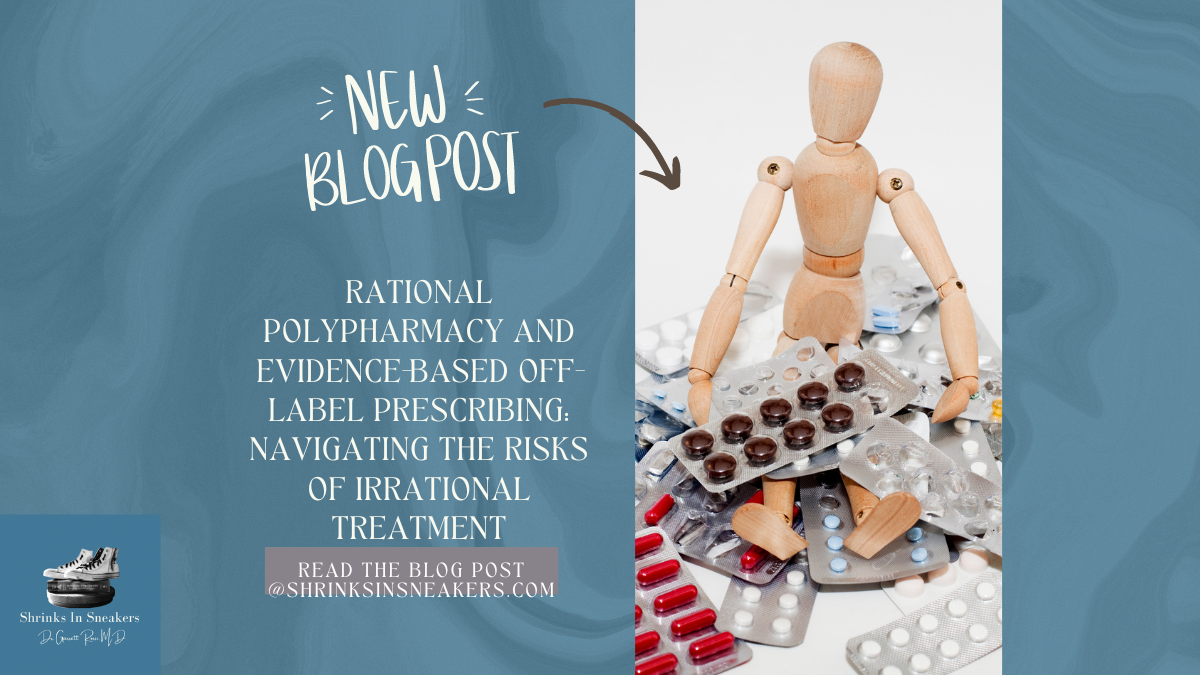

  • Rational Polypharmacy and Evidence-Based Off-Label Prescribing: Navigating the Risks of Irrational Treatment

    Rational Polypharmacy and Evidence-Based Off-Label Prescribing: Navigating the Risks of Irrational Treatment

    Today’s post is more of a clinical reflection. I’ve been sharing a lot about research studies lately, but I want to pause and talk about polypharmacy in psychiatry and off-label prescribing. Have you ever been in a situation where a patient comes in, and as you review their medications, you see they’re taking a benzodiazepine for anxiety, an antidepressant for depression, a dopamine blocker for psychosis, and a mood stabilizer for mood swings? Maybe even a stimulant for ADHD is thrown in the mix. While I say that with some humor, in reality, this is a common scenario. As an educator, it’s crucial to discuss rational polypharmacy and evidence-based off-label prescribing, as well as the dangers of irrational, off-evidence prescribing.

    There are times when using more than one dopamine-blocking medication is necessary in the short term—I’ve done it myself to achieve short-term stabilization—but it would never be my long-term plan. Treatment resistance is another situation where off-label medication, if supported by evidence, could be beneficial. However, if none of these justifications apply and the patient isn’t improving, yet they’re on a potentially risky combination of medications, this is the moment to reconsider the diagnosis. It may sound surprising, but misdiagnosis in psychiatry happens often. If the patient isn’t getting better, it could be because you’re treating the wrong condition.

    It’s also possible that you’re addressing a disorder that isn’t the primary issue. For example, a patient being treated for ADHD may have attention and impulsivity problems, but these could actually stem from an underlying bipolar disorder. Since symptoms in psychiatry frequently overlap across multiple disorders, it’s essential to maintain a diagnostic hierarchy in your mind. Sorting out which disorder should be prioritized can often resolve other symptoms that might be masquerading as a different psychiatric condition.

    So, if treatment isn’t working and the medication list keeps growing, consider that there may have been a mistake in the diagnosis, or that the focus has been on the wrong condition. Often, many symptoms are driven by a more serious underlying disorder, like bipolar disorder.

  • Is Self-Injurious Behavior The Same Everywhere?

    Is Self-Injurious Behavior The Same Everywhere?

    Non-suicidal self-injury (NSSI) is generally believed to be more prevalent among females, but there is limited research exploring the sex and geographic-specific factors influencing its prevalence among adolescents. This meta-analysis, which reviewed 38 studies, found that NSSI is twice as common in female teenagers compared to males in North America, though this pattern is not observed in Asia. This raises an important question: what factors are driving such significant distress in young women? Mood disorders, body image issues, and anxiety are all recognized as contributing factors that increase the likelihood of NSSI. We are lucky to have some treatments that help with NSSI including dialectical behavioral therapy (DBT). If you or someone you know is struggling with NSSI please reach out for help.

    Link to the Article:

    https://jamanetwork.com/journals/jamanetworkopen/fullarticle/2820026

  • Coping Strategies for Dealing with Intense Emotions

    Coping Strategies for Dealing with Intense Emotions

    In the fast-paced world of modern healthcare, it’s not uncommon to encounter individuals who don’t fit neatly into specific psychiatric diagnoses. Recently, I’ve noticed a significant number of patients who, despite not having bipolar disorder or depression, still experience considerable distress. Many of these individuals have endured severe trauma, including sexual abuse, and have a history of self-injurious behavior. I refer to these patients as affectively dysregulated, a term that, while not perfect, attempts to capture their unique experiences.

    Treating these individuals is particularly challenging because their core symptoms and experiences often can’t be effectively managed with pharmaceutical drugs. Instead, they require intense psychotherapy, which is typically difficult to find and expensive. This situation often leaves affectively dysregulated patients with few options, leading them to engage in self-harm and seek admission to inpatient hospitals. Unfortunately, this creates a vicious and dangerous cycle, as inpatient units are usually focused on acute stabilization rather than providing the long-term care these patients need.

    When evaluating these patients, I try to emphasize the limited efficacy of medications in treating affective dysregulation and instead focus on coping strategies, especially during periods of intense distress. Here are some strategies that can be helpful:

    1. Deep Breathing Exercises: Practicing deep, slow breathing can help calm the nervous system and reduce feelings of panic and anxiety.
    2. Grounding Techniques: Grounding involves using the five senses to reconnect with the present moment. This can include focusing on the feeling of your feet on the ground, listening to ambient sounds, or touching a familiar object.
    3. Mindfulness and Meditation: Mindfulness practices encourage staying present and accepting one’s emotions without judgment. Meditation can also help in cultivating a sense of inner peace and stability.
    4. Physical Activity: Engaging in physical exercise, whether it’s a walk, yoga, or a more intense workout, can help release built-up tension and improve mood.
    5. Creative Outlets: Activities like drawing, painting, writing, or playing music can provide an emotional release and a way to express feelings that might be difficult to articulate otherwise.
    6. Social Support: Talking to friends, family, or support groups can provide comfort and perspective. It’s essential to feel understood and not alone in your struggles.
    7. Professional Help: Seeking therapy from a qualified mental health professional can provide structured support and coping mechanisms tailored to individual needs.
    8. Healthy Distractions: Engaging in hobbies or activities that you enjoy can provide a temporary respite from overwhelming emotions.
    9. Self-Compassion: Practicing kindness towards oneself, especially during tough times, can reduce self-criticism and foster a sense of resilience.
    10. Safety Planning: Having a safety plan in place, which includes identifying triggers, safe people to contact, and safe places to go, can be crucial during times of crisis.

    It’s crucial to remember that coping strategies are highly individual, and what works for one person might not work for another. Encouraging patients to explore and find what resonates with them is key. By focusing on these strategies, we can provide affectively dysregulated patients with the tools they need to manage their distress and break the cycle of self-harm and hospital admissions.