Tag: Cobenfy

  • ARISE Study Phase 3 Results: Understanding Xanomeline’s Setback

    ARISE Study Phase 3 Results: Understanding Xanomeline’s Setback

    What Was the ARISE Study?

    The ARISE trial was a Phase 3 clinical study evaluating Cobenfy — a combination of xanomeline (a muscarinic receptor agonist) and trospium chloride (a peripheral anticholinergic) — as an adjunctive treatment for adults with schizophrenia who continued to experience symptoms despite taking an atypical antipsychotic.

    What Is a Primary Endpoint, and Why Does It Matter?

    In clinical trials, the primary endpoint is the most important outcome researchers are trying to affect — it’s how a drug’s success or failure is officially judged.
    In ARISE, the primary endpoint measured the change in symptom severity compared to placebo using a standardized scale for schizophrenia. Meeting this endpoint would have demonstrated clear, statistically significant symptom improvement attributable to Cobenfy.

    The Outcome: No Statistically Significant Benefit

    According to topline results, Cobenfy did not show a statistically significant improvement compared to placebo when added to atypical antipsychotics. This means the observed difference could have been due to chance and did not meet the pre-set threshold for success.

    However, Cobenfy did show a numerical improvement — the group receiving the drug combination performed betterthan placebo in symptom reduction, just not to a statistically convincing degree.

    Could Anticholinergic Effects Be to Blame?

    One possible explanation for this outcome lies in the mechanism of action of both Cobenfy and many commonly used atypical antipsychotics.

    • Xanomeline is designed to activate muscarinic receptors in the brain (specifically M1 and M4), which may help regulate dopamine and reduce psychosis.
    • But many atypical antipsychotics — like olanzapine, clozapine, and quetiapine — also have anticholinergic properties, meaning they block these same receptors.

    This sets up a pharmacological tug-of-war: Cobenfy tries to stimulate muscarinic activity, while the background antipsychotic may be dampening it. This conflict could blunt the therapeutic signal, explaining why the benefit didn’t reach statistical significance.

    What This Means for the Future

    The failure to meet the primary endpoint is a setback, but not the end of the road. The numerical improvements suggest a potential signal, and with refined trial design — perhaps using background medications with lower anticholinergic load — future studies may better reveal Cobenfy’s potential.

    Additionally, this trial underscores the importance of considering mechanism compatibility in combination therapies. It’s not just about adding drugs — it’s about how they interact at the receptor level.

    Conclusion

    While the ARISE study didn’t deliver the result many hoped for, it raised critical questions that will shape future research. A deeper understanding of anticholinergic burden, drug synergy, and precision pharmacology is essential as we continue the search for more effective treatments for schizophrenia.
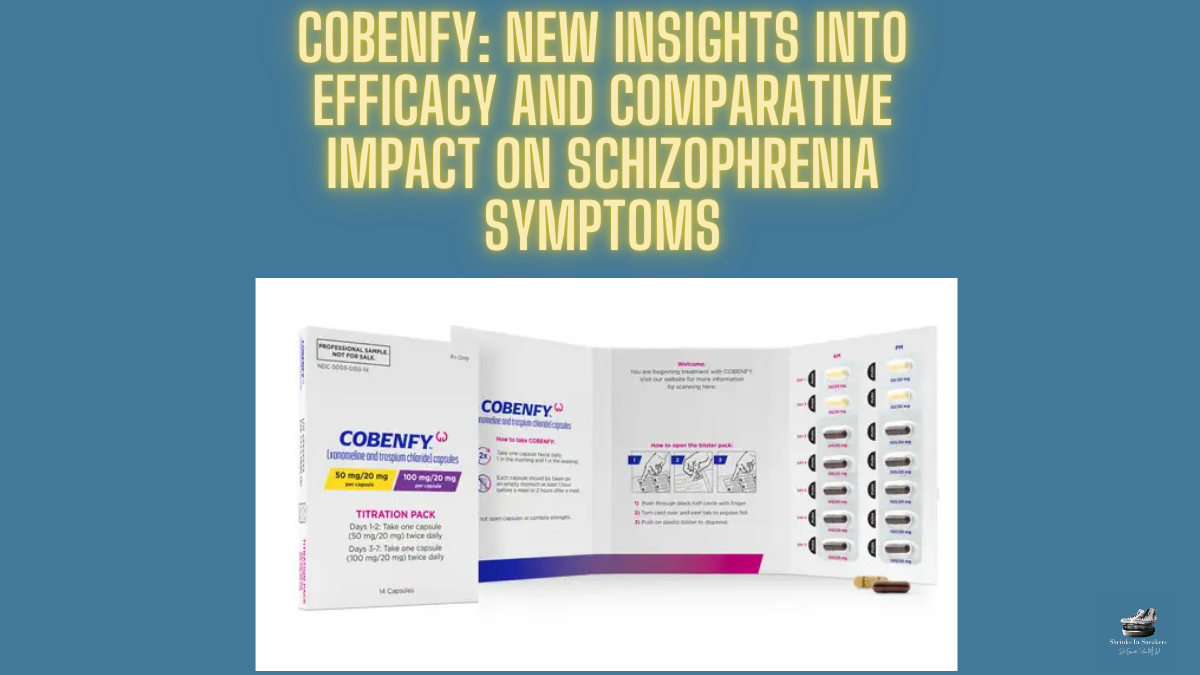
  • Cobenfy: New Insights into Efficacy and Comparative Impact on Schizophrenia Symptoms

    Cobenfy: New Insights into Efficacy and Comparative Impact on Schizophrenia Symptoms

    Overall Efficacy

    • Effect Size: Cobenfy’s overall efficacy on the Positive and Negative Syndrome Scale (PANSS) stands at an effect size of 0.6, which is higher than many established antipsychotics (typically 0.3-0.5). However, clozapine still leads as the gold standard, with effect sizes ranging from 0.76 to 1.0.
    • NNT (Number Needed to Treat): The estimated NNT for Cobenfy is around 4, placing it in the mid-range among antipsychotics, where NNTs often range from 3 to 10.

    Negative Symptom Impact

    • Cobenfy shows a notable efficacy in reducing negative symptoms. It achieves an impressive effect size of 1.18for this symptom domain, which is uncommon among antipsychotics. This improvement in negative symptoms appears to be independent of reductions in positive symptoms, a distinct advantage over traditional agents.
    • The NNT for negative symptoms specifically is around 2, highlighting Cobenfy’s potential as a robust option for patients struggling with these challenging symptoms.

    Onset of Action

    • Rapid Onset: Cobenfy begins to show statistically significant improvements by week 3.
    • Peak Effect: Maximal symptom improvement is typically observed by week 5.

    Conclusion
    Cobenfy offers strong efficacy in schizophrenia, with unique advantages for negative symptoms. While clozapine remains unmatched in treatment-resistant cases, Cobenfy provides a promising option, especially for patients with significant negative symptoms.


  • FDA Greenlights Breakthrough Schizophrenia Medication: Here’s How It Works

    FDA Greenlights Breakthrough Schizophrenia Medication: Here’s How It Works

    The FDA approved Cobenfy

    Schizophrenia is a complex and debilitating mental disorder characterized by a range of symptoms, including hallucinations, delusions, cognitive deficits, and emotional dysregulation. Despite advancements in antipsychotic medications, many patients experience incomplete symptom relief and significant side effects. As a result, there is a growing interest in alternative therapeutic targets, including the muscarinic acetylcholine receptors (mAChRs).

    Muscarinic Acetylcholine Receptors (mAChRs)

    The mAChRs are G protein-coupled receptors involved in various central nervous system functions, including cognition, learning, memory, and mood regulation. There are five subtypes of mAChRs (M1-M5), with the M1, M2, M3, and M4 subtypes playing significant roles in modulating neural activity related to schizophrenia.

    M1 Muscarinic Agonists

    The M1 receptor is primarily expressed in the cortex and hippocampus, regions crucial for cognitive processing. M1 agonists have shown promise in improving cognitive deficits and reducing psychotic symptoms in schizophrenia. Research indicates that M1 activation can enhance cholinergic neurotransmission and modulate glutamate and dopamine systems, potentially alleviating both positive and negative symptoms.

    M2 Muscarinic Agonists

    M2 receptors are predominantly found in the basal forebrain and play a role in modulating acetylcholine release. Although less studied than M1, M2 agonists may help balance neurotransmitter release, contributing to improved cognitive function and reduced psychotic symptoms.

    M3 Muscarinic Agonists

    The role of M3 receptors in schizophrenia is not as well understood as M1 and M4 receptors. However, M3 receptors are involved in various physiological processes, including insulin secretion and smooth muscle contraction. Research is ongoing to determine their potential therapeutic benefits in schizophrenia.

    M4 Muscarinic Agonists

    M4 receptors are highly expressed in the striatum, a brain region implicated in the regulation of motor control and reward processing. M4 agonists have shown potential in reducing dopaminergic hyperactivity, which is associated with positive symptoms of schizophrenia, such as hallucinations and delusions. Additionally, M4 activation may help mitigate side effects associated with conventional antipsychotics, such as extrapyramidal symptoms.

    Clinical Implications and Future Directions

    The therapeutic potential of M1-M4 muscarinic agonists in schizophrenia is an exciting area of research. Targeting these receptors may offer a novel approach to address the cognitive and negative symptoms of schizophrenia, which are often resistant to current treatments. Ongoing clinical trials and preclinical studies are crucial to understanding the efficacy, safety, and mechanisms of action of these compounds.

    Conclusion The exploration of M1-M4 muscarinic agonists represents a promising frontier in the treatment of schizophrenia. By modulating cholinergic, glutamatergic, and dopaminergic systems, these agents have the potential to provide more comprehensive symptom relief with fewer side effects compared to traditional antipsychotics. Continued research and development are essential to bring these innovative treatments to clinical practice, offering hope for improved outcomes for individuals with schizophrenia.