Tag: depression detection

  • 🧠 Blog Post: The Dark Mirror—How Screen Time Drains Our Mental Health

    🧠 Blog Post: The Dark Mirror—How Screen Time Drains Our Mental Health

    It’s no secret that screen time affects our mental health—but we still underestimate just how deeply it cuts.

    As a psychiatrist, I find myself glued to my phone far more than I’d like. I’m not scrolling TikTok—I’m answering emails, responding to messages, and compulsively checking patient updates. Yet, even in this “productive” digital use, I feel drained. The compulsion to keep checking leaves me feeling hollow and anxious.

    Now imagine that same digital pull in the hands of a developing mind.

    A recent study in JAMA examined over 4285 adolescents and found a clear link: teens with high levels of addictive digital media use were significantly more likely to report depression, anxiety, and suicidal thoughts.

    The connection isn’t surprising. Much of what’s consumed online isn’t educational or uplifting—it’s filtered perfection, highlight reels, and influencer fantasy. The more time spent scrolling, the easier it is to feel like you’re falling behind in life, socially or emotionally.

    It’s telling that Steve Jobs famously limited his own children’s access to screens, despite pioneering the very technology we now feel chained to.

    This isn’t about demonizing devices—it’s about reclaiming our attention and protecting mental space, especially for young people.

    We need digital hygiene just like we need physical hygiene. That means:

    • Setting screen-time boundaries
    • Promoting offline connection
    • Reframing how we compare ourselves to curated content

    Mental health isn’t just shaped in the therapy room—it’s shaped by the world we scroll through every day.

  • Mirtazapine: A unique tool in the antidepressant toolbox

    Mirtazapine isn’t your typical SSRI—and that’s exactly why it can be useful in the right context.

    ✅ When to consider mirtazapine:

    • Depression with insomnia
    • Poor appetite or weight loss
    • Concern about sexual side effects
    • Patients struggling with GI intolerance to SSRIs

    ⚠️ When to avoid it:

    • Obesity or metabolic syndrome
    • Risk of daytime sedation
    • Orthostatic hypotension history

    Mechanistically, it’s a noradrenergic and specific serotonergic antidepressant (NaSSA). It works via alpha-2 autoreceptor blockade, enhancing 5-HT1A transmission while avoiding 5-HT2/3 activity—translating to fewer GI and sexual side effects.

    💡 Pro tip:
    Sedation is dose-dependent and paradoxical:
    Lower doses (7.5–15 mg) = more sedation
    Higher doses (30–45 mg) = less sedation

    In short, mirtazapine shines in cases where sleep, appetite, or tolerability limit other antidepressants—but use it strategically.

  • EMA Warns of Suicidal Ideation from Finasteride

    EMA Warns of Suicidal Ideation from Finasteride

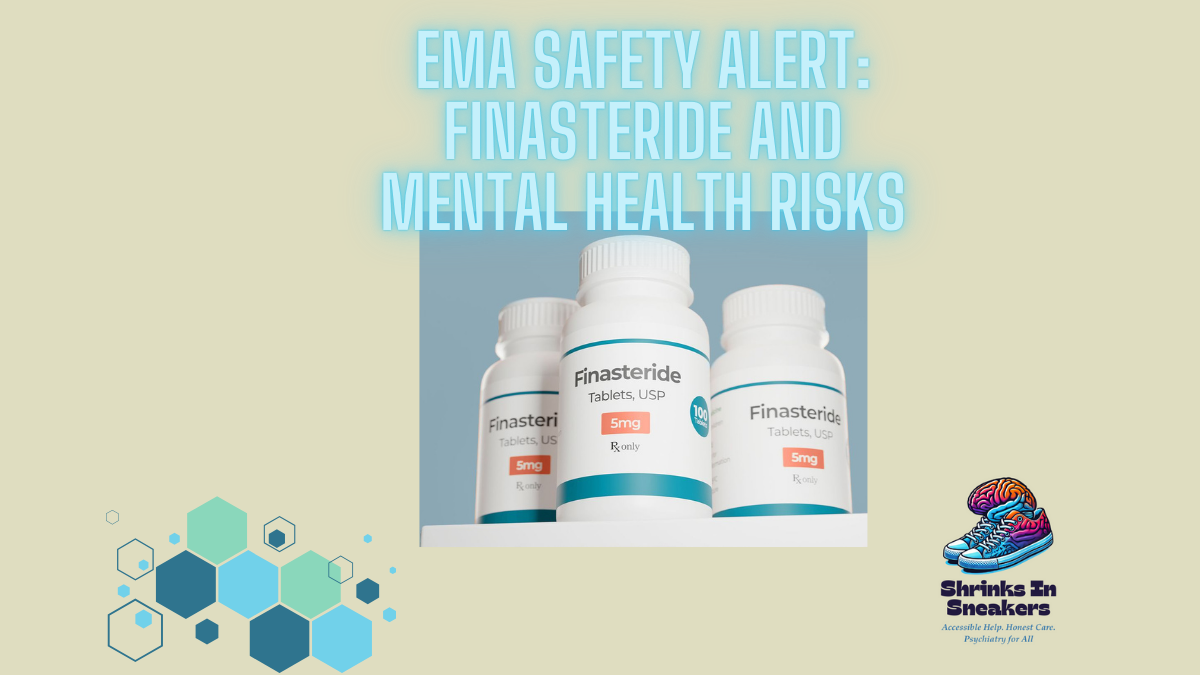
    In a significant update to its safety guidance, the European Medicines Agency (EMA) has officially recognized suicidal ideation as a potential side effect of finasteride. The EMA is urging healthcare professionals to advise patients to stop treatment and seek medical help if they experience depressed mood, depression, or suicidal thoughts while taking the drug.

    This decision follows a growing number of reports linking finasteride, particularly in younger men using it for androgenic alopecia (male pattern baldness), to neuropsychiatric side effects. While previous warnings have addressed sexual dysfunction, this marks a critical shift in regulatory focus to mental health.

    💊 What Is Finasteride?

    Finasteride is a 5α-reductase inhibitor used to treat:

    • Benign prostatic hyperplasia (BPH) in a 5 mg daily dose (Proscar)
    • Male pattern baldness (androgenic alopecia) in a 1 mg daily dose (Propecia)

    It works by inhibiting the conversion of testosterone to dihydrotestosterone (DHT)—a potent androgen implicated in hair loss and prostate growth.

    ⚠️ The EMA’s Updated Warning

    The EMA’s Pharmacovigilance Risk Assessment Committee (PRAC) reviewed post-marketing surveillance data and published literature and concluded that:

    “There is sufficient evidence to support a causal relationship between finasteride and the risk of suicidal ideation.”

    Key recommendations:

    • Suicidal ideation will be added to the drug’s product information as a potential adverse effect.
    • Healthcare professionals should proactively inform patients about this risk.
    • Patients should be advised to discontinue treatment immediately and seek medical advice if they experience changes in mood or mental health.

    🧠 Possible Mechanisms Behind Finasteride’s Psychiatric Effects

    The exact mechanisms linking finasteride to depression and suicidality remain unclear, but several biological hypotheseshave been proposed:

    1. Neurosteroid Depletion

    Finasteride inhibits 5α-reductase, which not only converts testosterone to DHT but also helps produce neurosteroids like allopregnanolone and tetrahydrodeoxycorticosterone (THDOC).

    • These neurosteroids have potent GABAergic activity, contributing to anxiolytic and antidepressant effects.
    • Inhibition leads to decreased GABA-A receptor modulation, potentially increasing anxiety, depression, and suicidal thoughts.

    2. Hypothalamic-Pituitary-Adrenal (HPA) Axis Dysregulation

    Altered steroid metabolism may dysregulate the HPA axis, increasing cortisol levels, a well-known biomarker of depression and suicidal behavior.

    3. Persistent Epigenetic Changes

    Some animal and human data suggest that finasteride may induce long-lasting changes in gene expression related to stress response and mood regulation, even after discontinuation—supporting the idea of post-finasteride syndrome (PFS).

    4. Neuroinflammation

    Reduced neurosteroids may increase neuroinflammatory signaling, a growing area of interest in the neurobiology of depression and suicidality.

    🧾 Final Thoughts

    The EMA’s announcement is a sobering reminder that drugs affecting hormonal pathways can have wide-reaching systemic effects, including on the brain. With better awareness, screening, and patient education, we can minimize harm and support individuals who may be at risk.
  • 🧠 Esketamine + Antidepressants in TRD: Does the Combo Matter?

    🧠 Esketamine + Antidepressants in TRD: Does the Combo Matter?

    📢 New data from a real-world study of 50,000+ patients with treatment-resistant depression (TRD) published in JAMA Psychiatry:

    📌 Study Question:
    Does combining esketamine with an SSRI or SNRI affect long-term outcomes in TRD?

    📊 Key Findings (5-Year Follow-Up):

    • ✅ Esketamine + SNRI:
       ↘️ Lower all-cause mortality
       ↘️ Fewer hospitalizations
       ↘️ Reduced depressive relapse
    • ✅ Esketamine + SSRI:
       ↘️ Lower incidence of suicide attempts
    • 🔒 Overall: Low rates of adverse outcomes in all groups

    💡 Clinical Implications:

    • Not all combinations are equal—pairing matters.
    • Esketamine + SNRI may be preferred for reducing relapse/mortality
    • Esketamine + SSRI may be considered in patients at risk for suicide
    • Personalized treatment decisions can enhance outcomes in TRD

    🔍 More than symptom relief—it’s about survival, stability, and safety.

  • 🧠 New Research Alert! 🧠

    🧠 New Research Alert! 🧠

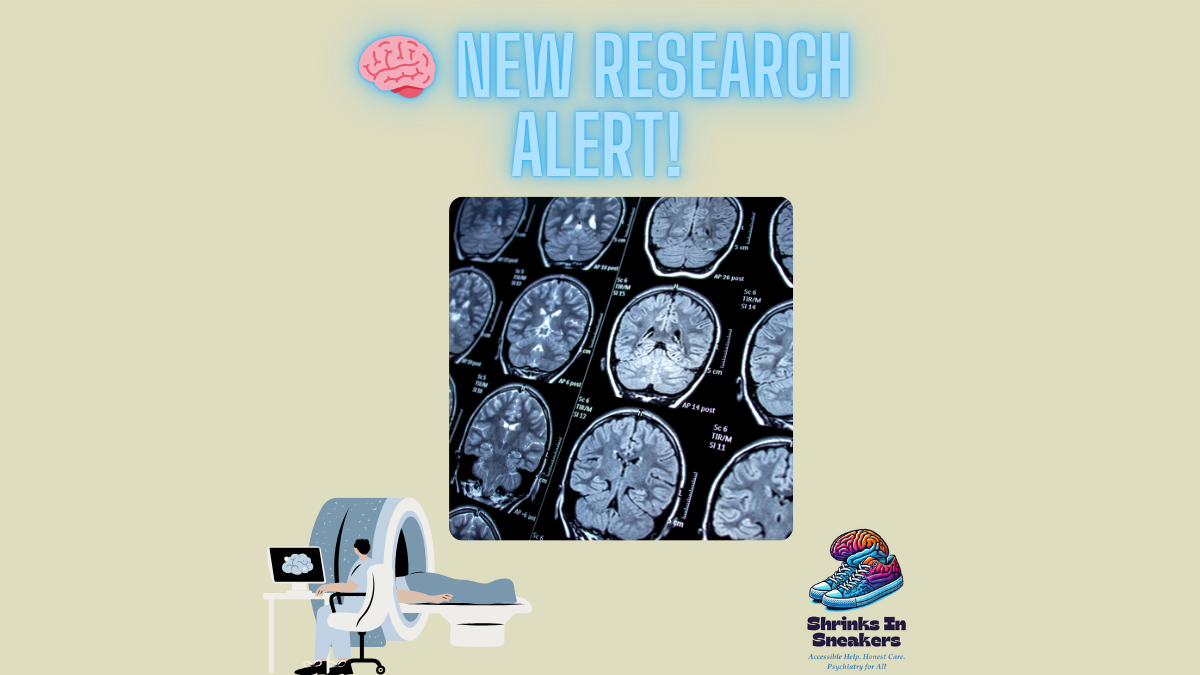
    A study in JAMA Psychiatry explores how functional MRI (fMRI) biomarkers can help distinguish major depressive disorder (MDD) 😔 from healthy individuals. Researchers found that regional homogeneity (ReHo) patterns in the brain are a more reliable marker for MDD than traditional structural MRI 🏗️.

    🔬 Why does this matter?
    👉 Better Diagnostics: fMRI could lead to more objective ways to diagnose depression, reducing reliance on self-reporting.
    👉 Early Detection: One day, brain scans 🏥 might help identify people at risk before symptoms fully develop.
    👉 Personalized Treatment: Understanding individual brain patterns could help guide targeted interventions like therapy or medication.

    Could brain scans be the future of depression diagnosis? 🤔 Drop your thoughts below! ⬇️

    📖 Read more: jamanetwork.com