Tag: DSM-5

  • Psych Meds Are Not the Enemy. Bad Medicine Is

    Psych Meds Are Not the Enemy. Bad Medicine Is

    There is a dangerous difference between criticizing bad psychiatric practice and stigmatizing psychiatric illness.

    I have criticized aspects of psychiatry many times. I believe our field should be open to critique. We should question our prescribing habits. We should challenge lazy diagnosis. We should acknowledge when medications are used too quickly, continued too long, or substituted for the deeper work of psychotherapy, lifestyle change, social support, and careful clinical formulation.

    Psychiatry should never be above criticism.

    But criticism of psychiatric practice is not the same thing as denying the legitimacy of psychiatric illness.

    And right now, that line is being blurred.

    Serious Mental Illness Is Real

    One thing you will never hear me say is that psychiatric disease is not real.

    Schizophrenia is real.
    Bipolar disorder is real.
    Severe major depression is real.
    Catatonia is real.
    Psychotic depression is real.
    Obsessive-compulsive disorder can be profoundly disabling.
    Posttraumatic stress disorder can devastate a person’s life.

    These are not character flaws. They are not weakness. They are not simply failures of lifestyle, discipline, resilience, spirituality, or mindset.

    They are legitimate medical illnesses.

    That does not mean every painful experience is a disease. It does not mean every person who is grieving, anxious, overwhelmed, lonely, or struggling needs a diagnosis or a medication. In fact, one of the most important tasks in psychiatry is knowing the difference.

    Some people need medication.

    Some people need psychotherapy.

    Some people need sleep, exercise, nutrition, structure, social connection, housing, safety, meaning, accountability, or community.

    Many people need several of these at the same time.

    The goal is not to medicalize all suffering. The goal is to recognize real illness when it is present and treat it with the seriousness it deserves.

    The Problem Is Not “Medication”

    Psychiatric medications are often discussed as if they are inherently suspicious.

    But medication is not the enemy.

    Bad medicine is.

    A medication can be life-changing when used for the right condition, in the right person, at the right time, for the right reason.

    The same medication can be harmful when used carelessly, without a clear diagnosis, without follow-up, without discussion of risks and benefits, or without a plan for reassessment.

    That is not unique to psychiatry.

    Antibiotics can be lifesaving, but inappropriate antibiotic use causes harm. Opioids can be appropriate in some clinical contexts, but reckless prescribing devastated communities. Steroids can be powerful tools, but long-term unnecessary use can create major problems.

    The issue is not whether medications are “good” or “bad.”

    The issue is whether we are practicing medicine well.

    Deprescribing Matters, But It Is Not a Mental Health Policy

    Deprescribing is important.

    Every psychiatrist I know has experience reducing, simplifying, or stopping medications when the risks outweigh the benefits or when the original indication no longer makes sense.

    This is not a fringe idea. It is part of daily psychiatric practice.

    We stop medications that are not helping.
    We reduce unnecessary polypharmacy.
    We simplify regimens when possible.
    We monitor side effects.
    We reassess diagnoses.
    We talk with patients about what still makes sense.

    Good psychiatry includes deprescribing.

    But deprescribing alone will not solve the mental health crisis.

    People cannot deprescribe their way out of a lack of psychiatric beds. They cannot deprescribe their way out of months-long waitlists. They cannot deprescribe their way out of poverty, homelessness, trauma, addiction, loneliness, or a collapsing continuum of care.

    And they cannot deprescribe their way out of schizophrenia, mania, catatonia, psychotic depression, or severe melancholic depression.

    When we frame the mental health crisis primarily as a problem of overprescribing, we oversimplify a system failure.

    We ignore the shortage of psychiatrists. We ignore the lack of access to psychotherapy. We ignore inadequate visit times, fragmented care, insurance barriers, emergency departments boarding psychiatric patients for days, and the near disappearance of a true continuum of care.

    Those are not solved by telling people to take fewer medications.

    The Risk of Stigma Dressed Up as Reform

    My concern is not that we are talking about prescribing quality. We should be talking about that.

    My concern is that the rhetoric around psychiatric medications often sends a dangerous message to people who already feel ashamed.

    Many patients with serious mental illness already struggle with the idea of needing medication.

    They worry it means they are weak.
    They worry it means they are broken.
    They worry it means they are dependent.
    They worry it means they are not trying hard enough.
    They worry others will see them differently.

    When public conversations frame psychiatric medications as the central villain, those patients hear something very different from “we need better prescribing.”

    They hear:

    You are dependent.
    You are addicted.
    You are taking the easy way out.
    You should be able to fix this naturally.
    You are the problem.

    That is not empowerment.

    That is stigma.

    And for some patients, that stigma can be dangerous. It can lead people to stop medications abruptly, avoid treatment, disengage from care, relapse, or delay help until a crisis occurs.

    Of course patients should be informed. Of course they should understand risks and benefits. Of course they should have a voice in treatment decisions.

    But informed consent should not become fear-based messaging. And reform should not become another way of shaming people with serious psychiatric illness.

    Better Medicine Means Holding Two Truths

    The future of psychiatry depends on our ability to hold two truths at the same time.

    First, psychiatric illness is real and can be devastating.

    Second, psychiatry must be careful not to overdiagnose, overprescribe, or turn normal human suffering into lifelong pathology.

    Both truths matter.

    If we only emphasize the first, we risk medicalizing everything.

    If we only emphasize the second, we risk abandoning people with serious illness.

    Real psychiatric care lives in the tension between those truths.

    It requires humility. It requires careful diagnosis. It requires honest conversations about uncertainty. It requires medication when appropriate, psychotherapy when appropriate, lifestyle intervention when appropriate, social support when appropriate, neuromodulation when appropriate, and deprescribing when appropriate.

    It also requires us to say clearly that some people need medication, and that needing medication is not a moral failure.

    The Goal Is Better Medicine

    The goal is not to prescribe more.

    The goal is not to prescribe less.

    The goal is to prescribe better.

    Better diagnosis.
    Better informed consent.
    Better follow-up.
    Better access to psychotherapy.
    Better use of lifestyle interventions.
    Better systems of care.
    Better deprescribing when medications are no longer needed.
    Better protection for people whose medications are the reason they are alive, stable, working, parenting, studying, and functioning.

    We do not fix psychiatry by pretending psychiatric medications are always the answer.

    But we also do not fix psychiatry by pretending they are the enemy.

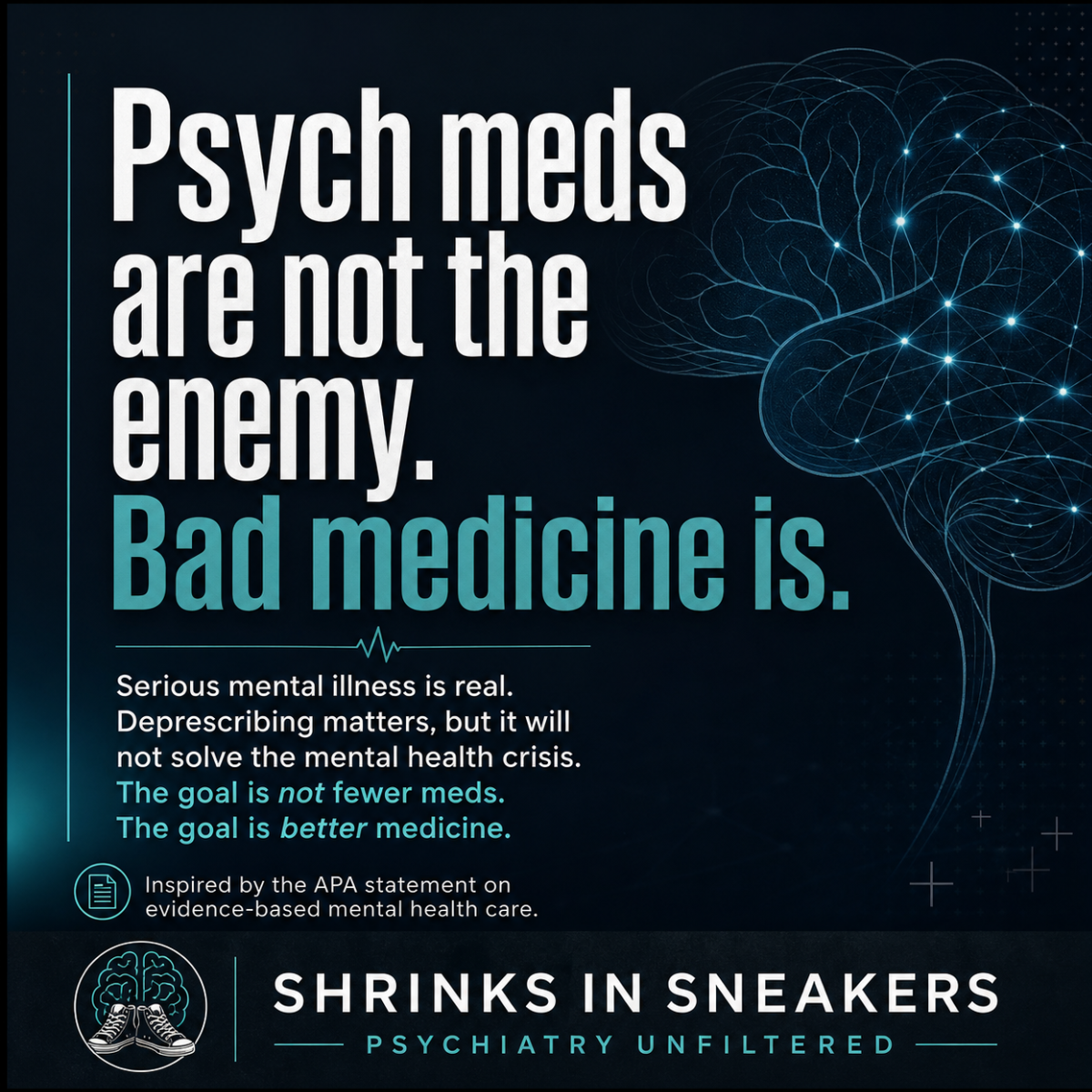
    Psych meds are not the enemy.

    Bad medicine is.

  • Mental Illness Is Real. Not Everything Painful Is

    Mental Illness Is Real. Not Everything Painful Is

    On the two opposite ways psychiatry harms patients, and the discipline to know the difference.

    There are two dangerous ways to talk about mental illness, and most public conversation manages to do both at once.

    The first is to deny that it exists.

    The second is to see it everywhere.

    Both are wrong. Both are harmful. Both leave patients worse off.

    On one side are the people who claim psychiatric disease isn’t real, that we’re medicating normal emotion, that diagnosis is social construction, that psychiatry exists to enrich pharmaceutical companies and serve as gatekeepers for a coercive system.

    This is the most extreme antipsychiatry position. And anyone who has actually worked with the seriously mentally ill knows how detached from reality it is.

    Anyone who has sat with a patient in the middle of a manic episode, watched schizophrenia consume a young person’s future, or cared for a loved one whose personality and functioning were permanently altered by illness knows that serious mental illness is not a metaphor. It is not a branding problem. It is not a failure of social acceptance.

    It is real.

    It destroys lives.

    It fractures families.

    It changes the trajectory of everyone around it.

    To deny that is not compassionate. It is cruel.

    But there is a subtler version of denial, one that doesn’t reject psychiatric illness outright, but explains nearly everything through the lens of trauma.

    I don’t mean trauma in the strict PTSD sense. Not the defined clinical syndrome with intrusive memories, avoidance, negative alterations in mood and cognition, and hyperarousal. I mean the broader cultural reflex to frame almost every form of suffering, dysregulation, or dysfunction as “trauma.”

    Trauma matters. Adverse experiences shape brain development, attachment, emotional regulation, interpersonal functioning, substance use, and psychiatric vulnerability. Trauma-informed care has improved medicine, especially by reminding clinicians not to mistake survival strategies for character flaws.

    But trauma does not explain everything.

    It does not explain every case of bipolar disorder. It does not explain every case of schizophrenia. It does not explain every recurrent psychotic episode, every manic state, every severe melancholic depression, or every disabling case of OCD.

    Sometimes the illness is the illness.

    Sometimes the problem is not that society failed to understand a person’s pain. Sometimes the problem is that a devastating psychiatric disease has emerged, and without treatment, it will keep dismantling that person’s life.

    But the opposite error is just as common, and at least as harmful.

    Some clinicians see mental illness in everything.

    They accept every DSM category as if it were a blood test result. They are not critical enough of psychiatry’s limitations. They recognize suffering, and because they want to help, they reach for diagnosis. They reach for medication. They reach for neuromodulation. They reach for a treatment plan that looks medical, billable, and actionable.

    But not every form of suffering is a psychiatric disease.

    Some suffering is grief.

    Some suffering is loneliness.

    Some suffering is moral injury.

    Some suffering is poverty.

    Some suffering is addiction, family chaos, social collapse, lack of purpose, bad relationships, unemployment, burnout, or the consequences of repeated poor decisions.

    Some suffering is just the pain of being human in a world that doesn’t give people much room to fall apart.

    That doesn’t make it fake. It doesn’t mean the person doesn’t deserve help.

    It means the help they need may not live inside a pill bottle.

    This is one of the hardest conversations in psychiatry.

    A patient is suffering. Their family is desperate. Everyone wants the problem named. Everyone wants the plan, the timeline, the medication, the diagnosis, the insurance code, the discharge plan, the promise that things will get better quickly.

    But sometimes the honest answer is:

    “I believe you are suffering. I believe you need help. But I am not convinced that what you have is best understood as a medication-responsive psychiatric disease.”

    That is not abandonment. That is clinical honesty.

    And it is much harder than simply prescribing something.

    The pressure to diagnose is everywhere.

    Families want answers. Hospitals need billable codes. Insurance companies require DSM or ICD diagnoses. Patients often arrive already convinced that if their suffering is severe enough, it must be a disorder. Clinicians are trained inside systems where diagnosis drives reimbursement, treatment authorization, length of stay, documentation, and discharge planning.

    The incentives quietly push us toward overdiagnosis.

    Not always because clinicians are careless. Often because that is simply how the system works.

    A person presents in crisis. They are admitted to an inpatient psychiatric unit. The system expects a psychiatric diagnosis. But not everything that gets someone admitted to inpatient psychiatry is caused by a primary psychiatric disease.

    Sometimes it is. Absolutely. Sometimes it is mania, psychosis, melancholic depression, catatonia, severe OCD, or a lethal depressive episode.

    Those cases need aggressive, evidence-based psychiatric treatment. Medication can be lifesaving. ECT can be lifesaving. Lithium, clozapine, antipsychotics, long-acting injectables, lifesaving. We should never minimize that. Untreated serious mental illness can destroy the patient’s life and the family’s along with it.

    But other times the picture is far more complicated. There may be interpersonal chaos, substance use, housing instability, personality structure, trauma history, family conflict, legal problems, financial collapse, social isolation, or a profound absence of coping skills. The person is suffering, but the suffering does not map cleanly onto a discrete psychiatric disease.

    These patients often respond poorly to medication, because medication was never the main answer.

    Then, when the medication doesn’t work, everyone assumes the psychiatrist chose the wrong one.

    Try another SSRI. Add an antipsychotic. Add a mood stabilizer. Try ketamine. Try TMS. Try something stronger.

    But sometimes the problem isn’t treatment resistance.

    Sometimes the problem is diagnostic overreach.

    This is where psychiatry must be honest with itself.

    We can harm people in two opposite directions.

    We can harm them by failing to diagnose and treat real mental illness.

    We can harm them by diagnosing and treating something as mental illness when it isn’t.

    The first error leaves people untreated and at the mercy of their disease.

    The second exposes people to unnecessary treatment, side effects, identity shifts, stigma, financial cost, and the disappointment that follows when a promised medical solution fails to deliver.

    And when people are harmed by treatments they didn’t need, they often become psychiatry’s loudest critics.

    Not because they were always antipsychiatry.

    Because psychiatry overpromised. Because someone gave them a diagnosis that didn’t fit. Because someone medicalized their suffering without understanding their life.

    Psychiatry does not need to choose between naïve biological reductionism and total diagnostic nihilism. We need a more disciplined middle.

    When there is a clear psychiatric illness, recognizable course, symptom pattern, family history, severity, treatment-responsive biology, we should treat it seriously and decisively. No apologies. No hesitation. No pretending that schizophrenia is just “difference,” or mania is “spiritual awakening,” or severe depression is “sadness,” or OCD is “perfectionism.”

    But when the presentation is questionable, when the course doesn’t fit, when the diagnosis is being stretched to justify intervention, when the suffering is real but not clearly disease-based, we should slow down.

    We should listen longer. Widen the frame. Ask whether medication is likely to help. Consider psychotherapy, structure, sleep, substance use treatment, social repair, family boundaries, vocational support, lifestyle change, and time.

    We should be willing to say:

    “This is real suffering. But I am not going to pretend that a psychiatric label explains all of it.”

    That isn’t minimizing. That’s precision.

    The future of psychiatry depends on our ability to hold both truths at the same time.

    Mental illness is real.

    And not everything painful is mental illness.

    Some people desperately need psychiatric treatment and will be devastated without it. Others need compassion, structure, therapy, accountability, community, and support, but not a diagnosis that follows them for life, or medications that may do more harm than good.

    The goal is not to diagnose less. The goal is to diagnose better.

    The goal is not to medicate everyone. The goal is to treat the right condition, in the right person, at the right time, for the right reason.

    That is the psychiatry I believe in.

    Not psychiatry as social control.

    Not psychiatry as a pill for every problem.

    Psychiatry as a serious medical discipline, one that recognizes disease reality, respects human suffering, and has the humility to know the difference.

  • The Dangers of Overpathologizing Behavioral Issues

    The Dangers of Overpathologizing Behavioral Issues

    Psychiatrists could do the profession—and their patients—a great service by resisting the urge to medicalize every behavioral problem, impulsive act, or mood fluctuation as a direct manifestation of psychiatric illness. While genuine psychiatric disorders exist and require careful diagnosis and treatment, many of the struggles patients face are deeply rooted in the complexities of life itself—financial stress, relationship conflicts, loss, trauma, and systemic issues that no DSM diagnosis can fully capture.

    When Life Struggles Are Mistaken for Mental Illness

    Certain behaviors and emotional responses are frequently overpathologized. For example:

    • A teenager acting out in school following their parents’ divorce may be labeled with oppositional defiant disorder, when their reaction is a predictable response to emotional distress.
    • A grieving spouse who experiences sadness, tearfulness, and withdrawal beyond a few weeks might be diagnosed with major depressive disorder, despite bereavement being a normal and deeply personal process.
    • A person engaging in impulsive spending or risky behaviors after a significant life change might be quickly categorized as having bipolar disorder, when in reality, they are struggling to cope with a sudden transition.

    While these behaviors may be distressing, they do not always indicate the presence of a psychiatric disease requiring medication. Instead, they may reflect normal reactions to adversity that should be addressed through support, coping strategies, and time.

    The Risks of Overpathologizing Human Experience

    The trend of pathologizing problems of living carries significant consequences. Studies have shown that psychiatric overdiagnosis leads to unnecessary medication use, stigma, and a shift in focus away from addressing social determinants of health. For instance, research suggests that antidepressants are prescribed to 1 in 4 U.S. adults, often for mild or situational distress rather than true clinical depression. Moreover, children—particularly boys—are diagnosed with ADHD at disproportionately high rates, sometimes as a response to difficulties in structured classroom settings rather than a true neurodevelopmental disorder.

    Overpathologizing also impacts the credibility of psychiatry. If every struggle is framed as a disorder, the public may begin to view psychiatric diagnoses with skepticism, undermining trust in the profession and the legitimacy of serious mental illnesses.

    A Case That Stuck With Me

    I once treated a young man who had been brought to the hospital by his family after he quit his job, broke up with his girlfriend, and started making impulsive purchases. His parents were convinced he had bipolar disorder, having read online that sudden life changes and spending sprees were signs of mania. However, after spending time with him, it became clear that his actions were rooted in profound dissatisfaction with his life, not a mood disorder. He was struggling with feelings of stagnation, a lack of purpose, and a desire to redefine himself—not symptoms of an illness, but a human experience.

    Despite my clinical assessment, his family was frustrated. They wanted a diagnosis, a label, a treatment plan—something concrete. It was difficult for them to accept that not every distressing experience fits neatly into a medical framework.

    How Can Psychiatry Do Better?

    Psychiatrists and mental health professionals must be intentional in distinguishing true mental illness from the expected emotional and behavioral responses to life’s challenges. Some ways to do this include:

    • A thorough biopsychosocial assessment that considers the role of environmental, cultural, and situational factors in a patient’s presentation.
    • The judicious use of psychiatric diagnoses, ensuring that labels are assigned only when they accurately reflect a disorder rather than a reaction to stress.
    • Education for patients and families about the natural spectrum of human emotions, helping them understand that distress does not always equate to disease.
    • Advocating for systemic solutions, such as better social support networks, financial resources, and access to therapy, so that emotional struggles are not automatically funneled into the medical system.

    Addressing the Counterarguments

    Some might argue that withholding a diagnosis could prevent patients from accessing the care they need. While it’s true that a psychiatric label can sometimes be a gateway to services and support, misdiagnosis can be just as harmful. Providing the wrong diagnosis can lead to unnecessary medication, reinforce a sense of pathology where none exists, and obscure the real sources of distress. The challenge for psychiatrists is to walk this fine line carefully—validating suffering without automatically medicalizing it.

    Conclusion: A Call for Thoughtful Psychiatry

    As psychiatrists, our role is not simply to diagnose and medicate, but to thoughtfully assess and guide. True psychiatric illness must be identified and treated appropriately, but we must also be cautious not to medicalize the normal, albeit painful, struggles of life. The goal should always be to help patients find real, meaningful solutions—whether that means therapy, life changes, or, in some cases, just the reassurance that what they are feeling is part of the human experience.

  • Does Everyone Have Autism or Is It Just Me? 

    Does Everyone Have Autism or Is It Just Me? 

    There is an ongoing fascination in the world of social media with regards to certain psychiatric diagnoses. It begins with the rise of self-diagnosing, which is rampant on social media these days and ends with a lot of individuals believing they have autism, tic disorder, or dissociative identity disorder (multiple personalities). I’ve also seen a rise in my patients suggesting they have autism as an explanation for symptoms clearly caused by other disorders. 

    I can think of one specific example where an individual was convinced, they had autism. Later that day I observed the individual socializing with peers and staff making excellent eye contact, and all those symptoms they described in the diagnostic interview seemingly went away completely. It was clear at that point that autism was not the cause of this individual’s distress.

    I feel like there is no better time to discuss autism spectrum disorders because we have a lot to clear up. 

    Introduction

    Autism spectrum disorder (ASD) was introduced in the diagnostic and statistical manual (DSM-5) to replace the category of pervasive developmental disorders (PDD) which previously included Asperger’s disorder, Autistic disorder, and PDD not otherwise specified (NOS). You might ask, why did they change the category in DSM-5 to just autism spectrum disorder? This was thought to improve the ability to make a diagnosis of ASD while maintaining the sensitivity of its criteria. In fact, research suggests that 91% of those who met the previous criteria would meet the new DSM-5 criteria. They also grandfathered in those with a previously well-established diagnosis of Asperger’s, autistic disorder, or PDD NOS. 

    Epidemiology

    In 2021, the CDC reported that approximately 1 in 44 children in the U.S. is diagnosed with ASD. The prevalence has been rising over the years, and this is largely thought to be related to better detection and awareness of the disorder not vaccinations or other environmental factors. ASD is 4.5 times more common in males than females. The median age when ASD is diagnosed in the U.S. is 50 months which is about 4 years of age. ASD can be found in all racial and ethnic groups although the prevalence does appear to be higher in Caucasian children. 

    Clinical Features of ASD

    The focus in DSM-5 was in two domains and not the three domains from the prior classification. These domains are social communication impairment and restricted/repetitive patterns of behavior, and an individual must have had these symptoms in early childhood. Specifiers were added to indicate the level of impairment, level 1: requiring support, level 2: requiring substantial support, and level 3: requiring very substantial support.

    DSM-5 Criteria 

    Persistent deficits in social communication and social interaction, as manifested by all 3 of the following:

    -Deficits in social-emotional exchange: failure of back-and-forth communication, reduced sharing of interests, emotions, or affect, or failure to respond to social interactions. 

    -Deficits in nonverbal communicative behaviors used for social interaction: difficulty understanding facial expressions, body language, or eye contact 

    -Deficits in developing and maintaining relationships appropriate for the developmental level: difficulty adjusting behavior based on social context, difficult engaging in imaginative paly, or difficulty making friends 

    These symptoms can be seen in other disorders in the adult population including social anxiety, OCD, schizoid personality disorder, schizotypal personality disorder, avoidant personality disorder, schizophrenia, bipolar disorder, and intellectual disability. Therefore, it’s important to establish that these deficits were present at an early age. 

    Restricted, Repetitive Patterns of Behavior, Interests, or activities 

    At least two of the following must be present:

    • Stereotyped or repetitive speech, motor movements, or use of objects (simple motor stereotypies, lining up toys, or repetitive use of objects). 
    • Insistence on sameness, inflexible adherence to routines, ritualized patterns of verbal or nonverbal behavior, or excessive resistance to change 
    • -Highly restricted, fixated interests that are abnormal in intensity or focus 
    • -Hyper-or hypo-reactivity to sensory input or unusual interest in sensory aspects of environment 

    These individuals may have a rigid greeting ritual or struggle with small changes to normal activity. I had a case where the family took a different route to school one day and child became so upset that they jumped out of a moving car. This is the level of insistence on sameness and routine that we are talking about. 

    Gender Impact on ASD

    The prevalence of ASD is lower in females, but females are noted to have a greater impairment in social communication, lower cognitive abilities, and more difficulty externalizing problems than males. 

    Causes of ASD

    ASD is a complex neurodevelopmental disorder with both genetic and environmental factors. Family and genetic studies identified ASD as a highly heritable disorder. The heritability can range from 37% to more than 90% with only 15% of cases being attributed to a known genetic mutation. ASD is polygenic meaning there are multiple genes that contribute to the disease. Many inherited genetic variants contribute to a small additive risk of developing ASD. 

    Neuroimaging research has found that ASD is often associated with atypical brain maturation. Children with autism usually have an excessive number of synapses in the cerebral cortex, this indicates abnormal pruning may be part of the etiology. Pruning occurs at a critical period in childhood where excess synapses are eliminated, it’s critical for proper cortical maturation. Other findings include abnormalities in neurotransmitter levels, immune dysfunction, and neuroinflammation. 

    One of the greatest areas of controversy has focused on the impact on childhood vaccinations as a causative factor for ASD. The current evidence does not support this theory, and ASD is not associated with childhood vaccinations. 

    Environmental factors including exposure to valproate, air pollution, low birth weight, and increased maternal and paternal age are all associated with increased risk for the development of ASD. 

    Co-Morbidity

    The most common co-morbid disorders in ASD include intellectual disability, ADHD, and seizure disorder. Approximately one-third of individuals with ASD meet criteria for intellectual disability. ADHD can be seen in 30% to 50% of individuals with ASD. Seizure disorders in these individuals can be difficult to treat, and often refractory to treatment. There is also increased risk of gastrointestinal disturbances such as constipation and restricted food intake.

    Evaluating Someone with Suspected ASD

    The assessment of ASD requires both an evaluation of the individual and collateral information from caregivers and teachers. ASD remains a clinical diagnosis, but there are several screening and diagnostic assessments that may help support the diagnosis. The most well-known is the ADOS autism diagnostic observation schedule, and the ADI-R autism diagnostic interview revised. 

    A delay in spoken language is common first symptom that prompts referral in younger children for autism screening. The starting point is usually to check hearing and vision to be sure the individual is not suffering from deficit in either of these sensory domains. If there are dysmorphic characteristics, genetic testing for specific genetic disorders may also be completed prior to the evaluation. 

    Treatment

    There is no FDA approved medication for the treatment of ASD. The primary intervention is behavioral, and these interventions should be started as soon as possible. Applied behavioral analysis (ABA) is a type of therapy that focuses in developing specific behaviors such as social skills, communication, reading, and academics as well as fine motor dexterity, hygiene, grooming, domestic capabilities, and job competence. This should be the core of treatment and has good evidence to support its use. 

    If medications are used, it’s important to note that they do change the underlying communication or social deficits seen in these children. They are used to target specific co-morbidities such as ADHD, or symptoms that include irritability and aggression. There are only two FDA approved medications for ASD-related symptoms. These medications are risperidone, and aripiprazole and they are approved to treat irritability in children. 

    Conclusion

    ASD is a complex disorder with multiple genetic and environmental factors contributing to the development of the disorder. Since it’s a neurodevelopmental disorder it’s often present at an early age and suspicion of ASD should be followed up with a proper diagnostic evaluation.  I think it’s important for people to avoid self-diagnosis and be careful what information they are consuming on social media.