Tag: healthcare

  • We say we care about mental health in America

    We say we care about mental health in America

    We say we care about mental health in America.
    But the data—and my front-line experience—say otherwise.

    We are overmedicating, underfunding, and pathologizing poverty, trauma, and stress.
    Instead of addressing why people are sick, we throw pills at symptoms.

    đź§  In my latest article for Psychiatric Times, I make the case that we’ve built a system that profits off disease—not health.
    We’re not solving the problem. We’re institutionalizing it.

    If we want to make America healthy again, we need to stop doing the wrong things.

    👉 Read the full piece here: https://www.psychiatrictimes.com/view/if-we-want-to-make-america-healthy-again-we-are-doing-the-wrong-thing

  • EMA Warns of Suicidal Ideation from Finasteride

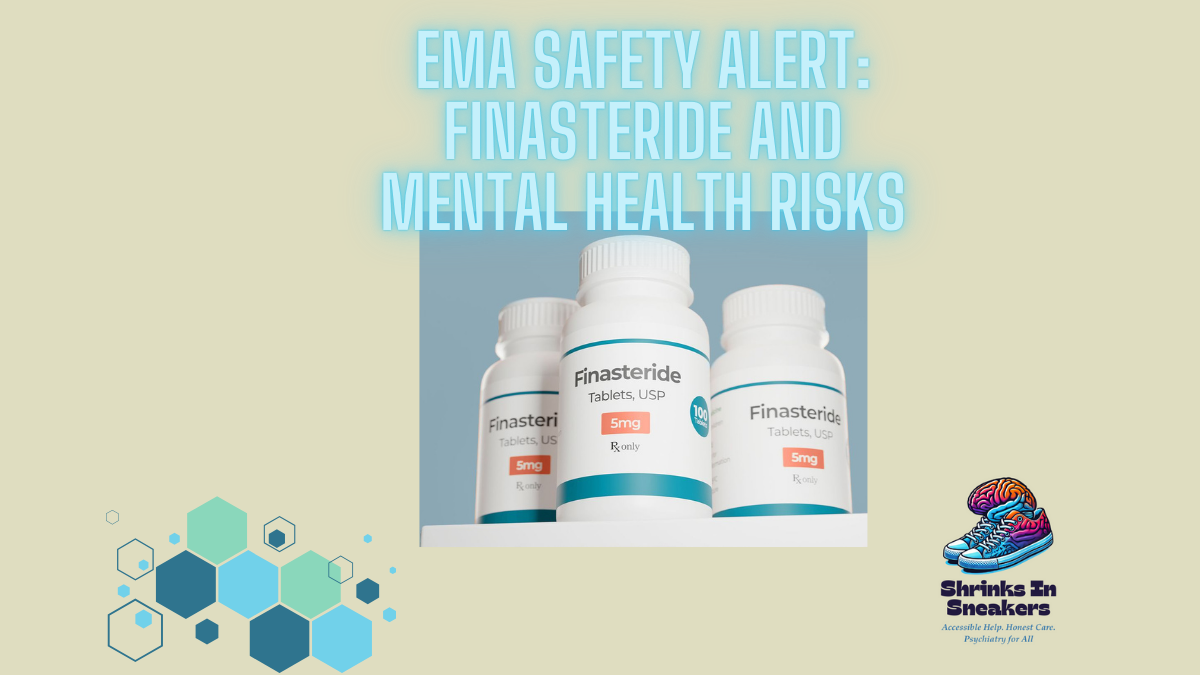
    EMA Warns of Suicidal Ideation from Finasteride

    In a significant update to its safety guidance, the European Medicines Agency (EMA) has officially recognized suicidal ideation as a potential side effect of finasteride. The EMA is urging healthcare professionals to advise patients to stop treatment and seek medical help if they experience depressed mood, depression, or suicidal thoughts while taking the drug.

    This decision follows a growing number of reports linking finasteride, particularly in younger men using it for androgenic alopecia (male pattern baldness), to neuropsychiatric side effects. While previous warnings have addressed sexual dysfunction, this marks a critical shift in regulatory focus to mental health.

    đź’Š What Is Finasteride?

    Finasteride is a 5α-reductase inhibitor used to treat:

    • Benign prostatic hyperplasia (BPH) in a 5 mg daily dose (Proscar)
    • Male pattern baldness (androgenic alopecia) in a 1 mg daily dose (Propecia)

    It works by inhibiting the conversion of testosterone to dihydrotestosterone (DHT)—a potent androgen implicated in hair loss and prostate growth.

    ⚠️ The EMA’s Updated Warning

    The EMA’s Pharmacovigilance Risk Assessment Committee (PRAC) reviewed post-marketing surveillance data and published literature and concluded that:

    “There is sufficient evidence to support a causal relationship between finasteride and the risk of suicidal ideation.”

    Key recommendations:

    • Suicidal ideation will be added to the drug’s product information as a potential adverse effect.
    • Healthcare professionals should proactively inform patients about this risk.
    • Patients should be advised to discontinue treatment immediately and seek medical advice if they experience changes in mood or mental health.

    🧠 Possible Mechanisms Behind Finasteride’s Psychiatric Effects

    The exact mechanisms linking finasteride to depression and suicidality remain unclear, but several biological hypotheseshave been proposed:

    1. Neurosteroid Depletion

    Finasteride inhibits 5α-reductase, which not only converts testosterone to DHT but also helps produce neurosteroids like allopregnanolone and tetrahydrodeoxycorticosterone (THDOC).

    • These neurosteroids have potent GABAergic activity, contributing to anxiolytic and antidepressant effects.
    • Inhibition leads to decreased GABA-A receptor modulation, potentially increasing anxiety, depression, and suicidal thoughts.

    2. Hypothalamic-Pituitary-Adrenal (HPA) Axis Dysregulation

    Altered steroid metabolism may dysregulate the HPA axis, increasing cortisol levels, a well-known biomarker of depression and suicidal behavior.

    3. Persistent Epigenetic Changes

    Some animal and human data suggest that finasteride may induce long-lasting changes in gene expression related to stress response and mood regulation, even after discontinuation—supporting the idea of post-finasteride syndrome (PFS).

    4. Neuroinflammation

    Reduced neurosteroids may increase neuroinflammatory signaling, a growing area of interest in the neurobiology of depression and suicidality.

    đź§ľ Final Thoughts

    The EMA’s announcement is a sobering reminder that drugs affecting hormonal pathways can have wide-reaching systemic effects, including on the brain. With better awareness, screening, and patient education, we can minimize harm and support individuals who may be at risk.

  • Boost Your Brain Health with Exercise: What the Science Says

    Boost Your Brain Health with Exercise: What the Science Says

    If you’re looking for a way to protect and enhance your brain health, regular exercise should be at the top of your list. Decades of randomized controlled trial (RCT) data have consistently shown that moderate to vigorous physical activity is one of the most effective strategies for maintaining cognitive function and reducing the risk of neurological and mental health disorders.

    How Exercise Supports Brain Health

    Exercise is not just about physical fitness—it has profound effects on brain function and resilience. Research has demonstrated that regular physical activity contributes to:

    âś… Reduced Risk of Dementia & Cognitive Decline â€“ Studies indicate that individuals who engage in moderate to vigorous exercise have up to a 30-40% lower risk of developing dementia compared to those with sedentary lifestyles. Physical activity enhances neuroplasticity, promotes new neuron growth (neurogenesis), and improves synaptic function—all crucial factors in preventing cognitive decline.

    âś… Improved Stroke Prevention & Recovery â€“ Exercise lowers blood pressure, enhances circulation, and improves endothelial function, significantly reducing the risk of stroke. For stroke survivors, RCTs suggest that physical rehabilitation incorporating aerobic and strength training can improve motor function, cognitive recovery, and quality of life.

    âś… Lower Rates of Anxiety & Depression â€“ Multiple RCTs have shown that exercise is as effective as antidepressantsin treating mild to moderate depression, thanks to its ability to regulate neurotransmitters like serotonin, dopamine, and endorphins. Regular physical activity also reduces cortisol (stress hormone) levels, improving resilience to stress and anxiety disorders.

    âś… Better Sleep Quality â€“ Exercise plays a crucial role in regulating circadian rhythms and increasing slow-wave (deep) sleep, which is essential for cognitive recovery and emotional processing. RCTs show that individuals with insomnia who engage in aerobic exercise experience significant improvements in sleep latency, duration, and overall sleep quality.

    How Much Exercise is Needed for Brain Benefits?

    The gold standard for brain health is a combination of aerobic exercise (such as brisk walking, cycling, or swimming) and strength training (such as weightlifting or bodyweight exercises). Research recommends:

    📌 150-300 minutes per week of moderate-intensity aerobic exercise OR 75-150 minutes per week of vigorous-intensity exercise 📌 At least two days per week of strength training to preserve muscle mass and support neuroprotective benefits

    The Bottom Line

    Regular physical activity isn’t just about fitness—it’s one of the most powerful, evidence-based tools for maintaining brain health, preventing cognitive decline, and improving mental well-being. Whether you’re looking to sharpen memory, reduce stress, or protect against neurological disease, making exercise a regular habit is a science-backed investment in your future.

    So, lace up your sneakers, get moving, and give your brain the boost it deserves! đź§ đź’Ş

  • Tragic Loss of United Healthcare CEO Shines Spotlight on Insurance Denials

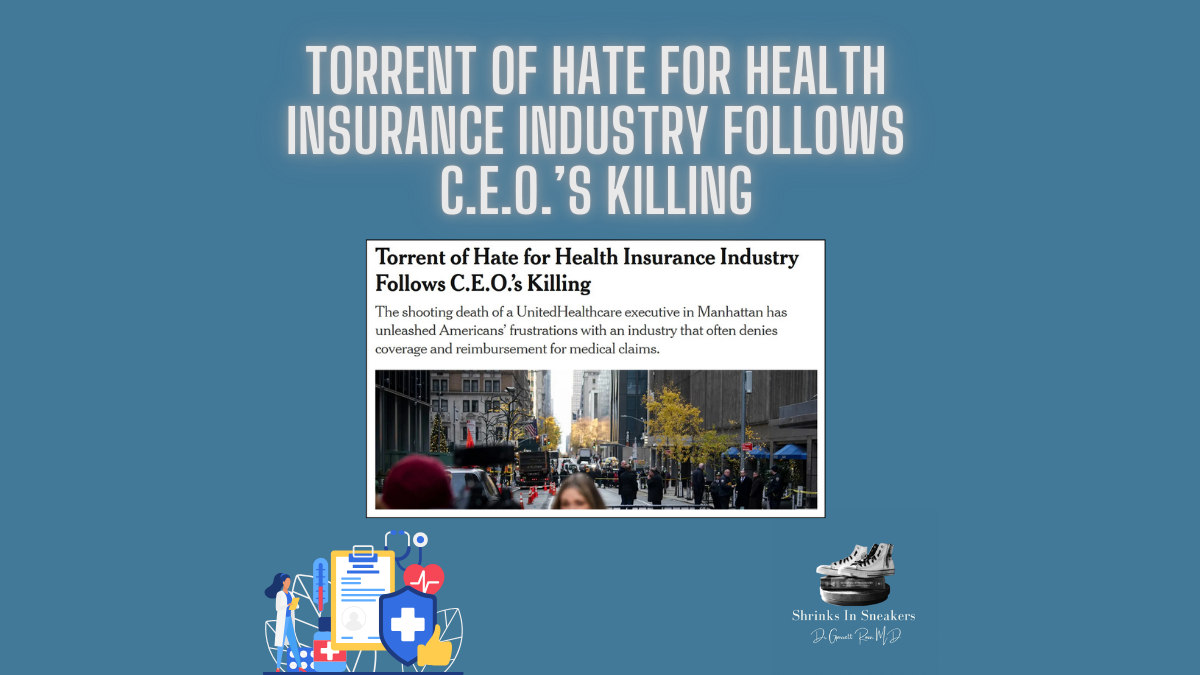
    Tragic Loss of United Healthcare CEO Shines Spotlight on Insurance Denials

    I would never condone violence against anyone, and the loss of any life in such a manner is a profound tragedy. That said, this event has sparked a critical and necessary conversation about the devastating impact of insurance companies denying claims for essential healthcare.

    Far too often, people feel abandoned by these companies during their most vulnerable moments, when their lives are quite literally on the line. As a healthcare provider, I’ve had countless experiences fighting with insurance companies for additional days of coverage for acutely suicidal patients who were clearly not ready for discharge. Each time, I was left with the unshakable impression that the priority was not patient care but finding any justification to deny coverage, regardless of the circumstances.

    This systemic disregard for the value of human life in favor of profit leaves a lasting impression—one that is deeply unsettling. It’s a stark reminder of how broken the system is when patients’ lives, and the quality of care they receive, are treated as secondary to financial interests.