Tag: JAMA

  • New JAMA Study Challenges Previous Concerns About Valproate and Paternal Risk

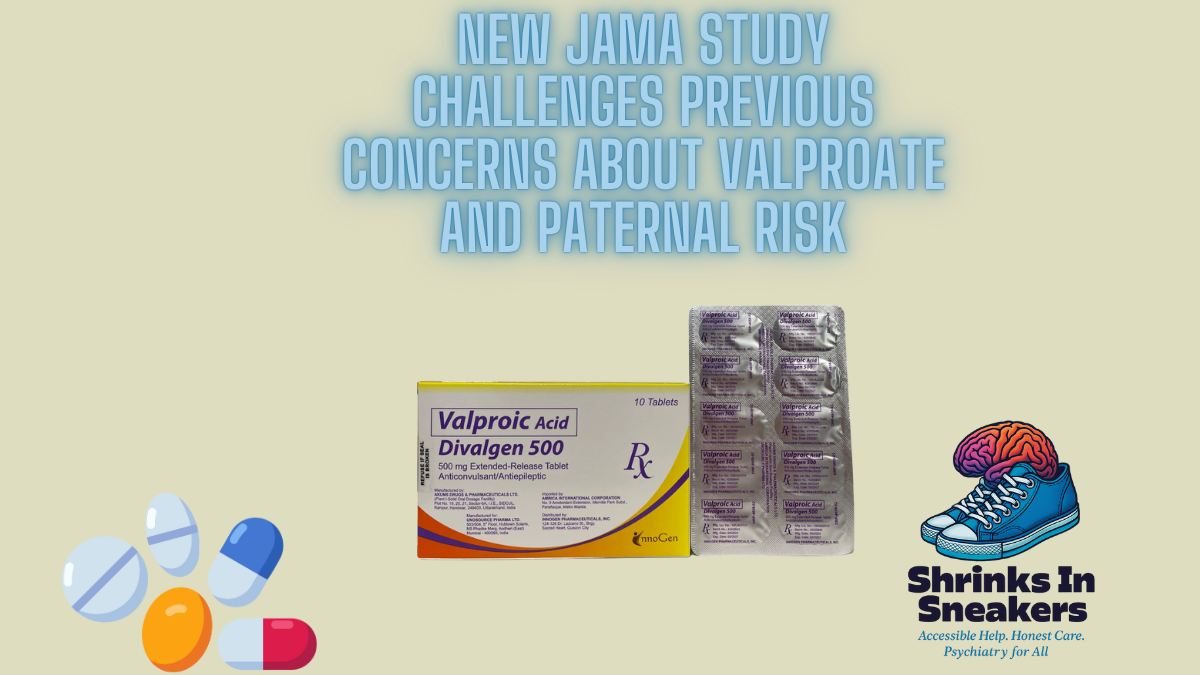
    New JAMA Study Challenges Previous Concerns About Valproate and Paternal Risk

    What we thought we knew may not hold up under scrutiny.

    A recent JAMA Psychiatry study titled “Disorders and Paternal Use of Valproate During Spermatogenesis” has delivered surprising news:

    There was no increased risk of neurodevelopmental disorders in children whose fathers were taking valproic acid around the time of conception.

    This finding directly challenges earlier observational data that suggested a possible link, leading to cautionary guidance against prescribing valproate to men of reproductive age. But now, with a large, well-conducted study showing no signal of harm, we’re left reconsidering that initial recommendation.

    As clinicians, we must remember:
    🔍 Association is not causation.
    🚧 Observational studies, while valuable, can mislead when confounding variables aren’t fully accounted for.
    📚 Evidence evolves—and so must our clinical guidance.

    This study not only impacts how we think about valproate use in men but also serves as a critical reminder about the limits of inference from non-randomized data.

    👉 For patients with bipolar disorder or epilepsy who benefit from valproate, this offers some reassurance. We may not need to withhold an effective treatment based on unconfirmed reproductive risks.

    📌 Bottom line: Always be skeptical. Always be curious. Always be willing to revise your practice when the data say it’s time.

    link to the study: https://jamanetwork.com/journals/jamanetworkopen/fullarticle/2834363

  • 🧠 Esketamine + Antidepressants in TRD: Does the Combo Matter?

    🧠 Esketamine + Antidepressants in TRD: Does the Combo Matter?

    📢 New data from a real-world study of 50,000+ patients with treatment-resistant depression (TRD) published in JAMA Psychiatry:

    📌 Study Question:
    Does combining esketamine with an SSRI or SNRI affect long-term outcomes in TRD?

    📊 Key Findings (5-Year Follow-Up):

    • ✅ Esketamine + SNRI:
       ↘️ Lower all-cause mortality
       ↘️ Fewer hospitalizations
       ↘️ Reduced depressive relapse
    • ✅ Esketamine + SSRI:
       ↘️ Lower incidence of suicide attempts
    • 🔒 Overall: Low rates of adverse outcomes in all groups

    💡 Clinical Implications:

    • Not all combinations are equal—pairing matters.
    • Esketamine + SNRI may be preferred for reducing relapse/mortality
    • Esketamine + SSRI may be considered in patients at risk for suicide
    • Personalized treatment decisions can enhance outcomes in TRD

    🔍 More than symptom relief—it’s about survival, stability, and safety.

  • Managing Mild to Severe Depression: A Guide to Treatment Approaches

    Managing Mild to Severe Depression: A Guide to Treatment Approaches

    It is crucial to recognize that none of the available medications or neuromodulation procedures, including electroconvulsive therapy (ECT) and psychedelics, are disease-modifying. This means that while these treatments can alleviate symptoms, they do not address the underlying causes of depression. Think of them like acetaminophen for a fever—it may temporarily reduce the fever, but without treating the underlying infection, the fever will return.

    Neuromodulation refers to techniques that alter brain activity through electrical or magnetic stimulation. Examples include ECT, transcranial magnetic stimulation (TMS), and vagus nerve stimulation (VNS), all of which have been explored as treatments for severe depression.

    Optimizing Depression Treatment for Different Severity Levels

    Given this understanding, how can we best utilize these treatments to support patients during difficult times? The key is to acknowledge that medications and neuromodulation primarily serve as symptom management tools, most effectively used in the short term for severe cases.

    Mild to Moderate Depression: Prioritizing Non-Medication Approaches

    For individuals experiencing mild to moderate depression, medication should not be the first line of treFor individuals experiencing mild to moderate depression, medication should not be the first line of treatment. Many people can directly link their depressive symptoms to stressful life events. In such cases, the best initial approach includes:

    • Cognitive Behavioral Therapy (CBT) – Evidence-based therapy that helps reframe negative thinking patterns. Research has shown that CBT is as effective as antidepressants for mild to moderate depression, with relapse rates significantly reduced in those who complete therapy.
    • Lifestyle Modifications – Regular exercise and a healthy diet have strong evidence supporting their role in reducing depressive symptoms. A study published in JAMA Psychiatry found that individuals engaging in at least 150 minutes of moderate exercise per week had a 25% lower risk of developing depression.

    For some, these interventions alone may be sufficient to overcome depression and maintain long-term well-being. If additional support is needed, natural supplements with reasonable evidence, such as St. John’s Wort and S-Adenosylmethionine (SAMe), may be considered for mild to moderate depression. However, these supplements are not without risks—St. John’s Wort can interact with many medications, including antidepressants and birth control pills, potentially reducing their effectiveness. SAMe may cause gastrointestinal discomfort or manic symptoms in individuals with bipolar disorder.

    Severe Depression: When Medication and Neuromodulation Play a Role

    For individuals with severe depression, particularly those at risk for self-harm or suicide, the risks and benefits of medication should be carefully weighed. Antidepressants and neuromodulation therapies have demonstrated the most significant impact in these cases. When selecting a medication, I prioritize those with a lower risk of concerning side effects, particularly sexual dysfunction. My initial choices often include:

    • Bupropion – A dopamine-norepinephrine reuptake inhibitor with a favorable side effect profile.
    • Vortioxetine – Known for its cognitive benefits and relatively low sexual side effects.
    • Mirtazapine – Can be beneficial for those with sleep disturbances or appetite loss.
    • Vilazodone – A serotonin modulator with a lower incidence of sexual dysfunction compared to SSRIs.

    It is essential for patients starting antidepressants to be closely monitored, especially in the early weeks of treatment, to assess for side effects and response. Regular follow-ups with a healthcare provider can help adjust dosages or explore alternative treatments if needed.

    Treatment Duration and Discontinuation Considerations

    For those starting medication, I generally recommend continuing treatment for 6 to 12 months, followed by an assessment to determine whether tapering off is feasible. This process involves shared decision-making, considering:

    • Symptom severity and stability
    • Level of daily functioning
    • Patient’s goals and preferences

    The goal is to ensure that the patient has developed effective coping strategies, engaged in therapy, and adopted a healthy lifestyle before considering medication discontinuation. If stopping medication is not advisable, we work to identify the lowest effective dose for long-term maintenance.

    Final Thoughts

    Depression treatment should be personalized and dynamic, evolving with the patient’s needs. By recognizing that medications and neuromodulation are tools for symptom management rather than cures, we can ensure they are used effectively—providing relief during crises while prioritizing long-term strategies for resilience and recovery.

  • When Expectations Matter: Antidepressant Efficacy vs. Psilocybin’s Unique Impact

    When Expectations Matter: Antidepressant Efficacy vs. Psilocybin’s Unique Impact

    It’s always valuable to challenge our own assumptions, especially in areas as complex as mental health treatment. A secondary analysis of a randomized controlled trial, recently published in JAMA Psychiatry, explored the role of treatment expectancies in the efficacy of psilocybin versus escitalopram for depression.

    I’ve often argued that blinding these studies is challenging, and participants are likely to have higher expectations for psychedelics like psilocybin. However, this analysis provides a nuanced perspective.

    While participants did report higher expectations for psilocybin’s effectiveness compared to escitalopram, expectancy only seemed to impact outcomes in the escitalopram group. A stronger belief in escitalopram’s efficacy correlated with better results for those receiving it. In contrast, expectancy didn’t significantly influence psilocybin’s effectiveness.

    Another intriguing finding: individuals with higher pre-treatment suggestibility showed more significant therapeutic responses to psilocybin—a pattern not observed in the escitalopram group.

    Although this is a secondary analysis and not the final word on the topic, it raises fascinating questions. Could psilocybin’s therapeutic mechanisms be less reliant on patient expectations than traditional antidepressants?

    For now, this remains an open question, but I’ll be closely following future research as it unfolds.

    Link to article: https://pubmed.ncbi.nlm.nih.gov/39653344/

  • Hallucinogens: A Trip Not Everyone Should Take

    Hallucinogens: A Trip Not Everyone Should Take

    The recent JAMA Psychiatry study, Emergency Department Visits Involving Hallucinogen Use and Risk of Schizophrenia Spectrum Disorder, explored a notable increase in emergency department (ED) visits related to hallucinogen use, with a focus on potential links to the onset of schizophrenia spectrum disorders.

    Key Findings:

    1. Rise in Hallucinogen-Related ED Visits:
      • The number of ED visits due to hallucinogens, including LSD, psilocybin, and MDMA, has significantly risen, particularly among younger populations. This aligns with changing perceptions of these substances in some parts of society.
    2. Connection to Schizophrenia Spectrum Disorders:
      • Individuals who presented at EDs for hallucinogen-related issues were found to have a higher risk of later developing schizophrenia spectrum disorders. The study suggests a potential association between hallucinogen use and triggering or exacerbating underlying psychiatric vulnerabilities.
    3. Demographic Insights:
      • The rise in hallucinogen use and related health complications appears to disproportionately affect young adults and men. These groups may face greater risks due to higher consumption rates and potential genetic predispositions to mental health disorders.
    4. Clinical Implications:
      • Emergency physicians and mental health professionals are encouraged to screen for hallucinogen use during ED visits, particularly in individuals showing early signs of psychosis. Early identification and intervention may help mitigate long-term mental health outcomes.

    This study emphasizes the importance of public health strategies addressing hallucinogen use, including education on potential risks and the establishment of protocols to identify and treat associated psychiatric conditions.

    Link to the article: https://jamanetwork.com/journals/jamapsychiatry/article-abstract/2825649

  • Inflammation: The Hidden Culprit Behind Your Mental Health Struggles

    Inflammation: The Hidden Culprit Behind Your Mental Health Struggles

    Over the past several years, a growing body of research has highlighted the role of inflammation in the development and progression of psychiatric disorders. A key biomarker frequently used in these studies is C-reactive protein (CRP), which can be measured through a simple blood test. For precise results, it’s important to order the ultra-sensitive CRP test when conducting this in a lab setting.

    Recent findings from JAMA Psychiatry have revealed varying mental health trajectories for individuals with low-grade inflammation throughout childhood. Persistently elevated CRP levels, particularly peaking around age 9, were linked to an increased risk of developing psychosis, severe depression, and insulin resistance in adolescence and early adulthood.

    This research suggests that a simple blood test could potentially identify children at higher risk for serious mental illnesses and cardiometabolic issues later in life, offering a window for early intervention.

    The big question remains: how should we address this low-grade inflammation? My first recommendation is to focus on lifestyle modifications, particularly dietary changes that reduce inflammation, such as adopting a Mediterranean diet. Additionally, I believe chronic stress is a major contributor to inflammation. In modern American society, stress reduction is often overlooked, but finding effective ways to manage stress is crucial to mitigating long-term health risks.

    Link to the article: https://jamanetwork.com/journals/jamapsychiatry/fullarticle/2822343

  • Suboxone or Subutex Which is Better for Your Baby?

    Suboxone or Subutex Which is Better for Your Baby?

    I remember being a resident and having the same question about buprenorphine versus the buprenorphine and naloxone combination. Now, we have a clearer answer. The big question was whether prenatal exposure to the combination of buprenorphine and naloxone, compared to buprenorphine alone, increases the risk of adverse neonatal and maternal outcomes. I was always advised by my mentors to use buprenorphine alone in pregnant patients, as it was considered safer, with concerns that naloxone might pose a risk.

    However, an article published in JAMA Psychiatry puts this debate to rest. The study compared perinatal outcomes following prenatal exposure to buprenorphine alone versus the buprenorphine and naloxone combination. The researchers evaluated the risk of congenital malformations, low birth weight, neonatal abstinence syndrome (NAS), neonatal intensive care unit (NICU) admission, preterm birth, and adjusted for confounding factors.

    The findings revealed that when buprenorphine combined with naloxone was compared to buprenorphine alone, there was a lower risk of NAS, NICU admission, and being small for gestational age. The other outcome measures were similar for both groups. These results indicate that the risk is comparable, and in some cases, there are more favorable neonatal and maternal outcomes for pregnancies exposed to the buprenorphine and naloxone combination.

    I can now confidently tell my former mentors that buprenorphine combined with naloxone during pregnancy appears to be a safe and effective treatment option for mothers with opioid use disorder.

    Article Link: https://jamanetwork.com/journals/jama/article-abstract/2822178#:~:text=When%20comparing%20buprenorphine%20combined%20with,30.6%25%20vs%2034.9%25%3B%20weighted