Tag: lithium

  • The Most Commonly Prescribed Medication for Bipolar Disorder… But Is It the Best?

    The Most Commonly Prescribed Medication for Bipolar Disorder… But Is It the Best?

    When it comes to bipolar disorder, the most commonly prescribed medication isn’t necessarily the most effective.Many clinicians default to prescribing quetiapine, valproate, or lamotrigine, yet lithium remains the gold standardfor long-term treatment.

    So, why is lithium often overlooked? Despite decades of evidence supporting its unmatched efficacy in preventing relapse, reducing suicide risk, and stabilizing mood long-term, lithium is underprescribed due to concerns over side effects, monitoring requirements, and physician discomfort with its use.

    🔹 What Do the RCTs Say About Lithium?

    ✅ BALANCE Trial (2010) – The landmark study comparing lithium vs. valproate vs. combination therapy found that lithium monotherapy was superior to valproate in preventing relapse into both manic and depressive episodes (Geddes et al., 2010).

    ✅ NIMH STEP-BD Trial (2005) – Among mood stabilizers, lithium significantly reduced suicide risk, a benefit not shared by other common treatments (Goodwin et al., 2003).

    ✅ Cade’s Legacy and Beyond – Multiple meta-analyses confirm that lithium reduces relapse rates and is the only mood stabilizer with strong anti-suicidal effects (Cipriani et al., 2005).

    🚨 The Bottom Line? Lithium is STILL the most effective long-term treatment for bipolar disorder, yet it is often underutilized. Instead, newer and more expensive alternatives are frequently prescribed—even when they lack lithium’s robust evidence base.

    Yes, lithium requires monitoring. Yes, it comes with side effects. But for patients with bipolar disorder, choosing the right medication can mean the difference between stability and relapse, life and death.

    Let’s start prescribing based on data, not convenience. 🔥
  • 🚨 Mania with Mixed Features: The Ultimate Mood Storm 🌪️

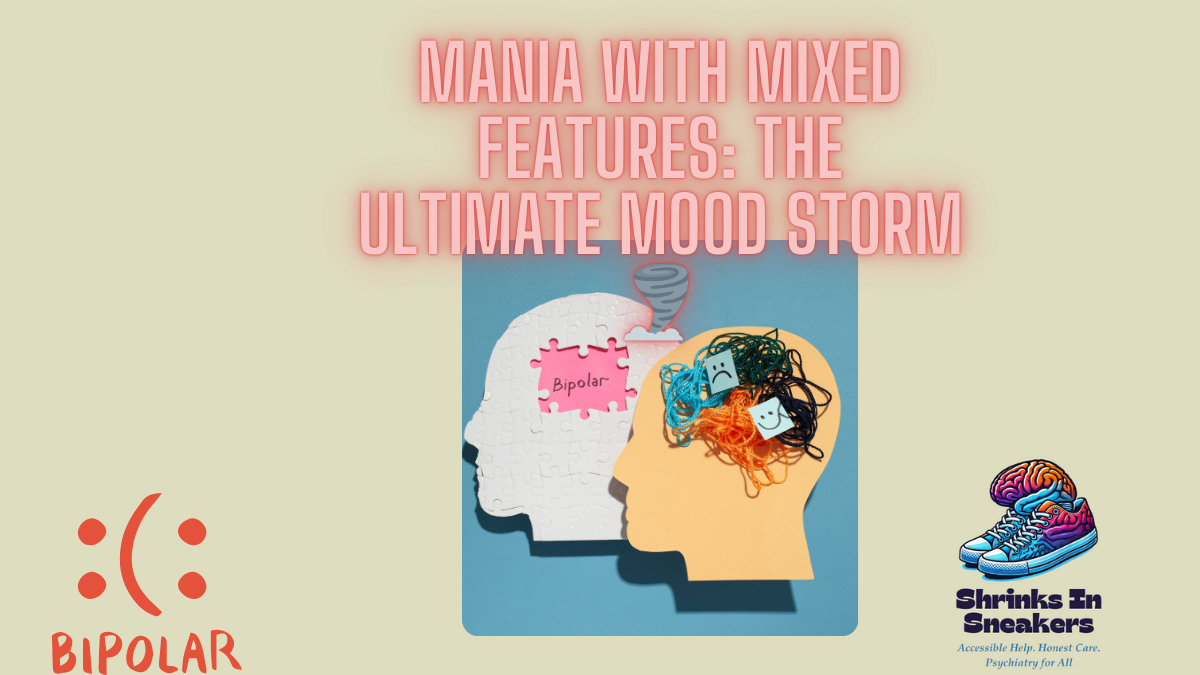
    🚨 Mania with Mixed Features: The Ultimate Mood Storm 🌪️

    Bipolar mania is intense—but when mixed features are present, it’s a whole different beast. Imagine sky-high energy ⚡ + crushing despair 😞 at the same time. That’s mixed mania—one of the most challenging and high-risk mood states in psychiatry.

    🔍 What Does It Look Like?

    ✅ Racing thoughts 🏎️ + Hopelessness 😔
    ✅ Insomnia for days 🌙 + Feeling exhausted 😴
    ✅ Irritability 🔥 + Tearfulness 😢
    ✅ Grandiosity 👑 + Suicidal thoughts 🚨
    ✅ Restless energy ⚡ + No pleasure in anything ❌

    🚑 Why It’s High Risk

    Patients with mania + mixed features have:
    ⚠️ Higher suicide risk than pure mania
    ⚠️ More agitation & impulsivity
    ⚠️ Less response to traditional mood stabilizers

    🛑 Treatment Challenges

    ❌ Antidepressants can worsen symptoms
    ✅ Mood stabilizers (lithium, valproate) & atypical antipsychotics (quetiapine, olanzapine, lurasidone) are key
    ✅ Careful monitoring is essential

    💡 Takeaway: Mixed mania isn’t just “agitated depression” or “irritable mania”—it’s a unique, dangerous mood state that requires urgent intervention. Recognizing it early can save lives.

    Have you encountered mixed mania in practice? Let’s discuss! 👇

  • 📌 CANMAT Guidelines for Depression: Evidence-Based Treatment Strategies

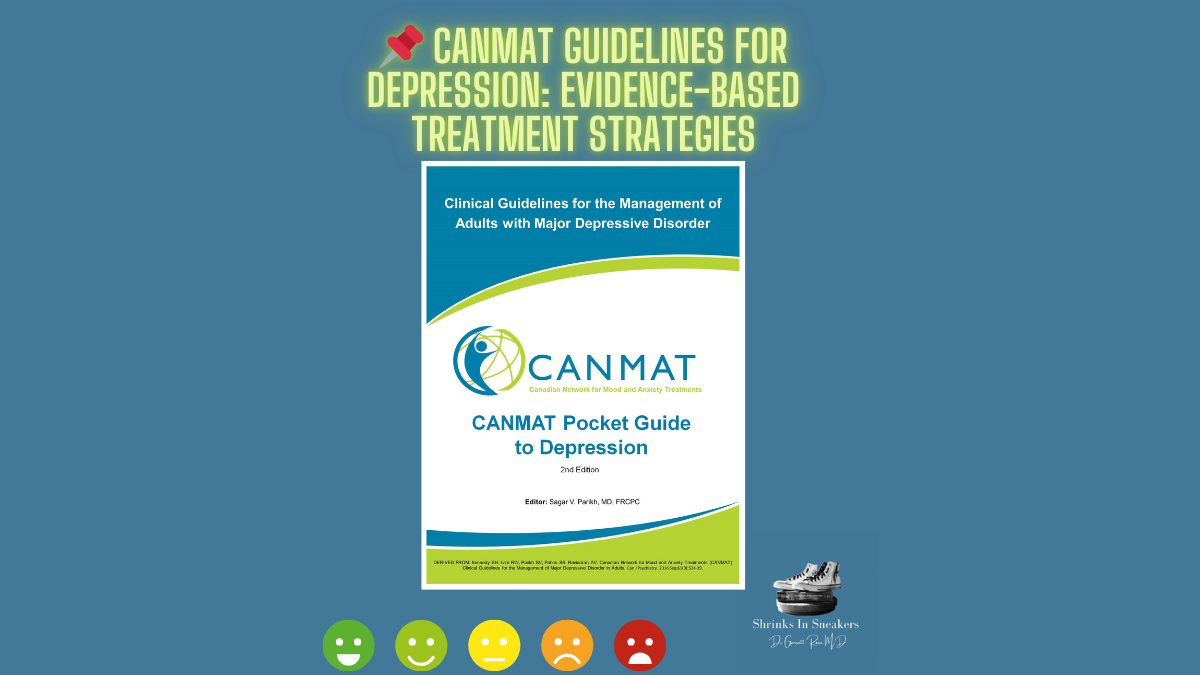
    📌 CANMAT Guidelines for Depression: Evidence-Based Treatment Strategies

    The CANMAT 2016 guidelines remain one of the most comprehensive, evidence-based frameworks for treating major depressive disorder (MDD). These guidelines emphasize a stepwise, individualized approach based on efficacy, safety, and patient preference. Here’s a breakdown of the key recommendations:

    🔹 First-Line Treatments

    ✅ Psychotherapy – Cognitive Behavioral Therapy (CBT), Interpersonal Therapy (IPT), and Mindfulness-Based CBT are recommended, especially for mild to moderate depression.
    ✅ Pharmacotherapy – SSRIs, SNRIs, bupropion, mirtazapine, and vortioxetine are all first-line antidepressantsbased on efficacy and tolerability.
    ✅ Neurostimulation – Electroconvulsive Therapy (ECT) and Repetitive Transcranial Magnetic Stimulation (rTMS) are considered first-line for severe or treatment-resistant depression (TRD).

    🔹 Second-Line Treatments

    🔸 Other antidepressants – Tricyclics (TCAs), trazodone, moclobemide, and some atypical antipsychotics (e.g., quetiapine XR, aripiprazole, brexpiprazole)
    🔸 Adjunctive strategies – Lithium, atypical antipsychotics, or combination antidepressant therapy for partial responders
    🔸 Ketamine/esketamine – Emerging evidence for TRD

    🔹 Third-Line & Beyond

    🔹 MAOIs (reserved for treatment-resistant cases)
    🔹 Novel agents (psilocybin, anti-inflammatory treatments) – Experimental but promising

    💡 Key Takeaways
    🔹 Personalized treatment is essential – factors like symptom profile, comorbidities, and patient preference influence the best approach.
    🔹 Combination strategies (meds + psychotherapy) often yield superior outcomes.
    🔹 Treatment-resistant depression requires a multimodal approach, including augmentation, switching strategies, and neurostimulation options.

    The CANMAT guidelines are a critical resource for clinicians, offering a structured approach to optimizing depression treatment. What are your go-to strategies for managing MDD? Let’s discuss!

    #DepressionTreatment #Psychiatry #CANMAT #MDD #Psychopharmacology

  • The Only Medication Proven to Reduce Suicide

    The Only Medication Proven to Reduce Suicide

    As a psychiatry trainee you will never forget that the two medications that reduce suicide are lithium and clozapine. In the case of clozapine, it has been shown in RCTs to reduce suicidal thoughts but not necessarily completed suicides. Lithium on the other hand has RCT data that indicates it reduces suicidal thoughts as well as completed suicide.

    Lithium has anti-suicidal effects even at low doses. Lithium’s anti-suicidal effects are beneficial for both unipolar and bipolar depression. Unlike standard antidepressants that can increase the risk of suicide specifically in younger patients under the age 24, lithium has a prophylactic effect to prevent suicide. 

    While lithium overdoses can be fatal, this outcome is less likely given the anti-suicidal properties of this medication. We should not avoid prescribing it for this reason.