Tag: Mental health awareness

  • Does Everyone Have Autism or Is It Just Me? 

    Does Everyone Have Autism or Is It Just Me? 

    There is an ongoing fascination in the world of social media with regards to certain psychiatric diagnoses. It begins with the rise of self-diagnosing, which is rampant on social media these days and ends with a lot of individuals believing they have autism, tic disorder, or dissociative identity disorder (multiple personalities). I’ve also seen a rise in my patients suggesting they have autism as an explanation for symptoms clearly caused by other disorders. 

    I can think of one specific example where an individual was convinced, they had autism. Later that day I observed the individual socializing with peers and staff making excellent eye contact, and all those symptoms they described in the diagnostic interview seemingly went away completely. It was clear at that point that autism was not the cause of this individual’s distress.

    I feel like there is no better time to discuss autism spectrum disorders because we have a lot to clear up. 

    Introduction

    Autism spectrum disorder (ASD) was introduced in the diagnostic and statistical manual (DSM-5) to replace the category of pervasive developmental disorders (PDD) which previously included Asperger’s disorder, Autistic disorder, and PDD not otherwise specified (NOS). You might ask, why did they change the category in DSM-5 to just autism spectrum disorder? This was thought to improve the ability to make a diagnosis of ASD while maintaining the sensitivity of its criteria. In fact, research suggests that 91% of those who met the previous criteria would meet the new DSM-5 criteria. They also grandfathered in those with a previously well-established diagnosis of Asperger’s, autistic disorder, or PDD NOS. 

    Epidemiology

    In 2021, the CDC reported that approximately 1 in 44 children in the U.S. is diagnosed with ASD. The prevalence has been rising over the years, and this is largely thought to be related to better detection and awareness of the disorder not vaccinations or other environmental factors. ASD is 4.5 times more common in males than females. The median age when ASD is diagnosed in the U.S. is 50 months which is about 4 years of age. ASD can be found in all racial and ethnic groups although the prevalence does appear to be higher in Caucasian children. 

    Clinical Features of ASD

    The focus in DSM-5 was in two domains and not the three domains from the prior classification. These domains are social communication impairment and restricted/repetitive patterns of behavior, and an individual must have had these symptoms in early childhood. Specifiers were added to indicate the level of impairment, level 1: requiring support, level 2: requiring substantial support, and level 3: requiring very substantial support.

    DSM-5 Criteria 

    Persistent deficits in social communication and social interaction, as manifested by all 3 of the following:

    -Deficits in social-emotional exchange: failure of back-and-forth communication, reduced sharing of interests, emotions, or affect, or failure to respond to social interactions. 

    -Deficits in nonverbal communicative behaviors used for social interaction: difficulty understanding facial expressions, body language, or eye contact 

    -Deficits in developing and maintaining relationships appropriate for the developmental level: difficulty adjusting behavior based on social context, difficult engaging in imaginative paly, or difficulty making friends 

    These symptoms can be seen in other disorders in the adult population including social anxiety, OCD, schizoid personality disorder, schizotypal personality disorder, avoidant personality disorder, schizophrenia, bipolar disorder, and intellectual disability. Therefore, it’s important to establish that these deficits were present at an early age. 

    Restricted, Repetitive Patterns of Behavior, Interests, or activities 

    At least two of the following must be present:

    • Stereotyped or repetitive speech, motor movements, or use of objects (simple motor stereotypies, lining up toys, or repetitive use of objects). 
    • Insistence on sameness, inflexible adherence to routines, ritualized patterns of verbal or nonverbal behavior, or excessive resistance to change 
    • -Highly restricted, fixated interests that are abnormal in intensity or focus 
    • -Hyper-or hypo-reactivity to sensory input or unusual interest in sensory aspects of environment 

    These individuals may have a rigid greeting ritual or struggle with small changes to normal activity. I had a case where the family took a different route to school one day and child became so upset that they jumped out of a moving car. This is the level of insistence on sameness and routine that we are talking about. 

    Gender Impact on ASD

    The prevalence of ASD is lower in females, but females are noted to have a greater impairment in social communication, lower cognitive abilities, and more difficulty externalizing problems than males. 

    Causes of ASD

    ASD is a complex neurodevelopmental disorder with both genetic and environmental factors. Family and genetic studies identified ASD as a highly heritable disorder. The heritability can range from 37% to more than 90% with only 15% of cases being attributed to a known genetic mutation. ASD is polygenic meaning there are multiple genes that contribute to the disease. Many inherited genetic variants contribute to a small additive risk of developing ASD. 

    Neuroimaging research has found that ASD is often associated with atypical brain maturation. Children with autism usually have an excessive number of synapses in the cerebral cortex, this indicates abnormal pruning may be part of the etiology. Pruning occurs at a critical period in childhood where excess synapses are eliminated, it’s critical for proper cortical maturation. Other findings include abnormalities in neurotransmitter levels, immune dysfunction, and neuroinflammation. 

    One of the greatest areas of controversy has focused on the impact on childhood vaccinations as a causative factor for ASD. The current evidence does not support this theory, and ASD is not associated with childhood vaccinations. 

    Environmental factors including exposure to valproate, air pollution, low birth weight, and increased maternal and paternal age are all associated with increased risk for the development of ASD. 

    Co-Morbidity

    The most common co-morbid disorders in ASD include intellectual disability, ADHD, and seizure disorder. Approximately one-third of individuals with ASD meet criteria for intellectual disability. ADHD can be seen in 30% to 50% of individuals with ASD. Seizure disorders in these individuals can be difficult to treat, and often refractory to treatment. There is also increased risk of gastrointestinal disturbances such as constipation and restricted food intake.

    Evaluating Someone with Suspected ASD

    The assessment of ASD requires both an evaluation of the individual and collateral information from caregivers and teachers. ASD remains a clinical diagnosis, but there are several screening and diagnostic assessments that may help support the diagnosis. The most well-known is the ADOS autism diagnostic observation schedule, and the ADI-R autism diagnostic interview revised. 

    A delay in spoken language is common first symptom that prompts referral in younger children for autism screening. The starting point is usually to check hearing and vision to be sure the individual is not suffering from deficit in either of these sensory domains. If there are dysmorphic characteristics, genetic testing for specific genetic disorders may also be completed prior to the evaluation. 

    Treatment

    There is no FDA approved medication for the treatment of ASD. The primary intervention is behavioral, and these interventions should be started as soon as possible. Applied behavioral analysis (ABA) is a type of therapy that focuses in developing specific behaviors such as social skills, communication, reading, and academics as well as fine motor dexterity, hygiene, grooming, domestic capabilities, and job competence. This should be the core of treatment and has good evidence to support its use. 

    If medications are used, it’s important to note that they do change the underlying communication or social deficits seen in these children. They are used to target specific co-morbidities such as ADHD, or symptoms that include irritability and aggression. There are only two FDA approved medications for ASD-related symptoms. These medications are risperidone, and aripiprazole and they are approved to treat irritability in children. 

    Conclusion

    ASD is a complex disorder with multiple genetic and environmental factors contributing to the development of the disorder. Since it’s a neurodevelopmental disorder it’s often present at an early age and suspicion of ASD should be followed up with a proper diagnostic evaluation.  I think it’s important for people to avoid self-diagnosis and be careful what information they are consuming on social media. 

  • SAINT The Best Transcranial Magnetic Stimulation (TMS) Therapy Protocol Ever  

    SAINT The Best Transcranial Magnetic Stimulation (TMS) Therapy Protocol Ever  

    We all know how difficult treatment resistant depression (TRD) is for both the patient and the clinician. Wouldn’t it be great if we had a noninvasive method to treat these cases with better efficacy than ECT? What if I told you there is a new type of TMS that leads to remission in 80% of the most difficult to treat cases of depression? Would you be interested? Let’s Find out. 

    Introduction:

    SAINT stands for Stanford Accelerated Intelligent Neuromodulation Therapy, try saying that one three times fast. 

    This is not a new concept as SAINT uses a noninvasive neuromodulation therapy (TMS) in patients with treatment resistant depression and it has shown some real promise in that area.

    Treatment resistant depression (TRD) can affect up to 30% of patients with major depressive disorder and as you might expect it’s hard to treat these cases. When a patient reaches this point, things like off-label medication prescribing, ECT and Ketamine are used. However, the FDA just approved a new version of TMS that is reported to have an 80% remission rate in these patients. 

    The approval came quick as this device has received breakthrough status by the FDA based on the impressive results from study that included 22 participants with TRD. 19 of the 22 participants achieved remission which in terms of percentage was 86.4% of participants. This is substantially better than other treatments for TRD including ECT which come in around 50%-70% depending on the study you read. 

    What Is SAINT?

    SAINT was first developed at Stanford University. What sets this TMS procedure apart from other methods of TMS is the intensity of treatment (10 sessions per day) carried out over the course of 5 days. Each session is 10 minutes in length. The intelligent portion of the name has to do with the use of MRI/fMRI-guided theta burst stimulation ensure proper placement of the coil on the dorsal lateral prefrontal cortex. 

    This device made it out of the academic arena and is now being distributed by a private start up company called Magnus Medical. You can get on the waiting list now to purchase one of these machines if you feel compelled to do so after this talk. To be clear I have no affiliations with the company.

    What Research Lead to FDA Breakthrough Status Approval?

    In general devices are not held to the same standard as medications when we are talking about FDA approval. It’s much easier to get a device approved. 

    The initial work was carried out with an open label format which is usually considered a lower form of evidence when compared to randomized controlled trials. The research group eventually published a randomized controlled trial in the American Journal of Psychiatry which is largely what allowed SAINT to gain FDA approval. In this study 32 participants with TRD were randomized to active treatment or sham. In this study they used percent reduction from baseline MADRS score 4 weeks after treatment which was found to be 52.5% in the SAINT group and 11.1% in the sham group. The remission rates in this study were 79% for the treatment group compared to 13.3% in the sham group. 

    These are significant results in the most difficult patient population to treat. It’s important to point out that these participants had 10 hours of contact with the treatment team per day and the number of participants in the study was small. Both are confounding factors, but using sham treatment helps because most participants were not able to tell if they received the treatment or sham. The one thing that was more common in the treatment group was headaches which may have altered them to which groups they were randomized into.

    The authors justified the low number of participants because they achieved a very large effect size with statistical significance without additional participants. What is currently missing from the research is a large randomized controlled trial conducted independently of the research group who designed the protocol (something to look out for in the future). 

    Mechanism of Action (MOA)

    One question you may have been thinking about is how does TMS work and what is the proposed mechanism of action for SAINT? 

    TMS is a noninvasive method of modulating specific areas of the brain by generating a magnetic field which induces neural cell membrane potentials to depolarize in the brain under the coil. Placing the coil in the correct location is critical and there is a 30% chance of missing that location when MRI is not used to map the exact location of the dorsal lateral prefrontal cortex. 

    SAINT is thought to alter brain connectivity and increase neuroplasticity in ways that traditional forms of TMS do not. The preliminary evidence suggests connectivity between the amygdala, insula, and medial frontal gyrus is altered in a meaningful way resulting in the improvement in depressive symptoms. Studies are underway to assess the MOA further. 

    How Does SAINT Differ From Other Forms of TMS? 

    First it differs in the time frame, it takes place only 5 days while most other forms of TMS take a full 6 weeks to complete. The treatments during those 5 days are intense, it requires 10 treatments per day while standard TMS is usually once per day. 

    The time for each treatment in the SAINT protocol is much shorter lasting approximately 10 minutes compared to the 20 to 45 minutes usually required. 

    There are three established types of TMS that differ in the time it takes to complete the treatment session. 

    -The first one on the market was the figure 8 coil which took 45 minutes to complete each session 

    -The H coils were invented by Brainsway and these sessions take 20 minutes 

    -Theta-burst stimulation: only take 3 minutes, and this is the one that the SAINT protocol uses 

    The next question is where to place the coil and how to place it. Traditionally the coil is moved around until the thumb twitches, this is the so-called thumb center, and we can look at the homunculus drawing and see how large the thumb center is. Traditionally we would measure 7 centimeters away from the thumb center and that should be the left dorsolateral prefrontal cortex. This method is not very accurate missing the mark approximately 30% of the time. To fix this problem the SAINT protocol uses MRI guided imaging to be sure the coil placement is accurate. You can also use EEG or PET scans to guide placement. 

    Conclusion

    -While I’m glad there is innovation in TMS treatment, and the results thus far have been impressive we have to keep in mind this machine is now being marketed by a startup company and has left the world of academia. 

    -It’s unclear if you need their machine to produce similar results as theta burst TMS already exists and MRI guided placement of the coil on the dorsal lateral prefrontal cortex exists as well. The company claims they have developed an algorithm for placing the coil that is unique and this claim will need to be investigated further once the machines are available. 

    -Another concern is most of the research has been published by the same group that designed the protocol and has not been reproduced in large RCTs independently. 

    -My final concern is regarding the application of this treatment for the average patient. It requires a full 5 days and 10 hours of treatment over the course of the 5 days. This may or may not be feasible for the average patient with treatment resistant depression. We haven’t even talked about what this intensive treatment will cost and if insurers will pay for it, another potential barrier. 

    -I would also like to see this go head-to-head in a study with Ketamine infusions and ECT. 

  • Can MDMA Cure Post Traumatic Stress Disorder (PTSD).

    Can MDMA Cure Post Traumatic Stress Disorder (PTSD).

    Introduction

    The entactogen MDMA overlaps with the chemical structure of methamphetamine and mescaline and has biological effects similar to epinephrine, dopamine, and serotonin. 

    It increases the release of monoamines through the reversal of transporter proteins and reuptake inhibition specifically serotonin and norepinephrine. Not only does it block reuptake of serotonin and norepinephrine it enhances the release as well and inhibits VMAT preventing the packaging of monoamines into vesicles making more available for release. It also modulates glucocorticoids through the HPA axis, decreases amygdala and hippocampal activity, increases oxytocin, and increase prefrontal cortex activity. 

    Medical Use

    MDMA started out as a therapeutic agent to enhance blood clotting for surgical procedures and trauma. Turns out it does not work very well for that indication, who would have thought. It’s currently listed as a schedule I substance (defined as having no accepted medical use, high abuse potential, and lack of accepted safety). 

    It was later discovered to have “empathogenic effects” helping individuals who use the medication to feel more connected to their fellow human beings. After all isn’t that what we are all after? A deep connection to others and people who truly understand us. The original name for the drug was empathy, but that has changed over the years to molly and escstcy. Personally, I like names that describe what a drug does, and empathy or empath is just so much more marketable don’t you think?

    Why PTSD is a Big Problem

    With several recent wars in both Iraq and Afghanistan, America has a PTSD problem with many combat veterans returning home and requiring treatment. If you ever treated patients with PTSD than you know it’s difficult and the therapy can be intense. Many patients are unable to sit with the discomfort required to reconsolidate these memories. Having worked at the VA for one year I was surprised by the number of vets with non-combat related PTSD. Honestly, they the vast majority of my cases were people who had accidents while working or in training and subsequently developed PTSD. 

    The idea is we need methods to enhance the efficacy and speed of trauma focused psychotherapies. What better way to do that than with empathy a medication that enhances feelings of connection. The basic idea being the patient would be given MDMA and then undergo psychotherapy and by using the medication it can influence fear extinction and memory reconsolidation. There are many mechanisms at play including effects on dopamine, serotonin, BDNF, cortisol, and oxytocin. 

    The concept of using a psychedelic drug to enhance the effects of psychotherapy is not a new concept, and was done for years using LSD and other compounds. What is different now, is we are trying to put the scientific rigor behind the studies to prove that it works better than placebo, and to learn more about the mechanism of action. 

    I want to point out that the main benefit of all these psychedelic medications seems to be enhanced neuroplasticity and the ability to form new connections in critical neurocircuits much easier than would otherwise be possible. 

    Benefits of MDMA Assisted Psychotherapy

    -Increase blood flow to the vmPFC decreasing activation of the amygdala largely responsible for the fear response 

    -Enhance the production of BDNF which improves the long-term potentiation and memory consolidation 

    -Elevate the stress hormone cortisol which interacts with glucocorticoid receptors in the hippocampus to improve memory 

    -Elevates the prosocial neuropeptide oxytocin which decreases activation of the amygdala and enhances connection with the therapist

    -Increased levels of dopamine which can destabilize the old memories and help with reconsolidation of new ones 

    -Increased serotonin levels resulting in prosocial and positive affective states. 

    The goal of PTSD treatment is to prevent the patient from being held hostage by these memories. We want to destabilize the old memories, modify them, and reconsolidate the new memories. The trauma still occurred, but the patient no longer has the same fear reaction to the traumatic memories. 

    MDMA-Assisted Therapy proved to be highly effective in individuals with severe PTSD. 

    -In this study investigators gave patients with PTSD 120-180 mg of MDMA along with a trauma focused psychotherapy. There were significant rates of both response and remission compared to placebo. 

    -MDMA was well tolerated 

    -It was granted breakthrough status by the FDA 

    -This was a big deal in the news and media outlets 

    -It needs to be replicated to confirm the results 

    Potential Adverse Effects of MDMA 

    -Potential for abuse and diversion (probably no take homes) 

    -Possible hyperthermia or hyponatremia (more common in the recreational use environment than clinical) 

    -People often engage in prolonged physical activity in hot environments and do not consume enough water this results in dehydration and possible hyperthermia (think large dance party)

    -In the opposite case the person overcompensates and overconsumes water diluting their blood and causing hyponatremia. Excess of anything can cause problems and water is no exception. 

    Blue Monday and Black Tuesday 

    -Use of MDMA can cause low mood, irritability, and fatigue. It can occur for days after recreational use. 

    -In the clinical setting, fatigue, anxiety, low mood, headaches, and nausea can occur in the week after treatment 

  • How to Manage Aggression with Psychopharmacology in an Inpatient Setting

    How to Manage Aggression with Psychopharmacology in an Inpatient Setting

    I’m very careful about the content I consume and the resources I use to grow as a psychiatrist.

    When I endorse something like The Psychiatry & Psychotherapy Podcast, you know it’s something I personally use and trust. 


    I had the opportunity to work with Dr. Puder on a recent episode How to manage aggression with psychopharmacology in an inpatient setting. Unfortunately, I got caught up taking care of patients on my inpatient service on the day of the recording and did not get to talk with Dr. Puder and Dr. Cummings.

    I would encourage you to listen to all the episodes, but my personal favorites are the ones with Dr. Cummings. He has a wealth of knowledge and I’ve learned some amazing clinical pearls that I apply in my daily practice. 

    Check out the episode, you will not be disappointed

    https://www.psychiatrypodcast.com/psychiatry-psychotherapy-podcast/episode-145-how-to-manage-aggression-with-psychopharmacology-in-an-inpatient-setting

  • 

    New Treatment for Acute Agitation

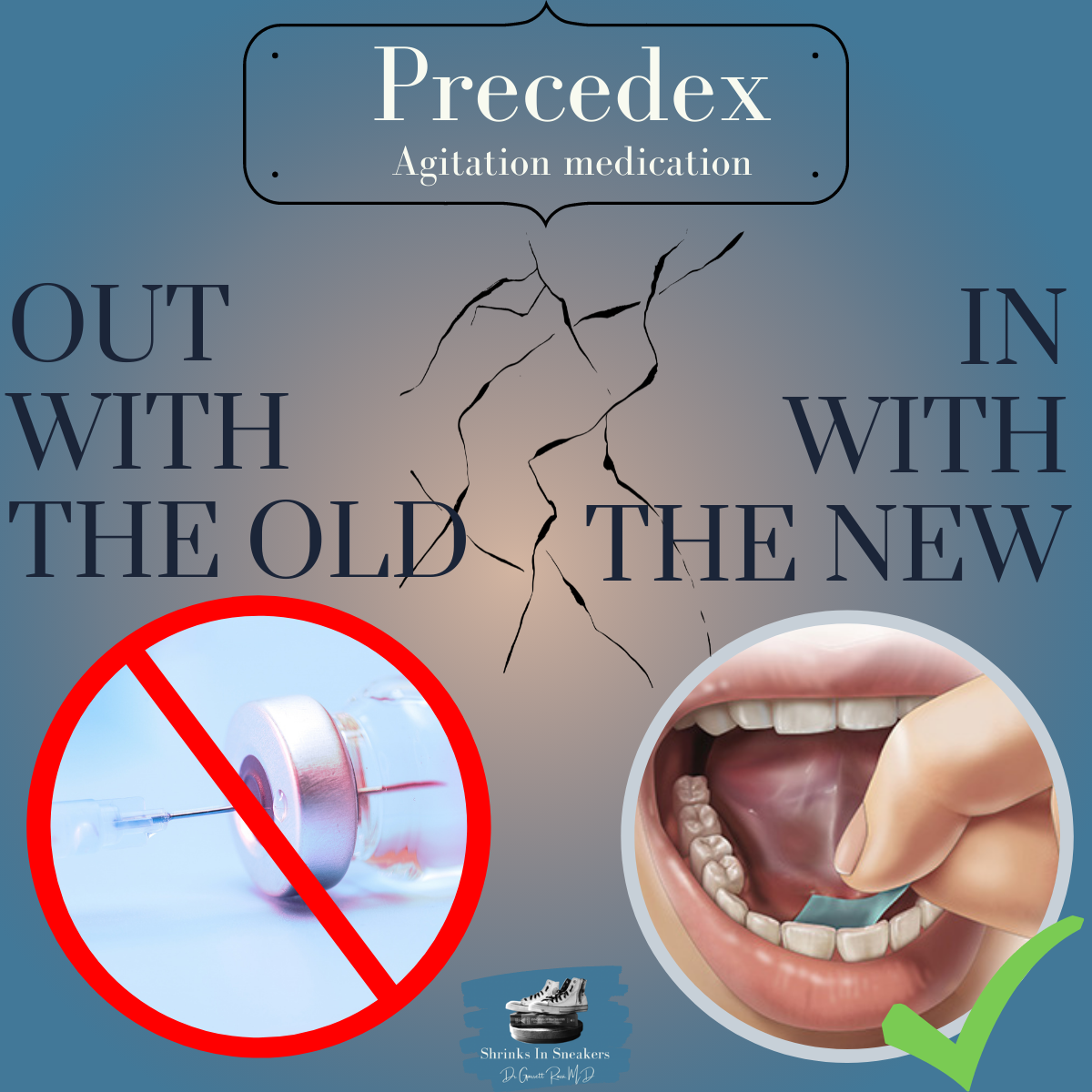
    The FDA has approved dexmedetomidine sublingual film for the treatment of agitation associated with schizophrenia or Bipolar I/II disorder in adults.  

    When agitation and aggression are severe, swift resolution of the situation is required.

    Introduction:

    Since the advent of chlorpromazine in the 1950’s pharmacological intervention has been a mainstay in these acute situations. In many cases the combination of haloperidol, lorazepam, and diphenhydramine, the so called B-52 are administered intramuscularly when quick resolution of agitation is required for the safety of the person and staff. 

    But what happens when these methods fail to provide adequate relief and person remains agitated?

    There are few options available outside of the dopamine blocking medications and benzodiazepines. 

    I’ve been in situations as an early career psychiatrist where I’ve had to treat severe agitation that is unresponsive to the traditional methods of treating agitation. 

    After multiple medications failed to adequately treat the agitation, I called the medical floor to transfer the person for a Dexmedetomidine (precedex) drip. This is a medication I’ve seen work well in the ICU setting with agitated delirium. 

    But drips are complicated to use and require careful monitoring on the medical floor. I was thinking it would be great if there was an option that did not require IV placement or transfer to the medical floor. 

    Mechanism of Action:

    Recent studies have looked at sublingual Dexmedetomidine as a potential new treatment for agitation. 

    Dexmedetomidine is an alpha-2 noradrenergic agonist approved by the FDA for IV sedation and analgesia and limitted to 24 hours. It induces sleep by activating alpha-2 presynaptic receptors reducing norepinephrine release. Both sedation and awakening are rapid, and the medication is safe but does require monitoring of blood pressure and heart rate. 

    Phase 3 Clinical Trial Results:

    A phase 3 clinical trial of 120 micrograms and 180 micrograms of sublingual dexmedetomidine was compared to placebo in patients with bipolar disorder. They used the excited portion (PEC) of the PANSS to measure efficacy and found a response beginning at 20 minutes and continuing to 120 minutes at both doses. 90% of participants in the 180 microgram and 76% in the 120 microgram groups achieved a response. No significant adverse events occurred in the treatment groups.  

    Hsiao JK. Sublingual Dexmedetomidine as a Potential New Treatment for Agitation. JAMA. 2022;327(8):723–725. doi:10.1001/jama.2021.21313

  • Introducing Shrinks In Sneakers on YouTube

    Introducing Shrinks In Sneakers on YouTube

    I’ve done a soft rollout of the Shrinks In Sneakers YouTube channel over the past several months. I think I’m finally comfortable introducing it on the blog. I made the decision to start making videos because I can create content at a more rapid rate, and I can connect with the viewer in a more personal and intimate way. Please subscribe to the channel for updates. If you have specific topics you want covered, or have questions about existing content please comment. I will try to answer all questions and continue creating engaging content based on your interests. 

    Cheers,

    Dr. G

    Link to YouTube Channel

    https://www.youtube.com/channel/UCaaywi6nWB4zzpqBCMvxbsA