Tag: mental health is health

  • 🚨 New Research Alert! 🚨

    🚨 New Research Alert! 🚨

    We’re diving deep into the latest JAMA Psychiatry article on Social Determinants of Health & Suicide-Related Outcomes 🧠💔. This groundbreaking study sheds light on how factors like income, education, and community support play a crucial role in mental health and suicide prevention. 📊🏡💬

    Key Takeaways: 🔍 Social & economic inequalities significantly impact mental well-being. 🛠️ Addressing these factors can save lives and improve outcomes.

    🤝 Community support is more vital than ever.

    💡 With regard to suicide attempt, experience of childhood abuse and maltreatment and sexual assault, gender and sexual minority status, and parental suicide mortality were the strongest risk factors. 

    💡 For suicide mortality, justice system–involved individuals in the community, exposure to others’ and parental suicide, firearm accessibility, divorce, experience in foster care, release from incarceration, and midlife (age 35-65 years) unemployment were the SDOH with consistently strong effects. 

    Join the conversation and let’s work towards a more equitable and supportive world! 🌍✨

    #MentalHealthMatters #JAMAPsychiatry #SocialDeterminants #community #psychiatry #psychiatrist #doctor#mentalhealth #mentalhealthmatters #mentalhealthishealth #SuicidePrevention #HealthEquity #Psychiatry#Research #Wellness 🌈❤️🧠

    🔗 https://jamanetwork.com/journals/jamapsychiatry/article-abstract/2828935

  • The Erosion of Mutual Respect in Mental Health: A Growing Crisis

    The Erosion of Mutual Respect in Mental Health: A Growing Crisis

    An increasing trend I’ve noticed among patients is a lack of respect for mental health professionals who dedicate their lives to helping them. This erosion of mutual respect has become a significant contributor to burnout and emotional exhaustion for those of us working in the field.

    When you choose a career in medicine—especially in mental health—you do so with a desire to help others and make a meaningful difference in their lives. However, what you don’t expect is to face constant verbal abuse, threats, or dismissal of your expertise while you’re doing the best job possible within the constraints of an underfunded and overstretched system.

    Community mental health, in particular, operates under a scarcity of resources—limited staffing, excessive caseloads, inadequate funding, and a never-ending demand for services. These challenges are often compounded by systemic barriers, such as fragmented care, social stigma, and patients’ personal frustrations, which too often are directed at the very people trying to help them.

    It’s important to remember that mental health professionals are human, too. We experience the same range of emotions as anyone else, including pain when our work and intentions are unfairly maligned. The cumulative toll of being met with hostility instead of collaboration can lead to compassion fatigue, a diminished sense of efficacy, and even questioning the value of staying in the profession. This is particularly disheartening in a field where the work is already emotionally taxing by nature.

    We need to address this trend collectively, not just for the sake of providers but also for the patients we serve. Fostering an environment of mutual respect and understanding—on both sides—is crucial. Patients have every right to advocate for their needs and express dissatisfaction when appropriate, but it’s equally essential to recognize the humanity, dedication, and effort of those striving to help them, often in conditions far from ideal.

    For my colleagues who feel disheartened, remember that you’re not alone. Your work matters, and for every challenging interaction, there are also lives you’ve undoubtedly changed for the better—even if it isn’t acknowledged in the moment. And for the system at large, it’s imperative that we address both the external barriers to quality care and the internal culture that makes this kind of disrespect seem increasingly acceptable. If we want mental health care to thrive, we must take care of its providers just as much as its patients.

  • Evidence-Based Exercise Programs for ADHD

    Evidence-Based Exercise Programs for ADHD

    Exercise is a powerful, evidence-based strategy for managing ADHD symptoms. Research shows that regular physical activity can boost dopamine and norepinephrine levels, improving attention, executive function, and emotional regulation. 

    1. Aerobic Exercise Programs

    Aerobic activities are particularly effective for ADHD because they increase heart rate and stimulate brain chemicals associated with focus and mood.

    • Example:
      • Program: Preparing for 5K race
      • Duration: 3 times per week, 30–45 minutes per session
      • Benefits: Gradual progression helps build consistency, while running boosts executive functioning and decreases hyperactivity.

    2. High-Intensity Interval Training (HIIT)

    HIIT involves alternating short bursts of intense activity with periods of rest or lower-intensity activity. It’s time-efficient and highly engaging, which suits individuals with ADHD.

    • Example:
      • Program: 20-Minute HIIT Circuit (e.g., 30 seconds of jumping jacks, 15 seconds rest; repeat with squats, burpees, and mountain climbers)
      • Frequency: 3–4 times per week
      • Benefits: Improves impulse control and mood regulation through quick transitions and intense focus.

    3. Martial Arts Training

    Martial arts like karate, taekwondo, or judo combine physical activity with discipline and mindfulness, making them highly effective for ADHD.

    • Example:
      • Program: Weekly martial arts classes for 60 minutes
      • Key Features: Incorporates structure, focus on breathwork, and sequential movements that require attention.
      • Benefits: Enhances self-control, confidence, and attention.

    4. Yoga for ADHD

    Yoga combines movement with mindfulness, helping individuals develop better body awareness and emotional regulation.

    • Example:
      • Program: 20–30-minute yoga sessions using ADHD-focused videos (e.g., Cosmic Kids Yoga for children or Yoga with Adriene for adults).
      • Frequency: Daily or 3–5 times per week
      • Benefits: Reduces stress, improves attention span, and strengthens mind-body connection.

    5. Structured Strength Training

    Strength training involves repetitive, organized routines that build physical strength while requiring focus.

    • Example:
      • Program: 3-day split routine (e.g., arms, legs, core) at home or in the gym, using weights or resistance bands.
      • Benefits: Boosts discipline and executive functioning, while offering visible progress over time.

    6. Nature-Based Activities

    Activities like hiking, biking, or kayaking combine exercise with the calming effects of nature, reducing overstimulation.

    • Example:
      • Program: 60-minute nature walk or bike ride in a local park 2–3 times per week.
      • Benefits: Improves mood, reduces hyperactivity, and promotes relaxation.

    How to Get Started

    • Start small: Begin with 10–15 minutes and gradually increase duration.
    • Make it fun: Choose activities you enjoy to sustain motivation.
    • Set a schedule: Consistency is key. Aim for at least 150 minutes of moderate-intensity exercise per week.
    • Monitor progress: Track improvements in focus, mood, or energy levels to stay motivated.
  • What HAPPENED to Ulotaront The TAAR-1 Agonist for Schizophrenia?

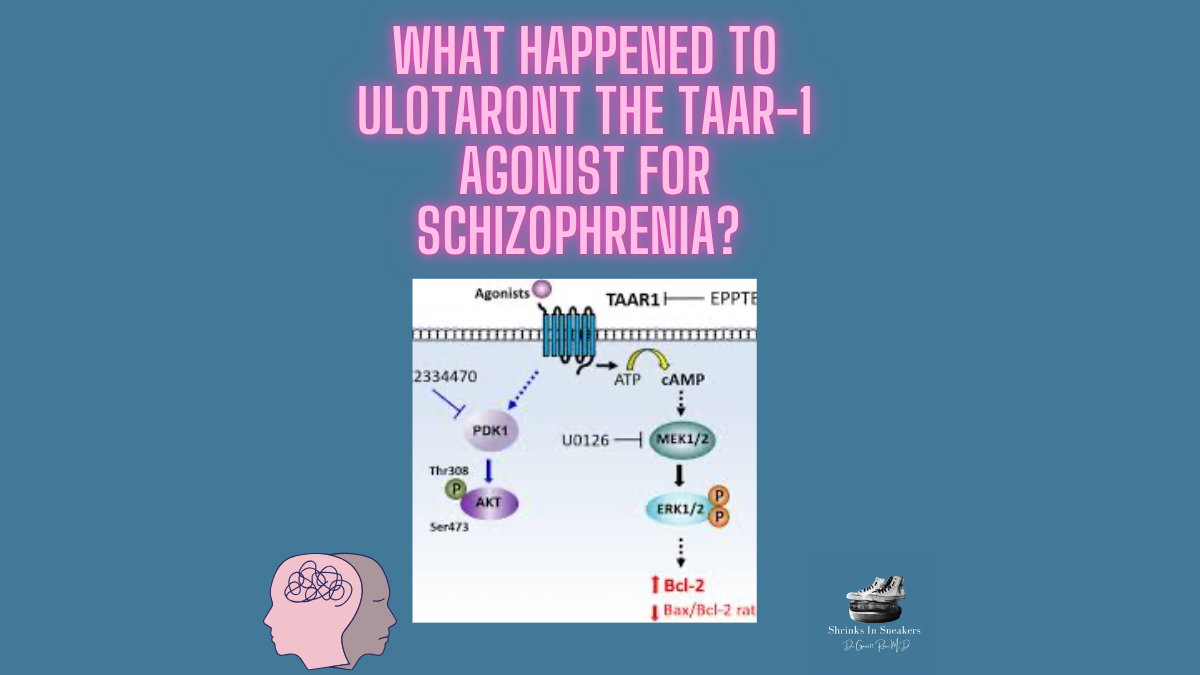
    What HAPPENED to Ulotaront The TAAR-1 Agonist for Schizophrenia?

    Back in 2019, during my residency, TAAR-1 agonists were hailed as the future of schizophrenia treatment, generating a wave of excitement and high expectations. Fast forward to 2025, and the once-prominent buzz has all but vanished. What happened to this promising class of drugs that once seemed poised to revolutionize the field?

    Ulotaront, an investigational antipsychotic developed by Sumitomo Pharma and Otsuka Pharmaceutical, has recently encountered significant challenges in its clinical development. In July 2023, the drug failed to meet primary endpoints in two Phase III clinical trials aimed at treating acutely psychotic adults with schizophrenia. These studies did not demonstrate a statistically significant improvement over placebo, raising concerns about ulotaront’s efficacy in this patient population.

    Given these setbacks, the timeline for ulotaront’s potential approval by the U.S. Food and Drug Administration (FDA) is now uncertain.Consequently, any previous projections for FDA approval will likely be delayed as the developers reassess their clinical strategy.

    It’s important to note that ulotaront had previously received Breakthrough Therapy Designation from the FDA in 2019 for the treatment of schizophrenia, reflecting initial optimism about its therapeutic potential.

  • Mindfulness and Meditation for ADHD: A Natural Boost for Focus and Calm

    Mindfulness and Meditation for ADHD: A Natural Boost for Focus and Calm

    ADHD often brings challenges like racing thoughts, impulsivity, and difficulty staying focused. Mindfulness and meditation are powerful tools that can help individuals with ADHD calm their minds, enhance focus, and reduce stress. Backed by research, these practices are accessible and adaptable to everyday life.

    What is Mindfulness?

    Mindfulness is the practice of paying attention to the present moment without judgment. It involves observing your thoughts, feelings, and surroundings with curiosity and acceptance.

    For individuals with ADHD, mindfulness can help manage the constant stream of thoughts and improve attention regulation.

    Benefits of Mindfulness and Meditation for ADHD

    1. Improved Focus: Regular mindfulness practice helps train the brain to redirect attention back to the task at hand.
    2. Reduced Impulsivity: Mindfulness strengthens self-awareness, helping individuals pause before reacting.
    3. Lower Stress Levels: Deep breathing and meditation activate the relaxation response, countering ADHD-related anxiety.
    4. Better Emotional Regulation: Mindfulness helps identify and manage strong emotions before they escalate.

    The Evidence: Mindfulness for ADHD

    Research supports mindfulness and meditation as effective interventions for ADHD:

    • 2018 meta-analysis found that mindfulness-based interventions significantly improved attention, impulsivity, and emotional regulation in children and adults with ADHD.
    • 2016 RCT published in Journal of Attention Disorders reported that mindfulness training reduced ADHD symptoms and improved executive functioning in adults.

    How to Start a Mindfulness Practice for ADHD

    1. Breathing Exercises

    • What to Do:
      • Sit comfortably.
      • Focus on your breath as it flows in and out.
      • If your mind wanders, gently bring your focus back to your breath.
    • Duration: Start with 2–5 minutes and gradually increase to 10–15 minutes.
    • Why it Works: Deep breathing calms the nervous system and anchors attention.

    2. Body Scan Meditation

    • What to Do:
      • Lie down or sit comfortably.
      • Close your eyes and focus on each part of your body, starting from your toes and moving upward.
      • Notice sensations, tension, or relaxation.
    • Duration: 5–10 minutes.
    • Why it Works: Increases body awareness and reduces physical restlessness.

    3. Mindful Walking

    • What to Do:
      • Walk slowly and focus on the sensations of your feet touching the ground.
      • Pay attention to the rhythm of your steps and the sounds around you.
    • Duration: 5–10 minutes during breaks or daily walks.
    • Why it Works: Combines movement with mindfulness, making it ADHD-friendly.

    4. Guided Meditations

    • What to Do: Use mindfulness apps like CalmHeadspace, or Insight Timer for ADHD-specific guided sessions.
    • Duration: Sessions range from 5 to 30 minutes.
    • Why it Works: Guided meditations provide structure, making it easier to stay engaged.

    5. One-Minute Check-Ins

    • What to Do:
      • Pause for one minute during the day to notice your breath, thoughts, or surroundings.
      • Ask yourself, “What’s happening right now?”
    • Why it Works: Quick mindfulness breaks ground your attention and reduce overwhelm.

    Tips for Success

    • Start Small: Begin with short sessions and gradually increase as your comfort grows.
    • Be Patient: It’s normal for the ADHD mind to wander. The goal is to notice and gently refocus.
    • Practice Consistently: Aim for 3–5 sessions per week to build the habit.
    • Integrate into Daily Life: Use mindfulness during daily tasks, like eating or brushing your teeth, to stay present.
  • L-theanine (LT) supplementation and Mental Health Disorders Does it work?

    L-theanine (LT) supplementation and Mental Health Disorders Does it work?

    L-theanine is a supplement I’ve personally explored, especially during periods of intense study for major exams or when managing a particularly challenging work schedule. I’ve found it to be helpful, especially when paired with caffeine, either by adding it to coffee or using pre-formulated combination products. My general stance on supplements is that they can have a place in treatment, provided they don’t interfere with other therapies. For my patients, I often allow the use of these products as adjuncts when appropriate.

    That said, it’s essential to acknowledge the limitations of supplements like L-theanine. While they may offer some benefit, particularly in mild cases or for specific symptoms, they are unlikely to provide significant relief in severe mental health conditions. Rather than viewing them as standalone alternatives, we should see these natural products as complementary tools—useful additions to comprehensive treatment plans, especially in cases requiring robust intervention.

    A recent systematic review published in BMC Psychiatry examined the effects of L-theanine (LT) supplementation on patients with mental disorders. 

    The review analyzed 11 randomized controlled trials from six countries, focusing on conditions such as schizophrenia, anxiety disorders, and Attention-Deficit/Hyperactivity Disorder (ADHD). The findings suggest that LT supplementation significantly reduces psychiatric symptoms more effectively than control conditions in individuals with these disorders. However, the authors emphasize the need for further studies to validate these findings and explore the underlying mechanisms.

    L-theanine, a non-protein amino acid found in green tea, has been associated with various mental health benefits, including stress reduction and cognitive enhancement. 

    Its potential therapeutic effects in psychiatric disorders are gaining attention, but more research is necessary to fully understand its efficacy and safety.

    In summary, while current evidence indicates that L-theanine supplementation may be beneficial for individuals with certain mental health conditions, further research is essential to confirm these effects and determine appropriate usage guidelines.

    LInk to Article: https://bmcpsychiatry.biomedcentral.com/articles/10.1186/s12888-024-06285-y

  • Mindfulness and Meditation for ADHD: A Natural Boost for Focus and Calm

    Mindfulness and Meditation for ADHD: A Natural Boost for Focus and Calm

    ADHD often brings challenges like racing thoughts, impulsivity, and difficulty staying focused. Mindfulness and meditation are powerful tools that can help individuals with ADHD calm their minds, enhance focus, and reduce stress.

    What is Mindfulness?

    Mindfulness is the practice of paying attention to the present moment without judgment. It involves observing your thoughts, feelings, and surroundings with curiosity and acceptance.

    For individuals with ADHD, mindfulness can help manage the constant stream of thoughts and improve attention regulation.

    Benefits of Mindfulness and Meditation for ADHD

    1. Improved Focus: Regular mindfulness practice helps train the brain to redirect attention back to the task at hand.
    2. Reduced Impulsivity: Mindfulness strengthens self-awareness, helping individuals pause before reacting.
    3. Lower Stress Levels: Deep breathing and meditation activate the relaxation response, countering ADHD-related anxiety.
    4. Better Emotional Regulation: Mindfulness helps identify and manage strong emotions before they escalate.

    The Evidence: Mindfulness for ADHD

    Research supports mindfulness and meditation as effective interventions for ADHD:

    • 2018 meta-analysis found that mindfulness-based interventions significantly improved attention, impulsivity, and emotional regulation in children and adults with ADHD.
    • 2016 RCT reported that mindfulness training reduced ADHD symptoms and improved executive functioning in adults.

    How to Start a Mindfulness Practice for ADHD

    1. Breathing Exercises

    • What to Do:
      • Sit comfortably.
      • Focus on your breath as it flows in and out.
      • If your mind wanders, gently bring your focus back to your breath. Allow thoughts to come and go, don’t hold onto them
    • Duration: Start with 2–5 minutes and gradually increase to 10–15 minutes.
    • Why it Works: Deep breathing calms the nervous system and anchors attention.

    2. Body Scan Meditation

    • What to Do:
      • Lie down or sit comfortably.
      • Close your eyes and focus on each part of your body, starting from your toes and moving upward.
      • Notice sensations, tension, or relaxation.
    • Duration: 5–10 minutes.
    • Why it Works: Increases body awareness and reduces physical restlessness.

    3. Mindful Walking

    • What to Do:
      • Walk slowly and focus on the sensations of your feet touching the ground.
      • Pay attention to the rhythm of your steps and the sounds around you.
    • Duration: 5–10 minutes during breaks or daily walks.
    • Why it Works: Combines movement with mindfulness, making it ADHD-friendly.

    4. Guided Meditations

    • What to Do: Use mindfulness apps like CalmHeadspace, or Insight Timer for ADHD-specific guided sessions.
    • Duration: Sessions range from 5 to 30 minutes.
    • Why it Works: Guided meditations provide structure, making it easier to stay engaged.

    5. One-Minute Check-Ins

    • What to Do:
      • Pause for one minute during the day to notice your breath, thoughts, or surroundings.
      • Ask yourself, “What’s happening right now?”
    • Why it Works: Quick mindfulness breaks ground your attention and reduce overwhelm.

    Tips for Success

    • Start Small: Begin with short sessions and gradually increase as your comfort grows.
    • Be Patient: It’s normal for the ADHD mind to wander. The goal is to notice and gently refocus.
    • Practice Consistently: Aim for 3–5 sessions per week to build the habit.
    • Integrate into Daily Life: Use mindfulness during daily tasks, like eating or brushing your teeth, to stay present.
  • Crush Long Hours: The Ultimate Hack for Demanding Jobs!

    Crush Long Hours: The Ultimate Hack for Demanding Jobs!

    It seems like ADHD medication is following me this week—or maybe it’s the law of attraction at work as I keep coming across articles aligned with the key points I’ve been reflecting on recently.

    A recent Wall Street Journal article highlights the growing use of prescription stimulants like Adderall and Vyvanse among young investment bankers, helping them manage the grueling demands of 90-hour workweeks. While the prevalence of substances to enhance performance isn’t new (cocaine was once the drug of choice), it’s become much easier to obtain legal alternatives. A quick five-minute online questionnaire can now yield a prescription, no shady drug dealers required.

    The article centers on a young professional who, despite his own skepticism about having ADHD, found the medication transformative for surviving the intense pace of his job. Predictably, dependency followed.

    This isn’t an isolated issue, nor is it exclusive to investment banking. We’ve seen a marked increase in adult ADHD diagnoses, likely tied to the expansion of telehealth and more relaxed prescribing practices.

    While the article rightly calls for reevaluating workplace expectations and support systems, let’s be honest—this phenomenon isn’t going anywhere soon. The stakes are too high: major profits for companies and career-defining opportunities for individuals.

    We need to acknowledge this for what it really is: the use of performance-enhancing drugs (PEDs) to gain an edge in professional life. In many ways, it’s no different from using steroids in sports. Maybe the real question isn’t how to stop it, but whether we should allow informed adults to use PEDs under careful medical supervision.

    I’ll let you all weigh in on that one.

    Cheers,
    Dr. G

    LInk: https://www.wsj.com/finance/banking/young-banker-finance-adhd-medication-adderall-d578a16f

  • APA Updates Guidance on Borderline Personality Disorder: What Clinicians Need to Know

    APA Updates Guidance on Borderline Personality Disorder: What Clinicians Need to Know

    Borderline Personality Disorder (BPD) is one of the most misunderstood and challenging conditions in psychiatric practice. It’s a topic I’m particularly passionate about, as patients with BPD are frequently misdiagnosed, and many clinicians hesitate to assign the diagnosis due to stigma or uncertainty. This reluctance often leads to suboptimal care, including the overuse of multiple medication classes without clear benefit. In response to these challenges, the American Psychiatric Association (APA) has recently updated its guidelines on BPD, providing a more comprehensive framework to enhance diagnosis and treatment. This update represents a significant step forward in improving care for a condition that has long been underserved.

    1. Diagnosis and Early Detection

    The updated guidance emphasizes the importance of early identification of BPD symptoms, particularly in adolescence and early adulthood. It encourages clinicians to use structured diagnostic tools alongside clinical interviews to reduce misdiagnosis and stigma.

    2. Therapeutic Approaches

    Evidence-based psychotherapies remain the cornerstone of BPD treatment. Dialectical Behavior Therapy (DBT) continues to hold strong empirical support, but the APA has expanded its recommendations to include:

    • Mentalization-Based Therapy (MBT)
    • Transference-Focused Psychotherapy (TFP)
    • Good Psychiatric Management (GPM)

    The guidance highlights the importance of tailoring therapy to individual patient needs, with a focus on building trust and managing emotional dysregulation.

    3. Medications

    While no medications are FDA-approved specifically for BPD, the APA guidance underscores the role of pharmacotherapy in managing co-occurring conditions such as mood disorders, anxiety, and impulsivity. Clinicians are advised to take a cautious and evidence-based approach to prescribing, avoiding polypharmacy whenever possible.

    4. Stigma Reduction and Patient Advocacy

    The guidance calls for a shift in how clinicians, patients, and society perceive BPD. Educating patients and their families about the condition, normalizing treatment, and advocating for systemic support are crucial components.

    5. Integrative and Community-Based Care

    The APA emphasizes the need for multidisciplinary care teams and integrating care across settings. This includes collaboration with primary care providers, social services, and crisis intervention programs to ensure continuity of care.

    6. Focus on Outcomes and Recovery

    The updated guidance reflects a recovery-oriented approach, focusing on helping patients achieve long-term functional improvement and quality of life. Measuring treatment outcomes and adapting care plans accordingly are encouraged practices.

    Conclusion

    These updates highlight the APA’s commitment to improving outcomes for individuals living with BPD. By promoting evidence-based practices, reducing stigma, and advocating for patient-centered care, clinicians are better equipped to address the challenges associated with this condition.

    What do you think about these changes? How do you see them impacting your practice or care delivery?

  • ADHD in Later Life: A Surge in Diagnoses Among Older Americans

    ADHD in Later Life: A Surge in Diagnoses Among Older Americans

    🤣 What a perfect time for this article considering ADHD is my topic of choice this week.

    🧠 A nuanced debate surrounds the rise in ADHD diagnoses, particularly among adults. While underdiagnosis and increased awareness contribute to this trend, it’s not the sole explanation. ADHD, often linked to developmental delays, may require continued medication into adulthood for some individuals with persistent symptoms

    ➡️ However, the necessity for lifelong medication in all or most cases is questionable

    ➡️ The surge in first-time ADHD diagnoses among adults aged 30’s-40’s, often without prior documented history, raises important questions

    💡 While some cases may have been previously overlooked, it’s crucial to consider:

    ⚡ Co-occurring disorders like depression and anxiety, which can cause similar cognitive issues

    ⚡ Societal factors: Increasing demands for productivity and competitiveness in modern society

    ⚡ The potential misuse of performance-enhancing drugs in high-pressure environments

    💡 It’s essential to approach each case individually, considering both the benefits of treatment and the risks of overdiagnosis. A comprehensive evaluation, including assessment of co-existing conditions and life circumstances, is crucial for accurate diagnosis and appropriate treatment plans

    Link to NYT article: https://www.nytimes.com/2024/12/11/well/mind/adhd-diagnosis-older-middle-age.html

    #ADHD #ADHDawarness #ADHDtreatment #ADHDtips #ADHDlife #mentalhealth #mentalhealthmatters #mentalhealthishealth #psychiatry #psychiatrist #doctor #stimulants #stimulantmedication