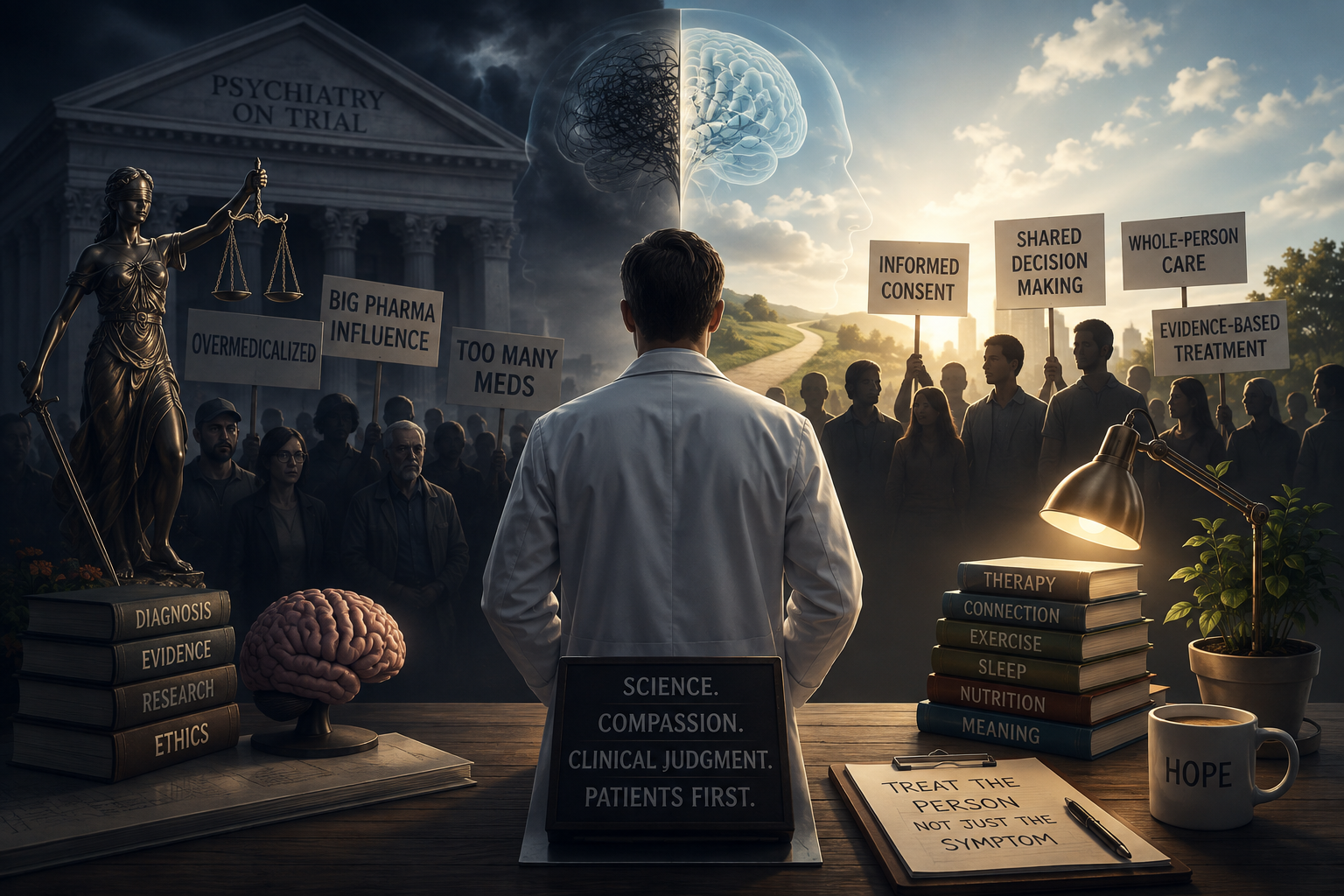
Tag: mental health treatment

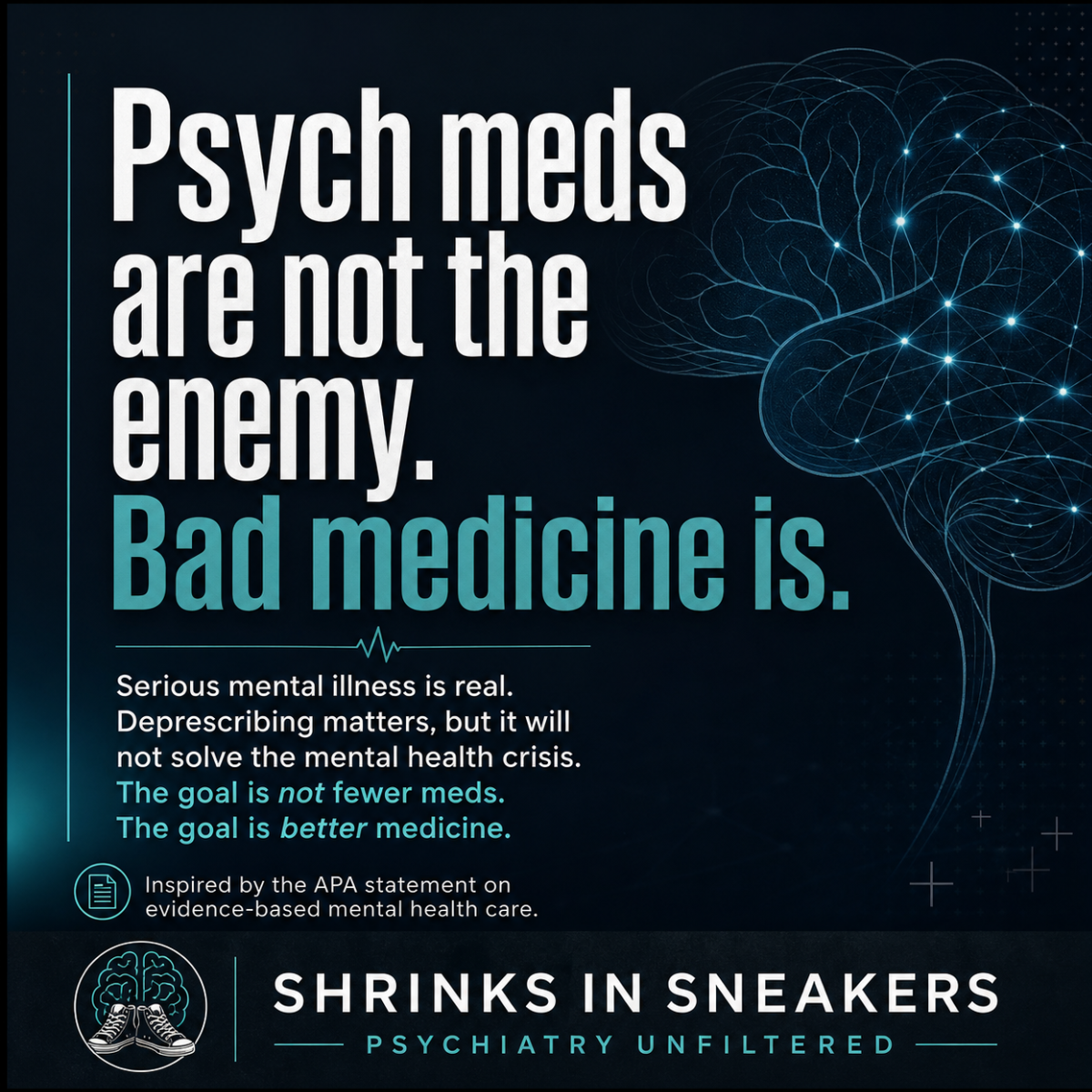
  • Psych Meds Are Not the Enemy. Bad Medicine Is

    Psych Meds Are Not the Enemy. Bad Medicine Is

    There is a dangerous difference between criticizing bad psychiatric practice and stigmatizing psychiatric illness.

    I have criticized aspects of psychiatry many times. I believe our field should be open to critique. We should question our prescribing habits. We should challenge lazy diagnosis. We should acknowledge when medications are used too quickly, continued too long, or substituted for the deeper work of psychotherapy, lifestyle change, social support, and careful clinical formulation.

    Psychiatry should never be above criticism.

    But criticism of psychiatric practice is not the same thing as denying the legitimacy of psychiatric illness.

    And right now, that line is being blurred.

    Serious Mental Illness Is Real

    One thing you will never hear me say is that psychiatric disease is not real.

    Schizophrenia is real.
    Bipolar disorder is real.
    Severe major depression is real.
    Catatonia is real.
    Psychotic depression is real.
    Obsessive-compulsive disorder can be profoundly disabling.
    Posttraumatic stress disorder can devastate a person’s life.

    These are not character flaws. They are not weakness. They are not simply failures of lifestyle, discipline, resilience, spirituality, or mindset.

    They are legitimate medical illnesses.

    That does not mean every painful experience is a disease. It does not mean every person who is grieving, anxious, overwhelmed, lonely, or struggling needs a diagnosis or a medication. In fact, one of the most important tasks in psychiatry is knowing the difference.

    Some people need medication.

    Some people need psychotherapy.

    Some people need sleep, exercise, nutrition, structure, social connection, housing, safety, meaning, accountability, or community.

    Many people need several of these at the same time.

    The goal is not to medicalize all suffering. The goal is to recognize real illness when it is present and treat it with the seriousness it deserves.

    The Problem Is Not “Medication”

    Psychiatric medications are often discussed as if they are inherently suspicious.

    But medication is not the enemy.

    Bad medicine is.

    A medication can be life-changing when used for the right condition, in the right person, at the right time, for the right reason.

    The same medication can be harmful when used carelessly, without a clear diagnosis, without follow-up, without discussion of risks and benefits, or without a plan for reassessment.

    That is not unique to psychiatry.

    Antibiotics can be lifesaving, but inappropriate antibiotic use causes harm. Opioids can be appropriate in some clinical contexts, but reckless prescribing devastated communities. Steroids can be powerful tools, but long-term unnecessary use can create major problems.

    The issue is not whether medications are “good” or “bad.”

    The issue is whether we are practicing medicine well.

    Deprescribing Matters, But It Is Not a Mental Health Policy

    Deprescribing is important.

    Every psychiatrist I know has experience reducing, simplifying, or stopping medications when the risks outweigh the benefits or when the original indication no longer makes sense.

    This is not a fringe idea. It is part of daily psychiatric practice.

    We stop medications that are not helping.
    We reduce unnecessary polypharmacy.
    We simplify regimens when possible.
    We monitor side effects.
    We reassess diagnoses.
    We talk with patients about what still makes sense.

    Good psychiatry includes deprescribing.

    But deprescribing alone will not solve the mental health crisis.

    People cannot deprescribe their way out of a lack of psychiatric beds. They cannot deprescribe their way out of months-long waitlists. They cannot deprescribe their way out of poverty, homelessness, trauma, addiction, loneliness, or a collapsing continuum of care.

    And they cannot deprescribe their way out of schizophrenia, mania, catatonia, psychotic depression, or severe melancholic depression.

    When we frame the mental health crisis primarily as a problem of overprescribing, we oversimplify a system failure.

    We ignore the shortage of psychiatrists. We ignore the lack of access to psychotherapy. We ignore inadequate visit times, fragmented care, insurance barriers, emergency departments boarding psychiatric patients for days, and the near disappearance of a true continuum of care.

    Those are not solved by telling people to take fewer medications.

    The Risk of Stigma Dressed Up as Reform

    My concern is not that we are talking about prescribing quality. We should be talking about that.

    My concern is that the rhetoric around psychiatric medications often sends a dangerous message to people who already feel ashamed.

    Many patients with serious mental illness already struggle with the idea of needing medication.

    They worry it means they are weak.
    They worry it means they are broken.
    They worry it means they are dependent.
    They worry it means they are not trying hard enough.
    They worry others will see them differently.

    When public conversations frame psychiatric medications as the central villain, those patients hear something very different from “we need better prescribing.”

    They hear:

    You are dependent.
    You are addicted.
    You are taking the easy way out.
    You should be able to fix this naturally.
    You are the problem.

    That is not empowerment.

    That is stigma.

    And for some patients, that stigma can be dangerous. It can lead people to stop medications abruptly, avoid treatment, disengage from care, relapse, or delay help until a crisis occurs.

    Of course patients should be informed. Of course they should understand risks and benefits. Of course they should have a voice in treatment decisions.

    But informed consent should not become fear-based messaging. And reform should not become another way of shaming people with serious psychiatric illness.

    Better Medicine Means Holding Two Truths

    The future of psychiatry depends on our ability to hold two truths at the same time.

    First, psychiatric illness is real and can be devastating.

    Second, psychiatry must be careful not to overdiagnose, overprescribe, or turn normal human suffering into lifelong pathology.

    Both truths matter.

    If we only emphasize the first, we risk medicalizing everything.

    If we only emphasize the second, we risk abandoning people with serious illness.

    Real psychiatric care lives in the tension between those truths.

    It requires humility. It requires careful diagnosis. It requires honest conversations about uncertainty. It requires medication when appropriate, psychotherapy when appropriate, lifestyle intervention when appropriate, social support when appropriate, neuromodulation when appropriate, and deprescribing when appropriate.

    It also requires us to say clearly that some people need medication, and that needing medication is not a moral failure.

    The Goal Is Better Medicine

    The goal is not to prescribe more.

    The goal is not to prescribe less.

    The goal is to prescribe better.

    Better diagnosis.
    Better informed consent.
    Better follow-up.
    Better access to psychotherapy.
    Better use of lifestyle interventions.
    Better systems of care.
    Better deprescribing when medications are no longer needed.
    Better protection for people whose medications are the reason they are alive, stable, working, parenting, studying, and functioning.

    We do not fix psychiatry by pretending psychiatric medications are always the answer.

    But we also do not fix psychiatry by pretending they are the enemy.

    Psych meds are not the enemy.

    Bad medicine is.

  • Mental Illness Is Real. Not Everything Painful Is

    Mental Illness Is Real. Not Everything Painful Is

    On the two opposite ways psychiatry harms patients, and the discipline to know the difference.

    There are two dangerous ways to talk about mental illness, and most public conversation manages to do both at once.

    The first is to deny that it exists.

    The second is to see it everywhere.

    Both are wrong. Both are harmful. Both leave patients worse off.

    On one side are the people who claim psychiatric disease isn’t real, that we’re medicating normal emotion, that diagnosis is social construction, that psychiatry exists to enrich pharmaceutical companies and serve as gatekeepers for a coercive system.

    This is the most extreme antipsychiatry position. And anyone who has actually worked with the seriously mentally ill knows how detached from reality it is.

    Anyone who has sat with a patient in the middle of a manic episode, watched schizophrenia consume a young person’s future, or cared for a loved one whose personality and functioning were permanently altered by illness knows that serious mental illness is not a metaphor. It is not a branding problem. It is not a failure of social acceptance.

    It is real.

    It destroys lives.

    It fractures families.

    It changes the trajectory of everyone around it.

    To deny that is not compassionate. It is cruel.

    But there is a subtler version of denial, one that doesn’t reject psychiatric illness outright, but explains nearly everything through the lens of trauma.

    I don’t mean trauma in the strict PTSD sense. Not the defined clinical syndrome with intrusive memories, avoidance, negative alterations in mood and cognition, and hyperarousal. I mean the broader cultural reflex to frame almost every form of suffering, dysregulation, or dysfunction as “trauma.”

    Trauma matters. Adverse experiences shape brain development, attachment, emotional regulation, interpersonal functioning, substance use, and psychiatric vulnerability. Trauma-informed care has improved medicine, especially by reminding clinicians not to mistake survival strategies for character flaws.

    But trauma does not explain everything.

    It does not explain every case of bipolar disorder. It does not explain every case of schizophrenia. It does not explain every recurrent psychotic episode, every manic state, every severe melancholic depression, or every disabling case of OCD.

    Sometimes the illness is the illness.

    Sometimes the problem is not that society failed to understand a person’s pain. Sometimes the problem is that a devastating psychiatric disease has emerged, and without treatment, it will keep dismantling that person’s life.

    But the opposite error is just as common, and at least as harmful.

    Some clinicians see mental illness in everything.

    They accept every DSM category as if it were a blood test result. They are not critical enough of psychiatry’s limitations. They recognize suffering, and because they want to help, they reach for diagnosis. They reach for medication. They reach for neuromodulation. They reach for a treatment plan that looks medical, billable, and actionable.

    But not every form of suffering is a psychiatric disease.

    Some suffering is grief.

    Some suffering is loneliness.

    Some suffering is moral injury.

    Some suffering is poverty.

    Some suffering is addiction, family chaos, social collapse, lack of purpose, bad relationships, unemployment, burnout, or the consequences of repeated poor decisions.

    Some suffering is just the pain of being human in a world that doesn’t give people much room to fall apart.

    That doesn’t make it fake. It doesn’t mean the person doesn’t deserve help.

    It means the help they need may not live inside a pill bottle.

    This is one of the hardest conversations in psychiatry.

    A patient is suffering. Their family is desperate. Everyone wants the problem named. Everyone wants the plan, the timeline, the medication, the diagnosis, the insurance code, the discharge plan, the promise that things will get better quickly.

    But sometimes the honest answer is:

    “I believe you are suffering. I believe you need help. But I am not convinced that what you have is best understood as a medication-responsive psychiatric disease.”

    That is not abandonment. That is clinical honesty.

    And it is much harder than simply prescribing something.

    The pressure to diagnose is everywhere.

    Families want answers. Hospitals need billable codes. Insurance companies require DSM or ICD diagnoses. Patients often arrive already convinced that if their suffering is severe enough, it must be a disorder. Clinicians are trained inside systems where diagnosis drives reimbursement, treatment authorization, length of stay, documentation, and discharge planning.

    The incentives quietly push us toward overdiagnosis.

    Not always because clinicians are careless. Often because that is simply how the system works.

    A person presents in crisis. They are admitted to an inpatient psychiatric unit. The system expects a psychiatric diagnosis. But not everything that gets someone admitted to inpatient psychiatry is caused by a primary psychiatric disease.

    Sometimes it is. Absolutely. Sometimes it is mania, psychosis, melancholic depression, catatonia, severe OCD, or a lethal depressive episode.

    Those cases need aggressive, evidence-based psychiatric treatment. Medication can be lifesaving. ECT can be lifesaving. Lithium, clozapine, antipsychotics, long-acting injectables, lifesaving. We should never minimize that. Untreated serious mental illness can destroy the patient’s life and the family’s along with it.

    But other times the picture is far more complicated. There may be interpersonal chaos, substance use, housing instability, personality structure, trauma history, family conflict, legal problems, financial collapse, social isolation, or a profound absence of coping skills. The person is suffering, but the suffering does not map cleanly onto a discrete psychiatric disease.

    These patients often respond poorly to medication, because medication was never the main answer.

    Then, when the medication doesn’t work, everyone assumes the psychiatrist chose the wrong one.

    Try another SSRI. Add an antipsychotic. Add a mood stabilizer. Try ketamine. Try TMS. Try something stronger.

    But sometimes the problem isn’t treatment resistance.

    Sometimes the problem is diagnostic overreach.

    This is where psychiatry must be honest with itself.

    We can harm people in two opposite directions.

    We can harm them by failing to diagnose and treat real mental illness.

    We can harm them by diagnosing and treating something as mental illness when it isn’t.

    The first error leaves people untreated and at the mercy of their disease.

    The second exposes people to unnecessary treatment, side effects, identity shifts, stigma, financial cost, and the disappointment that follows when a promised medical solution fails to deliver.

    And when people are harmed by treatments they didn’t need, they often become psychiatry’s loudest critics.

    Not because they were always antipsychiatry.

    Because psychiatry overpromised. Because someone gave them a diagnosis that didn’t fit. Because someone medicalized their suffering without understanding their life.

    Psychiatry does not need to choose between naïve biological reductionism and total diagnostic nihilism. We need a more disciplined middle.

    When there is a clear psychiatric illness, recognizable course, symptom pattern, family history, severity, treatment-responsive biology, we should treat it seriously and decisively. No apologies. No hesitation. No pretending that schizophrenia is just “difference,” or mania is “spiritual awakening,” or severe depression is “sadness,” or OCD is “perfectionism.”

    But when the presentation is questionable, when the course doesn’t fit, when the diagnosis is being stretched to justify intervention, when the suffering is real but not clearly disease-based, we should slow down.

    We should listen longer. Widen the frame. Ask whether medication is likely to help. Consider psychotherapy, structure, sleep, substance use treatment, social repair, family boundaries, vocational support, lifestyle change, and time.

    We should be willing to say:

    “This is real suffering. But I am not going to pretend that a psychiatric label explains all of it.”

    That isn’t minimizing. That’s precision.

    The future of psychiatry depends on our ability to hold both truths at the same time.

    Mental illness is real.

    And not everything painful is mental illness.

    Some people desperately need psychiatric treatment and will be devastated without it. Others need compassion, structure, therapy, accountability, community, and support, but not a diagnosis that follows them for life, or medications that may do more harm than good.

    The goal is not to diagnose less. The goal is to diagnose better.

    The goal is not to medicate everyone. The goal is to treat the right condition, in the right person, at the right time, for the right reason.

    That is the psychiatry I believe in.

    Not psychiatry as social control.

    Not psychiatry as a pill for every problem.

    Psychiatry as a serious medical discipline, one that recognizes disease reality, respects human suffering, and has the humility to know the difference.

  • Reject dogma—embrace nuance in Psychiatry

    🔹 Psychoanalysis should not be treated as sacred doctrine. Freud was a clever and influential thinker, but not a prophet.


    🔹 Biological psychiatry is equally vulnerable to dogma. Not every symptom signals a disease, and not every distress warrants medication.


    🔹 That said, evidence-based pharmacology has its place—especially when medications show clear, replicable benefits in defined clinical conditions.

    The future of psychiatry lies in balanced thinking, not blind allegiance—to Freud, to biology, or to any single model of mind.

  • The Importance of Distinguishing Suicidal Behaviors

    The Importance of Distinguishing Suicidal Behaviors

    This is the subject of a recent discussion I had with a colleague regarding the differences between a suicide attempt and a suicide gesture. Though these terms are sometimes used interchangeably in casual conversation or even in clinical documentation, they carry fundamentally different meanings—both in terms of patient risk and in how we, as clinicians, should respond.

    Our conversation emerged from a case involving a patient with borderline personality disorder who presented to the emergency department after ingesting a small quantity of over-the-counter medication. The intent was unclear. Was this a serious attempt to end her life? Or was it a gesture—an act of desperation without the intention to die, but rather to communicate emotional distress?

    The question is not academic. Our interpretation of the event determines our risk formulation, our documentation, our treatment planning, and even how we communicate with the patient and their support system. Yet, it is precisely in these gray areas that clinicians often struggle, and where outdated or stigmatizing language can do real harm.

    Defining the Terms: Clinical and Functional Differences

    suicide attempt refers to an act of self-harm with at least some intent to die. The degree of lethality may vary, but what distinguishes an attempt is that the individual believed the act could result in death and engaged in it with that goal in mind—even if ambivalence was present. The National Institute of Mental Health (NIMH) and the Columbia-Suicide Severity Rating Scale (C-SSRS) define this with some specificity: any potentially self-injurious behavior with non-zerointent to die, regardless of outcome.

    In contrast, a suicidal gesture is a behavior that mimics suicidal behavior or appears life-threatening but is typically not intended to be fatal. The function is often communicative or affect-regulating rather than aimed at death. Classic examples include superficial wrist-cutting, ingesting a sub-lethal dose of medication, or tying a noose but not tightening it. These acts often occur in interpersonal contexts and can be seen as efforts to signal pain, elicit help, or assert control in the face of perceived abandonment.

    Why the Distinction Matters

    It might be tempting to dismiss suicidal gestures as “attention-seeking” or “manipulative,” but this framing is both clinically dangerous and ethically fraught. Individuals who engage in gestures often experience intense psychological suffering, and repeated gestures are a well-established risk factor for future suicide attempts and completed suicide.

    From a risk assessment standpoint, gestures should be taken seriously, especially when they become part of a pattern. While the intent to die may not be present in a given gesture, intent can shift quickly, particularly in individuals with mood disorders, personality pathology, or under the influence of substances.

    From a treatment perspective, understanding the function of the behavior—whether it is to relieve affective tension, to communicate distress, or to punish oneself—is crucial to tailoring interventions. For instance, dialectical behavior therapy (DBT) explicitly targets self-harm and suicidal gestures as part of its hierarchy of treatment priorities, recognizing the urgency and potential danger of these behaviors even when lethality is low.

    Conclusion: Clarify, Don’t Categorize

    Ultimately, the conversation with my colleague reminded me that the real clinical challenge is not to label a behavior as a suicide attempt or a gesture, but to understand its meaning in the life of the patient. Both require empathy, structure, and a willingness to engage with complexity. Whether a patient wants to die or wants their suffering to be seen and acknowledged, both deserve serious clinical attention.

    By sharpening our definitions and approaching these behaviors with nuance, we can better serve patients in crisis and avoid the pitfalls of assumptions—especially in emotionally charged clinical environments like emergency rooms, inpatient units, or high-acuity outpatient settings.

  • Managing Mild to Severe Depression: A Guide to Treatment Approaches

    Managing Mild to Severe Depression: A Guide to Treatment Approaches

    It is crucial to recognize that none of the available medications or neuromodulation procedures, including electroconvulsive therapy (ECT) and psychedelics, are disease-modifying. This means that while these treatments can alleviate symptoms, they do not address the underlying causes of depression. Think of them like acetaminophen for a fever—it may temporarily reduce the fever, but without treating the underlying infection, the fever will return.

    Neuromodulation refers to techniques that alter brain activity through electrical or magnetic stimulation. Examples include ECT, transcranial magnetic stimulation (TMS), and vagus nerve stimulation (VNS), all of which have been explored as treatments for severe depression.

    Optimizing Depression Treatment for Different Severity Levels

    Given this understanding, how can we best utilize these treatments to support patients during difficult times? The key is to acknowledge that medications and neuromodulation primarily serve as symptom management tools, most effectively used in the short term for severe cases.

    Mild to Moderate Depression: Prioritizing Non-Medication Approaches

    For individuals experiencing mild to moderate depression, medication should not be the first line of treFor individuals experiencing mild to moderate depression, medication should not be the first line of treatment. Many people can directly link their depressive symptoms to stressful life events. In such cases, the best initial approach includes:

    • Cognitive Behavioral Therapy (CBT) – Evidence-based therapy that helps reframe negative thinking patterns. Research has shown that CBT is as effective as antidepressants for mild to moderate depression, with relapse rates significantly reduced in those who complete therapy.
    • Lifestyle Modifications – Regular exercise and a healthy diet have strong evidence supporting their role in reducing depressive symptoms. A study published in JAMA Psychiatry found that individuals engaging in at least 150 minutes of moderate exercise per week had a 25% lower risk of developing depression.

    For some, these interventions alone may be sufficient to overcome depression and maintain long-term well-being. If additional support is needed, natural supplements with reasonable evidence, such as St. John’s Wort and S-Adenosylmethionine (SAMe), may be considered for mild to moderate depression. However, these supplements are not without risks—St. John’s Wort can interact with many medications, including antidepressants and birth control pills, potentially reducing their effectiveness. SAMe may cause gastrointestinal discomfort or manic symptoms in individuals with bipolar disorder.

    Severe Depression: When Medication and Neuromodulation Play a Role

    For individuals with severe depression, particularly those at risk for self-harm or suicide, the risks and benefits of medication should be carefully weighed. Antidepressants and neuromodulation therapies have demonstrated the most significant impact in these cases. When selecting a medication, I prioritize those with a lower risk of concerning side effects, particularly sexual dysfunction. My initial choices often include:

    • Bupropion – A dopamine-norepinephrine reuptake inhibitor with a favorable side effect profile.
    • Vortioxetine – Known for its cognitive benefits and relatively low sexual side effects.
    • Mirtazapine – Can be beneficial for those with sleep disturbances or appetite loss.
    • Vilazodone – A serotonin modulator with a lower incidence of sexual dysfunction compared to SSRIs.

    It is essential for patients starting antidepressants to be closely monitored, especially in the early weeks of treatment, to assess for side effects and response. Regular follow-ups with a healthcare provider can help adjust dosages or explore alternative treatments if needed.

    Treatment Duration and Discontinuation Considerations

    For those starting medication, I generally recommend continuing treatment for 6 to 12 months, followed by an assessment to determine whether tapering off is feasible. This process involves shared decision-making, considering:

    • Symptom severity and stability
    • Level of daily functioning
    • Patient’s goals and preferences

    The goal is to ensure that the patient has developed effective coping strategies, engaged in therapy, and adopted a healthy lifestyle before considering medication discontinuation. If stopping medication is not advisable, we work to identify the lowest effective dose for long-term maintenance.

    Final Thoughts

    Depression treatment should be personalized and dynamic, evolving with the patient’s needs. By recognizing that medications and neuromodulation are tools for symptom management rather than cures, we can ensure they are used effectively—providing relief during crises while prioritizing long-term strategies for resilience and recovery.

  • Can Low-Dose LSD Treat ADHD? A New Study Weighs In

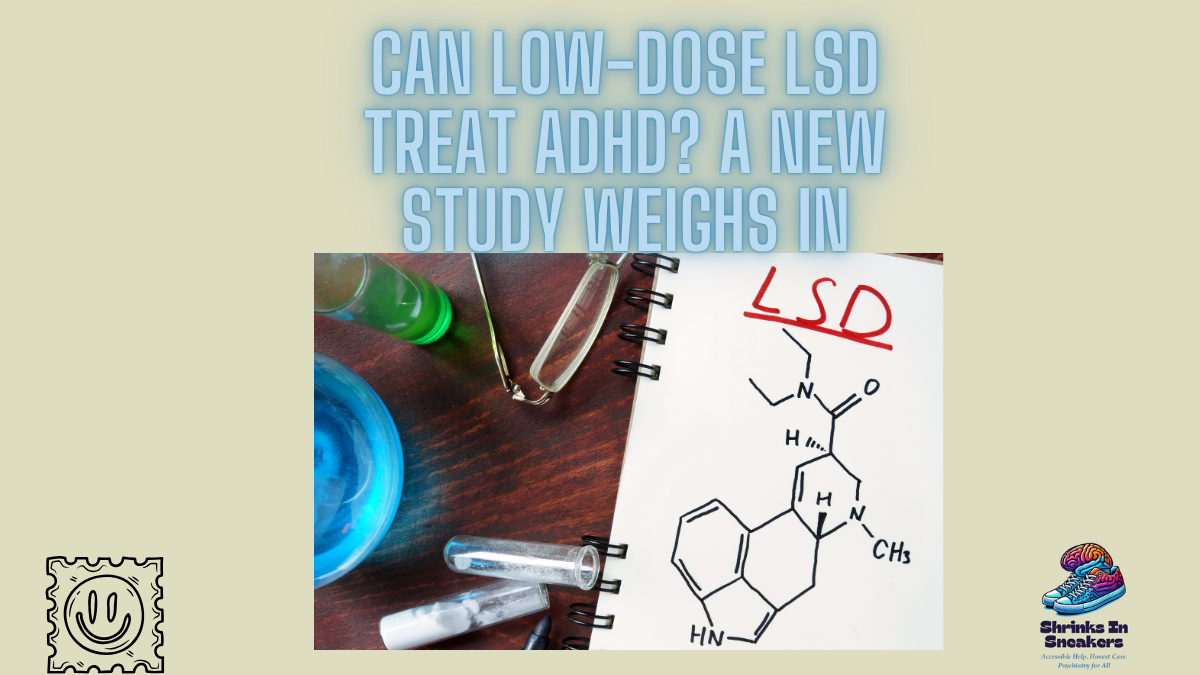
    Can Low-Dose LSD Treat ADHD? A New Study Weighs In

    ADHD (Attention-Deficit/Hyperactivity Disorder) affects millions of adults worldwide, with stimulants like methylphenidate and amphetamine being the most effective treatments. But could psychedelics like LSD offer an alternative? A new randomized clinical trial aimed to find out.

    👉 Study Overview:

    • Design: Multicenter, double-blind, placebo-controlled trial (N = 53)
    • Participants: Mean age 37 years, 42% female
    • Intervention: Low-dose LSD (20 μg) or placebo twice weekly for 6 weeks (12 doses total)
    • Primary Outcome: Change in ADHD symptoms using the Adult ADHD Investigator Symptom Rating Scale (AISRS)

    💡 Key Findings:

    • Both groups showed significant improvement in ADHD symptoms:
      • LSD group: −7.1 points (95% CI, −10.1 to −4.0)
      • Placebo group: −8.9 points (95% CI, −12.0 to −5.8)
    • ✅ LSD was safe and well tolerated
    • ❌ No significant difference between LSD and placebo in symptom reduction

    🧠 What This Means:
    While low-dose LSD was safe, it didn’t outperform placebo in treating ADHD symptoms. This challenges anecdotal claims about psychedelics for ADHD and reinforces the need for rigorous placebo-controlled trials in psychedelic research.

    📈 Future research may explore higher doses or alternative mechanisms—but for now, stimulants remain the gold standard for ADHD treatment.

    🔗 https://jamanetwork.com/journals/jamapsychiatry/fullarticle/2831639

  • The Dangers of Overpathologizing Behavioral Issues

    The Dangers of Overpathologizing Behavioral Issues

    Psychiatrists could do the profession—and their patients—a great service by resisting the urge to medicalize every behavioral problem, impulsive act, or mood fluctuation as a direct manifestation of psychiatric illness. While genuine psychiatric disorders exist and require careful diagnosis and treatment, many of the struggles patients face are deeply rooted in the complexities of life itself—financial stress, relationship conflicts, loss, trauma, and systemic issues that no DSM diagnosis can fully capture.

    When Life Struggles Are Mistaken for Mental Illness

    Certain behaviors and emotional responses are frequently overpathologized. For example:

    • A teenager acting out in school following their parents’ divorce may be labeled with oppositional defiant disorder, when their reaction is a predictable response to emotional distress.
    • A grieving spouse who experiences sadness, tearfulness, and withdrawal beyond a few weeks might be diagnosed with major depressive disorder, despite bereavement being a normal and deeply personal process.
    • A person engaging in impulsive spending or risky behaviors after a significant life change might be quickly categorized as having bipolar disorder, when in reality, they are struggling to cope with a sudden transition.

    While these behaviors may be distressing, they do not always indicate the presence of a psychiatric disease requiring medication. Instead, they may reflect normal reactions to adversity that should be addressed through support, coping strategies, and time.

    The Risks of Overpathologizing Human Experience

    The trend of pathologizing problems of living carries significant consequences. Studies have shown that psychiatric overdiagnosis leads to unnecessary medication use, stigma, and a shift in focus away from addressing social determinants of health. For instance, research suggests that antidepressants are prescribed to 1 in 4 U.S. adults, often for mild or situational distress rather than true clinical depression. Moreover, children—particularly boys—are diagnosed with ADHD at disproportionately high rates, sometimes as a response to difficulties in structured classroom settings rather than a true neurodevelopmental disorder.

    Overpathologizing also impacts the credibility of psychiatry. If every struggle is framed as a disorder, the public may begin to view psychiatric diagnoses with skepticism, undermining trust in the profession and the legitimacy of serious mental illnesses.

    A Case That Stuck With Me

    I once treated a young man who had been brought to the hospital by his family after he quit his job, broke up with his girlfriend, and started making impulsive purchases. His parents were convinced he had bipolar disorder, having read online that sudden life changes and spending sprees were signs of mania. However, after spending time with him, it became clear that his actions were rooted in profound dissatisfaction with his life, not a mood disorder. He was struggling with feelings of stagnation, a lack of purpose, and a desire to redefine himself—not symptoms of an illness, but a human experience.

    Despite my clinical assessment, his family was frustrated. They wanted a diagnosis, a label, a treatment plan—something concrete. It was difficult for them to accept that not every distressing experience fits neatly into a medical framework.

    How Can Psychiatry Do Better?

    Psychiatrists and mental health professionals must be intentional in distinguishing true mental illness from the expected emotional and behavioral responses to life’s challenges. Some ways to do this include:

    • A thorough biopsychosocial assessment that considers the role of environmental, cultural, and situational factors in a patient’s presentation.
    • The judicious use of psychiatric diagnoses, ensuring that labels are assigned only when they accurately reflect a disorder rather than a reaction to stress.
    • Education for patients and families about the natural spectrum of human emotions, helping them understand that distress does not always equate to disease.
    • Advocating for systemic solutions, such as better social support networks, financial resources, and access to therapy, so that emotional struggles are not automatically funneled into the medical system.

    Addressing the Counterarguments

    Some might argue that withholding a diagnosis could prevent patients from accessing the care they need. While it’s true that a psychiatric label can sometimes be a gateway to services and support, misdiagnosis can be just as harmful. Providing the wrong diagnosis can lead to unnecessary medication, reinforce a sense of pathology where none exists, and obscure the real sources of distress. The challenge for psychiatrists is to walk this fine line carefully—validating suffering without automatically medicalizing it.

    Conclusion: A Call for Thoughtful Psychiatry

    As psychiatrists, our role is not simply to diagnose and medicate, but to thoughtfully assess and guide. True psychiatric illness must be identified and treated appropriately, but we must also be cautious not to medicalize the normal, albeit painful, struggles of life. The goal should always be to help patients find real, meaningful solutions—whether that means therapy, life changes, or, in some cases, just the reassurance that what they are feeling is part of the human experience.

  • 🧪 Exciting Breakthrough in Cannabis Use Disorder Treatment!

    🧪 Exciting Breakthrough in Cannabis Use Disorder Treatment!

    A recent Phase 2b clinical trial has shown that PP-01, an investigational therapy by PleoPharma, significantly reduces cannabis withdrawal symptoms in individuals with Cannabis Use Disorder (CUD). The study demonstrated a clear dose-response relationship, with the highest dose yielding clinically meaningful results (p=0.02). Importantly, PP-01 was well-tolerated with no safety concerns.

    Recognizing the urgent need for effective treatments, the FDA has granted Fast Track designation to PP-01, expediting its development and review process. This brings hope to the approximately 19.2 million Americans affected by CUD, as there are currently no FDA-approved medications for cannabis withdrawal.

    PP-01 works by targeting suppressed CB1 receptors and neurotransmitter dysregulation in the brain’s reward pathway, offering a novel approach to mitigating withdrawal symptoms. As it enters Phase 3 trials, PP-01 holds promise as a first-in-class treatment for those seeking to overcome cannabis dependence.

  • 🚨 Health Care is Under Attack

    🚨 Health Care is Under Attack

    Our patients are under attack. Our oath to do no harm is under attack. Health care is under attack.

    Last week, the U.S. House of Representatives passed a budget resolution that could slash $880 billion from Medicaid—a devastating blow that would strip 15.9 million people of health coverage. That’s 1 in 5 of your friends, neighbors, and patients.

    📉 Who will suffer most?
    🔹 Children
    🔹 The elderly
    🔹 People with disabilities
    🔹 Those living in poverty

    These are the people we serve every day

    We cannot stand by as essential care is ripped away from the most vulnerable. This is not a red or blue issue —this is a people issue.

    🩺 If you’re a healthcare professional, patient, or advocate, now is the time to speak up. Join us in the fight to protect Medicaid and ensure no one is left behind.

  • 🧠 Microplastics in the Brain: A Rising Concern for Mental Health? 🧠

    🧠 Microplastics in the Brain: A Rising Concern for Mental Health? 🧠

    New research reveals that microplastics and nanoplastics (MNPs) have been accumulating in the human brain at increasing levels from 2016 to 2024—and in higher concentrations than in other organs. 😳

    What does this mean for mental health? While the psychiatric implications are still being explored, potential concerns include:
    🔬 Neuroinflammation – A known factor in mood and cognitive disorders.
    🧩 Blood-brain barrier disruption – Could impact neurotransmission.
    ⚡ Oxidative stress & toxicity – Possible links to neurodegenerative and psychiatric conditions.

    🚨 Big picture: We need more research, but growing evidence suggests environmental factors like MNP exposure could play a role in brain health and psychiatric disorders.