Tag: mental health

  • EMA Warns of Suicidal Ideation from Finasteride

    EMA Warns of Suicidal Ideation from Finasteride

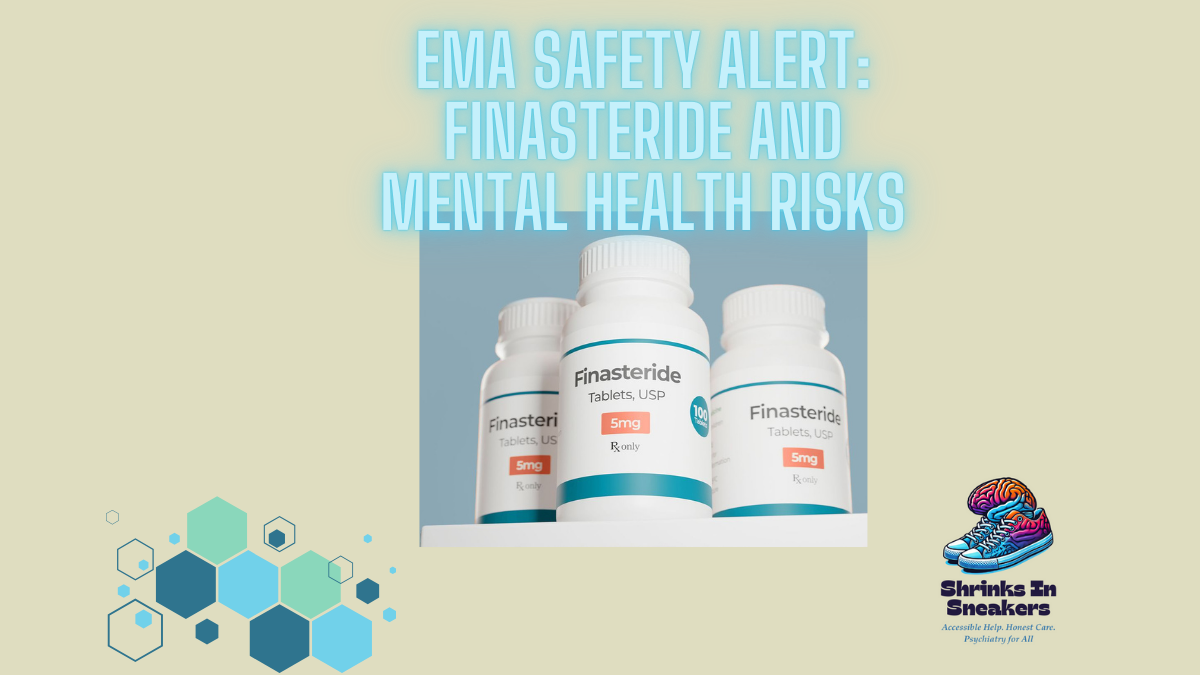
    In a significant update to its safety guidance, the European Medicines Agency (EMA) has officially recognized suicidal ideation as a potential side effect of finasteride. The EMA is urging healthcare professionals to advise patients to stop treatment and seek medical help if they experience depressed mood, depression, or suicidal thoughts while taking the drug.

    This decision follows a growing number of reports linking finasteride, particularly in younger men using it for androgenic alopecia (male pattern baldness), to neuropsychiatric side effects. While previous warnings have addressed sexual dysfunction, this marks a critical shift in regulatory focus to mental health.

    💊 What Is Finasteride?

    Finasteride is a 5α-reductase inhibitor used to treat:

    • Benign prostatic hyperplasia (BPH) in a 5 mg daily dose (Proscar)
    • Male pattern baldness (androgenic alopecia) in a 1 mg daily dose (Propecia)

    It works by inhibiting the conversion of testosterone to dihydrotestosterone (DHT)—a potent androgen implicated in hair loss and prostate growth.

    ⚠️ The EMA’s Updated Warning

    The EMA’s Pharmacovigilance Risk Assessment Committee (PRAC) reviewed post-marketing surveillance data and published literature and concluded that:

    “There is sufficient evidence to support a causal relationship between finasteride and the risk of suicidal ideation.”

    Key recommendations:

    • Suicidal ideation will be added to the drug’s product information as a potential adverse effect.
    • Healthcare professionals should proactively inform patients about this risk.
    • Patients should be advised to discontinue treatment immediately and seek medical advice if they experience changes in mood or mental health.

    🧠 Possible Mechanisms Behind Finasteride’s Psychiatric Effects

    The exact mechanisms linking finasteride to depression and suicidality remain unclear, but several biological hypotheseshave been proposed:

    1. Neurosteroid Depletion

    Finasteride inhibits 5α-reductase, which not only converts testosterone to DHT but also helps produce neurosteroids like allopregnanolone and tetrahydrodeoxycorticosterone (THDOC).

    • These neurosteroids have potent GABAergic activity, contributing to anxiolytic and antidepressant effects.
    • Inhibition leads to decreased GABA-A receptor modulation, potentially increasing anxiety, depression, and suicidal thoughts.

    2. Hypothalamic-Pituitary-Adrenal (HPA) Axis Dysregulation

    Altered steroid metabolism may dysregulate the HPA axis, increasing cortisol levels, a well-known biomarker of depression and suicidal behavior.

    3. Persistent Epigenetic Changes

    Some animal and human data suggest that finasteride may induce long-lasting changes in gene expression related to stress response and mood regulation, even after discontinuation—supporting the idea of post-finasteride syndrome (PFS).

    4. Neuroinflammation

    Reduced neurosteroids may increase neuroinflammatory signaling, a growing area of interest in the neurobiology of depression and suicidality.

    🧾 Final Thoughts

    The EMA’s announcement is a sobering reminder that drugs affecting hormonal pathways can have wide-reaching systemic effects, including on the brain. With better awareness, screening, and patient education, we can minimize harm and support individuals who may be at risk.

  • Substance-Induced Psychosis vs. Primary Psychosis: Treatment, Prognosis, and the Cannabis Connection

    Substance-Induced Psychosis vs. Primary Psychosis: Treatment, Prognosis, and the Cannabis Connection

    Psychosis can emerge from a range of causes, but distinguishing between substance-induced psychosis (SIP) and primary psychotic disorders like schizophrenia is critical for effective treatment and prognosis. While the clinical presentation often overlaps—hallucinations, delusions, disorganized thinking—the underlying etiology, treatment approach, and long-term outcomes can diverge significantly.

    Defining the Two

    Substance-Induced Psychosis (SIP) occurs when symptoms of psychosis are directly caused by intoxication with or withdrawal from substances such as cannabis, amphetamines, alcohol, hallucinogens, or synthetic cannabinoids (e.g., spice or K2). The psychosis typically emerges during or shortly after substance use and resolves with abstinence.

    Primary Psychosis, on the other hand, refers to psychotic disorders that are not directly attributable to substances or medical conditions. This includes schizophreniaschizoaffective disorder, and brief psychotic disorder, among others.

    Treatment: Overlapping Tools, Different Emphasis

    1. Acute Management
    Both SIP and primary psychosis are often treated with antipsychotic medications during acute episodes. The initial goals are the same: reduce agitation, manage delusions or hallucinations, and ensure safety.

    • Commonly used antipsychotics include risperidone, olanzapine, haloperidol, and quetiapine. In SIP, short-term use is typically sufficient.
    • In cases involving severe agitation or aggression, benzodiazepines (like lorazepam) may be used adjunctively, especially if stimulant intoxication is suspected.

    2. Long-Term Strategy

    • SIP: After stabilization, the primary strategy is abstinence from the offending substance and psychosocial support (e.g., CBT, motivational interviewing, relapse prevention).
    • Primary psychosis: Typically requires ongoing antipsychotic treatment, often for life. Psychosocial interventions, supported employment, and cognitive remediation are also central to recovery.

    Conversion to Schizophrenia: What’s the Risk?

    One of the key concerns with SIP is whether the episode is a harbinger of an underlying primary psychotic disorder.

    • Approximately 20–50% of individuals with substance-induced psychosis later develop a primary psychotic disorder, such as schizophrenia.
    • Amphetamine- and cannabis-induced psychosis carry the highest risk of conversion, particularly when psychosis occurs in adolescence or early adulthood.
    • meta-analysis by Niemi-Pynttäri et al. (2013) found that 46% of people with SIP later developed schizophrenia-spectrum disorders over a follow-up of 8 years.

    Predictors of conversion include:

    • Younger age at first psychotic episode
    • Family history of psychotic illness
    • Persistent psychotic symptoms after substance clearance
    • Poor premorbid functioning

    Do Antipsychotics Work in SIP?

    Antipsychotics reduce acute psychotic symptoms in SIP, but their long-term utility is less clear.

    • Studies show rapid resolution of psychosis within days to weeks in most SIP cases when abstinence is achieved.
    • Long-term antipsychotic treatment does not reduce the conversion rate to schizophrenia in confirmed SIP, suggesting their role should be time-limited unless ongoing symptoms or risk factors emerge.
    • A 2020 review in Psychological Medicine emphasized that monitoring over the 6–12 months post-episode is essential for risk stratification and avoiding premature chronic medication exposure.

    Cannabis: A Powerful Catalyst

    Cannabis has become the most studied and most controversial substance linked to psychosis. Here’s what the evidence says:

    • Daily cannabis users are 3–5 times more likely to develop a psychotic disorder compared to non-users, especially with high-THC strains (≥10% THC).
    • A 2019 Lancet Psychiatry study by Di Forti et al. showed that strong cannabis use accounts for 12% of new psychosis cases in Amsterdam, and 30% in London.
    • Adolescents who use cannabis, particularly those with a family history of psychosis, are at dramatically increased risk.

    Mechanistically, THC may dysregulate the dopamine system in vulnerable brains, tipping the balance toward psychosis. Cannabidiol (CBD), in contrast, may be protective, but commercial cannabis typically contains very little CBD.

    Final Thought: Clinicians must balance vigilance and restraint—treating psychosis aggressively when needed but also avoiding unnecessary chronic antipsychotic exposure in what may be a reversible, substance-driven episode.

  • ARISE Study Phase 3 Results: Understanding Xanomeline’s Setback

    ARISE Study Phase 3 Results: Understanding Xanomeline’s Setback

    What Was the ARISE Study?

    The ARISE trial was a Phase 3 clinical study evaluating Cobenfy — a combination of xanomeline (a muscarinic receptor agonist) and trospium chloride (a peripheral anticholinergic) — as an adjunctive treatment for adults with schizophrenia who continued to experience symptoms despite taking an atypical antipsychotic.

    What Is a Primary Endpoint, and Why Does It Matter?

    In clinical trials, the primary endpoint is the most important outcome researchers are trying to affect — it’s how a drug’s success or failure is officially judged.
    In ARISE, the primary endpoint measured the change in symptom severity compared to placebo using a standardized scale for schizophrenia. Meeting this endpoint would have demonstrated clear, statistically significant symptom improvement attributable to Cobenfy.

    The Outcome: No Statistically Significant Benefit

    According to topline results, Cobenfy did not show a statistically significant improvement compared to placebo when added to atypical antipsychotics. This means the observed difference could have been due to chance and did not meet the pre-set threshold for success.

    However, Cobenfy did show a numerical improvement — the group receiving the drug combination performed betterthan placebo in symptom reduction, just not to a statistically convincing degree.

    Could Anticholinergic Effects Be to Blame?

    One possible explanation for this outcome lies in the mechanism of action of both Cobenfy and many commonly used atypical antipsychotics.

    • Xanomeline is designed to activate muscarinic receptors in the brain (specifically M1 and M4), which may help regulate dopamine and reduce psychosis.
    • But many atypical antipsychotics — like olanzapine, clozapine, and quetiapine — also have anticholinergic properties, meaning they block these same receptors.

    This sets up a pharmacological tug-of-war: Cobenfy tries to stimulate muscarinic activity, while the background antipsychotic may be dampening it. This conflict could blunt the therapeutic signal, explaining why the benefit didn’t reach statistical significance.

    What This Means for the Future

    The failure to meet the primary endpoint is a setback, but not the end of the road. The numerical improvements suggest a potential signal, and with refined trial design — perhaps using background medications with lower anticholinergic load — future studies may better reveal Cobenfy’s potential.

    Additionally, this trial underscores the importance of considering mechanism compatibility in combination therapies. It’s not just about adding drugs — it’s about how they interact at the receptor level.

    Conclusion

    While the ARISE study didn’t deliver the result many hoped for, it raised critical questions that will shape future research. A deeper understanding of anticholinergic burden, drug synergy, and precision pharmacology is essential as we continue the search for more effective treatments for schizophrenia.

  • Adult ADHD: Current Trends and Emerging Research (2025 Update)

    Adult ADHD: Current Trends and Emerging Research (2025 Update)

    Attention-deficit/hyperactivity disorder (ADHD) has traditionally been seen as a childhood condition — but in recent years, there has been an explosion of interest in ADHD among adults. As awareness grows, so does research. New studies are reshaping how we diagnose, treat, and understand ADHD in the adult population.

    1. 🔥 Rising Rates of Adult ADHD Diagnosis

    Recent studies show that adult ADHD diagnoses have sharply increased over the past decade. According to a 2023 analysis published in JAMA Psychiatry, the diagnosis rate for adults aged 18–45 rose by more than 80% between 2011 and 2022.

    Why the surge?

    • Greater public awareness
    • Better screening tools for adults
    • A cultural shift toward recognizing executive dysfunction in adulthood

    However, there are concerns that overdiagnosis is also happening, particularly when ADHD is diagnosed after brief evaluations without thorough history-taking.

    2. 🧠 Expanded Understanding of Adult ADHD Symptoms

    The symptom profile in adults differs significantly from children. While hyperactivity often fades, issues like emotional dysregulationdisorganization, and executive dysfunction persist.

    Recent research emphasizes that adult ADHD often presents as:

    • Chronic procrastination
    • Low frustration tolerance
    • Difficulty managing responsibilities (work, home, finances)
    • Persistent inner restlessness

    A 2024 review in The American Journal of Psychiatry noted that emotional impulsivity may actually be a core symptomin adults, not just a secondary feature.

    3. 💊 Treatment Shifts: Caution Around Stimulants

    While stimulant medications (like amphetamines and methylphenidate) remain the gold standard, new studies highlight the importance of careful prescribing, especially in adults with:

    • Comorbid substance use disorders
    • Cardiovascular risk factors
    • Poor diagnostic workups

    Non-stimulant treatments are gaining ground:

    • Atomoxetine (Strattera) remains a mainstay.
    • Viloxazine (Qelbree) was approved for adult ADHD in 2024 and shows promise with lower abuse potential.
    • Bupropion (Wellbutrin) continues to be an important off-label option, especially when depression coexists with ADHD.

    According to a 2024 meta-analysis in Lancet Psychiatrynon-stimulants now account for about 30% of new ADHD prescriptions in adults — a significant jump compared to previous years.

    4. 🧬 Precision Psychiatry and Biomarkers on the Horizon

    Emerging studies are exploring neuroimaging and genetic markers to better understand adult ADHD subtypes.

    • A 2023 study using fMRI found distinct prefrontal cortex dysfunction patterns in adults with ADHD compared to controls.
    • Genetic research continues to implicate genes related to dopamine transmission and synaptic plasticity.

    Although these findings are not yet ready for clinical application, the future of ADHD diagnosis may involve biomarkers, moving beyond subjective questionnaires alone.

    5. 🌿 Lifestyle Interventions Are Getting More Attention

    There’s a growing body of evidence supporting complementary approaches:

    • Cognitive-behavioral therapy (CBT) for ADHD-specific skills
    • Exercise as a way to enhance executive function and mood
    • Mindfulness practices to improve emotional regulation

    A 2024 RCT published in Behavior Therapy showed that an 8-week mindfulness-based intervention led to significant improvements in attention and working memory in adults with ADHD — with effect sizes comparable to pharmacotherapy in some cases.

    Final Thoughts

    Adult ADHD is real, complex, and often misunderstood.
    The field is evolving rapidly, with a push toward better diagnosticssafer treatments, and a broader understanding of how ADHD affects life across the lifespan.

    As research continues to grow, clinicians are challenged not only to treat ADHD effectively but to do so thoughtfully — avoiding both underdiagnosis and overdiagnosis.

    Stay tuned — the future of ADHD care is just getting started.

  • Natural ADHD Treatments: Evidence-Based Options

    Natural ADHD Treatments: Evidence-Based Options

    The search for natural alternatives to pharmaceutical treatments is a growing trend across many medical conditions, and ADHD is no exception. Although stimulant medications remain the gold standard for ADHD management, boasting large effect sizes, they are not without potential risks and side effects. This raises an important clinical question: are there evidence-based natural options that could serve either as primary therapies or as adjunctive treatments in ADHD? Exploring these alternatives could offer valuable strategies for patients and families seeking safer, well-tolerated interventions.

    1. Hirayama et al., 2014 (Phosphatidylserine alone)

    • Population: 36 children (6–12 years) with ADHD
    • Dose: 200 mg/day PS
    • Duration: 15 weeks
    • Main outcomes: ADHD symptoms (teacher ratings), auditory memory

    Reported effect:

    • They did not directly report Cohen’s d, but they reported statistically significant differences between PS and placebo groups on ADHD symptom scores.
    • Based on the mean differences and standard deviations reported:

    Estimated effect size:
    → Cohen’s d ≈ 0.5–0.6 (moderate effect size)

    ✅ Interpretation: A medium, meaningful clinical effect, but not huge like you’d expect with stimulants (where d ~0.8–1.2).

    2. Manor et al., 2012 (Phosphatidylserine + Omega-3 Fatty Acids)

    • Population: 200 children with ADHD symptoms (formal diagnosis not always required)
    • Dose: 300 mg PS + 120 mg EPA + 80 mg DHA daily
    • Duration: 15 weeks
    • Main outcomes: ADHD symptomatology, impulsivity, emotional regulation

    Reported effect:

    • Statistically significant improvements over placebo.
    • Again, they didn’t directly report Cohen’s d, but they provided enough statistical info to estimate.

    Estimated effect size:
    → Cohen’s d ≈ 0.3–0.5 depending on the specific symptom cluster.

    ✅ Interpretation: Small to moderate effect. (Closer to small-to-medium than medium.)

    StudyPopulationInterventionKey Outcome
    Hirayama 2014ADHD kids (n=36)200 mg PS/dayImproved attention & memory
    Manor 2012Kids with ADHD symptoms (n=200)300 mg PS + 200 mg omega-3sReduced impulsivity, improved emotional regulation

    🧠 Clinical Bottom Line:

    • Phosphatidylserine alone → moderate effect on ADHD symptoms (especially attention and memory).
    • PS + Omega-3 → small to moderate effect, mainly helping impulsivity and emotional regulation.
    • Better tolerated than traditional ADHD meds but obviously less potent.

    👉 They could be considered in mild ADHD cases, in parents preferring “natural” options, or as adjuncts to other therapies.

  • Why CBT Reigns as the Top Therapy for Mental Health

    Why CBT Reigns as the Top Therapy for Mental Health

    🧠💡 CBT Confirmed—Again: Landmark Meta-Analysis Reinforces Clinical Value Across Diagnoses
    A massive meta-analysis in JAMA Psychiatry (2025) reaffirms what many of us observe in day-to-day care: Cognitive Behavioral Therapy (CBT) is one of the most effective, versatile, and enduring treatments for adult psychiatric conditions.

    🔬 Study at a Glance

    • Pooled data from hundreds of RCTs
    • Assessed CBT’s efficacy across depression, anxiety disorders, PTSD, and eating disorders
    • Found significant, lasting effects across diagnostic categories
    • Highlighted condition-specific variation in effect sizes, but overall CBT consistently outperformed inactive controls

    📚 Real-World Relevance
    Imagine a patient with chronic panic disorder who’s failed two SSRI trials and prefers non-pharmacologic interventions. CBT remains a frontline solution—equally relevant for the young adult with bulimia or the veteran with PTSD. These aren’t just data points—they’re the cases we see every day.

    🔄 How Does CBT Stack Up Against Other Therapies?
    While the study primarily focused on CBT, it reinforces existing literature suggesting that CBT often matches or outperforms alternative modalities like psychodynamic therapy or interpersonal therapy in short-term efficacy—especially when structure, time-limited treatment, and measurable goals are critical.

    🛠 Implications for Clinical Practice
    ✅ Why prioritize CBT?

    • It’s highly adaptable
    • Supported across diverse populations
    • Scalable via group therapy, digital tools, and telehealth

    🚧 Barriers to Access:

    • Limited availability of trained therapists
    • Insurance coverage gaps
    • Patient preference for “talk therapy” without structure

    ✅ Strategies to Overcome Them:

    • Integrate CBT-informed principles into brief med management visits
    • Refer to digital CBT platforms when face-to-face access is limited
    • Advocate for reimbursement parity and expanded training programs

    📎 Bottom Line
    This study isn’t just academic—it’s a call to action. Prioritizing CBT in treatment planning can lead to better outcomes, broader reach, and more durable recovery. As clinicians, it’s on us to ensure our systems support its accessibility.

    📖 Full Article:
    https://jamanetwork.com/journals/jamapsychiatry/article-abstract/2832696

  • 💊 Methylene Blue: Science-Based Hope or Hype in a Bottle? 💙

    💊 Methylene Blue: Science-Based Hope or Hype in a Bottle? 💙

    As someone who supports thoughtful use of complementary and alternative medicine, I absolutely believe that compounds like SAMe or St. John’s Wort can offer meaningful benefits—when used appropriately and supported by evidence. But with the rise of anti-aging influencers, we’re seeing a familiar pattern: mechanistically promising compounds getting pushed far ahead of the science.

    Methylene Blue is a perfect example.

    🧬 Mechanistic appeal:

    • Enhances mitochondrial respiration
    • Acts as a redox mediator to reduce oxidative stress
    • May support autophagy and protein homeostasis
    • Studied for cognitive enhancement and neuroprotection

    Sounds great on paper—and some early research is encouraging. But…

    ⚠️ Here’s the caution:

    • Most data is from animal studies or in vitro experiments
    • Human trials for cognitive or anti-aging outcomes are small, inconsistent, and early-stage
    • Long-term safety at “biohacker” doses remains largely untested

    Many people are understandably drawn to the promise of longer, healthier lives, but often at the cost of embracing interventions before we truly understand their risks, benefits, or limitations.

    Even if the science makes theoretical sense, biology doesn’t always behave the way our models predict.

    Let’s stay open—but also skeptical. Not everything that sounds too good to be true ends up being true.

  • RFK Jr. Claims He’ll Identify the Cause of Autism by September

    RFK Jr. Claims He’ll Identify the Cause of Autism by September

    In a bold statement this week, Robert F. Kennedy Jr. announced that he will reveal the definitive cause of autism by September. Kennedy, a longtime critic of childhood vaccine programs, did not provide specific scientific details or a research plan, but implied that his administration would prioritize transparency and independent investigations into the condition’s origins.

    The claim has sparked immediate controversy. Autism is a complex neurodevelopmental condition with a strong genetic foundation and a wide range of potential environmental influences—none of which have yielded a singular, definitive cause. The scientific consensus, built over decades of rigorous research, continues to support a multifactorial model rather than a simplistic explanation.

    Many highly intelligent and dedicated scientists have spent years studying autism without identifying a single, unifying cause. One of the recurring issues that arises when politics intersects with science is a resistance to the idea that these are nuanced, multifaceted conditions. It’s not the most satisfying explanation—but it is consistent with the best evidence we have. My fear is that this type of investigation, under political pressure, could prematurely identify a false causal agent—such as vaccines—and reignite a harmful narrative that has already been thoroughly debunked.

    Kennedy’s history of promoting vaccine-autism links adds further concern. The CDC, WHO, and a vast body of peer-reviewed research have all concluded there is no credible evidence connecting vaccines to autism. Suggesting otherwise not only undermines public trust in science and medicine—it risks the health of entire communities by fueling vaccine hesitancy.

    For families and individuals affected by autism, the promise of discovering its origins is understandably compelling. But it’s critical that we approach that pursuit with scientific integrity, not political expediency.

  • 🧠 Esketamine + Antidepressants in TRD: Does the Combo Matter?

    🧠 Esketamine + Antidepressants in TRD: Does the Combo Matter?

    📢 New data from a real-world study of 50,000+ patients with treatment-resistant depression (TRD) published in JAMA Psychiatry:

    📌 Study Question:
    Does combining esketamine with an SSRI or SNRI affect long-term outcomes in TRD?

    📊 Key Findings (5-Year Follow-Up):

    • ✅ Esketamine + SNRI:
       ↘️ Lower all-cause mortality
       ↘️ Fewer hospitalizations
       ↘️ Reduced depressive relapse
    • ✅ Esketamine + SSRI:
       ↘️ Lower incidence of suicide attempts
    • 🔒 Overall: Low rates of adverse outcomes in all groups

    💡 Clinical Implications:

    • Not all combinations are equal—pairing matters.
    • Esketamine + SNRI may be preferred for reducing relapse/mortality
    • Esketamine + SSRI may be considered in patients at risk for suicide
    • Personalized treatment decisions can enhance outcomes in TRD

    🔍 More than symptom relief—it’s about survival, stability, and safety.

  • 🧠 New Research Alert! 🧠

    🧠 New Research Alert! 🧠

    A study in JAMA Psychiatry explores how functional MRI (fMRI) biomarkers can help distinguish major depressive disorder (MDD) 😔 from healthy individuals. Researchers found that regional homogeneity (ReHo) patterns in the brain are a more reliable marker for MDD than traditional structural MRI 🏗️.

    🔬 Why does this matter?
    👉 Better Diagnostics: fMRI could lead to more objective ways to diagnose depression, reducing reliance on self-reporting.
    👉 Early Detection: One day, brain scans 🏥 might help identify people at risk before symptoms fully develop.
    👉 Personalized Treatment: Understanding individual brain patterns could help guide targeted interventions like therapy or medication.

    Could brain scans be the future of depression diagnosis? 🤔 Drop your thoughts below! ⬇️

    📖 Read more: jamanetwork.com