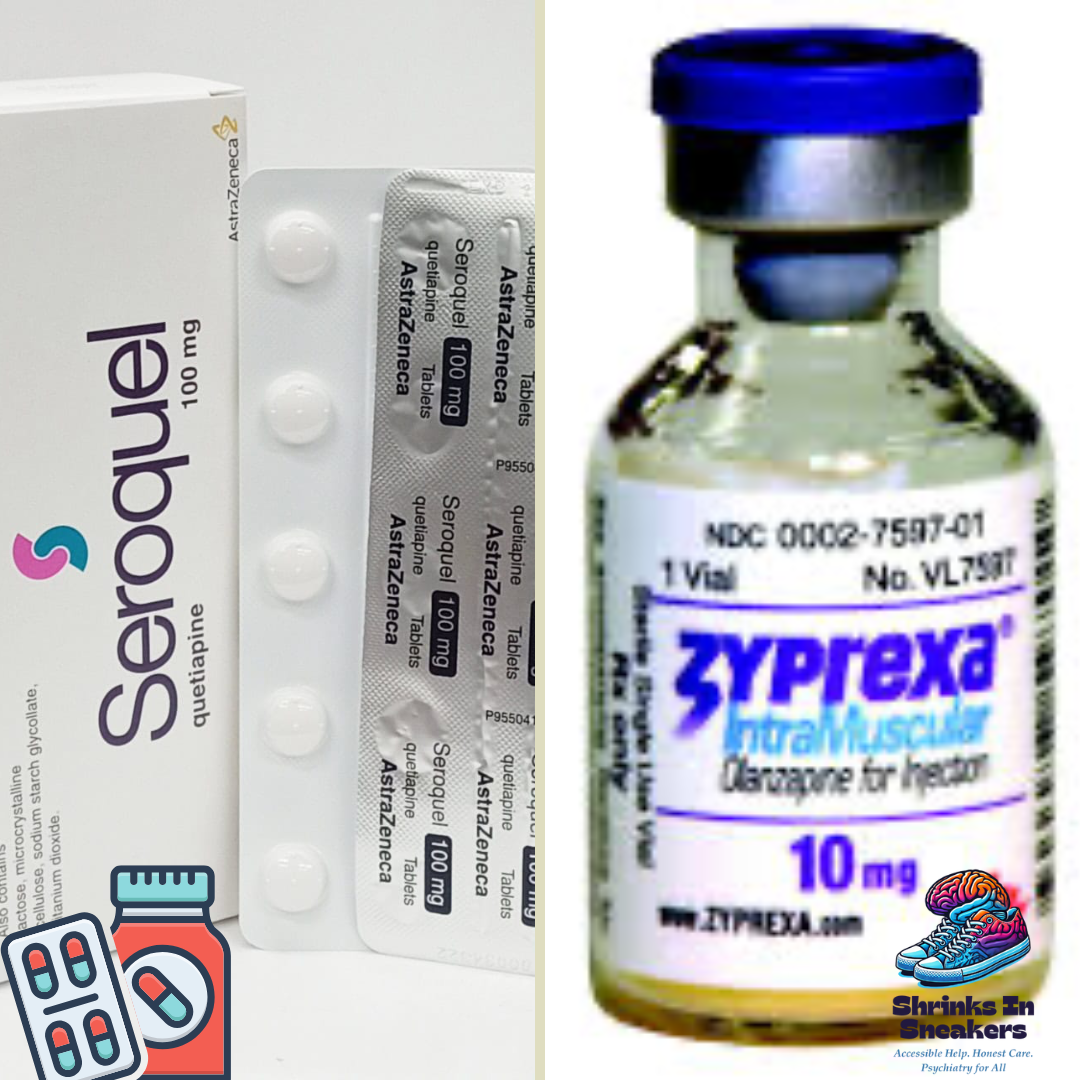
Olanzapine vs. Quetiapine for Stimulant Psychosis: Is One the Clear Winner?

There is limited high-quality randomized controlled trial (RCT) evidence specifically comparing Zyprexa (olanzapine) or Seroquel (quetiapine) for the treatment of stimulant-induced psychosis (SIP), including cocaine-induced psychosis. However, some RCTs and observational studies provide useful insights:

Olanzapine (Zyprexa)

  • RCT Evidence:
    • 2022 meta-analysis of antipsychotic treatments for stimulant-induced psychosis included olanzapine and found it to be effective in reducing positive psychotic symptoms, often comparable to haloperidol but with a better side effect profile (less extrapyramidal symptoms) 11.
    • double-blind RCT comparing olanzapine vs. haloperidol in methamphetamine-induced psychosisfound that both were effective at reducing PANSS (Positive and Negative Syndrome Scale) scores, but olanzapine was associated with better tolerability 22.
    • Another RCT in methamphetamine-induced psychosis compared olanzapine and risperidone, showing similar efficacy but better tolerability with olanzapine 33.

Quetiapine (Seroquel)

  • RCT Evidence:
    • small RCT in methamphetamine-induced psychosis found that quetiapine was effective but tended to require higher doses to achieve symptom resolution 44.
    • retrospective study on cocaine-induced psychosis suggested that quetiapine may help reduce symptoms, but data is weaker compared to olanzapine or risperidone 55.
    • Quetiapine has also been studied as an option for reducing cocaine cravings, but results are mixed and it is generally less preferred for acute agitation compared to faster-acting options like olanzapine.

Head-to-Head Comparison

There is no direct RCT comparing olanzapine vs. quetiapine for stimulant-induced psychosis, but based on available data:

  • Olanzapine is generally preferred for acute agitation and psychosis because of its faster onset and greater D2 blockade.
  • Quetiapine may be useful in milder cases or for individuals needing sedation, but higher doses are often required.

Clinical Implications

  • For acute stimulant-induced psychosisolanzapine (5–10 mg IM or PO) is a common first-line option due to rapid onset and favorable side effect profile.
  • Quetiapine (200–400 mg PO) can be considered, particularly for patients needing sedation or those with comorbid conditions like bipolar disorder.
  • Other antipsychotics with strong evidence include risperidone and haloperidol (though the latter has more extrapyramidal risk).

After reviewing the available literature, direct randomized controlled trials (RCTs) comparing olanzapine (Zyprexa) and quetiapine (Seroquel) for stimulant-induced psychosis (SIP), including cocaine-induced psychosis, remain scarce. However, some studies provide relevant insights:

Olanzapine (Zyprexa):

  • Efficacy: A randomized, double-blind trial compared olanzapine and haloperidol in patients with amphetamine-induced psychosis. Both medications effectively improved psychotic symptoms in the short term, with olanzapine showing a faster onset of action.

Quetiapine (Seroquel):

  • Efficacy: A double-blind RCT compared haloperidol and quetiapine for methamphetamine-induced psychosis. While both medications reduced psychotic symptoms, quetiapine appeared to have a more favorable profile in reducing certain symptoms over time. 

Indirect Comparisons:

  • First-Episode Psychosis: A 52-week randomized, double-blind study evaluated olanzapine, quetiapine, and risperidone in early psychosis patients. All three antipsychotics demonstrated comparable effectiveness, as indicated by similar rates of treatment discontinuation.

Conclusion:

While direct RCT evidence comparing olanzapine and quetiapine specifically for stimulant-induced psychosis is limited, existing studies suggest that both medications are effective in managing such conditions. Olanzapine may offer a faster onset of symptom relief, whereas quetiapine might present a more favorable side effect profileClinical decisions should be individualized, considering factors such as patient history, specific symptomatology, and potential side effects.
New ASAM and AAAP Guidelines for Stimulant Use Disorder: Key Updates

The American Society of Addiction Medicine (ASAM) and the American Academy of Addiction Psychiatry (AAAP) recently released updated guidelines for the treatment of stimulant use disorder (SUD).

  1. Comprehensive Assessment: The guidelines emphasize a thorough assessment of patients, including the use of validated screening tools to diagnose SUD, assess severity, and identify co-occurring mental health disorders.
  2. Evidence-Based Psychosocial Interventions: Behavioral therapies remain the cornerstone of treatment. Cognitive-behavioral therapy (CBT), contingency management (CM), and motivational interviewing (MI) are recommended due to strong evidence of their efficacy.
  3. Pharmacological Treatments: While no medications are currently FDA-approved specifically for stimulant use disorder, the guidelines discuss off-label use of medications like bupropion and naltrexone, which show promise in reducing stimulant use and cravings in some patients.
  4. Harm Reduction Strategies: Recognizing the importance of harm reduction, the guidelines support interventions like needle exchange programs and education on safer use to reduce the risk of infectious diseases and other health complications.
  5. Integrated Care Models: The guidelines highlight the importance of integrated care that combines medical, psychiatric, and social support services, aiming to provide holistic care tailored to individual patient needs.
  6. Special Populations: Specific recommendations are provided for treating special populations, including pregnant individuals, adolescents, and those with co-occurring mental health disorders, recognizing the unique challenges these groups face.
  7. Recovery Support: Emphasis is placed on long-term recovery support, including peer support groups, vocational training, and housing assistance, to help individuals maintain recovery and improve their quality of life.

These guidelines represent a significant step forward in the standardization of care for individuals with stimulant use disorder, aiming to improve outcomes through evidence-based, patient-centered approaches. For clinicians, staying informed and implementing these recommendations can greatly enhance the quality of care provided to this population.

Contingency Management: The Overlooked Game-Changer for Methamphetamine Use Disorder

I frequently encounter patients with methamphetamine use disorder, and I don’t know about you, but finding effective interventions in the inpatient psychiatric setting can be a real challenge. Unlike opioid or alcohol use disorders, where we have biological interventions like buprenorphine or naltrexone, methamphetamine use disorder lacks such clear pharmacological treatments. Because of this, many rehab facilities are reluctant to admit patients whose primary issue is methamphetamine use.

In my practice, I often turn to combinations like bupropion and naltrexone since they’re among the few studied pharmacological options for methamphetamine use disorder. However, based on my experience, the results are modest at best—but I suppose it’s better than nothing.

That said, there’s a much simpler, evidence-based option that doesn’t even require inpatient treatment, and it’s been around since the 1980s: Contingency Management. The concept is straightforward: reward patients with small incentives—like gift cards worth $30 or less—for each negative drug screen they produce. As patients continue to test negative, the rewards increase. This approach has been shown to double the chances of success in stopping methamphetamine use.

Of course, there are potential issues, such as concerns about fraud or patients providing fake samples. But let’s be real—how much are we already spending on treating methamphetamine users without seeing much improvement? Probably a lot more. With contingency management, we’re not just spending money—we’re actually seeing patients get better.

Powered by WordPress.com.

Up ↑