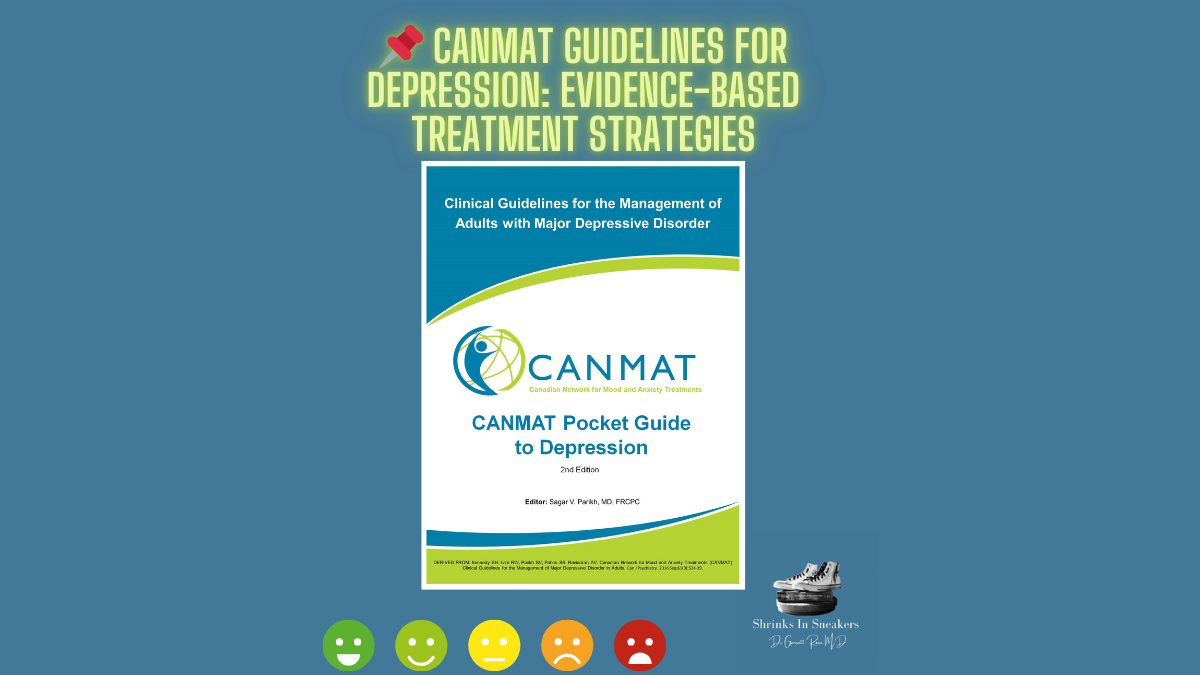
The CANMAT 2016 guidelines remain one of the most comprehensive, evidence-based frameworks for treating major depressive disorder (MDD). These guidelines emphasize a stepwise, individualized approach based on efficacy, safety, and patient preference. Here’s a breakdown of the key recommendations:
🔹 First-Line Treatments
✅ Psychotherapy – Cognitive Behavioral Therapy (CBT), Interpersonal Therapy (IPT), and Mindfulness-Based CBT are recommended, especially for mild to moderate depression.
✅ Pharmacotherapy – SSRIs, SNRIs, bupropion, mirtazapine, and vortioxetine are all first-line antidepressantsbased on efficacy and tolerability.
✅ Neurostimulation – Electroconvulsive Therapy (ECT) and Repetitive Transcranial Magnetic Stimulation (rTMS) are considered first-line for severe or treatment-resistant depression (TRD).
🔹 Second-Line Treatments
🔸 Other antidepressants – Tricyclics (TCAs), trazodone, moclobemide, and some atypical antipsychotics (e.g., quetiapine XR, aripiprazole, brexpiprazole)
🔸 Adjunctive strategies – Lithium, atypical antipsychotics, or combination antidepressant therapy for partial responders
🔸 Ketamine/esketamine – Emerging evidence for TRD
🔹 Third-Line & Beyond
🔹 MAOIs (reserved for treatment-resistant cases)
🔹 Novel agents (psilocybin, anti-inflammatory treatments) – Experimental but promising
💡 Key Takeaways
🔹 Personalized treatment is essential – factors like symptom profile, comorbidities, and patient preference influence the best approach.
🔹 Combination strategies (meds + psychotherapy) often yield superior outcomes.
🔹 Treatment-resistant depression requires a multimodal approach, including augmentation, switching strategies, and neurostimulation options.
The CANMAT guidelines are a critical resource for clinicians, offering a structured approach to optimizing depression treatment. What are your go-to strategies for managing MDD? Let’s discuss!
#DepressionTreatment #Psychiatry #CANMAT #MDD #Psychopharmacology