Tag: mood disorders

  • 🚨 Mania with Mixed Features: The Ultimate Mood Storm 🌪️

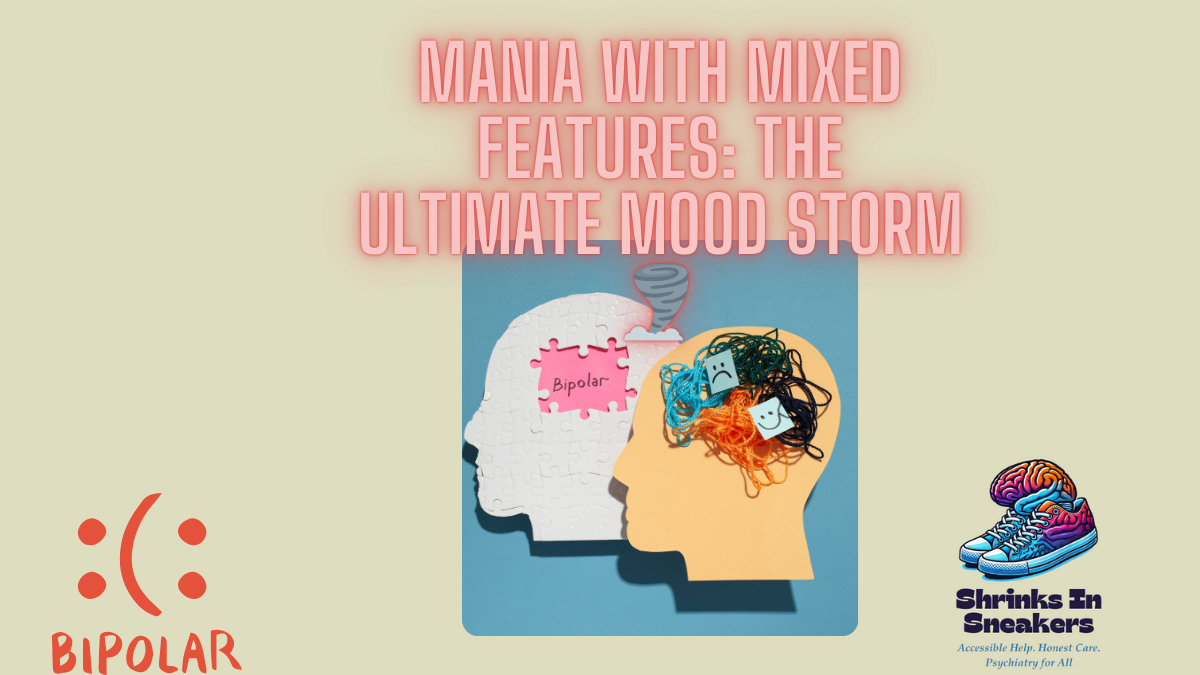
    🚨 Mania with Mixed Features: The Ultimate Mood Storm 🌪️

    Bipolar mania is intense—but when mixed features are present, it’s a whole different beast. Imagine sky-high energy ⚡ + crushing despair 😞 at the same time. That’s mixed mania—one of the most challenging and high-risk mood states in psychiatry.

    🔍 What Does It Look Like?

    ✅ Racing thoughts 🏎️ + Hopelessness 😔
    ✅ Insomnia for days 🌙 + Feeling exhausted 😴
    ✅ Irritability 🔥 + Tearfulness 😢
    ✅ Grandiosity 👑 + Suicidal thoughts 🚨
    ✅ Restless energy ⚡ + No pleasure in anything ❌

    🚑 Why It’s High Risk

    Patients with mania + mixed features have:
    ⚠️ Higher suicide risk than pure mania
    ⚠️ More agitation & impulsivity
    ⚠️ Less response to traditional mood stabilizers

    🛑 Treatment Challenges

    ❌ Antidepressants can worsen symptoms
    ✅ Mood stabilizers (lithium, valproate) & atypical antipsychotics (quetiapine, olanzapine, lurasidone) are key
    ✅ Careful monitoring is essential

    💡 Takeaway: Mixed mania isn’t just “agitated depression” or “irritable mania”—it’s a unique, dangerous mood state that requires urgent intervention. Recognizing it early can save lives.

    Have you encountered mixed mania in practice? Let’s discuss! 👇

  • ECT Maintenance: To Continue or Not To Continue

    ECT Maintenance: To Continue or Not To Continue

    The article on Clinical Outcomes of Continuation and Maintenance Electroconvulsive Therapy (ECT) highlights the role of ECT in preventing relapses in patients with major depressive disorder. Continuation (C-ECT) and maintenance (M-ECT) ECT, when used after an initial successful acute ECT response, are shown to be effective in reducing the recurrence of mood disorders, particularly when combined with pharmacotherapy. Despite its proven benefits, this therapeutic approach is underutilized. Studies also suggest that C-ECT and M-ECT are well-tolerated with no significant cognitive decline​

    Link to the study: https://jamanetwork.com/journals/jamapsychiatry/article-abstract/2823669

  • The ketogenic Diet For Mental Health

    The ketogenic Diet For Mental Health

    The ketogenic diet, primarily known for its benefits in weight loss and managing conditions like epilepsy, has been increasingly explored for its potential impact on mental health, including psychiatry. While research in this area is still emerging, some studies suggest that the ketogenic diet may offer benefits for certain psychiatric conditions. 

    1. Mood Disorders: Some research indicates that the ketogenic diet might have a positive impact on mood disorders such as depression and bipolar disorder. The diet’s ability to stabilize blood sugar levels and regulate neurotransmitters like serotonin and dopamine could contribute to mood improvement.
    2. Anxiety: The ketogenic diet’s effects on GABA (gamma-aminobutyric acid), a neurotransmitter that helps regulate anxiety, have been of interest to researchers. By increasing GABA levels, the diet may have an anxiolytic effect, potentially reducing symptoms of anxiety.
    3. Cognitive Function: Ketones produced during ketosis are an alternative fuel source for the brain. Some studies suggest that ketones may provide more efficient energy for brain cells, leading to improved cognitive function and clarity of thought. This could have implications for conditions such as ADHD and cognitive impairment.
    4. Neuroprotective Effects: Ketones have been shown to have neuroprotective properties, which could be beneficial in neurodegenerative disorders like Alzheimer’s disease and Parkinson’s disease. By providing an alternative energy source for the brain, the ketogenic diet may help protect against neuronal damage and promote brain health.
    5. Inflammation: Chronic inflammation has been linked to various psychiatric disorders. The ketogenic diet has anti-inflammatory effects, which could potentially reduce inflammation in the brain and mitigate symptoms of conditions like schizophrenia and PTSD.
    6. Gut-Brain Axis: Emerging research suggests that the gut microbiota plays a crucial role in mental health. The ketogenic diet can influence the gut microbiome, potentially improving gut health and modulating brain function through the gut-brain axis.

    While these findings are promising, it’s essential to approach the use of the ketogenic diet in psychiatry with caution. More research, including large-scale clinical trials, is needed to fully understand its efficacy, safety, and long-term effects on mental health conditions. Additionally, the ketogenic diet may not be suitable for everyone and should be implemented under the guidance of healthcare professionals, especially for individuals with pre-existing health conditions or those taking medications.