Tag: Omega-3

  • Natural ADHD Treatments: Evidence-Based Options

    Natural ADHD Treatments: Evidence-Based Options

    The search for natural alternatives to pharmaceutical treatments is a growing trend across many medical conditions, and ADHD is no exception. Although stimulant medications remain the gold standard for ADHD management, boasting large effect sizes, they are not without potential risks and side effects. This raises an important clinical question: are there evidence-based natural options that could serve either as primary therapies or as adjunctive treatments in ADHD? Exploring these alternatives could offer valuable strategies for patients and families seeking safer, well-tolerated interventions.

    1. Hirayama et al., 2014 (Phosphatidylserine alone)

    • Population: 36 children (6–12 years) with ADHD
    • Dose: 200 mg/day PS
    • Duration: 15 weeks
    • Main outcomes: ADHD symptoms (teacher ratings), auditory memory

    Reported effect:

    • They did not directly report Cohen’s d, but they reported statistically significant differences between PS and placebo groups on ADHD symptom scores.
    • Based on the mean differences and standard deviations reported:

    Estimated effect size:
    → Cohen’s d ≈ 0.5–0.6 (moderate effect size)

    ✅ Interpretation: A medium, meaningful clinical effect, but not huge like you’d expect with stimulants (where d ~0.8–1.2).

    2. Manor et al., 2012 (Phosphatidylserine + Omega-3 Fatty Acids)

    • Population: 200 children with ADHD symptoms (formal diagnosis not always required)
    • Dose: 300 mg PS + 120 mg EPA + 80 mg DHA daily
    • Duration: 15 weeks
    • Main outcomes: ADHD symptomatology, impulsivity, emotional regulation

    Reported effect:

    • Statistically significant improvements over placebo.
    • Again, they didn’t directly report Cohen’s d, but they provided enough statistical info to estimate.

    Estimated effect size:
    → Cohen’s d ≈ 0.3–0.5 depending on the specific symptom cluster.

    ✅ Interpretation: Small to moderate effect. (Closer to small-to-medium than medium.)

    StudyPopulationInterventionKey Outcome
    Hirayama 2014ADHD kids (n=36)200 mg PS/dayImproved attention & memory
    Manor 2012Kids with ADHD symptoms (n=200)300 mg PS + 200 mg omega-3sReduced impulsivity, improved emotional regulation

    🧠 Clinical Bottom Line:

    • Phosphatidylserine alone → moderate effect on ADHD symptoms (especially attention and memory).
    • PS + Omega-3 → small to moderate effect, mainly helping impulsivity and emotional regulation.
    • Better tolerated than traditional ADHD meds but obviously less potent.

    👉 They could be considered in mild ADHD cases, in parents preferring “natural” options, or as adjuncts to other therapies.
  • Evidence-Based Diets for ADHD: Insights from Randomized Controlled Trials (RCTs)

    Evidence-Based Diets for ADHD: Insights from Randomized Controlled Trials (RCTs)

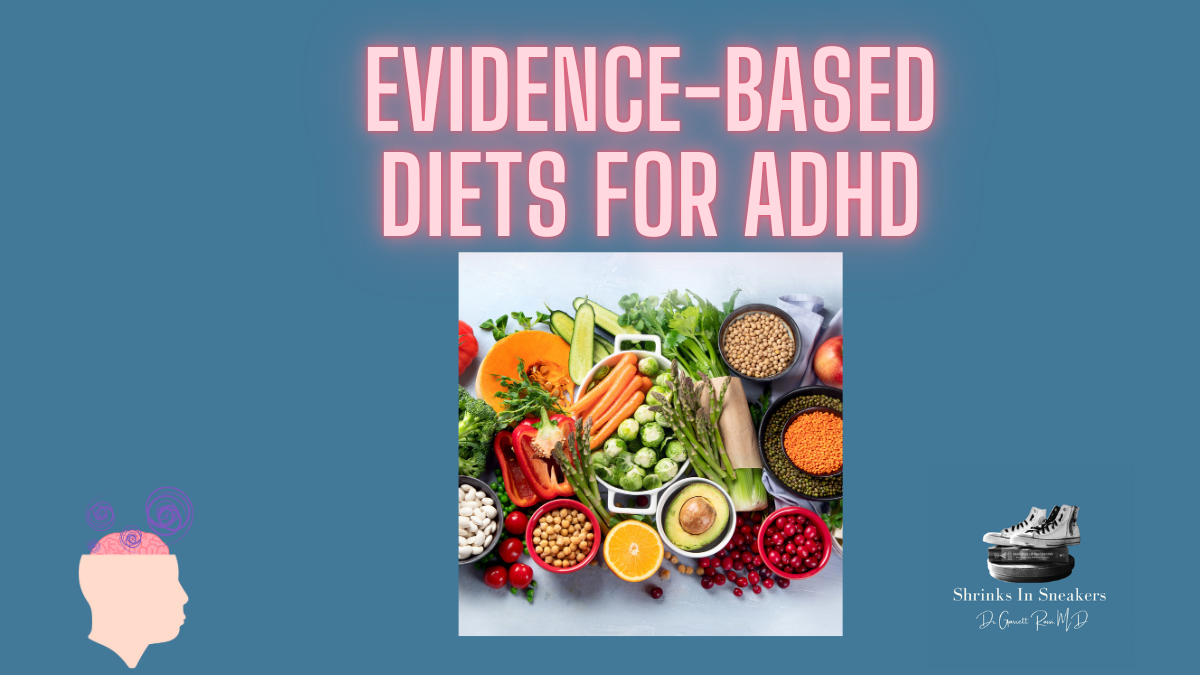
    Diet plays a significant role in brain health and behavior, making it a promising area for ADHD symptom management. While dietary changes are not a substitute for standard treatments, several dietary interventions have shown evidence-based benefits in improving ADHD symptoms.

    1. Omega-3 Fatty Acid Supplementation

    • Why: Omega-3 fatty acids, particularly EPA (eicosapentaenoic acid) and DHA (docosahexaenoic acid), are crucial for brain development and function.
    • Evidence:
      • A 2018 meta-analysis of RCTs found that omega-3 supplementation improved attention and reduced hyperactivity in children with ADHD.
      • Higher EPA-to-DHA ratios (e.g., 3:1) were more effective.
    • How to Implement:
      • Include fatty fish (e.g., salmon, mackerel, sardines) 2–3 times per week.
      • Consider omega-3 supplements (1–2 grams daily with a high EPA content).

    2. Elimination Diets

    • Why: Some children with ADHD may react adversely to specific foods or additives, exacerbating symptoms.
    • Evidence:
      • The Restricted Elimination Diet (RED), such as the oligoantigenic diet, has been tested in RCTs. A 2011 RCT published in The Lancet found significant symptom reductions in 64% of children who followed a restricted diet for 5 weeks.
      • Foods commonly eliminated include dairy, wheat, soy, eggs, and food additives.
    • How to Implement:
      • Work with a healthcare provider or dietitian to guide the process.
      • Reintroduce foods one at a time to identify triggers.

    3. Additive-Free and Preservative-Free Diets

    • Why: Artificial food colorings, preservatives, and sweeteners may worsen hyperactivity in some children.
    • Evidence:
      • A meta-analysis published in Pediatrics (2012) found that artificial food coloring elimination reduced ADHD symptoms in a subset of children.
    • How to Implement:
      • Avoid processed foods with artificial dyes (e.g., Red 40, Yellow 5).
      • Read ingredient labels and choose whole, minimally processed foods.

    4. Mediterranean Diet

    • Why: The Mediterranean diet is rich in nutrients critical for brain health, such as omega-3s, antioxidants, and vitamins.
    • Evidence:
      • A 2017 study in Pediatrics suggested that children who adhered to a Mediterranean diet had fewer ADHD symptoms compared to those with poor adherence.
    • How to Implement:
      • Focus on fruits, vegetables, whole grains, nuts, seeds, fish, and olive oil.
      • Limit red meat, processed foods, and added sugars.

    5. Low-Glycemic Index (GI) Diet

    • Why: High-GI foods (e.g., sugary snacks) cause rapid blood sugar spikes and crashes, which may worsen hyperactivity and inattention.
    • Evidence:
      • A small RCT found that a low-GI diet improved behavior in children with ADHD by stabilizing energy levels and focus.
    • How to Implement:
      • Choose whole grains, legumes, and non-starchy vegetables.
      • Avoid sugary drinks, white bread, and refined snacks

    6. High-Protein Diets

    • Why: Protein supports the production of neurotransmitters like dopamine, which is often dysregulated in ADHD.
    • Evidence:
      • Some studies suggest that protein-rich breakfasts improve attention and reduce impulsivity during the day.
    • How to Implement:
      • Include protein-rich foods (e.g., eggs, yogurt, lean meats, nuts) in each meal.
      • Avoid skipping breakfast to maintain consistent energy levels.

    Micronutrient Supplementation

    • Why: Nutrient deficiencies (e.g., zinc, magnesium, iron) are linked to ADHD symptoms.
    • Evidence:
      • RCTs show that zinc and magnesium supplementation improves hyperactivity and impulsivity, particularly in children with low baseline levels.
      • Iron supplementation benefits those with low ferritin levels.
    • How to Implement:
      • Have nutrient levels tested by a healthcare provider.
      • Include nutrient-rich foods like spinach (iron), nuts (magnesium), and seafood (zinc).

    Recommendations

    1. Prioritize Whole Foods: Focus on unprocessed, nutrient-dense foods.
    2. Limit Sugars and Additives: Avoid foods with high sugar content, artificial sweeteners, or additives.
    3. Monitor Responses: Keep a food and symptom journal to identify potential triggers or improvements.
    4. Consult Professionals: Work with a dietitian or healthcare provider to ensure nutritional adequacy and tailor dietary changes to individual needs.

  • Omega-3 Fatty Acids and Mental Health

    Omega-3 Fatty Acids and Mental Health

    Omega-3 fatty acids are reported to help with several physical and mental health conditions. 

    They are termed essential because they cannot be produced by the body and must come from the diet. 

    In fact, I use 1000 mg of omega-3 fish oil daily as part of my own supplement routine.

    How Do Omega-3s Work:

    Omega-3’s coat neurons, increase cell membrane fluidity, have neuroprotective properties, and the most well-established mechanism is an anti-inflammatory action. They directly affect arachidonic acid metabolism because they displace arachidonic acid from membranes and compete with it for the enzyme that catalyzes the biosynthesis of thromboxanes, prostaglandins, and leukotrienes involved in the inflammatory process thus reducing the formation of these products. 

    Indications For Omega-3 Use In Psychiatry:

    In mental health the most well-established use of Omega-3s is for the treatment of depression. It’s been looked at as a primary treatment as well as augmentation. The results aren’t that great when Omega-3s are used as stand-alone therapy. As augmentation they have an effect size of 0.5 to 0.6.

    Given our previous talks about inflammation and depression, people with high inflammatory biomarkers may respond better to Omega-3 treatment. 

    Omega-3s And Schizophrenia:

    Maybe the most interesting data comes from studies of Omega-3 use in schizophrenia. It seems to work best when started early in the illness when the first signs or symptoms appear. There also seems to be a reduction in white matter changes on imaging studies. 

    This raised the important question; can we prevent schizophrenia? 

    Vienna Study:

    There was a study published in nature communications that looked at outcomes in the prevention of psychotic disorders in Vienna. 

    They started with 12-week trial with omega-3s which proved to reduce the risk of progression to a psychotic disorder in young people with subthreshold psychotic states for a 12-month period compared to placebo. 

    They then completed a long term follow up of the study to show that brief intervention with Omega-3s reduced the risk of progression to a psychotic disorder and psychiatric morbidity. 

    A year after the Omega-3 treatment only 5% converted to schizophrenia, compared to 28% in the control arm. Seven years later the rates of conversion to schizophrenia were 10% Vs 40% with most of the patients being retained in the study. 

    Side Effects of Using Omega-3:

    There are very few risks to adding omega-3 fatty acids to existing psychiatric treatments. Fish burps are a common occurrence and can be mitigated with enteric coated capsules or refrigerating the capsules. Omega-3 can increase bleeding time and require careful monitoring if the person is scheduled for surgery or taking anticoagulants. Keeping doses at 1000 mg/day is advised for this population. 

    Sources of Omega-3:

    You can use a supplement, or you can consume fish like salmon, herring, or anchovies two times per week to get an adequate dose. 

    Ensuring the EPA to DHA ratio is 2:1 (EPA: DHA) or pure EPA is essential when selecting a product. Consumerlabs.com to help ensure the purity and potency of the product is accurate. 

    The cost of adding an Omega-3 supplement to your treatment is $8 to $30 per month depending on the specific product. 

    There is very little downside to increasing your consumption of Omega-3 fatty acids either from whole food sources or as a high-quality supplement.