Tag: Psychiatry Education

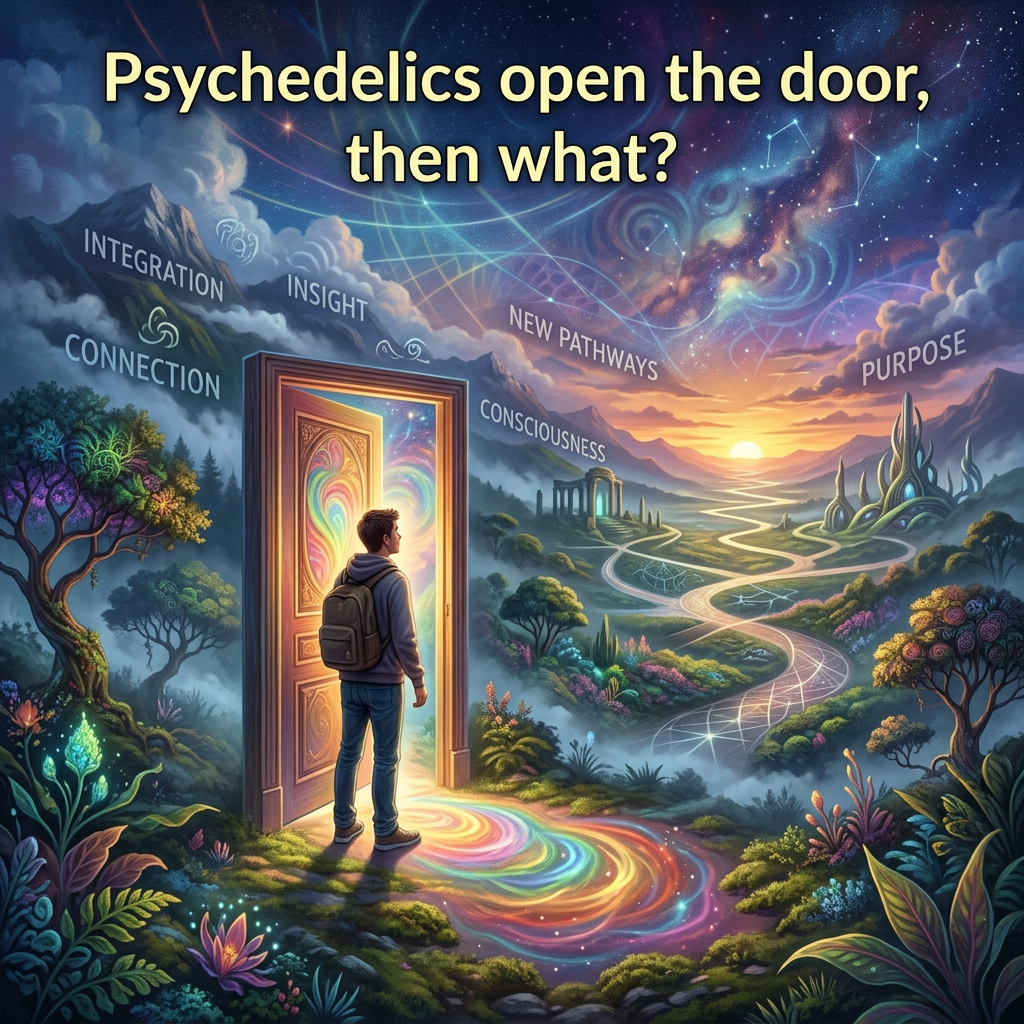
  • Psychedelics Open the Door Then What?

    Psychedelics Open the Door Then What?

    Someone left a comment on my YouTube channel a while back: “He doesn’t know anything, he’s just a new graduate.” Fair enough. I should probably update my profile.

    For the record, I’ve been practicing psychiatry for five years post-residency now, and to put it mildly, I’ve seen a few things. I’ve sat across from patients fighting depression that won’t lift, PTSD that won’t quiet, bipolar illness that won’t stabilize, and the often-forgotten but equally devastating problem of simply trying to live a daily life. In the most complex cases, I struggle right alongside them. It takes a real toll on both sides of the therapeutic relationship. I didn’t enter medicine, and certainly not psychiatry, to helplessly watch people suffer.

    How I Got Hooked (No Pun Intended)

    I remember attending my first American Academy of Addiction Psychiatry annual meeting with my best friend, two excited second-year residents with a budding interest in addiction medicine. There were dozens of strong lectures that week, but one track lit me up: a series on psychedelic research, including data on mystical experience and the use of psilocybin in patients with terminal cancer.

    I was hooked. The work was compelling, novel, and almost completely absent from the standard residency curriculum. The literature has only grown since, building on a body of clinical research and on centuries of indigenous and traditional experience that came long before any of us showed up to a conference.

    Why the Psychedelic Conversation Matters Now

    People have told me my entire field is “pseudoscience at best.” I prefer to think of psychiatry as the most interpretive part of medicine, but everyone is entitled to an opinion.

    What most people across the spectrum do agree on is this: collective mental health is getting worse, and the current standard of care leaves a lot of people out in the cold. There is a large gap, and it is begging to be filled. Right now, renewed clinical and cultural interest in psychedelics is rushing in to fill it.

    Everything old is new again. Postwar America saw a similar wave in the 1960s, a counterculture pushing back against the status quo with these compounds in hand, and we blew it. We were reckless, the political backlash was severe, and the scientific window slammed shut for a generation. We have a chance now to do this differently: to do the actual science, to understand these medicines, and to deliver them safely. I have written extensively about that elsewhere, and I will continue to.

    This piece is about something else.

    What I’ve Actually Seen in the Room

    After five years of treating serious mental illness, treatment-resistant depression, and addiction, here is the unglamorous clinical truth I want anyone considering psychedelic therapy to hear:

    I have rarely seen lasting recovery come from medication alone.

    Not on SSRIs. Not on mood stabilizers. Not on stimulants. And, this is the part the hype train usually skips, not on psychedelics either.

    Medication can take the edge off. It can crack a window in a sealed room. But without a concerted effort to change how a person thinks, what they believe about themselves, and how they show up in their own life, relief is often partial and temporary. Old patterns reassert themselves with depressing reliability.

    Being well, actually well, not just less symptomatic, is a far more complex process than adding a molecule. Even when that molecule is a powerful psychedelic that can temporarily reroute the circuits that have run a patient’s life into the ground.

    The Onion and the Ego

    This is where ego dissolution comes in.

    Psychedelics, used well, can do something extraordinary. They can peel back the layers, the conditioning, the wounds, the social performance, the inherited beliefs – and offer a person something close to a blank canvas. The experience is often described as a multi-stage journey: a descent into the subconscious, a confrontation with personal shadow material, and an ascent toward integration. Anyone who has sat with patients in the days after a session knows that structure is not imaginary.

    But dissolving the ego is only half the work. Maybe less.

    There has to be a rebuilding. Otherwise, the process can end in chaos, disorientation, drift, or destabilization. For all the cultural and societal programming embedded in the ego, the ego also has a job. It organizes. It protects. It gives a person a sense of continuous self. You do not want it gone so much as loosened, examined, and put back together with more skill.

    A Spiritual Problem in a Secular Age

    Here is where I will say something that may cost me a few subscribers: for many patients, psychedelic experiences can feel like a return to something sacred, however they define it.

    Nietzsche famously wrote, “God is dead. God remains dead. And we have killed him.” That line is usually quoted as a takedown of religion. I read it more as a diagnosis. Religious authority is not what it used to be, fine, but the bigger problem is the void it left behind. Not a physical void. An existential one. And that is much harder to fill.

    A great deal of suffering in modern mental health is not only symptomatic. It is existential. It is about disconnection, meaning, identity, and the felt sense that nothing larger is holding the pieces together. This is where psychedelics, used carefully, may do something SSRIs cannot. The mystical experience, that sense of being part of something larger, more connected, less small, is precisely what many patients are starving for. It offers a temporary transcendence of the cages we live inside and a reminder that the ego’s account of who we are is not the whole story.

    The Limitation Nobody Wants to Talk About

    Here is the catch, and it is a big one.

    Psychedelics can show us the possibility of what we could be and how the world could feel. They do not teach us how to embody that possibility once we come back down.

    It is like buying the book that is supposed to change your life, finishing it, and realizing it handed you the concept but not the protocol. The map, not the legs.

    In my view, this will be one of the central questions of the psychedelic revolution in both medicine and culture: when we strip away the layers that make us who we think we are, what do we replace them with?

    Will the medicine alone be enough? I do not think so. For people to genuinely transcend rigid thought patterns and live differently, something larger has to shift: a societal opening toward the slow work of integration, lived community, meaning-making, and the willingness to pursue some form of inner life without being constantly dragged back by money, politics, and a version of the American dream that has metabolized into burnout for much of the country.

    Without some broader change in how we live, think, and treat each other, psychedelic therapy risks becoming a high-end coping mechanism. People will dose, briefly touch something profound, and then return to the same conditions that drove the depression in the first place. So they will dose again. And again.

    What the Old-Timers Knew

    This is both a beacon of hope and a cautionary tale, and not from me. From the people who walked this path long before psychiatry got around to studying it. The medicines open the door. They do not walk you through it.

    The deepest insight – the one many patients eventually report after the sessions, the integration, and the work – is almost embarrassingly simple: the beauty of everyday life and ordinary connection was already there. The medicine just got the ego out of the way long enough to let them see it.

    The work, your work, my work, our work, is figuring out how to keep seeing it once the medicine wears off.

  • The psychedelic conversation in psychiatry is at an inflection point

    The psychedelic conversation in psychiatry is at an inflection point

    I believe these treatments deserve serious study. In fact, some of the most promising work in modern psychiatry is happening in this space. Psilocybin has FDA breakthrough therapy designation for treatment-resistant depression, MDMA-assisted therapy has shown meaningful promise in PTSD, and ibogaine is generating legitimate research interest in opioid use disorder and traumatic brain injury. 

    But promise is not proof.

    In my new Psychiatric Times article, I make the case that psychedelics deserve real science, not political shortcuts, podcast-driven enthusiasm, or regulatory acceleration built on weak evidence. The core issue is not whether we should study these compounds. We should. The issue is whether observational data, open-label studies, and viral claims are being asked to carry more weight than they should. 

    When a treatment has real risks, especially one like ibogaine with known cardiac concerns, the answer cannot be to lower the evidentiary bar. It has to be to raise the quality of the research. That means adequately powered randomized trials, careful safety monitoring, standardized outcomes, and enough humility to admit what we do not yet know. 

    Psychiatry does need better tools. Our patients need them badly. But if we want innovation that lasts, it has to be built on rigor, not hype.

    My latest piece in Psychiatric Times“Psychedelics Deserve Real Science”

  • We say we care about mental health in America

    We say we care about mental health in America

    We say we care about mental health in America.
    But the data—and my front-line experience—say otherwise.

    We are overmedicating, underfunding, and pathologizing poverty, trauma, and stress.
    Instead of addressing why people are sick, we throw pills at symptoms.

    🧠 In my latest article for Psychiatric Times, I make the case that we’ve built a system that profits off disease—not health.
    We’re not solving the problem. We’re institutionalizing it.

    If we want to make America healthy again, we need to stop doing the wrong things.

    👉 Read the full piece here: https://www.psychiatrictimes.com/view/if-we-want-to-make-america-healthy-again-we-are-doing-the-wrong-thing

  • Is Antidepressant Withdrawal Overhyped? What the Evidence Really Says

    Is Antidepressant Withdrawal Overhyped? What the Evidence Really Says

    In my clinical practice, I’ve often found myself scratching my head over the narrative surrounding antidepressant withdrawal.

    I’m not denying that withdrawal is real—it is. And for a small subset of patients, it can be quite distressing. But what I am saying is this: it’s not nearly as common, dramatic, or dangerous as some online circles and sensational stories would have you believe.

    I’ve seen countless patients abruptly stop antidepressants and experience no withdrawal symptoms. I’ve also aggressively tapered antidepressants in patients with bipolar disorder to prevent mood destabilization—again, with little to no evidence of withdrawal. This isn’t a one-off observation. It’s a consistent clinical pattern I’ve noted for years. So, I asked myself: What does the data actually say?

    The Evidence

    A 2024 meta-analysis published in JAMA Psychiatry examined 49 randomized controlled trials and finally gave us some clarity.

    The results?
    ✅ People discontinuing antidepressants reported on average just one more symptom than those who either continued medication or discontinued a placebo.
    ✅ The most commonly reported symptoms in the first two weeks were dizziness, nausea, vertigo, and nervousness—exactly what I’ve seen clinically.
    ✅ Critically, the average number of symptoms fell below the threshold for what’s considered a clinically significant discontinuation syndrome.
    ✅ There was no link between discontinuation and worsening depression, suggesting that if mood symptoms return, it’s likely a relapse—not withdrawal.

    Why This Matters

    There are vocal groups online—often with clear anti-psychiatry agendas—who focus exclusively on rare, severe cases of withdrawal and present them as the norm. The goal is simple: to scare people away from psychiatry and evidence-based treatment using emotional testimonials instead of clinical reality.

    Let’s be honest—those cases do exist, but they are not representative of what most patients experience.

    As clinicians, we should remain cautious and responsible. Yes, we should taper medications thoughtfully. Yes, we should prepare patients for the possibility of withdrawal symptoms. But we also shouldn’t scare them into avoiding treatment—or make them feel trapped on medications for life.

    Bottom Line

    Antidepressant withdrawal can happen. It can be uncomfortable. But it’s rarely severe and almost never dangerous. The fear around it has been overstated by those with an ax to grind. We owe it to our patients to treat based on evidence, not anecdotes.

  • Brexpiprazole + Sertraline: A New Hope for PTSD Treatment

    Brexpiprazole + Sertraline: A New Hope for PTSD Treatment

    We’ve all seen it: PTSD that won’t budge. Patients try sertraline or paroxetine—the so-called “gold standards”—and walk away with little more than side effects and a sense of failure.

    Enter a new contender: brexpiprazole + sertraline.

    A recent Phase 3 randomized controlled trial might finally offer something real for those stuck in the PTSD trenches.

    🚨 The Results

    In a study across 86 sites with over 550 adults, adding brexpiprazole (2–3 mg) to sertraline (150 mg) led to a 5.6-point greater reduction on the CAPS‑5 (the gold-standard PTSD measure) compared to sertraline + placebo. That’s not a marginal win—it’s a clinically significant shift, especially in a treatment-resistant population.

    Responder rates tell the story even clearer:

    • 68.5% of patients on the combo had ≥30% reduction in symptoms
    • Compared to 48.2% on sertraline alone
    • That’s a +20% absolute response rate boost

    And the improvements weren’t just short-lived. Benefits held through 12 weeks, even during a post-treatment observation period. No relapse, no rebound—just stability.

    🧩 More Than Symptom Checklists

    It wasn’t just about PTSD symptoms. This combo also:

    • Improved psychosocial functioning (B-IPF scores)
    • Reduced anxiety and depression (HADS)
    • Lowered global illness severity (CGI-S)
    • Helped with all symptom clusters, including reexperiencing, avoidance, and hyperarousal

    That’s rare. Most meds in psychiatry hit one or two domains and leave the rest hanging. This one made a dent where it counts: function, resilience, and real-world relief.

    ⚠️ What About Side Effects?

    Brexpiprazole is still an atypical antipsychotic, so there’s baggage. But the trial data suggest it’s relatively well-tolerated:

    • Fatigue: 6.8%
    • Weight gain: 5.9%
    • Somnolence: 5.4%
    • Discontinuation due to AEs? Just 3.9%, vs 10.2% in placebo.

    No new safety signals. No psychosis worsening. Not perfect, but not the metabolic disaster zone we see with other agents.

    🚀 What’s Next?

    The FDA is reviewing this combo

    For those of us treating chronic PTSD, this may be a real tool—not just a shiny new molecule with good marketing.

    Until then, it’s worth paying attention. Because when sertraline alone doesn’t cut it—and we know it often doesn’t—this combo could offer a lifeline.

  • ARISE Study Phase 3 Results: Understanding Xanomeline’s Setback

    ARISE Study Phase 3 Results: Understanding Xanomeline’s Setback

    What Was the ARISE Study?

    The ARISE trial was a Phase 3 clinical study evaluating Cobenfy — a combination of xanomeline (a muscarinic receptor agonist) and trospium chloride (a peripheral anticholinergic) — as an adjunctive treatment for adults with schizophrenia who continued to experience symptoms despite taking an atypical antipsychotic.

    What Is a Primary Endpoint, and Why Does It Matter?

    In clinical trials, the primary endpoint is the most important outcome researchers are trying to affect — it’s how a drug’s success or failure is officially judged.
    In ARISE, the primary endpoint measured the change in symptom severity compared to placebo using a standardized scale for schizophrenia. Meeting this endpoint would have demonstrated clear, statistically significant symptom improvement attributable to Cobenfy.

    The Outcome: No Statistically Significant Benefit

    According to topline results, Cobenfy did not show a statistically significant improvement compared to placebo when added to atypical antipsychotics. This means the observed difference could have been due to chance and did not meet the pre-set threshold for success.

    However, Cobenfy did show a numerical improvement — the group receiving the drug combination performed betterthan placebo in symptom reduction, just not to a statistically convincing degree.

    Could Anticholinergic Effects Be to Blame?

    One possible explanation for this outcome lies in the mechanism of action of both Cobenfy and many commonly used atypical antipsychotics.

    • Xanomeline is designed to activate muscarinic receptors in the brain (specifically M1 and M4), which may help regulate dopamine and reduce psychosis.
    • But many atypical antipsychotics — like olanzapine, clozapine, and quetiapine — also have anticholinergic properties, meaning they block these same receptors.

    This sets up a pharmacological tug-of-war: Cobenfy tries to stimulate muscarinic activity, while the background antipsychotic may be dampening it. This conflict could blunt the therapeutic signal, explaining why the benefit didn’t reach statistical significance.

    What This Means for the Future

    The failure to meet the primary endpoint is a setback, but not the end of the road. The numerical improvements suggest a potential signal, and with refined trial design — perhaps using background medications with lower anticholinergic load — future studies may better reveal Cobenfy’s potential.

    Additionally, this trial underscores the importance of considering mechanism compatibility in combination therapies. It’s not just about adding drugs — it’s about how they interact at the receptor level.

    Conclusion

    While the ARISE study didn’t deliver the result many hoped for, it raised critical questions that will shape future research. A deeper understanding of anticholinergic burden, drug synergy, and precision pharmacology is essential as we continue the search for more effective treatments for schizophrenia.

  • Natural ADHD Treatments: Evidence-Based Options

    Natural ADHD Treatments: Evidence-Based Options

    The search for natural alternatives to pharmaceutical treatments is a growing trend across many medical conditions, and ADHD is no exception. Although stimulant medications remain the gold standard for ADHD management, boasting large effect sizes, they are not without potential risks and side effects. This raises an important clinical question: are there evidence-based natural options that could serve either as primary therapies or as adjunctive treatments in ADHD? Exploring these alternatives could offer valuable strategies for patients and families seeking safer, well-tolerated interventions.

    1. Hirayama et al., 2014 (Phosphatidylserine alone)

    • Population: 36 children (6–12 years) with ADHD
    • Dose: 200 mg/day PS
    • Duration: 15 weeks
    • Main outcomes: ADHD symptoms (teacher ratings), auditory memory

    Reported effect:

    • They did not directly report Cohen’s d, but they reported statistically significant differences between PS and placebo groups on ADHD symptom scores.
    • Based on the mean differences and standard deviations reported:

    Estimated effect size:
    → Cohen’s d ≈ 0.5–0.6 (moderate effect size)

    ✅ Interpretation: A medium, meaningful clinical effect, but not huge like you’d expect with stimulants (where d ~0.8–1.2).

    2. Manor et al., 2012 (Phosphatidylserine + Omega-3 Fatty Acids)

    • Population: 200 children with ADHD symptoms (formal diagnosis not always required)
    • Dose: 300 mg PS + 120 mg EPA + 80 mg DHA daily
    • Duration: 15 weeks
    • Main outcomes: ADHD symptomatology, impulsivity, emotional regulation

    Reported effect:

    • Statistically significant improvements over placebo.
    • Again, they didn’t directly report Cohen’s d, but they provided enough statistical info to estimate.

    Estimated effect size:
    → Cohen’s d ≈ 0.3–0.5 depending on the specific symptom cluster.

    ✅ Interpretation: Small to moderate effect. (Closer to small-to-medium than medium.)

    StudyPopulationInterventionKey Outcome
    Hirayama 2014ADHD kids (n=36)200 mg PS/dayImproved attention & memory
    Manor 2012Kids with ADHD symptoms (n=200)300 mg PS + 200 mg omega-3sReduced impulsivity, improved emotional regulation

    🧠 Clinical Bottom Line:

    • Phosphatidylserine alone → moderate effect on ADHD symptoms (especially attention and memory).
    • PS + Omega-3 → small to moderate effect, mainly helping impulsivity and emotional regulation.
    • Better tolerated than traditional ADHD meds but obviously less potent.

    👉 They could be considered in mild ADHD cases, in parents preferring “natural” options, or as adjuncts to other therapies.