Tag: research

  • Iclepertin Trial Results: Insights on Schizophrenia Treatment

    Iclepertin Trial Results: Insights on Schizophrenia Treatment

  • 🚨 New Research Alert! 🚨

    🚨 New Research Alert! 🚨

    We’re diving deep into the latest JAMA Psychiatry article on Social Determinants of Health & Suicide-Related Outcomes 🧠💔. This groundbreaking study sheds light on how factors like income, education, and community support play a crucial role in mental health and suicide prevention. 📊🏡💬

    Key Takeaways: 🔍 Social & economic inequalities significantly impact mental well-being. 🛠️ Addressing these factors can save lives and improve outcomes.

    🤝 Community support is more vital than ever.

    💡 With regard to suicide attempt, experience of childhood abuse and maltreatment and sexual assault, gender and sexual minority status, and parental suicide mortality were the strongest risk factors. 

    💡 For suicide mortality, justice system–involved individuals in the community, exposure to others’ and parental suicide, firearm accessibility, divorce, experience in foster care, release from incarceration, and midlife (age 35-65 years) unemployment were the SDOH with consistently strong effects. 

    Join the conversation and let’s work towards a more equitable and supportive world! 🌍✨

    #MentalHealthMatters #JAMAPsychiatry #SocialDeterminants #community #psychiatry #psychiatrist #doctor#mentalhealth #mentalhealthmatters #mentalhealthishealth #SuicidePrevention #HealthEquity #Psychiatry#Research #Wellness 🌈❤️🧠

    🔗 https://jamanetwork.com/journals/jamapsychiatry/article-abstract/2828935

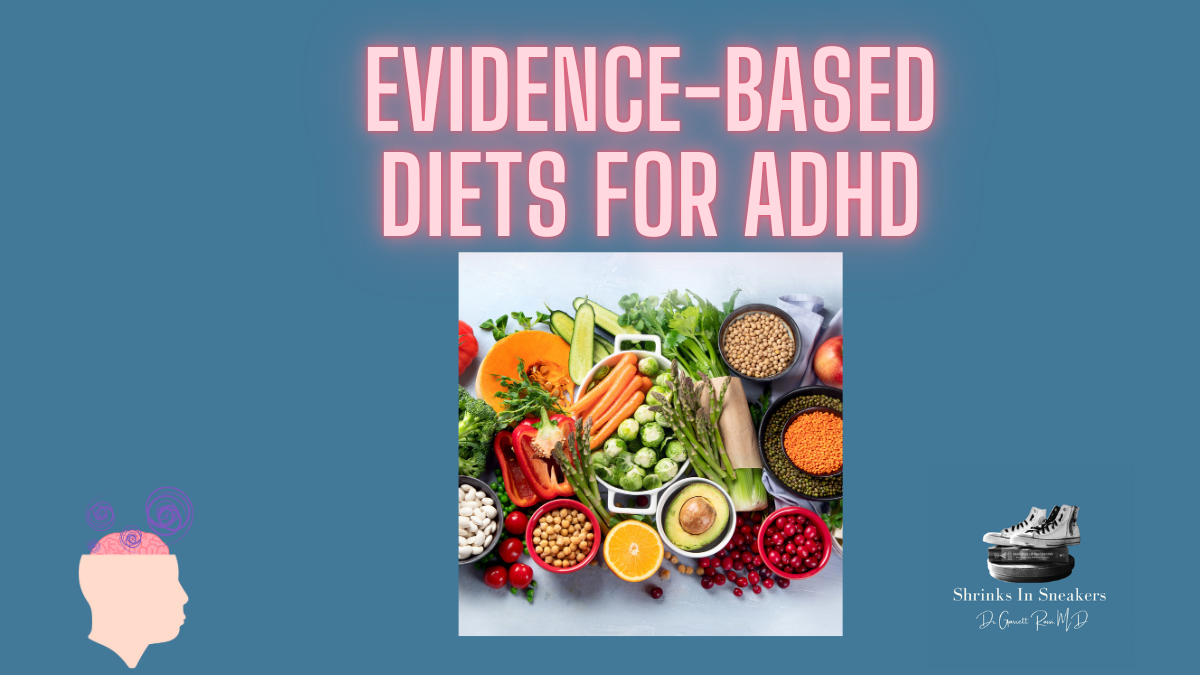
  • Evidence-Based Diets for ADHD: Insights from Randomized Controlled Trials (RCTs)

    Evidence-Based Diets for ADHD: Insights from Randomized Controlled Trials (RCTs)

    Diet plays a significant role in brain health and behavior, making it a promising area for ADHD symptom management. While dietary changes are not a substitute for standard treatments, several dietary interventions have shown evidence-based benefits in improving ADHD symptoms.

    1. Omega-3 Fatty Acid Supplementation

    • Why: Omega-3 fatty acids, particularly EPA (eicosapentaenoic acid) and DHA (docosahexaenoic acid), are crucial for brain development and function.
    • Evidence:
      • A 2018 meta-analysis of RCTs found that omega-3 supplementation improved attention and reduced hyperactivity in children with ADHD.
      • Higher EPA-to-DHA ratios (e.g., 3:1) were more effective.
    • How to Implement:
      • Include fatty fish (e.g., salmon, mackerel, sardines) 2–3 times per week.
      • Consider omega-3 supplements (1–2 grams daily with a high EPA content).

    2. Elimination Diets

    • Why: Some children with ADHD may react adversely to specific foods or additives, exacerbating symptoms.
    • Evidence:
      • The Restricted Elimination Diet (RED), such as the oligoantigenic diet, has been tested in RCTs. A 2011 RCT published in The Lancet found significant symptom reductions in 64% of children who followed a restricted diet for 5 weeks.
      • Foods commonly eliminated include dairy, wheat, soy, eggs, and food additives.
    • How to Implement:
      • Work with a healthcare provider or dietitian to guide the process.
      • Reintroduce foods one at a time to identify triggers.

    3. Additive-Free and Preservative-Free Diets

    • Why: Artificial food colorings, preservatives, and sweeteners may worsen hyperactivity in some children.
    • Evidence:
      • A meta-analysis published in Pediatrics (2012) found that artificial food coloring elimination reduced ADHD symptoms in a subset of children.
    • How to Implement:
      • Avoid processed foods with artificial dyes (e.g., Red 40, Yellow 5).
      • Read ingredient labels and choose whole, minimally processed foods.

    4. Mediterranean Diet

    • Why: The Mediterranean diet is rich in nutrients critical for brain health, such as omega-3s, antioxidants, and vitamins.
    • Evidence:
      • A 2017 study in Pediatrics suggested that children who adhered to a Mediterranean diet had fewer ADHD symptoms compared to those with poor adherence.
    • How to Implement:
      • Focus on fruits, vegetables, whole grains, nuts, seeds, fish, and olive oil.
      • Limit red meat, processed foods, and added sugars.

    5. Low-Glycemic Index (GI) Diet

    • Why: High-GI foods (e.g., sugary snacks) cause rapid blood sugar spikes and crashes, which may worsen hyperactivity and inattention.
    • Evidence:
      • A small RCT found that a low-GI diet improved behavior in children with ADHD by stabilizing energy levels and focus.
    • How to Implement:
      • Choose whole grains, legumes, and non-starchy vegetables.
      • Avoid sugary drinks, white bread, and refined snacks

    6. High-Protein Diets

    • Why: Protein supports the production of neurotransmitters like dopamine, which is often dysregulated in ADHD.
    • Evidence:
      • Some studies suggest that protein-rich breakfasts improve attention and reduce impulsivity during the day.
    • How to Implement:
      • Include protein-rich foods (e.g., eggs, yogurt, lean meats, nuts) in each meal.
      • Avoid skipping breakfast to maintain consistent energy levels.

    Micronutrient Supplementation

    • Why: Nutrient deficiencies (e.g., zinc, magnesium, iron) are linked to ADHD symptoms.
    • Evidence:
      • RCTs show that zinc and magnesium supplementation improves hyperactivity and impulsivity, particularly in children with low baseline levels.
      • Iron supplementation benefits those with low ferritin levels.
    • How to Implement:
      • Have nutrient levels tested by a healthcare provider.
      • Include nutrient-rich foods like spinach (iron), nuts (magnesium), and seafood (zinc).

    Recommendations

    1. Prioritize Whole Foods: Focus on unprocessed, nutrient-dense foods.
    2. Limit Sugars and Additives: Avoid foods with high sugar content, artificial sweeteners, or additives.
    3. Monitor Responses: Keep a food and symptom journal to identify potential triggers or improvements.
    4. Consult Professionals: Work with a dietitian or healthcare provider to ensure nutritional adequacy and tailor dietary changes to individual needs.

  • Breaking the Trauma Cycle: Can We Prevent PTSD Before It Begins?

    Breaking the Trauma Cycle: Can We Prevent PTSD Before It Begins?

    The use of hydrocortisone and propranolol in the prevention of post-traumatic stress disorder (PTSD) has been explored in several randomized controlled trials (RCTs). We always want to know does it work or is it just another interesting idea with little evidence to support its use

    Hydrocortisone:

    Hydrocortisone, a corticosteroid, has been investigated for its potential to modulate the stress response and prevent the consolidation of traumatic memories, which is thought to contribute to the development of PTSD.

    1. Mechanism: Hydrocortisone works by increasing cortisol levels, which can suppress the stress-induced overactivation of the hypothalamic-pituitary-adrenal (HPA) axis. Cortisol may reduce memory consolidation of trauma, thus decreasing PTSD risk.
    2. RCT Evidence:
      • Schelling et al. (2004) conducted a study on patients in the ICU, where hydrocortisone was used to treat septic shock. They found that patients who received hydrocortisone had a significantly lower risk of developing PTSD symptoms at follow-up compared to the placebo group. This suggested that hydrocortisone might have a protective effect in stress-related conditions.
      • Survivors of trauma: In a study by Zohar et al. (2011), trauma patients who received hydrocortisone in the immediate aftermath of the traumatic event had lower rates of PTSD symptoms compared to those who received placebo. The results suggested that hydrocortisone may reduce PTSD incidence when administered shortly after trauma exposure.
      • Critically ill patients: Schelling et al. (2001) showed that administering hydrocortisone to critically ill patients in the ICU reduced PTSD symptoms at follow-up, supporting the idea that early cortisol intervention can modulate the long-term psychological impact of traumatic experiences.
    3. Summary: Hydrocortisone has shown promise in reducing PTSD symptoms when administered during or soon after traumatic experiences, particularly in ICU patients or survivors of trauma. Its role appears to be in modulating the stress response and memory consolidation processes.

    Propranolol:

    Propranolol, a beta-blocker, is primarily used to treat cardiovascular conditions but has been studied for its effects on memory reconsolidation and emotional arousal, both of which are implicated in the development of PTSD.

    1. Mechanism: Propranolol reduces adrenergic activity by blocking beta-adrenergic receptors, potentially interfering with the emotional enhancement of traumatic memories, thus reducing their consolidation.
    2. RCT Evidence:
      • Pitman et al. (2002) conducted a double-blind, placebo-controlled trial in which trauma victims (e.g., car accident survivors) were given propranolol or placebo within a few hours of the event. At follow-up, patients who received propranolol had reduced PTSD symptoms compared to those given placebo, though the results were not statistically significant.
      • Brunet et al. (2008) performed a study on individuals with PTSD, where propranolol was administered before memory reactivation (i.e., recalling the traumatic event). The group that received propranolol showed reduced physiological responses to trauma reminders and decreased emotional impact, suggesting that propranolol may weaken the reconsolidation of traumatic memories.
      • Stein et al. (2007) did not find a significant reduction in PTSD incidence when propranolol was administered following trauma. This led to mixed conclusions regarding its preventive efficacy.
    3. Summary: The evidence for propranolol is more mixed. While some studies suggest it may reduce PTSD symptoms by weakening emotional memory consolidation, other trials have not demonstrated a significant reduction in PTSD development.

    Conclusion:

    • Hydrocortisone has more consistent evidence supporting its role in preventing PTSD, particularly when administered soon after trauma.
    • Propranolol shows mixed results, with some evidence suggesting it may reduce emotional memory consolidation and PTSD symptoms, though its effectiveness in preventing PTSD development is less conclusive.

    Both treatments hold potential, but more research is needed to establish their routine use in PTSD prevention.

  • Can Amantadine Tame Tardive Dyskinesia? Exploring the Evidence and Potential Benefits

    Can Amantadine Tame Tardive Dyskinesia? Exploring the Evidence and Potential Benefits

    In my practice, I see many patients who have been on high doses of antipsychotics for extended periods, particularly first-generation antipsychotics, which carry a higher risk of developing tardive dyskinesia (TD). While two FDA-approved treatments for TD exist, their high cost and limited availability can make access challenging in community mental health settings. This has led me to explore alternative treatments like amantadine. Like many of you, I wanted to understand the evidence supporting its use, so let’s take a closer look at what the research says about amantadine as a treatment option for TD.

    The evidence for the use of amantadine in treating tardive dyskinesia (TD) has been explored in several small randomized controlled trials (RCTs), though it remains limited compared to other treatments.

    1. Efficacy of Amantadine: Some studies suggest that amantadine, an NMDA receptor antagonist, may offer mild to moderate improvement in TD symptoms by modulating dopaminergic pathways. For instance, an early RCT (2007) tested amantadine in schizophrenia patients with TD and reported some improvements in abnormal involuntary movements compared to placebo. However, the sample size was small, and results were modest.
    2. Comparative Effectiveness: Few trials directly compare amantadine to other TD treatments like VMAT-2 inhibitors (e.g., valbenazine, deutetrabenazine), which are the preferred treatment options due to stronger RCT evidence. Amantadine’s effects may be less pronounced, though some patients have reported partial symptom relief, especially when TD is not severe.
    3. Safety Profile: In RCTs, amantadine is generally well-tolerated in TD patients, with few serious side effects. However, common side effects include dizziness, insomnia, and gastrointestinal issues, which may limit its use in certain patients, particularly those with cognitive or movement comorbidities.

    Overall, while RCTs support some benefit of amantadine in TD, the effect size is generally moderate. VMAT-2 inhibitors are preferred based on stronger, more consistent RCT data, although amantadine may still be considered for patients who cannot tolerate or do not respond to these primary therapies.