Tag: SNRIs

  • Understanding Social Anxiety Disorder: Key Insights and Treatments

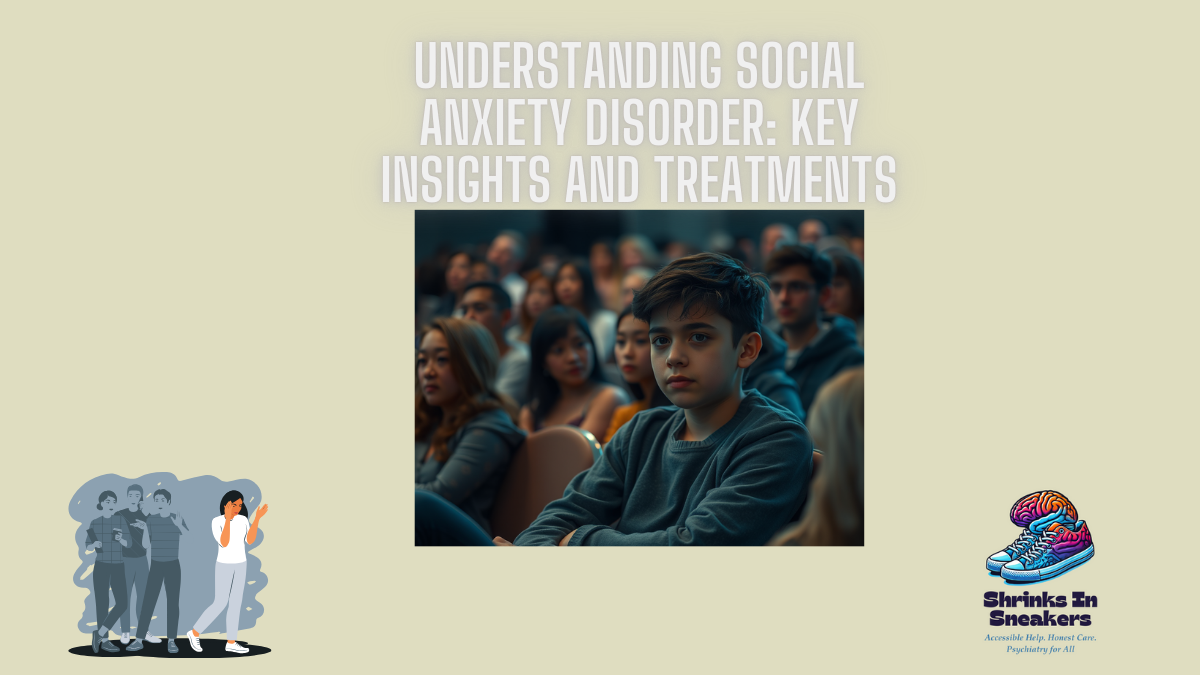
    Understanding Social Anxiety Disorder: Key Insights and Treatments

    What if your biggest fear was simply being seen?
    For millions living with Social Anxiety Disorder (SAD), everyday interactions—like answering a question in class or speaking up at work—can feel terrifying. Despite being one of the most prevalent and impairing anxiety conditions, SAD remains widely under-recognized.

    📊 Up to 8.4% of people meet criteria for SAD in a given year, yet only 20–40% recover after 20 years without treatment (Ruscio et al., 2008). Median age of onset? Just 13 years old.

    👤 Case Vignette: When Fear Takes Over

    At 15, “Jenna” stopped raising her hand in class—not because she didn’t know the answers, but because she was terrified of being laughed at. By college, she avoided presentations, skipped networking events, and turned down internships. Her friends thought she was shy. One professor suggested depression. But underneath was a paralyzing fear of judgment: classic Social Anxiety Disorder.

    🤝 What Is Social Anxiety Disorder?

    SAD is more than introversion or shyness. It’s a persistent, intense fear of being judged, embarrassed, or negatively evaluated in social or performance situations. This fear leads to avoidance behaviors that impair social, academic, and occupational functioning.

    ⚠️ Why Is It So Often Missed?

    SAD is frequently overshadowed by overlapping symptoms seen in:

    • Major Depressive Disorder (social withdrawal, low self-esteem)
    • Generalized Anxiety Disorder (excessive worry)
    • Avoidant Personality Disorder (longstanding social inhibition)
    • Body Dysmorphic Disorder (fear of negative evaluation tied to appearance)

    Because of this diagnostic overlap, many individuals go undiagnosed—or misdiagnosed—for years.

    🧠 Clinical Considerations

    1. SAD Is Not “Just Shyness”

    Shyness is a personality trait; SAD is a clinical condition. The difference lies in impairment: SAD interferes with daily life, relationships, academic goals, and career opportunities.

    2. Early Onset, Long Course

    Most individuals report symptoms starting in early adolescence. Without intervention, SAD often persists into adulthood and increases the risk of depressionsubstance use, and functional disability.

    3. Functional Impairment Is Significant

    SAD can lead to:

    • Academic underachievement
    • Avoidance of job interviews or public speaking
    • Social isolation
    • Delayed life milestones (e.g., dating, career advancement)

    4. Evidence-Based Treatments Exist

    🧠 Cognitive Behavioral Therapy (CBT):

    • Gold-standard psychotherapy
    • Targets negative thought patterns and avoidance behaviors
    • Often includes exposure exercises to feared situations
    • Group CBT is especially effective for SAD

    💊 Pharmacologic Options:

    • First-line: SSRIs (e.g., sertraline, paroxetine)
    • SNRIs: Like venlafaxine, also effective
    • Beta-blockers: May help with performance-only SAD (e.g., public speaking)
    • BenzodiazepinesNot recommended due to dependence risks and avoidance reinforcement

    🔄 Combined Therapy

    Some individuals benefit most from CBT + medication, particularly those with moderate-to-severe or treatment-resistant symptoms.

    📣 Call to Action

    Too many individuals live in silence with Social Anxiety Disorder. If you or someone you know avoids social situations due to fear of judgment, don’t ignore it. SAD is real. It’s common. And—most importantly—it’s treatable.

    👉 Talk to a mental health professional
    👉 Share this post to raise awareness
    👉 Start the conversation
  • New Cochrane Review on Antidepressants for GAD

    New Cochrane Review on Antidepressants for GAD

    A fresh Cochrane review confirms that SSRIs and SNRIs outperform placebo in treating generalized anxiety disorder (GAD) in adults. 📊 Not only do these medications show superior efficacy, but dropout rates were comparable to placebo—suggesting they’re generally well tolerated.

    🔎 The catch? The long-term impact of antidepressants on GAD remains uncertain, highlighting the need for more extended follow-up studies.

    💡 Key takeaway: Antidepressants remain a solid treatment option for GAD, but we still have more to learn about their effects over time.

    link: https://www.cochranelibrary.com/cdsr/doi/10.1002/14651858.CD012942.pub2/full

  • 📌 CANMAT Guidelines for Depression: Evidence-Based Treatment Strategies

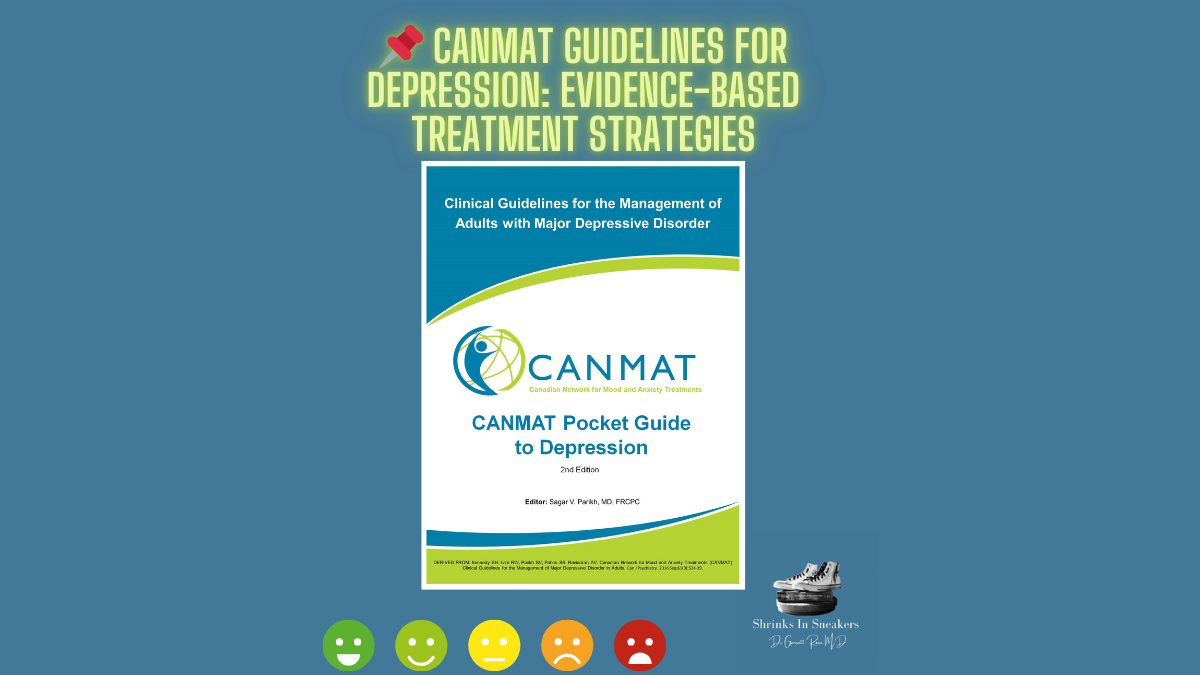
    📌 CANMAT Guidelines for Depression: Evidence-Based Treatment Strategies

    The CANMAT 2016 guidelines remain one of the most comprehensive, evidence-based frameworks for treating major depressive disorder (MDD). These guidelines emphasize a stepwise, individualized approach based on efficacy, safety, and patient preference. Here’s a breakdown of the key recommendations:

    🔹 First-Line Treatments

    ✅ Psychotherapy – Cognitive Behavioral Therapy (CBT), Interpersonal Therapy (IPT), and Mindfulness-Based CBT are recommended, especially for mild to moderate depression.
    ✅ Pharmacotherapy – SSRIs, SNRIs, bupropion, mirtazapine, and vortioxetine are all first-line antidepressantsbased on efficacy and tolerability.
    ✅ Neurostimulation – Electroconvulsive Therapy (ECT) and Repetitive Transcranial Magnetic Stimulation (rTMS) are considered first-line for severe or treatment-resistant depression (TRD).

    🔹 Second-Line Treatments

    🔸 Other antidepressants – Tricyclics (TCAs), trazodone, moclobemide, and some atypical antipsychotics (e.g., quetiapine XR, aripiprazole, brexpiprazole)
    🔸 Adjunctive strategies – Lithium, atypical antipsychotics, or combination antidepressant therapy for partial responders
    🔸 Ketamine/esketamine – Emerging evidence for TRD

    🔹 Third-Line & Beyond

    🔹 MAOIs (reserved for treatment-resistant cases)
    🔹 Novel agents (psilocybin, anti-inflammatory treatments) – Experimental but promising

    💡 Key Takeaways
    🔹 Personalized treatment is essential – factors like symptom profile, comorbidities, and patient preference influence the best approach.
    🔹 Combination strategies (meds + psychotherapy) often yield superior outcomes.
    🔹 Treatment-resistant depression requires a multimodal approach, including augmentation, switching strategies, and neurostimulation options.

    The CANMAT guidelines are a critical resource for clinicians, offering a structured approach to optimizing depression treatment. What are your go-to strategies for managing MDD? Let’s discuss!

    #DepressionTreatment #Psychiatry #CANMAT #MDD #Psychopharmacology

  • Gepirone: A New Player in the Antidepressant Arena—Should We Care?

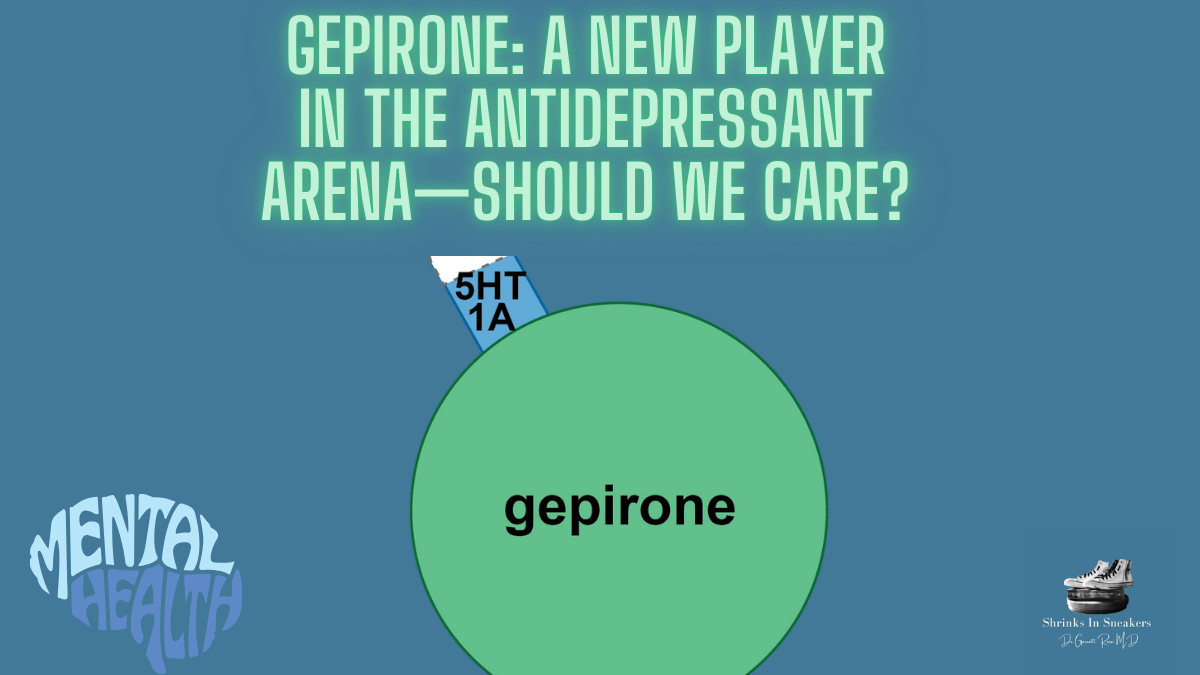
    Gepirone: A New Player in the Antidepressant Arena—Should We Care?

    Gepirone may have flown under the radar for many of us. I’ll admit, it didn’t generate much excitement on my end. However, it recently crossed a significant milestone: FDA approval as an antidepressant. But let’s not overlook its rocky path to getting there—a journey marked by hurdles and setbacks.

    The road to FDA approval for gepirone was anything but smooth. Its initial development began decades ago, but the approval process faced repeated delays and rejections. Questions about efficacy and study designs kept it in limbo for years. What ultimately got it across the finish line was a re-analysis of data demonstrating robust effects in specific populations, particularly those with significant depressive symptoms. This serves as a reminder that persistence and rigorous data reassessment can change the trajectory for medications once thought to have limited potential.

    Now that gepirone is finally available, the big question is: should we care? If so, where does it fit into our treatment algorithms for adult depression?

    With a mechanism targeting the serotonin 1A receptor as a partial agonist, gepirone offers a unique profile compared to SSRIs, SNRIs, and other standard antidepressants. Its anxiolytic effects may make it particularly appealing for patients with co-occurring anxiety. However, like any medication, it isn’t without its downsides.

    Potential side effects include nausea, dizziness, fatigue, and headache. These are generally mild, but it’s important to monitor for tolerability in sensitive patients. Gepirone also carries warnings about potential interactions with other serotonergic agents, raising the risk of serotonin syndrome. While this risk isn’t unique to gepirone, it’s a critical point to keep in mind when integrating it into a treatment plan.

    So, where does gepirone fit? Will it serve as a first-line option for certain patients, or will it find a niche role for those with specific tolerability issues or suboptimal responses to other antidepressants?

    I’d love to hear your thoughts. Is gepirone a tool worth adding to our arsenal, or just another option that might not shift the needle much in clinical practice?

  • Medication Side Effects: “I feel nauseous”

    Medication Side Effects: “I feel nauseous”

    Introduction:

    Did you know that the researchers that conduct drug trials do not ask patients about specific side effects? Rather, they ask a generic question such as “are you having adverse reactions to the medication” the patient then has to self-report any specific side effects they are having. Sometimes physicians during medication management sessions will use a similar question when asking about side effects. Some physicians also make statements when prescribing the medication such as “don’t worry most people do not have side effects with this medication.” This is egregious, considering we know these medications have side effects as all medications do. What I want to do over the next several posts, is discuss the common side effects of SSRIs and what you can do about them. The biggest issue we face with psychiatric medications is adherence, and many times side effects play a role. 

    I want to start with the most common side effects and work our way down. Nausea is one of the early side effects that is disturbing to patients and may result in discontinuation of the medication. Several things can be done to reduce the risk of nausea. 

    Medication Starting Dose and Titration

    One simple step could be to start the medication at the lowest possible dose and titrate slowly. Titrating the dose over one week has been shown to cut the risk of nausea in half. Another potential intervention is to split the dose and give the split dose with separate meals. If possible, use sustained/extended release preparations of the medication. For example, starting a patient on escitalopram 5 mg instead of 10 mg might help reduce the risk of nausea. Another simple change could be the timing of medication administration. Taking the medication after a meal may be helpful. Many patients find that food helps reduce the nausea and most of these medications can be taken with or without food. 

    Ginger Is Good

    If the above interventions fail to help you can consider ginger root. This dietary supplement can be purchased over the counter from your local health food store. Ginger root 550 mg one to two capsules up to three times per day if the slow titration and other intervention are ineffective. 

    If All Else Fails

    Finally, if the nausea does not respond to the above interventions then anti-nausea medications are appropriate. The two most commonly used at ondansetron and Mirtazapine which also blocks 5HT-3 receptors leading to reduced nausea.