Tag: substance induced psychosis

  • Substance-Induced Psychosis vs. Primary Psychosis: Treatment, Prognosis, and the Cannabis Connection

    Substance-Induced Psychosis vs. Primary Psychosis: Treatment, Prognosis, and the Cannabis Connection

    Psychosis can emerge from a range of causes, but distinguishing between substance-induced psychosis (SIP) and primary psychotic disorders like schizophrenia is critical for effective treatment and prognosis. While the clinical presentation often overlaps—hallucinations, delusions, disorganized thinking—the underlying etiology, treatment approach, and long-term outcomes can diverge significantly.

    Defining the Two

    Substance-Induced Psychosis (SIP) occurs when symptoms of psychosis are directly caused by intoxication with or withdrawal from substances such as cannabis, amphetamines, alcohol, hallucinogens, or synthetic cannabinoids (e.g., spice or K2). The psychosis typically emerges during or shortly after substance use and resolves with abstinence.

    Primary Psychosis, on the other hand, refers to psychotic disorders that are not directly attributable to substances or medical conditions. This includes schizophreniaschizoaffective disorder, and brief psychotic disorder, among others.

    Treatment: Overlapping Tools, Different Emphasis

    1. Acute Management
    Both SIP and primary psychosis are often treated with antipsychotic medications during acute episodes. The initial goals are the same: reduce agitation, manage delusions or hallucinations, and ensure safety.

    • Commonly used antipsychotics include risperidone, olanzapine, haloperidol, and quetiapine. In SIP, short-term use is typically sufficient.
    • In cases involving severe agitation or aggression, benzodiazepines (like lorazepam) may be used adjunctively, especially if stimulant intoxication is suspected.

    2. Long-Term Strategy

    • SIP: After stabilization, the primary strategy is abstinence from the offending substance and psychosocial support (e.g., CBT, motivational interviewing, relapse prevention).
    • Primary psychosis: Typically requires ongoing antipsychotic treatment, often for life. Psychosocial interventions, supported employment, and cognitive remediation are also central to recovery.

    Conversion to Schizophrenia: What’s the Risk?

    One of the key concerns with SIP is whether the episode is a harbinger of an underlying primary psychotic disorder.

    • Approximately 20–50% of individuals with substance-induced psychosis later develop a primary psychotic disorder, such as schizophrenia.
    • Amphetamine- and cannabis-induced psychosis carry the highest risk of conversion, particularly when psychosis occurs in adolescence or early adulthood.
    • meta-analysis by Niemi-Pynttäri et al. (2013) found that 46% of people with SIP later developed schizophrenia-spectrum disorders over a follow-up of 8 years.

    Predictors of conversion include:

    • Younger age at first psychotic episode
    • Family history of psychotic illness
    • Persistent psychotic symptoms after substance clearance
    • Poor premorbid functioning

    Do Antipsychotics Work in SIP?

    Antipsychotics reduce acute psychotic symptoms in SIP, but their long-term utility is less clear.

    • Studies show rapid resolution of psychosis within days to weeks in most SIP cases when abstinence is achieved.
    • Long-term antipsychotic treatment does not reduce the conversion rate to schizophrenia in confirmed SIP, suggesting their role should be time-limited unless ongoing symptoms or risk factors emerge.
    • A 2020 review in Psychological Medicine emphasized that monitoring over the 6–12 months post-episode is essential for risk stratification and avoiding premature chronic medication exposure.

    Cannabis: A Powerful Catalyst

    Cannabis has become the most studied and most controversial substance linked to psychosis. Here’s what the evidence says:

    • Daily cannabis users are 3–5 times more likely to develop a psychotic disorder compared to non-users, especially with high-THC strains (≥10% THC).
    • A 2019 Lancet Psychiatry study by Di Forti et al. showed that strong cannabis use accounts for 12% of new psychosis cases in Amsterdam, and 30% in London.
    • Adolescents who use cannabis, particularly those with a family history of psychosis, are at dramatically increased risk.

    Mechanistically, THC may dysregulate the dopamine system in vulnerable brains, tipping the balance toward psychosis. Cannabidiol (CBD), in contrast, may be protective, but commercial cannabis typically contains very little CBD.

    Final Thought: Clinicians must balance vigilance and restraint—treating psychosis aggressively when needed but also avoiding unnecessary chronic antipsychotic exposure in what may be a reversible, substance-driven episode.

  • 🔍 Suicide & Psychosis: What We Can Learn from Recent Research

    🔍 Suicide & Psychosis: What We Can Learn from Recent Research

    A new study sheds light on suicide risk in patients with psychotic disorders, comparing those with recent-onset schizophrenia or other psychotic disorders to those with longer illness duration. The findings offer critical insights for clinicians and mental health professionals.

    🚨 Key Takeaways:

    📌 Early Illness = Higher Risk: Patients within the first five years of their illness had higher suicide rates, emphasizing the need for intensive early intervention.

    📌 Common Risk Factors: Across both groups, depression, prior suicide attempts, and substance use were major red flags.

    📌 Different Patterns: Those with recent-onset psychosis were more likely to have rapid illness progression, while those with longer illness duration often had chronic distress and social isolation before suicide.

    📌 Missed Opportunities? Many had recent healthcare encounters before suicide, highlighting potential gaps in risk assessment and intervention.

    🛑 What This Means for Us:
    🔹 Early-phase psychosis care should prioritize suicide prevention.
    🔹 Screening for depression, substance use, and prior attempts is essential.
    🔹 More proactive intervention is needed, especially after hospital visits.

    This study reinforces what many frontline clinicians already suspect—suicide prevention in psychosis requires urgent, tailored strategies. How can we improve early detection and support for at-risk patients? Let’s discuss. 👇

  • Buprenorphine and Psychosis: Unraveling the Risks of Abrupt Discontinuation

    Buprenorphine and Psychosis: Unraveling the Risks of Abrupt Discontinuation

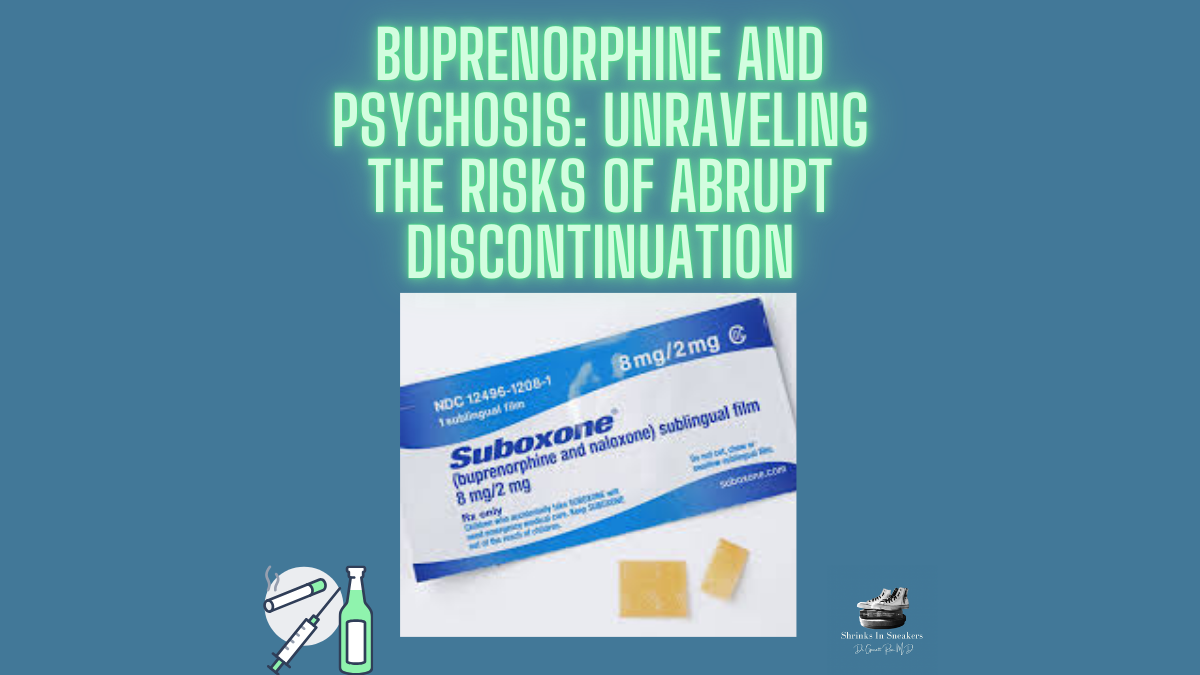
    This post is inspired by a real case from my practice involving a patient with no significant past psychiatric history but a strong history of substance use, including opioids and cocaine. The patient had been on buprenorphine maintenance therapy for several decades, providing stability in their recovery. However, following an abrupt discontinuation of buprenorphine, the patient developed acute psychotic symptoms. This case highlights an uncommon but important phenomenon clinicians should be aware of when managing buprenorphine discontinuation, especially in individuals with a history of substance use.

    Emerging evidence suggests that abrupt discontinuation of buprenorphine may induce psychosis in some individuals, though this appears to be a relatively uncommon occurrence.

    Documented Cases

    • New-onset psychotic symptoms have been reported after sudden cessation of buprenorphine in patients with no prior psychosis.
    • Common symptoms include auditory hallucinationsparanoid ideation, and delusions of reference.
    • Psychotic symptoms typically emerge within days to weeks after discontinuation.

    Potential Mechanisms

    1. Loss of buprenorphine’s antipsychotic effects through kappa-opioid receptor antagonism.
    2. Interaction between neurobiological vulnerabilities and the stress of withdrawal.
    3. Possible unmasking of latent psychotic disorders.

    Risk Factors

    • History of substance use.
    • Early adverse life events.
    • Underlying psychiatric conditions (e.g., bipolar disorder).

    Outcomes and Management

    • Symptoms may resolve in weeks to months, though some cases persist longer.
    • Reintroduction of buprenorphine has led to symptom remission in some cases, suggesting a causal relationship.
    • Gradual tapering of buprenorphine might mitigate this risk, though more research is needed.

    Clinical Implications

    Clinicians should remain vigilant when discontinuing buprenorphine, especially in individuals with risk factors for psychosis. A gradual tapering strategy is recommended to reduce potential risks, though further studies are necessary to guide best practices.

    Understanding this phenomenon highlights the importance of individualized care when managing buprenorphine discontinuation in vulnerable populations.

  • FDA Greenlights Breakthrough Schizophrenia Medication: Here’s How It Works

    FDA Greenlights Breakthrough Schizophrenia Medication: Here’s How It Works

    The FDA approved Cobenfy

    Schizophrenia is a complex and debilitating mental disorder characterized by a range of symptoms, including hallucinations, delusions, cognitive deficits, and emotional dysregulation. Despite advancements in antipsychotic medications, many patients experience incomplete symptom relief and significant side effects. As a result, there is a growing interest in alternative therapeutic targets, including the muscarinic acetylcholine receptors (mAChRs).

    Muscarinic Acetylcholine Receptors (mAChRs)

    The mAChRs are G protein-coupled receptors involved in various central nervous system functions, including cognition, learning, memory, and mood regulation. There are five subtypes of mAChRs (M1-M5), with the M1, M2, M3, and M4 subtypes playing significant roles in modulating neural activity related to schizophrenia.

    M1 Muscarinic Agonists

    The M1 receptor is primarily expressed in the cortex and hippocampus, regions crucial for cognitive processing. M1 agonists have shown promise in improving cognitive deficits and reducing psychotic symptoms in schizophrenia. Research indicates that M1 activation can enhance cholinergic neurotransmission and modulate glutamate and dopamine systems, potentially alleviating both positive and negative symptoms.

    M2 Muscarinic Agonists

    M2 receptors are predominantly found in the basal forebrain and play a role in modulating acetylcholine release. Although less studied than M1, M2 agonists may help balance neurotransmitter release, contributing to improved cognitive function and reduced psychotic symptoms.

    M3 Muscarinic Agonists

    The role of M3 receptors in schizophrenia is not as well understood as M1 and M4 receptors. However, M3 receptors are involved in various physiological processes, including insulin secretion and smooth muscle contraction. Research is ongoing to determine their potential therapeutic benefits in schizophrenia.

    M4 Muscarinic Agonists

    M4 receptors are highly expressed in the striatum, a brain region implicated in the regulation of motor control and reward processing. M4 agonists have shown potential in reducing dopaminergic hyperactivity, which is associated with positive symptoms of schizophrenia, such as hallucinations and delusions. Additionally, M4 activation may help mitigate side effects associated with conventional antipsychotics, such as extrapyramidal symptoms.

    Clinical Implications and Future Directions

    The therapeutic potential of M1-M4 muscarinic agonists in schizophrenia is an exciting area of research. Targeting these receptors may offer a novel approach to address the cognitive and negative symptoms of schizophrenia, which are often resistant to current treatments. Ongoing clinical trials and preclinical studies are crucial to understanding the efficacy, safety, and mechanisms of action of these compounds.

    Conclusion The exploration of M1-M4 muscarinic agonists represents a promising frontier in the treatment of schizophrenia. By modulating cholinergic, glutamatergic, and dopaminergic systems, these agents have the potential to provide more comprehensive symptom relief with fewer side effects compared to traditional antipsychotics. Continued research and development are essential to bring these innovative treatments to clinical practice, offering hope for improved outcomes for individuals with schizophrenia.

  • U.S. Overdose Deaths Hit Historic Low: A Turning Point in the Opioid Crisis

    U.S. Overdose Deaths Hit Historic Low: A Turning Point in the Opioid Crisis

    A recent NPR exclusive reveals a significant and unexpected decline in U.S. overdose deaths, marking the first drop in decades. Data from the Centers for Disease Control and Prevention (CDC) shows a nationwide reduction of roughly 10.6% in overdose deaths. Some states with rapid data collection have seen declines as high as 20-30%, suggesting the possibility of saving up to 20,000 lives annually.

    This turnaround follows years of increasing fatalities, largely driven by fentanyl and other synthetic opioids. Experts credit the broader availability of life-saving treatments, such as naloxone, and improvements in support systems for people at risk of overdosing. While the overall number of overdose deaths remains high, many in the public health community are cautiously optimistic, believing the worst of the crisis might be over for now

  • From Trip to Trigger: The Schizophrenia Risk After Substance-Induced Psychosis

    From Trip to Trigger: The Schizophrenia Risk After Substance-Induced Psychosis

    I recently had an interesting discussion with one of our residents about the risk of developing schizophrenia after experiencing substance-induced psychosis. The conversation was sparked by a study based on data from the Danish Civil Registration System. Fun fact: when you see large data sets like this, they’re often from Scandinavian countries.

    The study followed 6,788 people who were diagnosed with substance-induced psychosis between 1994 and 2014. They tracked patients until they developed schizophrenia, bipolar disorder, or passed away, using statistical methods to calculate the risk of conversion to a serious mental illness.

    A key takeaway: this study didn’t just look at the risk of schizophrenia but also included bipolar disorder and various substances—not just cannabis. Overall, 32.2% of people with substance-induced psychosis went on to develop either schizophrenia or bipolar disorder. Cannabis-induced psychosis had the highest conversion rate, with 47.4% of those cases developing one of these disorders.

    Being young and male increased the likelihood of developing schizophrenia, and self-harm after substance-induced psychosis was also linked to a higher risk of both schizophrenia and bipolar disorder.

    The big takeaway here? Substance-induced psychosis is closely associated with the development of serious mental illnesses. Follow-up care is essential, and steering clear of cannabis is always a smart move.

    Link to the article: https://psychiatryonline.org/doi/10.1176/appi.ajp.2017.17020223