Category: Psychiatry

  • Facing Treatment-Resistant Depression? Your Risk of Death Could Skyrocket

    Facing Treatment-Resistant Depression? Your Risk of Death Could Skyrocket

    A recent population-based cohort study examining cause-specific mortality in treatment-resistant major depression (TRD) revealed significant findings about the increased risks faced by those with TRD. The study, which analyzed data from over 176,000 Finnish patients diagnosed with major depressive disorder (MDD), found that approximately 11% of these patients developed TRD, meaning they did not respond to at least two adequate treatment trials.

    Key findings include that patient’s with TRD had a 17% higher overall mortality rate compared to non-TRD patients. The study highlights that much of this elevated mortality stems from external causes, with TRD patients facing nearly double the risk of suicide and a 27% higher chance of accidental death. Factors like male gender, psychotic depression, and rapid failure of initial treatments were linked to higher mortality risks.

    These findings highlight the importance of early intervention and aggressive treatment strategies for those diagnosed with TRD. The study suggests that clinicians should monitor patients closely and consider alternative therapeutic interventions, such as electroconvulsive therapy (ECT) or transcranial magnetic stimulation (TMS), when conventional treatments fail​

    Link to the article: https://www.sciencedirect.com/science/article/pii/S0165032724015490?via%3Dihub

  • The Dirty Little Secret They Won’t Tell You About Psychedelics

    The Dirty Little Secret They Won’t Tell You About Psychedelics

    It’s obvious to me, but I think the public, including many of our patients, remains unaware of a crucial truth: Psychedelics will not cure your depression, your PTSD, or your difficult life circumstances.

    There’s a growing wave of enthusiasm around psychedelics as miracle cures for mental health conditions, but the hard reality is that the evidence just doesn’t back it up—at least not yet. Even if you find yourself on the hopeful side, believing we desperately need alternatives to alleviate people’s suffering, the reported benefits of these substances have not been validated by large, rigorous, randomized controlled trials. The buzz around psychedelics often overshadows the fact that they lack the necessary scientific backing to support their mainstream use in treating complex mental health issues like depression or PTSD.

    Let’s not ignore the financial stakes here either: The people promoting these drugs stand to make billions of dollars. There’s a lot of money on the table, and many in the academic community are rallying behind these companies. But we should ask ourselves—are they doing so because of solid science or because of the potential financial windfall?

    These drugs have been around for decades, yet one consistent truth I’ve observed in every person I’ve known who’s used them is this: You must use them repeatedly, and they almost always experience a relapse of symptoms over time. There’s no permanent fix here, just a temporary reprieve, if even that.

    We can draw parallels with other treatments like ECT (electroconvulsive therapy) and ketamine. Both have shown promise in certain cases, but I’ve yet to see anyone cured by these treatments. We often perform maintenance ECT and maintenance ketamine therapy for this very reason. Just like psychedelics, they might offer temporary relief, but they don’t provide long-term solutions without ongoing interventions.

    I understand this may come off as cynical, but I’ve seen too many people fall for the hype, only to be disappointed later. People far more charismatic than me will try to convince you that psychedelics will cure everything that ails you—for a hefty price tag. Don’t buy into it without questioning the science and the motives behind the push.

  • Be the master of your emotions. Don’t let them master you

    Be the master of your emotions. Don’t let them master you

    “I’m going to let you in on a little secret…

    Do you know why a middle school loser like me was able to fulfill my dream of becoming a doctor?

    It comes down to one simple truth: I don’t let my emotions dictate what I do. Too many people allow their feelings to control what they accomplish in a day. If I had done that, I would have never achieved anything. I’d be lucky just to get out of bed.

    Be the master of your emotions. Don’t let them master you.”

  • The Silent Threat: How Excessive Alcohol Consumption Increases Cancer Risk

    The Silent Threat: How Excessive Alcohol Consumption Increases Cancer Risk

    Many people enjoy a drink without a second thought, but did you know that excessive alcohol consumption can significantly increase your risk of developing several types of cancer? It’s a hidden danger that often goes unnoticed. Here’s a breakdown of the various forms of cancer linked to heavy drinking:

    1. Mouth and Throat Cancer (Oral and Pharyngeal)

    Alcohol irritates the cells in your mouth and throat, making them more susceptible to carcinogens. Heavy drinkers are at much higher risk of developing cancers in these areas, especially when combined with smoking.

    2. Esophageal Cancer

    Drinking alcohol can damage the cells lining the esophagus, leading to DNA mutations over time. Certain genetic factors, such as deficiencies in alcohol metabolism, can further increase this risk.

    3. Liver Cancer

    Your liver is responsible for breaking down alcohol, and chronic drinking leads to inflammation, cirrhosis, and eventually liver cancer. Hepatocellular carcinoma is the most common type of liver cancer linked to alcohol abuse.

    4. Breast Cancer

    Alcohol affects hormone levels, particularly estrogen, which can contribute to an increased risk of breast cancer. Even moderate drinking can elevate this risk in women.

    5. Colon and Rectal Cancer

    Excessive alcohol consumption is linked to cancers of the colon and rectum. Alcohol disrupts the way your body processes nutrients, leading to inflammation and other conditions that promote cancer development.

    6. Pancreatic Cancer

    Chronic alcohol use can inflame the pancreas, increasing the risk of pancreatic cancer. Since this cancer is notoriously difficult to detect early, the connection to alcohol makes prevention even more critical.

    Reduce Your Risk

    The more alcohol you consume, the higher your risk of developing cancer. While occasional drinking in moderation might not significantly raise your risk, chronic and heavy drinking has been strongly linked to these cancers. To lower your risk:

    • Limit alcohol intake
    • Stay informed about the impact of alcohol on your body
    • Get regular health check-ups, especially if you drink often
  • Suicide Pods: A Grim Symptom of Our Global Mental Health Crisis

    Suicide Pods: A Grim Symptom of Our Global Mental Health Crisis

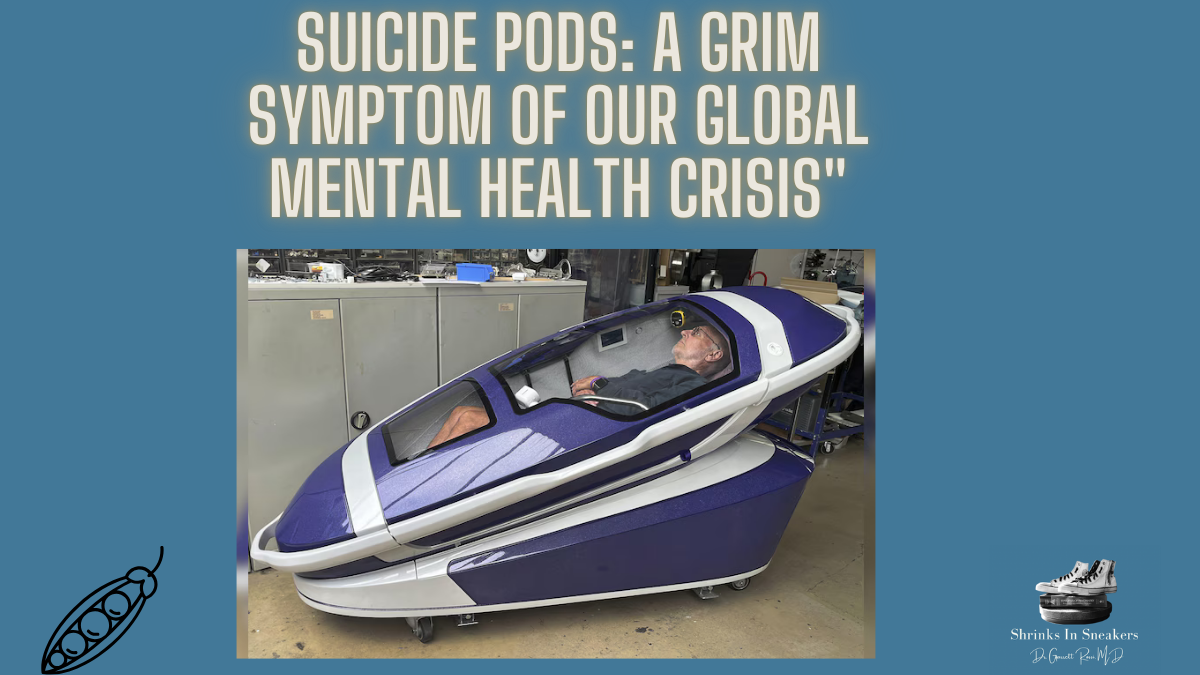
    Several individuals were arrested following the death of a 64-year-old American woman who used a controversial “suicide pod” in Switzerland. The device, known as Sarco, enables individuals to end their lives by releasing nitrogen gas, causing a painless death through oxygen deprivation. The incident occurred in the Schaffhausen canton near the Swiss-German border, supervised by a Swiss assisted suicide organization, The Last Resort

    Authorities detained several people involved, including Florian Willet, the co-president of The Last Resort, a journalist, and others, on charges of inducing and aiding suicide. Although assisted suicide is legal in Switzerland, the use of the Sarco pod has raised questions about its compliance with safety regulations and the legality of nitrogen use in this contex

    If you or a loved one is suffering there is hope:

    Help is available 

    Speak with someone today 

    988 Suicide and Crisis Lifeline

    Languages: English, Spanish

    Hours: Available 24 hours

  • Navigating First-Episode Psychosis: A Delicate Balance

    Navigating First-Episode Psychosis: A Delicate Balance

    In my practice, I encounter many cases of first-episode psychosis, a critical period that requires thoughtful and precise intervention. The decisions made during this time can set a patient on the path to long-term recovery or, unfortunately, towards a lifetime of challenges.

    There are a few guiding principles I always adhere to:

    1. Most antipsychotics can be effective, but it’s important to choose carefully.
    2. Lower doses often suffice to achieve remission in first-episode psychosis. Starting with a medication that has a lower risk of cardiometabolic side effects and weight gain is crucial, especially for young patients. They shouldn’t be burdened with long-term physical side effects as they navigate their recovery.

    Predicting whether a patient will experience a single episode or develop a chronic condition like schizophrenia is challenging. While family history and substance use, particularly cannabis, can provide clues, there is still uncertainty.

    I believe that after 6-12 months of treatment, it’s worth considering tapering the antipsychotic to the lowest effective dose, with a careful eye on any signs of relapse. Unfortunately, what I often see is that both patients and clinicians overlook the subtle signs of relapse because they’ve mutually decided to discontinue the medication. By the time I see them again, the situation has worsened.

    Early psychosis treatment requires a delicate balance between managing symptoms and minimizing long-term side effects, all while keeping a close watch for signs of relapse. Careful planning is key to setting patients on the best path forward.

  • FDA Greenlights Breakthrough Schizophrenia Medication: Here’s How It Works

    FDA Greenlights Breakthrough Schizophrenia Medication: Here’s How It Works

    The FDA approved Cobenfy

    Schizophrenia is a complex and debilitating mental disorder characterized by a range of symptoms, including hallucinations, delusions, cognitive deficits, and emotional dysregulation. Despite advancements in antipsychotic medications, many patients experience incomplete symptom relief and significant side effects. As a result, there is a growing interest in alternative therapeutic targets, including the muscarinic acetylcholine receptors (mAChRs).

    Muscarinic Acetylcholine Receptors (mAChRs)

    The mAChRs are G protein-coupled receptors involved in various central nervous system functions, including cognition, learning, memory, and mood regulation. There are five subtypes of mAChRs (M1-M5), with the M1, M2, M3, and M4 subtypes playing significant roles in modulating neural activity related to schizophrenia.

    M1 Muscarinic Agonists

    The M1 receptor is primarily expressed in the cortex and hippocampus, regions crucial for cognitive processing. M1 agonists have shown promise in improving cognitive deficits and reducing psychotic symptoms in schizophrenia. Research indicates that M1 activation can enhance cholinergic neurotransmission and modulate glutamate and dopamine systems, potentially alleviating both positive and negative symptoms.

    M2 Muscarinic Agonists

    M2 receptors are predominantly found in the basal forebrain and play a role in modulating acetylcholine release. Although less studied than M1, M2 agonists may help balance neurotransmitter release, contributing to improved cognitive function and reduced psychotic symptoms.

    M3 Muscarinic Agonists

    The role of M3 receptors in schizophrenia is not as well understood as M1 and M4 receptors. However, M3 receptors are involved in various physiological processes, including insulin secretion and smooth muscle contraction. Research is ongoing to determine their potential therapeutic benefits in schizophrenia.

    M4 Muscarinic Agonists

    M4 receptors are highly expressed in the striatum, a brain region implicated in the regulation of motor control and reward processing. M4 agonists have shown potential in reducing dopaminergic hyperactivity, which is associated with positive symptoms of schizophrenia, such as hallucinations and delusions. Additionally, M4 activation may help mitigate side effects associated with conventional antipsychotics, such as extrapyramidal symptoms.

    Clinical Implications and Future Directions

    The therapeutic potential of M1-M4 muscarinic agonists in schizophrenia is an exciting area of research. Targeting these receptors may offer a novel approach to address the cognitive and negative symptoms of schizophrenia, which are often resistant to current treatments. Ongoing clinical trials and preclinical studies are crucial to understanding the efficacy, safety, and mechanisms of action of these compounds.

    Conclusion The exploration of M1-M4 muscarinic agonists represents a promising frontier in the treatment of schizophrenia. By modulating cholinergic, glutamatergic, and dopaminergic systems, these agents have the potential to provide more comprehensive symptom relief with fewer side effects compared to traditional antipsychotics. Continued research and development are essential to bring these innovative treatments to clinical practice, offering hope for improved outcomes for individuals with schizophrenia.
  • Semaglutide: The Diabetes Drug with a Life-Saving Twist Against Opioid Overdose

    Semaglutide: The Diabetes Drug with a Life-Saving Twist Against Opioid Overdose

    A recent study published in JAMA Network Open investigated the relationship between semaglutide, a medication commonly used for type 2 diabetes (T2D), and the risk of opioid overdose in patients with both T2D and opioid use disorder (OUD). The researchers analyzed the health records of over 33,000 individuals, finding that those taking semaglutide had a significantly lower risk of opioid overdose compared to those using other diabetes medications. Semaglutide reduced overdose risk by as much as 58% when compared to insulin, and by 54% compared to metformin.

    The findings suggest that semaglutide may have protective effects in people with OUD and T2D, although more research is needed to confirm the mechanisms behind these effects and to validate the results through clinical trials. Researchers emphasized that these promising outcomes highlight the potential therapeutic value of semaglutide beyond diabetes management, though the study faced limitations due to its observational design and the possibility of uncontrolled variables.

    Further research is required to understand how semaglutide could be integrated into treatment strategies for opioid use disorder​

    Link to the article: https://jamanetwork.com/journals/jamanetworkopen/fullarticle/2824054?utm_source=silverchair&utm_medium=email&utm_campaign=article_alert-jamanetworkopen&utm_content=wklyforyou&utm_term=092524&adv=null

  • Locked Out: Why Most Inmates Are Denied Life-Saving Opioid Treatment

    Locked Out: Why Most Inmates Are Denied Life-Saving Opioid Treatment

    The JAMA Network Open article titled “Factors Associated With the Availability of Medications for Opioid Use Disorder in US Jails” investigates the availability of medications for opioid use disorder (MOUD) in U.S. jails, such as methadone, buprenorphine, and naltrexone. It highlights that MOUD, which is a critical component in treating opioid use disorder (OUD), is underutilized in correctional facilities, despite its effectiveness in reducing overdose rates, withdrawal symptoms, and recidivism.

    Key factors influencing MOUD availability in jails include jail size, regional location, the political landscape, and resources available in the facility. Jails in larger urban areas or those in states with Medicaid expansion are more likely to provide MOUD. Barriers such as stigma, lack of funding, and inadequate healthcare infrastructure also limit access to these medications.

    The study emphasizes the importance of expanding access to MOUD in jails to address the opioid epidemic and improve public health outcomes for incarcerated populations as only 44% of jails offer MOUD in the current system. 

  • Psilocybin Outshines Escitalopram: A Breakthrough in Depression Treatment

    Psilocybin Outshines Escitalopram: A Breakthrough in Depression Treatment

    The article Effect of psilocybin versus escitalopram on depression symptom severity in patients with moderate-to-severe major depressive disorder: observational 6-month follow-up of a phase 2, double-blind, randomised, controlled trialreports findings from an extended observation period on the comparative effects of psilocybin and escitalopram in treating depression. Here are the key points:

    Study Design: This was a 6-month follow-up of a Phase 2, double-blind, randomized controlled trial. It compared the effects of psilocybin (a psychedelic compound) and escitalopram (a common SSRI) on depression symptoms in patients with moderate-to-severe major depressive disorder (MDD).

    Participants: Patients with moderate-to-severe MDD were randomly assigned to either psilocybin or escitalopram groups. Both treatments were administered in a controlled clinical setting

    Primary Outcome: Depression symptom severity was measured using the QIDS-SR-16 (Quick Inventory of Depressive Symptomatology–Self-Report) scale at various time points, including baseline, during the treatment phase, and at the 6-month follow-up.

    Results:

    Both groups showed improvement in depression symptoms, but the psilocybin group had a greater reduction in symptoms compared to the escitalopram group.

    The effects of psilocybin were found to be more rapid and sustained over the 6-month period.

    Remission and Response Rates: A higher proportion of patients in the psilocybin group achieved remission and clinically significant response compared to those in the escitalopram group.

    Safety and Side Effects: Both treatments were generally well-tolerated. However, psilocybin was associated with transient, mild-to-moderate side effects, mostly during the acute phase of treatment (e.g., perceptual disturbances).

    Conclusion: Psilocybin demonstrated more pronounced and longer-lasting antidepressant effects compared to escitalopram at the 6-month follow-up. This suggests that psilocybin could be a viable alternative treatment for moderate-to-severe depression, but further research is necessary to confirm long-term safety and efficacy.