Tag: Anxiety

  • Clearing the Smoke: What We Know About Cannabis for Mental Health Treatment

    Clearing the Smoke: What We Know About Cannabis for Mental Health Treatment

    Research into the therapeutic potential of cannabis for mental health disorders has grown in recent years, with mixed findings from randomized controlled trials (RCTs).

    Anxiety Disorders

    • CBD (Cannabidiol) has shown promise in reducing anxiety symptoms in RCTs, particularly for social anxiety disorder (SAD). For instance, a small RCT found that a single dose of 300 mg of CBD reduced anxiety levels in participants undergoing a simulated public speaking test.
    • Some RCTs suggest that CBD may be anxiolytic without causing impairment or euphoria, making it preferable for anxiety compared to THC-dominant cannabis products, which may exacerbate anxiety in some users.

    Post-Traumatic Stress Disorder (PTSD)

    • RCTs exploring THC and CBD combinations in PTSD have had mixed outcomes. Some studies indicate that THC may reduce nightmares and improve sleep in PTSD patients, though these findings are generally based on small sample sizes and short-term trials.
    • A recent RCT with a synthetic cannabinoid (nabilone) reported some symptom improvement in PTSD-related insomnia and nightmares. However, larger trials with longer follow-ups are necessary to clarify the efficacy and safety for PTSD.

    Depression

    • Few RCTs show consistent evidence supporting cannabis (CBD or THC) as an effective treatment for major depressive disorder. Some trials indicate that CBD may have antidepressant-like effects, possibly due to serotonin receptor activity, but more robust and long-term studies are needed.
    • Concerns persist over THC’s potential to exacerbate depressive symptoms, particularly with regular or heavy use.

    Schizophrenia and Psychotic Disorders

    • THC-dominant products have been associated with increased risk of psychosis and exacerbation of symptoms in people predisposed to psychotic disorders. This has led to caution against THC use in people with schizophrenia.
    • CBD has shown promise as an adjunctive treatment in some RCTs, with findings suggesting that it may have antipsychotic effects without the psychoactive effects of THC. For example, an RCT found that CBD reduced psychotic symptoms and improved cognitive function when added to standard antipsychotic treatment, though the effects were modest.

    Bipolar Disorder

    • Evidence from RCTs on the use of cannabis in bipolar disorder is sparse and generally negative. Some trials indicate that THC may worsen manic and depressive symptoms in bipolar patients, and there is little to no support for cannabis as a treatment for bipolar depression.

    Sleep Disorders

    • Some RCTs have evaluated cannabinoids for sleep disturbances, with CBD showing potential for improving sleep quality. However, THC may reduce REM sleep, which could impact sleep architecture negatively over time.
    • For PTSD-related insomnia, cannabinoids like nabilone have shown some benefit, but the effects on sleep in general populations remain uncertain.

    Limitations

    • Sample Sizes and Duration: Many RCTs are small and short-term, limiting the generalizability and understanding of long-term effects.
    • Dosing and Formulations: Variability in cannabinoid content (THC vs. CBD), formulations (edibles, oils, vapes), and dosages across studies makes comparison challenging.
    • Side Effects: Both CBD and THC can have side effects, though THC’s psychoactive properties can lead to cognitive impairment, addiction potential, and negative impact on mood in some patients.

    While CBD shows some promise in anxiety, PTSD, and psychotic disorders, RCT evidence for other mental health conditions remains inconclusive or even negative, especially with THC. Further large-scale, long-term RCTs are needed to establish the efficacy and safety profile of cannabis-based treatments in mental health.
  • Unlocking Relief: Can Prazosin Power Up Depression Treatment?

    Unlocking Relief: Can Prazosin Power Up Depression Treatment?

    The evidence for the use of prazosin in major depressive disorder (MDD) comes mainly from smaller studies or trials focusing on its off-label use, as prazosin is primarily an alpha-1 adrenergic antagonist used to treat hypertension and PTSD-related nightmares.

    Clinical Rationale

    The theoretical rationale for prazosin in MDD is based on its ability to block alpha-1 adrenergic receptors, which may help reduce the hyperactivity of the norepinephrine system—a pathway implicated in stress and depression.

    Randomized Controlled Trials (RCTs)

    RCT evidence for prazosin in treating MDD is limited compared to other antidepressants, but a few studies have explored its potential benefits:

    1. Prazosin as Adjunctive Treatment for MDD (2009):
      A small pilot RCT assessed prazosin as an add-on therapy for MDD in patients who were already on standard antidepressants. The results showed modest improvements in depressive symptoms when prazosin was combined with SSRIs or SNRIs, particularly in patients with high anxiety or sleep disturbances.
    2. Prazosin for PTSD and MDD Comorbidity:
      Some RCTs conducted in patients with PTSD (a condition often comorbid with MDD) showed improvements in both PTSD and depressive symptoms. For example, a trial published in 2015 demonstrated that prazosin led to a significant reduction in depressive symptoms in veterans with PTSD and depression. While the trial primarily focused on PTSD, the secondary outcomes regarding depression were positive.
    3. Prazosin and Treatment-Resistant Depression (TRD):
      Some trials have explored prazosin’s efficacy in treatment-resistant forms of depression, hypothesizing that its ability to reduce stress-related symptoms could augment antidepressant efficacy. However, these trials have generally been small, and results have been inconsistent or not statistically significant in terms of primary depressive outcomes.

    Limitations

    • Sample Sizes: Most studies are small and underpowered.
    • Population: Most studies have focused on patients with PTSD, rather than pure MDD.
    • Adjunctive Use: Prazosin has mostly been tested as an adjunctive treatment, not as monotherapy for depression.

    While prazosin has shown some promise in improving depressive symptoms, particularly related to sleep disturbances and anxiety, larger RCTs specifically targeting MDD are needed to establish its efficacy.

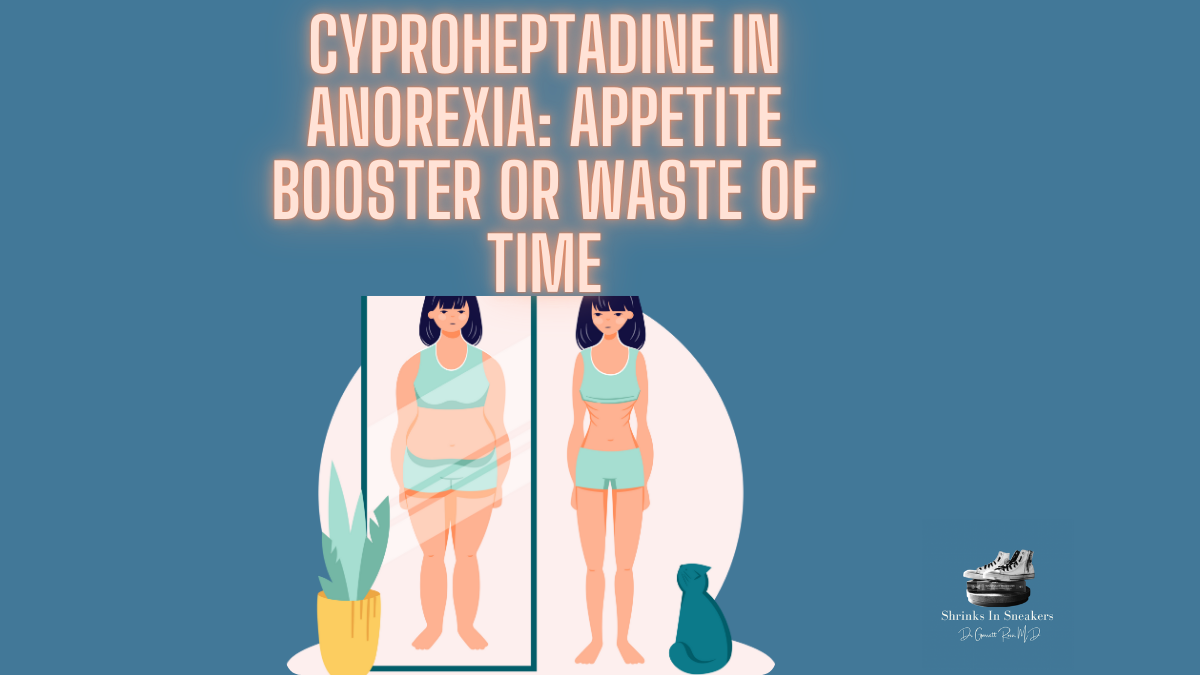
  • Cyproheptadine in Anorexia: Appetite Booster or Waste of Time

    Cyproheptadine in Anorexia: Appetite Booster or Waste of Time

    Over the past few posts, I’ve been using real cases from my practice to highlight essential teaching points in managing complex conditions. Anorexia nervosa, one of the most severe and high-mortality disorders I encounter, demands a multifaceted approach, especially in critical cases. Recently, I had to explore every possible option to support a particularly challenging case, including cyproheptadine—a medication with potential benefits in anorexia. I decided to dive deeper into the evidence supporting its use. At the end of this post, I’ll share my own experience with cyproheptadine in this case and whether it made a difference in the outcome

    Cyproheptadine has been studied in the treatment of anorexia, particularly anorexia nervosa, due to its appetite-stimulating and antihistaminic properties. Some early randomized controlled trials (RCTs) suggested it might have benefits, especially for anorexia nervosa with certain subtypes, but the evidence has been mixed, and it’s not widely recommended in current guidelines.

    1. Weight Gain: Cyproheptadine has been shown in some RCTs to help promote weight gain in individuals with anorexia nervosa, particularly in those with a restricting type of the disorder. However, results have not been consistent across studies, with some trials finding minimal or no effect on weight gain.
    2. Symptom Relief: Cyproheptadine may help reduce anxiety and obsessive thoughts related to food, as its antihistaminic and mild sedative effects can have a calming influence. However, this has not been strongly confirmed across all trials.
    3. Limitations and Side Effects: The mixed evidence may relate to differences in study designs, anorexia subtypes studied, and dosages used. Side effects, such as sedation, have also limited its use, especially in outpatient settings where these effects might interfere with daily functioning.

    Overall, while some RCTs have shown cyproheptadine might help with weight gain and symptom relief in anorexia, particularly in non-binging types, the evidence remains inconclusive. In my personal practice with the medication, I saw limited if any benefit by adding this medication to current standard of treatment. We are often looking for solutions to complex difficult to treat conditions such as anorexia, but the benefits here seem to be limitted both from the research and clinical perspective. 

  • Breaking the Cycle: Effective Strategies to Prevent Self-Injurious Behavior (SIB)

    Breaking the Cycle: Effective Strategies to Prevent Self-Injurious Behavior (SIB)

    This post comes from another real-world case that I frequently encounter in clinical practice. Self-injurious behavior (SIB) is common in the inpatient care setting and the strategies to prevent it are mostly behavioral. Many patients and families are also looking for pharmacological options. Here are some of the more common options and recommendations for treating SIB.

    Behavioral Interventions

    1. Functional Behavior Analysis (FBA): Start with an FBA to understand why the self-injury is occurring (e.g., to gain attention, avoid demands, or self-soothe). This guides intervention planning.
    2. Positive Reinforcement and Skill Building: Reinforce alternative, adaptive behaviors that fulfill the same needs as self-injury, such as communication skills (e.g., teaching to request attention) or self-soothing techniques.
    3. Cognitive Behavioral Therapy (CBT): For individuals able to engage in talk therapy, CBT can address underlying thoughts and emotions driving SIB, such as distress intolerance, perfectionism, or negative self-beliefs.
    4. Dialectical Behavior Therapy (DBT): DBT is particularly effective for reducing SIB, especially in borderline personality disorder. It combines emotional regulation, mindfulness, and distress tolerance skills.
    5. Environmental Modifications: Minimizing triggers in the individual’s environment can help reduce occurrences. This might include changes in routines, avoiding overstimulation, or modifying demands.
    6. Applied Behavior Analysis (ABA): Techniques from ABA, like differential reinforcement of other behaviors (DRO) or non-contingent reinforcement (NCR), can reduce self-injury by decreasing its functional value.

    Pharmacological Interventions

    1. SSRIs (Selective Serotonin Reuptake Inhibitors): Useful if self-injury is driven by anxiety, depression, or obsessive-compulsive tendencies. SSRIs can help stabilize mood and reduce anxiety, lessening the need for SIB.
    2. Antipsychotics: Atypical antipsychotics, such as risperidone or aripiprazole, are sometimes effective, particularly in autism spectrum disorders or severe intellectual disabilities. However, weigh these benefits against side effects, especially for long-term use.
    3. Mood Stabilizers: Medications like lithium, lamotrigine, or valproate can help regulate mood fluctuations that contribute to SIB. Lithium, in particular, has shown effectiveness in reducing aggression and impulsivity.
    4. Naltrexone: This opioid antagonist can be effective in cases where SIB is hypothesized to release endogenous opioids, providing a calming effect.
    5. Beta-blockers (e.g., propranolol): In cases of high impulsivity or aggression linked to SIB, beta-blockers can reduce physiological arousal, lessening the drive for self-injury.
    6. Clonidine or Guanfacine: These medications, which target the noradrenergic system, can help reduce impulsivity and aggression in patients with ADHD or autism, indirectly lowering self-injury.

    Choosing the best approach depends on the individual’s specific triggers, co-occurring conditions, and underlying motivations for SIB. Integrating both behavioral and medication interventions, while monitoring closely for effectiveness and side effects, often yields the best outcomes.

  • ADHD and Cannabis Use Disorder: Key Facts You Shouldn’t Ignore

    ADHD and Cannabis Use Disorder: Key Facts You Shouldn’t Ignore

    1. Prevalence and Patterns of Use

    People with ADHD have been shown to use cannabis at higher rates than those without ADHD. Studies indicate that adolescents and adults with ADHD are more likely to use cannabis, and they may start using it at a younger age. This may be due to self-medication attempts, as people with ADHD often report using cannabis to help with symptoms like impulsivity, anxiety, and sleep difficulties which seems like a bad idea to me but lets look at the reasons.

    2. Cannabis as a Self-Medication Attempt

    Some people with ADHD use cannabis in an attempt to self-manage their symptoms. Anecdotally, users report feeling more focused, relaxed, and less anxious, though the scientific evidence on cannabis’s effectiveness for ADHD symptom management is not robust. Studies show that while some ADHD symptoms like restlessness might feel alleviated short-term, long-term outcomes often do not show sustained benefit, and impairment can increase over time.

    3. Impact on ADHD Symptoms

    Research on cannabis’s effect on ADHD symptoms is mixed:

    • Impulsivity and Attention: Cannabis can impair attention, memory, and executive functioning, which are already areas of struggle for individuals with ADHD. Heavy cannabis use is associated with poorer performance on tasks measuring these cognitive domains.
    • Cognitive Function: Longitudinal studies have shown that chronic cannabis use can worsen cognitive functions over time, especially if use begins in adolescence. These cognitive impacts may compound ADHD-related deficits.
    • Motivation and Goal-Directed Behavior: Cannabis can affect motivation and goal-directed behavior, which can exacerbate some ADHD symptoms, particularly in individuals who already struggle with organization and task completion.

    4. ADHD as a Risk Factor for Cannabis Use Disorder

    Studies suggest that people with ADHD may be more prone to developing cannabis use disorder (CUD) compared to the general population. Traits like impulsivity and sensation-seeking, common in ADHD, may increase vulnerability to addiction. Additionally, the reinforcing effects of cannabis (e.g., reduction in perceived anxiety) may lead to increased use and dependency in those with ADHD.

    5. Genetic and Neurobiological Factors

    There is some evidence suggesting that the overlap between cannabis use and ADHD may have a genetic or neurobiological basis:

    • Genetic Overlap: Studies have found that genes linked to ADHD, particularly those affecting dopamine function, are also implicated in substance use disorders, including cannabis use disorder.
    • Endocannabinoid System: ADHD and cannabis use affect dopamine and endocannabinoid systems. Some research posits that dysregulation in these systems might underlie both the propensity for ADHD and substance use, but this remains an area for further research.

    6. Cannabis and Medication Interactions

    For those with ADHD taking stimulant medications, cannabis use can interfere with treatment. THC, the psychoactive component of cannabis, can interact with medications like methylphenidate or amphetamine-based treatments, potentially reducing their effectiveness or exacerbating side effects like anxiety and heart palpitations.

    7. Longitudinal and Population Studies

    Long-term studies generally show that early and heavy cannabis use is associated with worse outcomes for individuals with ADHD. These include lower academic achievement, increased rates of unemployment, and higher incidences of mental health issues, especially when cannabis use starts in adolescence.

    Summary

    While some people with ADHD report short-term symptom relief with cannabis, research shows that heavy, frequent use tends to worsen cognitive deficits associated with ADHD over time. Additionally, ADHD may predispose individuals to higher rates of cannabis use and a greater risk of developing cannabis use disorder. While cannabis might seem beneficial for symptom relief in the short term, its long-term use is generally not supported as an effective management strategy for ADHD.

  • The Culture of Burnout in Modern Medicine

    The Culture of Burnout in Modern Medicine

    Modern medicine has given rise to a new culture of burnout. As physicians, we are already high achievers—it’s a prerequisite to make it through the intense training. However, this constant push for relentless productivity often leads to feelings of exhaustion and disconnection. In medicine, the focus is always on doing more—seeing more patients, finishing more tasks, and achieving more outcomes each day.

    With digital technology, we’re constantly connected, always on call. Patients, colleagues, and administrators reach out through calls, texts, and emails at all hours. The pressure to respond immediately leads to guilt when we can’t meet these demands, even when they’re unreasonable. The result? We push ourselves beyond our limits, sacrificing our own well-being in the process.

    This grind leaves little room to rest or tend to our mental health. The importance of downtime is overlooked, even though it’s essential for long-term sustainability in our profession. But it’s time we rethink the culture of busyness and productivity. We need to start focusing on slowing down, with an emphasis on not staying busy for the sake of being busy.

    If you’re like me, you’ve probably tried this, only to find your mind immediately wandering to the next thing you need to do. The challenge is real. But to reclaim a deeper sense of meaning and purpose in both our personal and professional lives, we must commit to this change. By slowing down, we can begin to find more peace, love, and joy in our day-to-day activities.

    Let’s reclaim our lives—it’s long overdue

  • MAOIs: Mechanism of Action, Common Medications, and Side Effects

    MAOIs: Mechanism of Action, Common Medications, and Side Effects

    Mechanism of Action

    Monoamine oxidase inhibitors (MAOIs) are a class of medications primarily used to treat depression. They work by inhibiting the activity of monoamine oxidase enzymes (MAO-A and MAO-B). These enzymes are responsible for breaking down neurotransmitters such as serotonin, norepinephrine, and dopamine in the brain. By inhibiting these enzymes, MAOIs increase the levels of these neurotransmitters, which can help improve mood and alleviate depressive symptoms.

    Common Medications

    1. Phenelzine (Nardil)
    2. Tranylcypromine (Parnate)
    3. Isocarboxazid (Marplan)
    4. Selegiline (Emsam) – Available as a transdermal patch

    Side Effects

    MAOIs can have significant side effects and interactions, which is why they are often not the first choice for treating depression. Some common side effects include:

    1. Hypertensive Crisis: Consuming foods high in tyramine (such as aged cheeses, cured meats, and fermented products) can cause dangerously high blood pressure.
    2. Orthostatic Hypotension: A sudden drop in blood pressure when standing up, leading to dizziness or fainting.
    3. Insomnia: Difficulty falling or staying asleep.
    4. Weight Gain: An increase in body weight over time.
    5. Sexual Dysfunction: Decreased libido, erectile dysfunction, or difficulty achieving orgasm.
    6. Headaches: Frequent or severe headaches.
    7. Edema: Swelling, particularly in the lower limbs.
    8. Fatigue: General feeling of tiredness or lack of energy.
    9. Dry Mouth: Reduced saliva production, leading to a dry sensation in the mouth.

    Precautions

    • Dietary Restrictions: Due to the risk of hypertensive crisis, patients on MAOIs must follow strict dietary restrictions to avoid tyramine-rich foods.
    • Drug Interactions: MAOIs can interact with numerous medications, including over-the-counter drugs, other antidepressants, and certain pain medications, potentially leading to severe or life-threatening conditions.
    • Medical Monitoring: Regular monitoring by a healthcare professional is essential to manage and mitigate potential side effects and interactions.

    MAOIs can be effective for certain patients, particularly those who have not responded to other antidepressant treatments. However, their use requires careful management due to their side effect profile and interaction potential.

  • Non-Harvard Trained: Real Care, Real Results

    Non-Harvard Trained: Real Care, Real Results

    I constantly come across the phrase “Harvard-trained” in people’s bios. Sure, it brings instant brand recognition and credibility. But in reality, being trained at a prestigious institution—even one like Harvard—doesn’t automatically mean better skills or superior patient care.

    In psychiatry, quality care is shaped by much more than where someone trained. It comes from clinical experience, empathy, lifelong learning, and the ability to genuinely connect with patients. These are the factors that truly define the impact we make.

    While training is important, the real measure of a psychiatrist’s ability is in the care they provide and the outcomes they achieve. Psychiatry is such a nuanced field that no amount of prestige can substitute for hands-on experience and genuine compassion.

    It’s unfortunate that where someone trained is often used as a superficial marker of competence, overshadowing the true work that goes into patient care. Personally, I’d reject a Harvard offer, because for me, it’s about one thing: providing the highest level of care possible, every single day.

  • The more I learn the less certain I am About Things

    The more I learn the less certain I am About Things

    Did you ever feel like the more you learn the less certain you are about things?

    It’s completely natural to feel this way, especially in a field as complex and evolving as psychiatry. Uncertainty and skepticism can be strengths, driving you to seek deeper understanding and remain open to new perspectives and evidence. Here are a few thoughts that might resonate

    Complexity of Human Mind: The human brain and psyche are incredibly complex, and our understanding is still in its infancy. This complexity can make definitive answers elusive.

    Evolving Science: Psychiatry, like all medical fields, is constantly evolving. New research can change our understanding of mental health conditions and treatments, making certainty difficult.

    Individual Differences: What works for one person might not work for another. This variability can make it hard to be sure about diagnoses and treatments.

    Holistic Approach: Embracing uncertainty can lead to a more holistic approach, considering biological, psychological, and social factors in diagnosis and treatment.

    Continuous Learning: Your skepticism can fuel a commitment to continuous learning and improvement, which is essential in providing the best care.

    Collaboration and Discussion: Engaging in discussions with colleagues who have different perspectives can be enriching and help balance your skepticism with practical insights.

    Patient-Centered Care: Uncertainty can remind you to listen to your patients’ experiences and perspectives, which can be as important as clinical knowledge in guiding treatment.

    It’s good to question and explore; it means you’re thoughtful and committed to truly understanding and helping your patients.

  • Unintended Outcomes After FDA Pediatric Antidepressant Warnings

    Unintended Outcomes After FDA Pediatric Antidepressant Warnings

    The article “Intended and Unintended Outcomes After FDA Pediatric Antidepressant Warnings: A Systematic Review” examines the effects of the FDA’s 2003-2004 black box warning on antidepressants regarding the risk of increased suicidal thoughts and behaviors in children and adolescents.

    Intended Outcome:

    • The FDA issued the warning to ensure greater awareness of potential risks, encouraging careful monitoring of pediatric patients taking antidepressants.
    • The goal was to reduce suicidal behaviors potentially linked to antidepressant use in younger populations.

    Unintended Outcomes:

    • The warning led to a significant drop in antidepressant prescriptions for children and adolescents.
    • There was a corresponding increase in untreated depression, which may have led to higher rates of suicide attempts and worsening mental health outcomes in some cases.
    • Reduced prescriptions were associated with a decrease in diagnosis and treatment of mood disorders in pediatric populations.
    • The warning inadvertently caused confusion among healthcare providers and parents, often resulting in delays in seeking treatment for depression or anxiety.

    Post-Warning Trends:

    • Follow-up research found no consistent evidence that the use of antidepressants in pediatric patients increases the risk of completed suicides.
    • The decline in antidepressant use and increase in suicidal behaviors during the period following the warning suggest unintended negative consequences of the FDA’s decision.

    Conclusions:

    • While the warning achieved its goal of raising awareness about the risks of antidepressants in children, it also resulted in under-treatment of depression, potentially exacerbating mental health challenges.
    • The article calls for balanced decision-making in pediatric antidepressant use, emphasizing the need for risk-benefit assessments and careful monitoring rather than outright avoidance of antidepressants.

      The FDA’s black box warning led to a reduction in antidepressant use but also to increased untreated mental illness, highlighting the complexities of addressing medication risks in vulnerable populations.