Bipolar disorder thrives on disruption, and life can quickly spiral when daily rhythms are inconsistent. Social Rhythm Therapy (SRT) is a powerful, evidence-based approach that helps stabilize mood by anchoring routines. Here’s how it works and why it matters:
What is Social Rhythm Therapy? SRT focuses on regulating daily activities to stabilize the body’s internal clock (circadian rhythms). It combines behavioral strategies with insights into mood patterns, encouraging patients to establish predictable schedules for sleep, meals, social interactions, and exercise.
Why Does It Work? Our biological clocks are sensitive to disruptions. Irregular sleep or eating patterns can trigger mood episodes in bipolar disorder. By synchronizing daily activities with natural rhythms, SRT reduces these disruptions, promoting emotional stability and resilience.
Core Elements of SRT:
Monitor Social Rhythms: Start by logging your daily activities to identify patterns and areas of inconsistency.
Set Regular Sleep-Wake Times: Consistent sleep routines are the cornerstone of SRT. Aim to go to bed and wake up at the same time every day—even on weekends.
Structure Key Activities: Schedule meals, exercise, and social time at consistent times.
Track Moods: Pair activity tracking with mood journaling to understand how routines impact emotional states.
Anticipate Disruptions: Plan ahead for potential schedule changes (e.g., travel or holidays) to minimize their effects.
Practical Tips for Success:
Start Small: Introduce one new routine at a time to avoid feeling overwhelmed.
Enlist Support: Share your goals with friends or family who can help keep you accountable.
Be Flexible: Life happens—don’t strive for perfection, but prioritize getting back on track.
Combine with Other Treatments: SRT complements medications and psychotherapy, creating a well-rounded treatment plan.
In my practice, I’ve seen patients experience fewer mood episodes and greater confidence in managing their disorder when they commit to SRT. Establishing a routine isn’t just about organization—it’s about reclaiming control and fostering stability in an unpredictable world.
If you or someone you know is living with bipolar disorder, consider incorporating Social Rhythm Therapy into their care plan. Small changes can lead to significant improvements in mood and quality of life.
Bupropion, an atypical antidepressant with dopaminergic and noradrenergic activity, has been evaluated for use in bipolar depression through several studies, including double-blind, randomized controlled trials (RCTs).
Sachs et al. (2007) – In this multicenter trial, 179 patients with bipolar disorder (bipolar I or II) and depressive episodes were randomized to receive either bupropion, sertraline, or venlafaxine as adjunctive therapy to mood stabilizers (e.g., lithium, valproate) over 26 weeks. The study found that bupropion had a similar efficacy profile to the other antidepressants, with a response rate of about 40%. Importantly, bupropion had a relatively low rate of inducing manic or hypomanic episodes, which was around 7%, lower than venlafaxine but comparable to sertraline.
El-Mallakh et al. (2008) – This smaller study focused on the use of bupropion in bipolar II depression. It suggested that bupropion can effectively reduce depressive symptoms without significantly increasing the risk of switching to mania, although the study size was limited, and larger trials were recommended.
Systematic Reviews and Meta-analyses – A review by Gijsman et al. (2004) included a number of RCTs that assessed antidepressants in bipolar depression. While bupropion was included, the overall conclusion was that the risk of treatment-emergent affective switch (TEAS) was lower compared to tricyclic antidepressants, but comparable to other selective serotonin reuptake inhibitors (SSRIs). However, bupropion was noted for having a more favorable side effect profile, especially concerning sexual dysfunction and weight gain.
In general, while double-blind RCTs suggest that bupropion can be effective for bipolar depression, its most notable benefit is its relatively low risk of triggering manic episodes compared to other antidepressants. The data supports its use as an adjunct to mood stabilizers, but careful monitoring is still necessary with a mood stabilizing agent in place, as switching to mania, though less frequent, remains a risk.
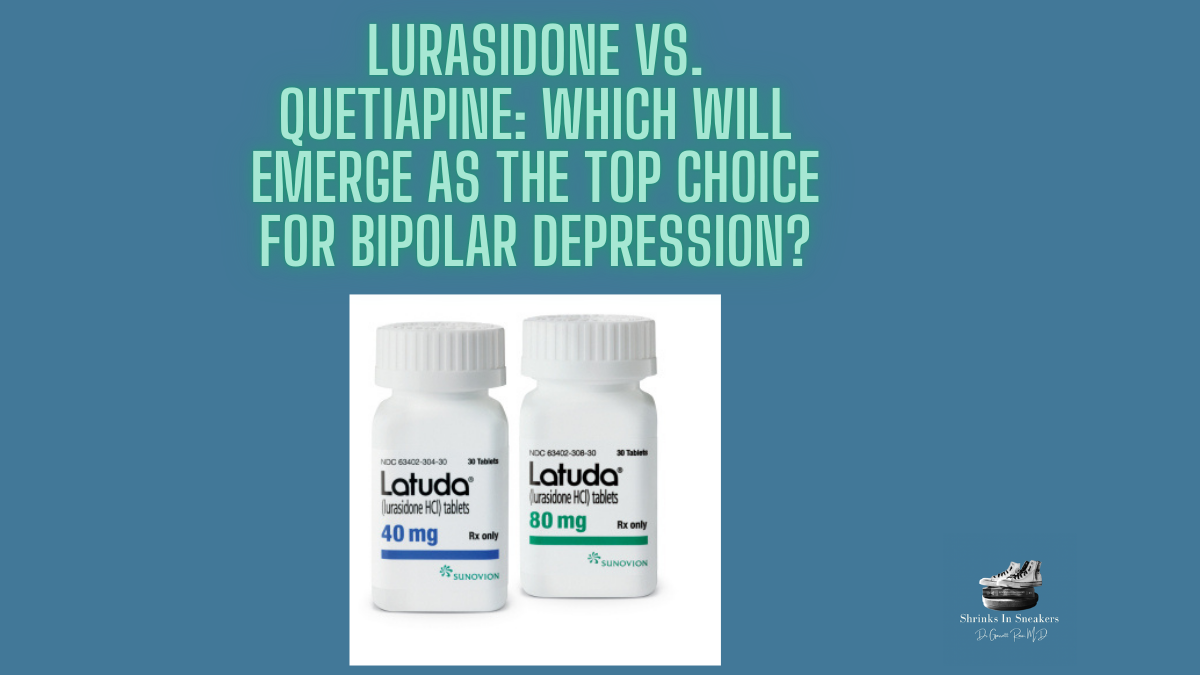
Bipolar depression is a challenging and common condition, with limited options for effective medication management. Finding the best treatment can be tough, especially given the lack of high-quality head-to-head comparisons in the literature. Two frequently prescribed medications for bipolar depression, quetiapine and lurasidone, are both solid options—but is one truly superior to the other?
Head-to-head randomized controlled trials comparing lurasidone and quetiapine specifically for bipolar depression are relatively limited. However, both medications have established evidence in treating bipolar depression, with some distinctions in efficacy, safety, and tolerability that can be informative for comparison.
Efficacy: Studies suggest that both lurasidone and quetiapine are effective in treating depressive symptoms in bipolar disorder. Quetiapine, particularly at doses of 300 mg or 600 mg, has shown significant efficacy in reducing depressive symptoms, whereas lurasidone also demonstrates effectiveness at doses typically ranging from 20 mg to 120 mg. Head-to-head trials generally find comparable efficacy between the two, though quetiapine may be preferred in certain cases for its sedative effects, which can help with associated insomnia in bipolar depression.
Tolerability and Side Effects: Lurasidone tends to have a more favorable side effect profile, with a lower risk of weight gain, metabolic issues, and sedation compared to quetiapine. Quetiapine is often associated with more sedation and metabolic side effects, such as weight gain and increased cholesterol and triglycerides, which may be more pronounced at higher doses. Lurasidone’s side effect profile may make it a better option for patients where weight gain or sedation is a concern.
Functioning and Quality of Life: Some studies highlight that patients on lurasidone report better functioning and fewer sedative effects, which may positively impact quality of life, particularly for those sensitive to the sedative properties of quetiapine.
Dropout Rates: Due to quetiapine’s sedative side effects, some patients discontinue it more often than lurasidone. Lurasidone’s lower risk for sedation and weight gain tends to improve adherence for those struggling with quetiapine’s tolerability.
Both medications are effective for bipolar depression, but lurasidone may be better tolerated overall, especially concerning weight gain and sedation. We should not forget that lurasidone carriers an equally concerning side effect of akathisia which can also increase dropout rates especially at higher doses. Additional direct head-to-head trials would be valuable to further elucidate these findings.
The olanzapine fluoxetine combination was FDA approved in 2003 for the treatment of depressive episodes in bipolar I disorder. In 2009 it was granted approval for treatment resistant depression.
This medication consists of the atypical dopamine blocking medication olanzapine and the SSRI fluoxetine. Many people consider olanzapine to be the best antipsychotic not named clozapine (see my video on the best antipsychotic in the world). This comes from the CATIE study where olanzapine proved to be superior to other medications. It has good efficacy, once daily dosing at night, and low risk for cardiac conduction abnormalities (QTc prolongation). However, the side effects including risk for weight gain and metabolic complications have made it a second line option.
My residents often jump to this medication on the inpatient unit, but I usually tell them to use caution because of the side effects and should it not be effective, it leaves you with clozapine as the next option in terms of effectiveness.
Fluoxetine is an antidepressant that has been around a long time with a broad spectrum of indications. It’s long track record and safety profile makes it a go to antidepressant in both the adult and child adolescent populations. Its main disadvantage is drug interactions.
Dosing
People often think you can make this medication by simply combining olanzapine and fluoxetine and do not believe you need to use the brand name combination pills. I would use some caution with that approach.
When we look at the doses in the combination pill, they are ones that are difficult to make with the current available dosages. For example, olanzapine comes in 2.5 mg, 5 mg, 7.5 mg, 10 mg, 15 mg, and finally 20 mg doses.
The fixed-combination capsule (olanzapine/fluoxetine) comes in 3/25 mg, 6/25 mg, 12/25 mg, 6/50 mg, 12/50 mg. The studies leading to approval of this medication were conducted using these doses in a fixed combination. It’s not clear that dosing each individually is effective.
How to Start the Medication
For bipolar depression the olanzapine fluoxetine combination should be started at 6/25 mg dosed at bedtime. With a target dose of 6-12/25-50 mg depending on clinical response.
Labs prior to starting the medication:
You should have a baseline weight, waist circumference, blood pressure, fasting glucose and lipid profile prior to starting the medication
Cost
The combination pill is more expensive than either medication alone. According to Good Rx The 6/25 mg capsule is $140-$150 per month. This is compared to olanzapine 5 mg which costs $9.00 and fluoxetine 20 mg which costs $4.00
Side Effects
Olanzapine: Most common is somnolence (dose related), dry mouth (dose related), constipation (anticholinergic), weight gain (up to 40% incidence and 10-30 lbs. of weight gain is common), increased appetite, EPS (dose related).
Fluoxetine: Nausea, diarrhea, nervousness, abnormal dreams, weight loss, sweating, tremor, sexual side effects, rash, and headaches. Rare increased risk for bleeding when combined with NSAIDs and hyponatremia in the elderly due to SIADH.
Mechanism of action
Olanzapine: Dopamine D-2 and 5-HT2A antagonist that is metabolized by CYP1A2 and CYP2D6
Fluoxetine: serotonin reuptake inhibitor that is metabolized by CYP2D6 and is an inhibitor of CYP 2C9/2C19 and 2D6 with a half-life of 4-6 days and 9 days for the metabolite norfluoxetine
The half-life is important here because what happens when someone stops taking the medication? The olanzapine has a much shorter half-life and will be cleared from the body more rapidly leaving the person exposed to fluoxetine without a mood stabilizing element possibly inducing mania or worsening mood symptoms. This is something to be mindful of when using this combination.
Studies Showing Efficacy
The studies that resulted in FDA approval for bipolar depression in 2003 were short, 8 weeks in duration. A total of 833 patients with bipolar I depression received either olanzapine alone, olanzapine fluoxetine combination (OFC), or placebo. Patients on OFC and olanzapine alone showed a significant reduction in depressive symptoms compared to placebo as early as the end of week 1 of treatment. By the end of 4 weeks the OFC participants saw significantly more improvement than placebo or olanzapine alone. The superiority continued over the final 4 weeks of the study. By the end 24.5% of patients on placebo met remission criteria, 32.8% of the olanzapine only group achieved remission, and 48.8% of the OFC group achieved remission.
For the 2009 approval of OFC in treatment resistant depression, it was based off two eight-week double blind placebo-controlled studies using doses of 6 to 18 mg for olanzapine and 25 to 50 mg for fluoxetine. 40% of patients receiving the OFC responded to therapy Vs 30% and 26% receiving fluoxetine or olanzapine monotherapy. The starting dose was 6/25 mg and could be titrated to 18/75 mg as tolerated.
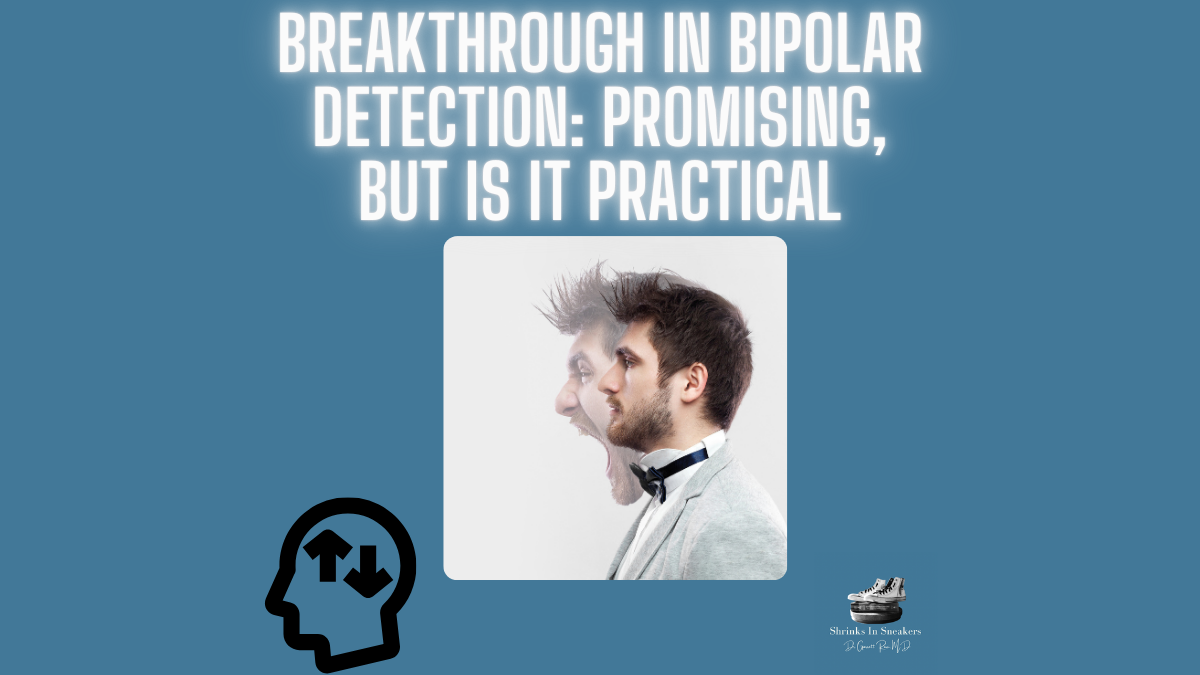
While this study underscores the critical need for early detection of bipolar disorder to prevent misdiagnosis and improper treatment, the advanced MRI techniques and extensive behavioral assessments it highlights may not be practical in most current clinical settings. This is often the challenge with such research: although it can enhance diagnostic accuracy, its real-world application remains limited.
The article on Clinical Outcomes of Continuation and Maintenance Electroconvulsive Therapy (ECT) highlights the role of ECT in preventing relapses in patients with major depressive disorder. Continuation (C-ECT) and maintenance (M-ECT) ECT, when used after an initial successful acute ECT response, are shown to be effective in reducing the recurrence of mood disorders, particularly when combined with pharmacotherapy. Despite its proven benefits, this therapeutic approach is underutilized. Studies also suggest that C-ECT and M-ECT are well-tolerated with no significant cognitive decline
Today’s post is more of a clinical reflection. I’ve been sharing a lot about research studies lately, but I want to pause and talk about polypharmacy in psychiatry and off-label prescribing. Have you ever been in a situation where a patient comes in, and as you review their medications, you see they’re taking a benzodiazepine for anxiety, an antidepressant for depression, a dopamine blocker for psychosis, and a mood stabilizer for mood swings? Maybe even a stimulant for ADHD is thrown in the mix. While I say that with some humor, in reality, this is a common scenario. As an educator, it’s crucial to discuss rational polypharmacy and evidence-based off-label prescribing, as well as the dangers of irrational, off-evidence prescribing.
There are times when using more than one dopamine-blocking medication is necessary in the short term—I’ve done it myself to achieve short-term stabilization—but it would never be my long-term plan. Treatment resistance is another situation where off-label medication, if supported by evidence, could be beneficial. However, if none of these justifications apply and the patient isn’t improving, yet they’re on a potentially risky combination of medications, this is the moment to reconsider the diagnosis. It may sound surprising, but misdiagnosis in psychiatry happens often. If the patient isn’t getting better, it could be because you’re treating the wrong condition.
It’s also possible that you’re addressing a disorder that isn’t the primary issue. For example, a patient being treated for ADHD may have attention and impulsivity problems, but these could actually stem from an underlying bipolar disorder. Since symptoms in psychiatry frequently overlap across multiple disorders, it’s essential to maintain a diagnostic hierarchy in your mind. Sorting out which disorder should be prioritized can often resolve other symptoms that might be masquerading as a different psychiatric condition.
So, if treatment isn’t working and the medication list keeps growing, consider that there may have been a mistake in the diagnosis, or that the focus has been on the wrong condition. Often, many symptoms are driven by a more serious underlying disorder, like bipolar disorder.
I recently had an interesting discussion with one of our residents about the risk of developing schizophrenia after experiencing substance-induced psychosis. The conversation was sparked by a study based on data from the Danish Civil Registration System. Fun fact: when you see large data sets like this, they’re often from Scandinavian countries.
The study followed 6,788 people who were diagnosed with substance-induced psychosis between 1994 and 2014. They tracked patients until they developed schizophrenia, bipolar disorder, or passed away, using statistical methods to calculate the risk of conversion to a serious mental illness.
A key takeaway: this study didn’t just look at the risk of schizophrenia but also included bipolar disorder and various substances—not just cannabis. Overall, 32.2% of people with substance-induced psychosis went on to develop either schizophrenia or bipolar disorder. Cannabis-induced psychosis had the highest conversion rate, with 47.4% of those cases developing one of these disorders.
Being young and male increased the likelihood of developing schizophrenia, and self-harm after substance-induced psychosis was also linked to a higher risk of both schizophrenia and bipolar disorder.
The big takeaway here? Substance-induced psychosis is closely associated with the development of serious mental illnesses. Follow-up care is essential, and steering clear of cannabis is always a smart move.