Tag: Doctor

  • Omega-3 Fatty Acids and Mental Health

    Omega-3 Fatty Acids and Mental Health

    Omega-3 fatty acids are reported to help with several physical and mental health conditions. 

    They are termed essential because they cannot be produced by the body and must come from the diet. 

    In fact, I use 1000 mg of omega-3 fish oil daily as part of my own supplement routine.

    How Do Omega-3s Work:

    Omega-3’s coat neurons, increase cell membrane fluidity, have neuroprotective properties, and the most well-established mechanism is an anti-inflammatory action. They directly affect arachidonic acid metabolism because they displace arachidonic acid from membranes and compete with it for the enzyme that catalyzes the biosynthesis of thromboxanes, prostaglandins, and leukotrienes involved in the inflammatory process thus reducing the formation of these products. 

    Indications For Omega-3 Use In Psychiatry:

    In mental health the most well-established use of Omega-3s is for the treatment of depression. It’s been looked at as a primary treatment as well as augmentation. The results aren’t that great when Omega-3s are used as stand-alone therapy. As augmentation they have an effect size of 0.5 to 0.6.

    Given our previous talks about inflammation and depression, people with high inflammatory biomarkers may respond better to Omega-3 treatment. 

    Omega-3s And Schizophrenia:

    Maybe the most interesting data comes from studies of Omega-3 use in schizophrenia. It seems to work best when started early in the illness when the first signs or symptoms appear. There also seems to be a reduction in white matter changes on imaging studies. 

    This raised the important question; can we prevent schizophrenia? 

    Vienna Study:

    There was a study published in nature communications that looked at outcomes in the prevention of psychotic disorders in Vienna. 

    They started with 12-week trial with omega-3s which proved to reduce the risk of progression to a psychotic disorder in young people with subthreshold psychotic states for a 12-month period compared to placebo. 

    They then completed a long term follow up of the study to show that brief intervention with Omega-3s reduced the risk of progression to a psychotic disorder and psychiatric morbidity. 

    A year after the Omega-3 treatment only 5% converted to schizophrenia, compared to 28% in the control arm. Seven years later the rates of conversion to schizophrenia were 10% Vs 40% with most of the patients being retained in the study. 

    Side Effects of Using Omega-3:

    There are very few risks to adding omega-3 fatty acids to existing psychiatric treatments. Fish burps are a common occurrence and can be mitigated with enteric coated capsules or refrigerating the capsules. Omega-3 can increase bleeding time and require careful monitoring if the person is scheduled for surgery or taking anticoagulants. Keeping doses at 1000 mg/day is advised for this population. 

    Sources of Omega-3:

    You can use a supplement, or you can consume fish like salmon, herring, or anchovies two times per week to get an adequate dose. 

    Ensuring the EPA to DHA ratio is 2:1 (EPA: DHA) or pure EPA is essential when selecting a product. Consumerlabs.com to help ensure the purity and potency of the product is accurate. 

    The cost of adding an Omega-3 supplement to your treatment is $8 to $30 per month depending on the specific product. 

    There is very little downside to increasing your consumption of Omega-3 fatty acids either from whole food sources or as a high-quality supplement. 

  • Hey Doc, What’s Psychogenic Polydipsia?

    Hey Doc, What’s Psychogenic Polydipsia?

    This is one of the interesting occurrences that can present on the medical floors, emergency rooms, or inpatient units. 

    A patient comes in with an established diagnosis of schizophrenia and is currently taking ziprasidone. The person is constantly asking for glasses of water and drinking water excessively throughout the day. 

    You might be thinking what is the harm in drinking water, isn’t staying hydrated a healthy behavior? 

    …But you order a basic metabolic panel and find the persons sodium is 125 mEq/L. 

    Now the panic sets in, it’s time to worry and the patient continues to complain of feeling thirsty and is noted to be urinating frequently. 

    There are a few possibilities for the persons behavior, but we need to consider psychogenic polydipsia or primary polydipsia. This was first described in the 1930s in patients with schizophrenia who drank water excessively resulting in low serum sodium levels. 

    The cause is unknown, but these patients may have an acquired defect in the hypothalamic thirst regulation. Medications have also been associated with worsening of psychogenic polydipsia. It’s thought to be related to the anticholinergic effects of many of these medications. Examples include carbamazepine, chlorpromazine, oxcarbazepine, haloperidol, and valproate. 

    Psychogenic polydipsia (PP) is common, and it’s usually associated with schizophrenia but can occur in other psychotic, mood, and anxiety disorders. Some users of MDMA also develop PP. 

    PP is a primary problem where the patient is drinking too much water. This results in a dilution of the blood and thus a low sodium level (defined as < 135 mEq/L) and low serum osmolality. The urine will also be dilute < 100 mOsmol/kg with low urine sodium. 

    Two other potential places where we can see polyuria are in cases of hyperglycemia from uncontrolled diabetes and nephrogenic diabetes insipidus. The key distinction in the first case is hyperglycemia. The water is drawn out by osmotic diuresis secondary to excess glucose in the urine. The key labs here are a fasting glucose and a urine analysis which should show hyperglycemia and glucose in the urine. In nephrogenic diabetes insipidus the brain secretes ADH just fine, but the kidney does not respond to it. The urine will be dilute, but the serum sodium level will be high not low separating it from psychogenic polydipsia.

    Treatment includes fluid restriction to 1000-1500 mL/day, this can be difficult to enforce even on an inpatient unit. The person may need to be watched because sources like the bathroom sink or even toilet may be used to consume more water. This is usually enough of a treatment, but should the sodium remain low you can add sodium chloride tablets 1-3 grams daily. 

    In severe cases where the sodium drops below 120 the person can have a seizure. In these cases, it’s best to handle the fluid replenishment on the medical floor with 3% saline. 

    You must be careful not to correct the sodium too rapidly as it can result in the dreaded central pontine myelinolysis which can result in quadriparesis. That’s why we correct the sodium at a rate of no more than 10 mmol/L/24 h or 0.5 mEQ/L/h 

  • Everything You Need to Know About Trintellix (Vortioxetine)

    Everything You Need to Know About Trintellix (Vortioxetine)

    Introduction:

    Vortioxetine is sold under the brand name Trintellix, and Brintellix and it’s approved for use in major depressive disorder. The name was changed to Trintellix in the U.S. due to confusion with Brillinta an anti-platelet medication. It was studied in generalized anxiety disorder (GAD) at lower doses, but the quality of the evidence is poor and does not appear to improve symptoms or quality of life in patients with GAD. 

    I want to make a quick point before going into the details about the medication. When I say the effect size is moderate and Vortioxetine does not perform better than other options for depression, I’m not saying in an individual case that it may not outperform other antidepressants that the person has tried in the past. It very well might for that individual. I’m talking about on average in large sample sizes, Vortioxetine does not outperform other medications according to the current literature. It’s also not a go to medication for treatment resistant depression, the literature does not support this either.

    The one place Vortioxetine does seem to stand out is cognitive function. Multiple studies have shown this medication to improve cognitive dysfunction associated with depression. It also appears to improve cognitive function in geriatric depression but failed to show any benefit in neurocognitive disorders like Alzheimer’s disease. It was also looked at as a potential treatment for attention deficit hyperactivity disorder (ADHD) but failed to show an adequate benefit in trials. 

    Mechanism of Action and Receptor Targets

    This medication falls into a class known as serotonin modulators and stimulators. It is thought to work by several different mechanisms:

    -Serotonin reuptake inhibitor

    -5-HT1A agonist (may diminish sexual side effects) 

    -5-HT1B partial agonist 

    -5-HT1D, 5-HT3 (may enhance noradrenergic and cholinergic activity that improves cognition while reducing nausea), and 5-HT7 antagonist (pro-cognitive and antidepressant effects) 

    The most robust action is on serotonin reuptake and 5-HT3 antagonism, while the other interactions are considered minor. 

    Target Affinity Ki (nM)Action 
    SERT1.6Inhibition 
    NET113Inhibition 
    5-HT1A 15Agonist 
    5-HT1B33Partial agonist 
    5-HT1D 54Antagonist 
    5-HT2C180 
    5-HT3A3.7Antagonist 
    5-HT719Antagonist 

    Metabolism

    Vortioxetine is metabolized by CYP2D6, 3A4/5, 2C19, 2C9, 2A6, 2C8 and 2B6, the half-life is 66 hours and it’s dosed one time per day. Reduction is dosing may be needed for patients taking strong CYP2D6 inhibitors (e.g. bupropion).

    Dosing:

    -5-20 mg/day 

    -Tablets come as 5 mg, 10 mg, and 20 mg 

    -The initial dose for depression is 10 mg which can be increased as needed to a maximum dose of 20 mg daily. 

    -For GAD does were kept lower 5-10 mg/day range 

    -Can be taken with or without food 

    -It can be stopped without a tapper 

    Side Effect:

    Common side effects include nausea, vomiting, constipation, sexual dysfunction, weight gain is unusual but possible. Nausea and sexual dysfunction were the most common side effects; all other side effects were reported in less than 10% of cases. 

    Sexual dysfunction was found in both the plebe group and the treatment arm. The incidence was 14-20% for placebo and 16-34% for those in the treatment arm.

    Rare life-threatening side effects include seizures, induction of mania and suicidal ideation. 

    Avoid using tramadol as it can increase the risk of seizure, and do not combine with MAOIs as this can result in serotonin syndrome. 

    It’s generally not recommended in pregnancy. 

    Conclusion

    While this medication may be helpful for some individuals there is no evidence to support its use in treatment resistant depression or other disorders outside of the primary indication major depressive disorder. There does seem to be a benefit for patients who have significant cognitive dysfunction as a result of depression and maybe that is where this medication best fits into a treatment plan. The main side effects are nausea and sexual dysfunction which are common with all antidepressant options. You must also consider the cost of the medication in comparison to duloxetine which outperformed Vortioxetine in some clinical trials.

  •  


    Major Depressive Disorder (MDD) With Psychotic Features

    This is a diagnosis that I often receive questions about. It can be confusing, how do we know if the person has schizophrenia, schizoaffective disorder, or bipolar disorder with psychotic features? 

    They all have psychotic symptoms such as delusions and hallucinations.

    In this video I’m going to explain how we navigate this diagnostic dilemma. 

    For one to be diagnosed with MDD with psychotic features they must meet criteria for major depressive disorder based on the DSM-5TR. 

    As a reminder, to meet criteria the person must have 5 out of 9 symptoms within a two-week period and at least one symptom must be either depressed mood or loss of interest

    In medical school they teach you the mnemonic SIGECAPS, an interesting fact is this is written the way you would fill out a paper prescription for depression. SIG Energy Capsules which you would give to a person with major depression because of the low energy and loss of interest commonly seen in major depression. 

    Anyway…

    The other criteria include 

    -Weight loss or weight gain 

    -Insomnia or hypersomnia 

    -Psychomotor agitation or retardation 

    -Fatigue or loss of energy 

    -Feelings of worthlessness or guilt 

    -Poor concentration 

    -Recurrent thoughts of death or suicidal ideation 

    So, we have a person who meets criteria for MDD, they have 5 out of 9 symptoms for a two-week period. 

    We should keep in mind it’s important that the person has also suffered some loss of function in their personal or professional life because of the symptoms. This is what makes it a disorder. 

    Now, what if the person also has a loss of reality-based thinking in conjunction with the major depressive episode?

    This will include things like delusions and hallucinations. The delusions can be persecutory in nature or paranoid, but other types may occur too. The persecutory delusions are ones where the person feels attacked or victimized by others. They may even believe people are coming into their home to harm them. This usually presents with the patient reporting things being moved in the home or things being out of place. A common paranoid delusion is one where the person believes they are being followed. This usually presents as a car or person the patient keeps seeing, and they cannot believe that it may just be a coincidence, or someone who travels the same route to work every day.

    Delusions are fixed false beliefs, and although there may be rational explanations for the things going on around them, this is the patient’s reality, and you must be careful when challenging it. The belief is fixed, and That is why presenting evidence contrary to the belief is not effective.  

    The important point here is the psychotic symptoms are only present during the major depressive episode. Treat the depression and the psychotic symptoms resolve. If the psychotic symptoms remain after the major depressive episode is successfully treated, you need to reevaluate the diagnosis.

    This is what separates MDD with psychotic features from schizophrenia. 

    In bipolar disorder with psychotic features, the psychosis often occurs in the manic phase of the illness and has a grandiose theme associated with it. The patient my for example believe they are a prominent religious figure, or the government is plotting against them. 

    We often call the delusions in depressive episodes mood congruent, meaning they are consistent with how the person is feeling. It’s not a far stretch for a person who is severally depressed to feel like people want to harm them. 

    Treatment

    Treatment is well established and consists of an SSRI or other antidepressant medication in combination with a dopamine blocking medication. The other option is electroconvulsive therapy (ECT) when the person is severally depressed not eating, attending to ADLs, or at risk for suicide. 

    Patients should remain on medication for at least 6 months after complete resolution of symptoms. This is very important as relapse has been proven to occur when medication is stopped prior to that time. People can taper off the dopamine blocking medication after 6 months as these tend to have worse side effect profiles. The SSRI should be continued for 1 year at which time you can attempt to taper off or reach a lowest effective dose if symptoms begin to reappear. An index phase of ECT should be completed if that is the treatment of choice which consists of 12 total sessions done either 2 or 3 times per week. 

  • Malingering In Psychiatry

    Malingering In Psychiatry

    • Let’s first define malingering, this is the production of false or grossly exaggerated physical or psychological symptoms motivated by external incentives. 
    • Not all lying involves secondary gain, but ALL malingering does involve secondary gain 
    • Common secondary gains include avoiding military service, avoiding work, financial incentives, avoiding legal actions, and obtaining controlled substances 
    • Feigning mental illness is not the same as malingering because the reason behind the false production of symptoms is not assumed with feigning symptoms. 
    • Factitious disorder is the voluntary production of symptoms, but this is with the goal of assuming the sick role or role of a patient, it’s not done for secondary gain. 

    Consider malingering when….

    -Rare symptoms are present 

    -Improbable symptoms are being reported

    -Rare combination of symptoms are present

    -Reported Vs observed symptoms are not congruent

    Malingered Depression:

    -25-30% of patients who claimed major depression in civil litigation were probably malingering

    -Pay careful attention to facial expressions 

    -Pay careful attention to motor function, psychomotor retardation is an important observable sign

    -If appetite changes are reported look for actual objective weight change 

    -symptoms opposite of depression 

    -blaming others for everything is not the way guilt typically presents in depression, this is externalizing and not taking personal responsibnility

    Malingered Psychosis: 

    -Often in true psychosis people can describe the voice/s, is it loud, soft, male, female, you have some experience of what you heard. When you ask a malingering patient about a voice, they should have some ability to describe what they are hearing, if not consider malingering.

    -If you are suspicious, begin with open ended questions, ask them to describe things in their own words. 

    -Genuine AH are in words or sentences, drug Hallucinations usually occur as unformed noises.

    -The location of the voice inside the head or outside is no longer a good predictor of malingering 

    -Many times the content of voices are derogatory in nature

    -Other signs of malingered psychosis include Vague or inaudible auditory hallucinations, AH not associated with delusions (86% of AH have an associated delusion), no strategies to diminish voices 76% of patients have some coping strategy to diminish the voices. They claim that all instructions are obeyed, the hallucinations are visual alone, seeing little people or giant people for example.

  •    Why It’s Important to Thrive and Not Just Survive

       Why It’s Important to Thrive and Not Just Survive

    We Spend a significant amount of time as doctors monitoring for adverse outcomes. 

    We use the absence of disease as an indicator of health. 

    But the mere absence of disease is not enough to proclaim good health. 

    If we only monitor for the absence of disease, we miss the things that are most important in our patients’ daily lives. 

    The things I’ve found to be most important in my life, and often lacking in my patient’s lives are…

    Being happy, having a sense of purpose and meaning, and having good relationships which are sometimes ignored if overt signs and symptoms of disease are not present. 

    Being “well” is a state of complete mental, physical, and social wellbeing. 

    Having a purpose in life is associated with reduced mortality risk, so is life satisfaction. Things like loneliness and social isolation are associated with increased mortality.

    When these needs are met people not only live longer but they live with intention. 

    Let’s Look beyond the absence disease 

  • Guide To Viewing My Content

    Guide To Viewing My Content

    If you are new to the blog and my social media content, we should start with a brief introduction. 

    My name is Dr. Garrett Rossi, I’m a medical doctor who specializes in adult psychiatry. I’m board certified by the American Board of Psychiatry and Neurology. I’ve practiced in multiple settings including inpatient, outpatient, partial care, assertive community treatment teams, and I provide ECT services.

    I make mental health content on multiple social media platforms and each one has a specific style and type of content. 

    Shrinks In Sneakers YouTube Click Here

    This is where you can find the deep dives on mental health topics including medication reviews, psychiatric diagnosis, and various other topics. Videos can range anywhere from 5-20 minutes and time stamps are available in the descriptions for longer content. 

    Shrinks In Sneakers Instagram Click Here:

    This is where you can find shorter videos and posts on mental health topics. The focus on Instagram is more on mental health advocacy, and myths about psychiatry and mental illness. The content here is shorter but still has a lot of educational value. 

    Shrinks In Sneakers LinkedIn:

    This is where you can find more information about my professional activities. I have information about my advocacy work, professional memberships, publications, and is another good place to follow my work. I make frequent posts here as well. 

    Shrinks In Sneakers Twitter

    Here I’m not very active and haven’t spent much time but I do update blog posts and other relevant information here as well. 

    If you have a question or want to get in touch with me, I am most active on YouTube, LinkedIn, and Instagram. 

    We are building a community where empathy is a central part of the content. The goal is to make psychiatry more accessible, provide education, and reduce stigma associated with mental health treatment. 

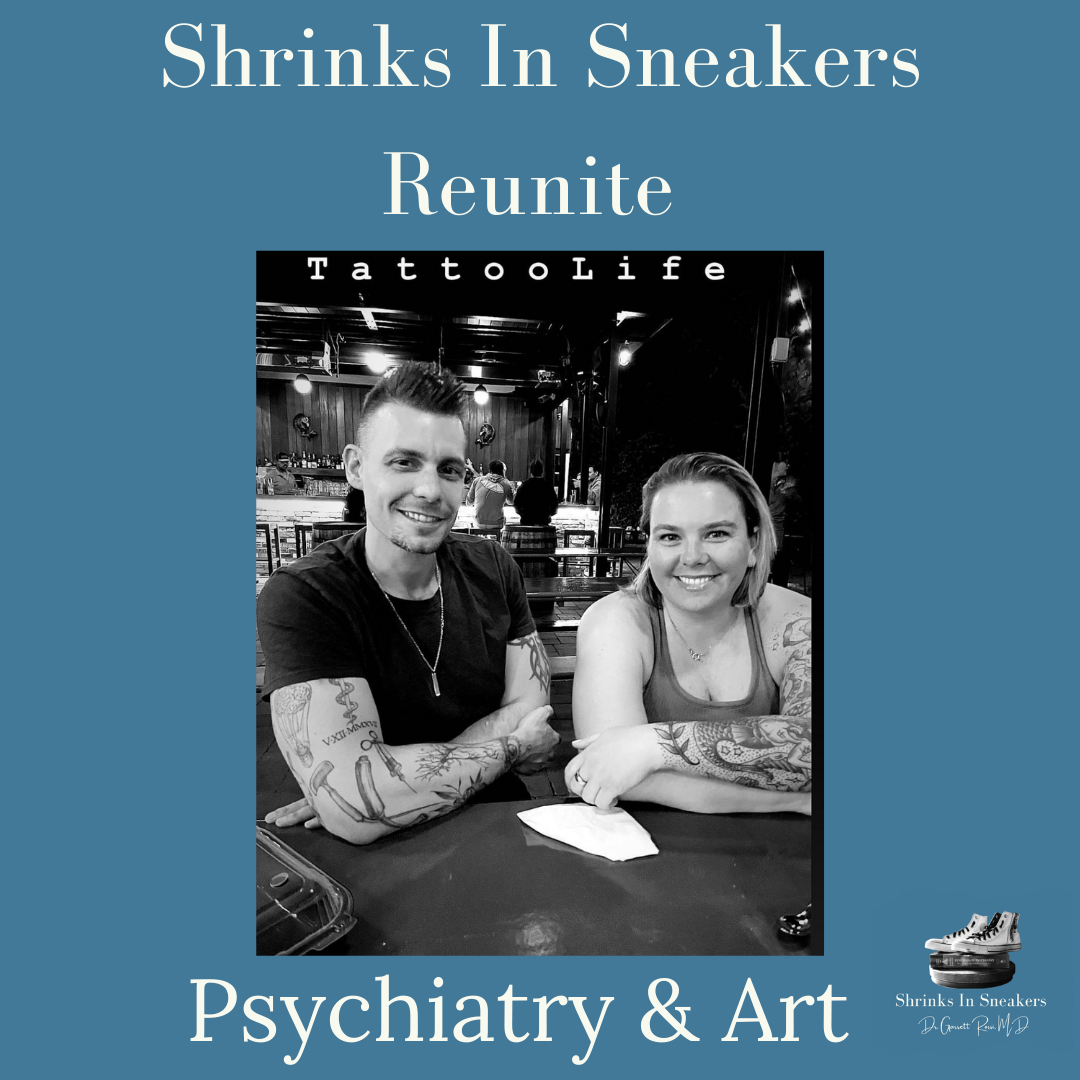
  • Shrinks In Sneakers Reunite: Bound by Love for Psychiatry

    Shrinks In Sneakers Reunite: Bound by Love for Psychiatry

    I think everyone needs a person in their medical training that they bond with and lean on during this difficult period. 

    Medical training has its ups and downs, the process is filled with highest highs and the lowest lows. There were moments that I loved training and there were moments where I hated training. 

    I was lucky enough to find a great person to share these experiences with.  

    We spent many hours discussing psychiatry, what excited us about the field and what worried us about the future. We discussed difficult cases and the drama of residency training. If I ever needed help or someone to cover a call shift last minute, I knew who I could count on.

    I could trust this person to have my back and I would do the same no matter what. 

     I would encourage anyone who is going through this process to find someone who can help them grow as both a physician and a person. 

    It’s always comforting knowing we can all get by with a little help from our friends. 

  •  


    The Loneliness Epidemic and Avoidant Personality Disorder 

    Although loneliness has always been a friend of mine (Backstreet boys 1997), there is an epidemic of loneliness across all age groups. 

    We live in a world where we are all more connected with each other through technological advances and social media, yet people feel more disconnected than ever. 

    The COVID-19 pandemic did make this any better, 36% of all Americans, including 61% of young adults and 51% of mothers with young children feel loneliness is a significant problem in their lives. 

    The question is are people feeling lonely because they are suffering from avoidant personality disorder?

    Epidemiology

    The prevalence of APD is 2.36% in the general population, and it appears to occur equally in males and females. 

    Definitions and Criteria for diagnosis

    Let’s start with a definition of what avoidant personality disorder is and how it can impact a person’s life. 

    This is part of the cluster C personality disorders often thought of as the anxious/fearful personality disorders. These individuals experience excessive social anxiety, severe feelings of inferiority and inadequacy, and while they desire close relationships, they avoid the feared stimulus instead living in self-imposed social isolation. 

    Other key criteria include: 

    -patterns of social inhibition 

    -hypersensitivity to rejection or criticism 

    -it must be present by early adulthood 

    This affects all areas of life and should be a pervasive pattern. It’s not something that is isolated or situational.  

    DSM-5 Criteria: 4 out of 7 are required to make a diagnosis 

    1. Avoids occupational activities that involve significant interpersonal contact because of fears of criticism, disapproval, or rejection. 
    2. Unwilling to engage in relationships unless they are certain of being liked. (They will look for social cue or indicators of interest before committing and often attempt to read other minds) 
    3. Shows restraint in relationships for fear of being ridiculed or shamed 
    4. You are preoccupied with being criticized or rejected 
    5. The person is inhibited in new interpersonal situations because of feelings of inadequacy 
    6. The person will view themselves as socially inept, inferior to others, or unappealing to others. 
    7. The person is reluctant to take personal risks for fear of embarrassment 

    It’s important to keep in mind this diagnosis is largely unchanged since DSM-III and are primarily viewed through a psychoanalytic lens. The key difference between avoidant personality disorder and social anxiety is these feelings are pervasive throughout the person’s life, where in social anxiety they are limited to social situations. Although some believe these are the same disorder with many of the criteria overlapping. Avoidant patients tend to read more into things and are constantly looking for any indication from others that supports their theory that they are defective or inadequate. 

    Other personality disorders can have rejection sensitivity and sensitivity to criticism, this is often seen in narcissistic personality disorder. We are all sensitive to criticism in certain situations it’s not necessarily pathological. 

    Treatment: 

    This largely focuses on psychotherapy and sometimes medication if other comorbid psychiatric disorders are identified. Some of the psychotherapy techniques that are effective include social skills training, cognitive behavioral therapy, and exposure therapy. These are also good cases for psychoanalysis if the person can commit to that form of therapy. 

    Conclusion :

    Could Some of the Loneliness people are experiencing be due to avoidant personality disorder?

    -Possibly, but it’s only going to be a small percentage considering the prevalence of avoidant personality disorder is 2.36%. 

    -Loneliness has many contributing factors and encouraging people to spend less time connecting digitally and more time connecting face to face is a good place to start. 

  • How to Manage Aggression with Psychopharmacology in an Inpatient Setting

    How to Manage Aggression with Psychopharmacology in an Inpatient Setting

    I’m very careful about the content I consume and the resources I use to grow as a psychiatrist.

    When I endorse something like The Psychiatry & Psychotherapy Podcast, you know it’s something I personally use and trust. 


    I had the opportunity to work with Dr. Puder on a recent episode How to manage aggression with psychopharmacology in an inpatient setting. Unfortunately, I got caught up taking care of patients on my inpatient service on the day of the recording and did not get to talk with Dr. Puder and Dr. Cummings.

    I would encourage you to listen to all the episodes, but my personal favorites are the ones with Dr. Cummings. He has a wealth of knowledge and I’ve learned some amazing clinical pearls that I apply in my daily practice. 

    Check out the episode, you will not be disappointed

    https://www.psychiatrypodcast.com/psychiatry-psychotherapy-podcast/episode-145-how-to-manage-aggression-with-psychopharmacology-in-an-inpatient-setting