Tag: medical research

  • Your Day Job Does Not Have to Be Your Life’s Work

    Your Day Job Does Not Have to Be Your Life’s Work

    Why doctors and probably everyone else need work that belongs to them

    Seeing patients all day was never my favorite way to use my skills.

    Even writing that sentence feels strangely uncomfortable. Physicians aren’t supposed to say things like that. We spend more than a decade training to take care of patients. We sacrifice our twenties, accumulate debt, miss weddings, work nights, weekends, and holidays, and build an enormous amount of our identity around becoming a doctor.

    So, once you finally become one, shouldn’t patient care be the thing that gives you the greatest sense of meaning and fulfillment?

    Maybe.

    But what if it isn’t?

    And what if there is nothing particularly wrong with that?

    One of Medicine’s Quiet Expectations

    I enjoy psychiatry. I care deeply about doing good clinical work. I want the people I treat to get better.

    But if you asked me what activities make me lose track of time, they usually aren’t the routine parts of clinical medicine. They are reading. Writing. Teaching. Going down an intellectual rabbit hole because I came across an idea I don’t understand. Reading an old psychiatry paper and wondering why we stopped thinking about the problem that way. Taking something complicated and figuring out how to explain it so another person can actually use it.

    Those have always been some of the most meaningful parts of my life.

    And for years, I almost felt guilty about that.

    There is an unspoken belief in medicine that the ideal physician should receive nearly unlimited emotional and intellectual nourishment from direct patient care. Anything else can sound selfish.

    You want to write? Fine, if you see your patients first.

    You want to teach? Great, if it doesn’t interfere with productivity.

    You want to research an obscure idea, create educational content, study philosophy, build something, or spend three hours thinking about a question nobody assigned you?

    That’s a hobby. Get back to work.

    Then I Heard Someone Say It Out Loud

    Recently, psychiatrist Nassir Ghaemi described an idea during his commencement address to the 2026 Yale psychiatry residency class that immediately resonated with me.

    He called it having a “night job.”

    Your day job is the work you are paid to do. Your night job is the work that satisfies something deeper.

    As Ghaemi put it: “Many people are dissatisfied because their day job doesn’t satisfy them emotionally or intellectually.”

    That doesn’t necessarily mean your day job is bad. It means we may be asking far too much of it.

    We expect a single profession to provide income, identity, purpose, intellectual stimulation, emotional fulfillment, social connection, prestige, and happiness. That is an enormous burden to place on a job. And when it inevitably fails to provide all those things, we conclude that something must be wrong.

    Maybe we chose the wrong specialty. Maybe we are burned out. Maybe medicine has changed. Maybe we aren’t as dedicated as everyone else.

    Sometimes those explanations are true.

    But sometimes your job is simply your job. It can be important. You can be good at it. You can care deeply about doing it well.

    And it still doesn’t have to satisfy every part of you.

    The Night Job

    The term “night job” is a little misleading, because this isn’t about staying up until midnight working on another project. It isn’t another version of hustle culture. The goal isn’t to finish a twelve-hour clinical day and then punish yourself with four more hours of productivity.

    The night job is the parallel pursuit that belongs to you.

    For me, that has meant writing, teaching, and creating — studying psychology, philosophy, neuroscience, and human behavior far outside the narrow boundaries of daily clinical practice. Trying to understand not simply what the treatment guidelines tell us to prescribe, but why people suffer, why treatments work, why they fail, and what we may be getting wrong.

    And then taking those ideas and sharing them.

    That’s a large part of why I created Shrinks in Sneakers. I wanted to talk about psychiatry the way clinicians experience it. I wanted to explain treatments without pretending the evidence is cleaner than it really is. I wanted to challenge conventional wisdom when the conventional wisdom didn’t make sense. And I wanted ordinary people to have access to high-quality psychiatric education without needing a medical degree to understand it.

    Nobody assigned me that job. For most of it, nobody paid me.

    I did it because I couldn’t imagine not doing it.

    That’s the difference.

    Your Greatest Work May Not Be the Work Someone Hired You to Do

    This is the part I think young physicians need to hear.

    Your career does not have to fit neatly inside your employment contract.

    Medicine has become very good at defining our value through measurable units. Patients seen. Notes completed. RVUs generated. Charts closed. Quality metrics achieved. Those things may be necessary to operate a healthcare system.

    But they are terrible measurements of a human life.

    Some of the most important work you ever do may have no billing code. It may be the paper you write because an observation bothered you. The lecture you build because nobody ever taught the topic correctly. The student you mentor. The podcast nobody listens to for the first year. The book sitting half-finished on your computer. The research questions your institution doesn’t care about. Or simply the subject you study because understanding it makes you feel alive.

    Your employer may never reward you for it. The world might not reward you for it either.

    Do it anyway.

    But there is a catch

    There is one major problem with the night job.

    Energy.

    After a full clinical day, there isn’t always much left. This is where I think the idea needs an important modification:

    Protect your best energy for at least some of the work that matters most to you.

    Don’t automatically give your employer every productive hour you have and reserve whatever exhausted fragments remain for the things you supposedly care about most.

    Sometimes that means writing before work. Reading for an hour in the morning. Blocking off an afternoon. Saying no to another committee. Doing slightly less of something that doesn’t matter so you can do more of something that does.

    Ghaemi described doing something similar — stopping at a café before reaching the hospital so he could write while his mind was still fresh. That makes far more sense to me than glorifying exhaustion.

    The night job shouldn’t shrink your life.

    It should make your life bigger.

    You Are Allowed to Be More Than Your Profession

    Medicine has a strange way of consuming identity. First, you are a premed. Then a medical student. Then a resident. Then an attending. Eventually somebody asks who you are, and without realizing it, you answer with your specialty.

    “I’m a psychiatrist.”

    True. But incomplete.

    I’m also someone who writes. Someone who teaches. Someone who creates. Someone who is endlessly curious about why human beings do the things they do. Being a psychiatrist gives me an extraordinary vantage point from which to explore those questions.

    It doesn’t need to be the boundary around them.

    Take your work seriously. Treat people well. Become excellent at whatever profession you choose. But you do not have to surrender the rest of yourself to your job.

    Find the thing you would keep doing even if nobody put it on your performance review. Find the subject you read about when nobody assigned the chapter. Find the work that makes two hours feel like twenty minutes.

    Then build some space for it.

    Call it your night job. Call it a side project. Call it your life’s work. The name isn’t important.

    What matters is recognizing that the work that pays for your life and the work that gives your life meaning do not have to be the same thing.

    And maybe we would all be a little happier if we stopped pretending they did.

    Psychiatry Unfiltered

  • Brexpiprazole + Sertraline: A New Hope for PTSD Treatment

    Brexpiprazole + Sertraline: A New Hope for PTSD Treatment

    We’ve all seen it: PTSD that won’t budge. Patients try sertraline or paroxetine—the so-called “gold standards”—and walk away with little more than side effects and a sense of failure.

    Enter a new contender: brexpiprazole + sertraline.

    A recent Phase 3 randomized controlled trial might finally offer something real for those stuck in the PTSD trenches.

    🚨 The Results

    In a study across 86 sites with over 550 adults, adding brexpiprazole (2–3 mg) to sertraline (150 mg) led to a 5.6-point greater reduction on the CAPS‑5 (the gold-standard PTSD measure) compared to sertraline + placebo. That’s not a marginal win—it’s a clinically significant shift, especially in a treatment-resistant population.

    Responder rates tell the story even clearer:

    • 68.5% of patients on the combo had ≥30% reduction in symptoms
    • Compared to 48.2% on sertraline alone
    • That’s a +20% absolute response rate boost

    And the improvements weren’t just short-lived. Benefits held through 12 weeks, even during a post-treatment observation period. No relapse, no rebound—just stability.

    🧩 More Than Symptom Checklists

    It wasn’t just about PTSD symptoms. This combo also:

    • Improved psychosocial functioning (B-IPF scores)
    • Reduced anxiety and depression (HADS)
    • Lowered global illness severity (CGI-S)
    • Helped with all symptom clusters, including reexperiencing, avoidance, and hyperarousal

    That’s rare. Most meds in psychiatry hit one or two domains and leave the rest hanging. This one made a dent where it counts: function, resilience, and real-world relief.

    ⚠️ What About Side Effects?

    Brexpiprazole is still an atypical antipsychotic, so there’s baggage. But the trial data suggest it’s relatively well-tolerated:

    • Fatigue: 6.8%
    • Weight gain: 5.9%
    • Somnolence: 5.4%
    • Discontinuation due to AEs? Just 3.9%, vs 10.2% in placebo.

    No new safety signals. No psychosis worsening. Not perfect, but not the metabolic disaster zone we see with other agents.

    🚀 What’s Next?

    The FDA is reviewing this combo

    For those of us treating chronic PTSD, this may be a real tool—not just a shiny new molecule with good marketing.

    Until then, it’s worth paying attention. Because when sertraline alone doesn’t cut it—and we know it often doesn’t—this combo could offer a lifeline.

  • Understanding Psychiatry: Science vs. Skepticism

    Understanding Psychiatry: Science vs. Skepticism

    🧠 “Psychiatry is a scam.” “Big Pharma controls your brain.” “Mental illness isn’t real.”

    You’ve heard the takes. Now here’s the truth.

    In my new article for Psychiatric Times, I dive headfirst into the controversy:
    👉 Understanding Psychiatry: Navigating Skepticism and Science
    https://www.psychiatrictimes.com/view/understanding-psychiatry-navigating-skepticism-and-science

    I don’t dodge the hard questions—about overmedication, broken trust, and bad science—but I also push back against lazy anti-psychiatry takes that ignore the very real suffering of patients.

    If you care about the future of mental health care, this one’s worth your time.

  • New JAMA Study Challenges Previous Concerns About Valproate and Paternal Risk

    New JAMA Study Challenges Previous Concerns About Valproate and Paternal Risk

    What we thought we knew may not hold up under scrutiny.

    A recent JAMA Psychiatry study titled “Disorders and Paternal Use of Valproate During Spermatogenesis” has delivered surprising news:

    There was no increased risk of neurodevelopmental disorders in children whose fathers were taking valproic acid around the time of conception.

    This finding directly challenges earlier observational data that suggested a possible link, leading to cautionary guidance against prescribing valproate to men of reproductive age. But now, with a large, well-conducted study showing no signal of harm, we’re left reconsidering that initial recommendation.

    As clinicians, we must remember:
    🔍 Association is not causation.
    🚧 Observational studies, while valuable, can mislead when confounding variables aren’t fully accounted for.
    📚 Evidence evolves—and so must our clinical guidance.

    This study not only impacts how we think about valproate use in men but also serves as a critical reminder about the limits of inference from non-randomized data.

    👉 For patients with bipolar disorder or epilepsy who benefit from valproate, this offers some reassurance. We may not need to withhold an effective treatment based on unconfirmed reproductive risks.

    📌 Bottom line: Always be skeptical. Always be curious. Always be willing to revise your practice when the data say it’s time.

    link to the study: https://jamanetwork.com/journals/jamanetworkopen/fullarticle/2834363

  • ARISE Study Phase 3 Results: Understanding Xanomeline’s Setback

    ARISE Study Phase 3 Results: Understanding Xanomeline’s Setback

    What Was the ARISE Study?

    The ARISE trial was a Phase 3 clinical study evaluating Cobenfy — a combination of xanomeline (a muscarinic receptor agonist) and trospium chloride (a peripheral anticholinergic) — as an adjunctive treatment for adults with schizophrenia who continued to experience symptoms despite taking an atypical antipsychotic.

    What Is a Primary Endpoint, and Why Does It Matter?

    In clinical trials, the primary endpoint is the most important outcome researchers are trying to affect — it’s how a drug’s success or failure is officially judged.
    In ARISE, the primary endpoint measured the change in symptom severity compared to placebo using a standardized scale for schizophrenia. Meeting this endpoint would have demonstrated clear, statistically significant symptom improvement attributable to Cobenfy.

    The Outcome: No Statistically Significant Benefit

    According to topline results, Cobenfy did not show a statistically significant improvement compared to placebo when added to atypical antipsychotics. This means the observed difference could have been due to chance and did not meet the pre-set threshold for success.

    However, Cobenfy did show a numerical improvement — the group receiving the drug combination performed betterthan placebo in symptom reduction, just not to a statistically convincing degree.

    Could Anticholinergic Effects Be to Blame?

    One possible explanation for this outcome lies in the mechanism of action of both Cobenfy and many commonly used atypical antipsychotics.

    • Xanomeline is designed to activate muscarinic receptors in the brain (specifically M1 and M4), which may help regulate dopamine and reduce psychosis.
    • But many atypical antipsychotics — like olanzapine, clozapine, and quetiapine — also have anticholinergic properties, meaning they block these same receptors.

    This sets up a pharmacological tug-of-war: Cobenfy tries to stimulate muscarinic activity, while the background antipsychotic may be dampening it. This conflict could blunt the therapeutic signal, explaining why the benefit didn’t reach statistical significance.

    What This Means for the Future

    The failure to meet the primary endpoint is a setback, but not the end of the road. The numerical improvements suggest a potential signal, and with refined trial design — perhaps using background medications with lower anticholinergic load — future studies may better reveal Cobenfy’s potential.

    Additionally, this trial underscores the importance of considering mechanism compatibility in combination therapies. It’s not just about adding drugs — it’s about how they interact at the receptor level.

    Conclusion

    While the ARISE study didn’t deliver the result many hoped for, it raised critical questions that will shape future research. A deeper understanding of anticholinergic burden, drug synergy, and precision pharmacology is essential as we continue the search for more effective treatments for schizophrenia.

  • RFK Jr. Claims He’ll Identify the Cause of Autism by September

    RFK Jr. Claims He’ll Identify the Cause of Autism by September

    In a bold statement this week, Robert F. Kennedy Jr. announced that he will reveal the definitive cause of autism by September. Kennedy, a longtime critic of childhood vaccine programs, did not provide specific scientific details or a research plan, but implied that his administration would prioritize transparency and independent investigations into the condition’s origins.

    The claim has sparked immediate controversy. Autism is a complex neurodevelopmental condition with a strong genetic foundation and a wide range of potential environmental influences—none of which have yielded a singular, definitive cause. The scientific consensus, built over decades of rigorous research, continues to support a multifactorial model rather than a simplistic explanation.

    Many highly intelligent and dedicated scientists have spent years studying autism without identifying a single, unifying cause. One of the recurring issues that arises when politics intersects with science is a resistance to the idea that these are nuanced, multifaceted conditions. It’s not the most satisfying explanation—but it is consistent with the best evidence we have. My fear is that this type of investigation, under political pressure, could prematurely identify a false causal agent—such as vaccines—and reignite a harmful narrative that has already been thoroughly debunked.

    Kennedy’s history of promoting vaccine-autism links adds further concern. The CDC, WHO, and a vast body of peer-reviewed research have all concluded there is no credible evidence connecting vaccines to autism. Suggesting otherwise not only undermines public trust in science and medicine—it risks the health of entire communities by fueling vaccine hesitancy.

    For families and individuals affected by autism, the promise of discovering its origins is understandably compelling. But it’s critical that we approach that pursuit with scientific integrity, not political expediency.

  • Olanzapine vs. Quetiapine for Stimulant Psychosis: Is One the Clear Winner?

    Olanzapine vs. Quetiapine for Stimulant Psychosis: Is One the Clear Winner?

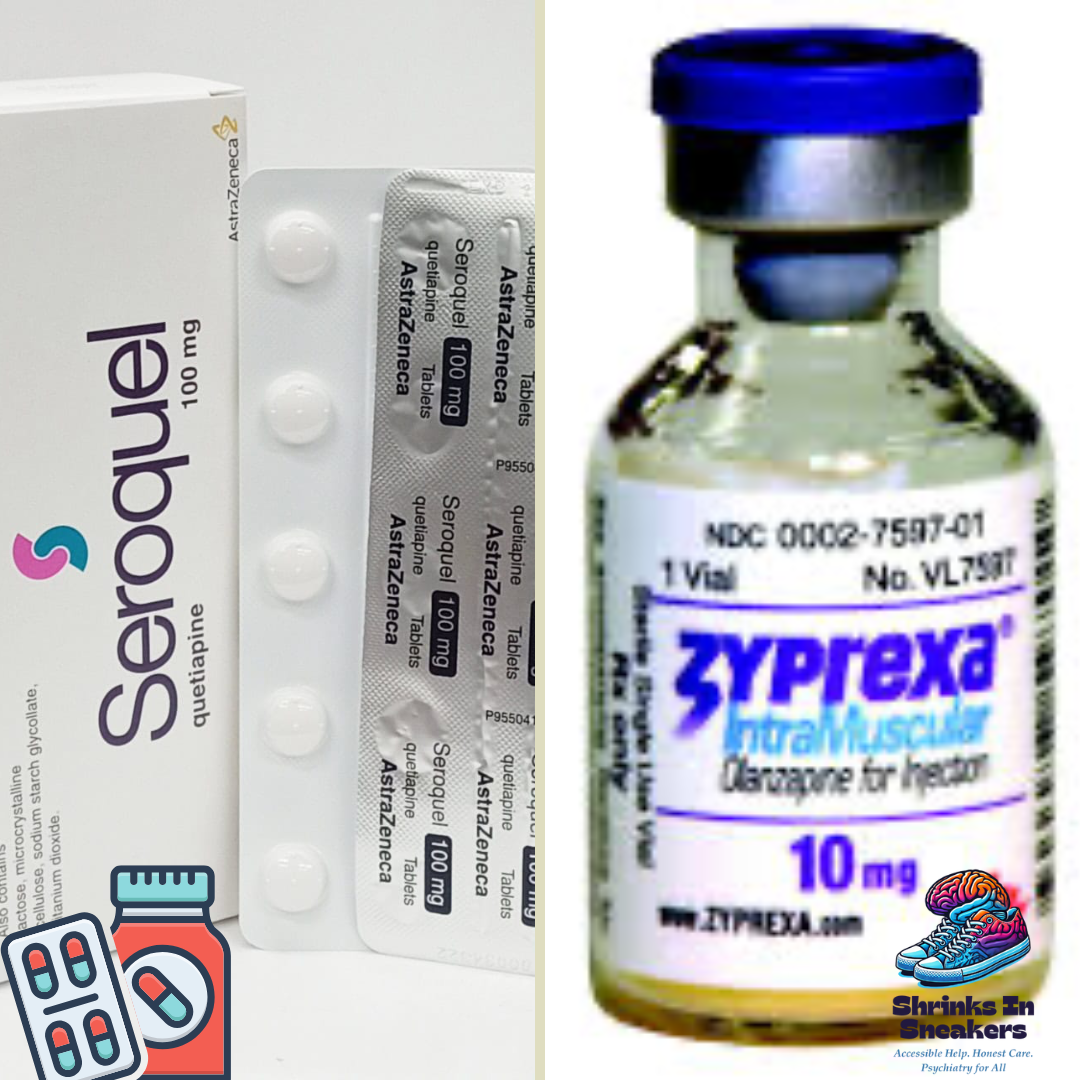
    There is limited high-quality randomized controlled trial (RCT) evidence specifically comparing Zyprexa (olanzapine) or Seroquel (quetiapine) for the treatment of stimulant-induced psychosis (SIP), including cocaine-induced psychosis. However, some RCTs and observational studies provide useful insights:

    Olanzapine (Zyprexa)

    • RCT Evidence:
      • 2022 meta-analysis of antipsychotic treatments for stimulant-induced psychosis included olanzapine and found it to be effective in reducing positive psychotic symptoms, often comparable to haloperidol but with a better side effect profile (less extrapyramidal symptoms) 11.
      • double-blind RCT comparing olanzapine vs. haloperidol in methamphetamine-induced psychosisfound that both were effective at reducing PANSS (Positive and Negative Syndrome Scale) scores, but olanzapine was associated with better tolerability 22.
      • Another RCT in methamphetamine-induced psychosis compared olanzapine and risperidone, showing similar efficacy but better tolerability with olanzapine 33.

    Quetiapine (Seroquel)

    • RCT Evidence:
      • small RCT in methamphetamine-induced psychosis found that quetiapine was effective but tended to require higher doses to achieve symptom resolution 44.
      • retrospective study on cocaine-induced psychosis suggested that quetiapine may help reduce symptoms, but data is weaker compared to olanzapine or risperidone 55.
      • Quetiapine has also been studied as an option for reducing cocaine cravings, but results are mixed and it is generally less preferred for acute agitation compared to faster-acting options like olanzapine.

    Head-to-Head Comparison

    There is no direct RCT comparing olanzapine vs. quetiapine for stimulant-induced psychosis, but based on available data:

    • Olanzapine is generally preferred for acute agitation and psychosis because of its faster onset and greater D2 blockade.
    • Quetiapine may be useful in milder cases or for individuals needing sedation, but higher doses are often required.

    Clinical Implications

    • For acute stimulant-induced psychosisolanzapine (5–10 mg IM or PO) is a common first-line option due to rapid onset and favorable side effect profile.
    • Quetiapine (200–400 mg PO) can be considered, particularly for patients needing sedation or those with comorbid conditions like bipolar disorder.
    • Other antipsychotics with strong evidence include risperidone and haloperidol (though the latter has more extrapyramidal risk).

    After reviewing the available literature, direct randomized controlled trials (RCTs) comparing olanzapine (Zyprexa) and quetiapine (Seroquel) for stimulant-induced psychosis (SIP), including cocaine-induced psychosis, remain scarce. However, some studies provide relevant insights:

    Olanzapine (Zyprexa):

    • Efficacy: A randomized, double-blind trial compared olanzapine and haloperidol in patients with amphetamine-induced psychosis. Both medications effectively improved psychotic symptoms in the short term, with olanzapine showing a faster onset of action.

    Quetiapine (Seroquel):

    • Efficacy: A double-blind RCT compared haloperidol and quetiapine for methamphetamine-induced psychosis. While both medications reduced psychotic symptoms, quetiapine appeared to have a more favorable profile in reducing certain symptoms over time. 

    Indirect Comparisons:

    • First-Episode Psychosis: A 52-week randomized, double-blind study evaluated olanzapine, quetiapine, and risperidone in early psychosis patients. All three antipsychotics demonstrated comparable effectiveness, as indicated by similar rates of treatment discontinuation.

    Conclusion:

    While direct RCT evidence comparing olanzapine and quetiapine specifically for stimulant-induced psychosis is limited, existing studies suggest that both medications are effective in managing such conditions. Olanzapine may offer a faster onset of symptom relief, whereas quetiapine might present a more favorable side effect profileClinical decisions should be individualized, considering factors such as patient history, specific symptomatology, and potential side effects.

  • Female Physicians at Higher Risk for Suicide: Key Findings

    Female Physicians at Higher Risk for Suicide: Key Findings

    February 26, 2025 study in JAMA Psychiatry reveals alarming trends in physician suicide rates:

    📊 Key Findings

    🔹 Female physicians face a significantly higher suicide risk compared to the general U.S. population.
    🔹 Male physicians have a lower suicide risk than their nonphysician counterparts.

    💡 Why This Matters

    These statistics underscore a deeper systemic issue within healthcare
    ➡️ “Physicians face immense pressure, long hours, and high-stakes decisions, which contribute to burnout and mental health struggles.”

    Failure to address these issues can lead to increased physician turnover, lower quality of care, and worsening healthcare outcomes for patients.

    ✅ What Can Be Done

    ✔️ Reduce stigma around mental health in medical culture.
    ✔️ Implement confidential mental health resources specifically for physicians.
    ✔️ Encourage work-life balance through adjusted schedules and peer support programs.
    ✔️ Offer routine mental health check-ins as part of employee wellness programs.

    📞 Where to Get Help

    🆘 If you or someone you know is struggling, help is available:
    ➡️ Call or text 988 for free, confidential support 24/7.
    ➡️ Visit the Physician Support Line at www.physiciansupportline.com — available 7 days a week with support from licensed psychiatrists.

    💙 It’s time to support those who care for us.

  • 🧪 Exciting Breakthrough in Cannabis Use Disorder Treatment!

    🧪 Exciting Breakthrough in Cannabis Use Disorder Treatment!

    A recent Phase 2b clinical trial has shown that PP-01, an investigational therapy by PleoPharma, significantly reduces cannabis withdrawal symptoms in individuals with Cannabis Use Disorder (CUD). The study demonstrated a clear dose-response relationship, with the highest dose yielding clinically meaningful results (p=0.02). Importantly, PP-01 was well-tolerated with no safety concerns.

    Recognizing the urgent need for effective treatments, the FDA has granted Fast Track designation to PP-01, expediting its development and review process. This brings hope to the approximately 19.2 million Americans affected by CUD, as there are currently no FDA-approved medications for cannabis withdrawal.

    PP-01 works by targeting suppressed CB1 receptors and neurotransmitter dysregulation in the brain’s reward pathway, offering a novel approach to mitigating withdrawal symptoms. As it enters Phase 3 trials, PP-01 holds promise as a first-in-class treatment for those seeking to overcome cannabis dependence.

  • 🌿 CBD for Psychosis? A Landmark Trial is Underway 🧠

    🌿 CBD for Psychosis? A Landmark Trial is Underway 🧠

    A major new study—the Stratification and Treatment in Early Psychosis (STEP) trial—is set to investigate CBD as a potential treatment for psychosis on a larger scale than ever before. Led by Philip McGuire, MD, professor of psychiatry at Oxford University, STEP will involve 1,000 participants across 30 sites in 10 countries 🌍, making it one of the most ambitious trials of its kind.

    🔬 Why it matters:
    ✅ CBD has shown promise in early studies for psychosis, but large-scale evidence is needed.
    ✅ STEP will combine three smaller trials to explore effectiveness, biomarkers, and precision treatment approaches.
    ✅ Nature Medicine named it one of 11 studies that will shape medicine in 2025.

    🚀 Could CBD redefine psychosis treatment? The results could change the landscape of psychiatric care. Stay tuned!