In mixed depression the individual is often irritable, and elevated. They have depressed mood with at least 3 manic symptoms but do not meet the full criteria for bipolar disorder. Here I avoid the antidepressant medications and chose to focus on two medications with evidence for their efficacy. I like lurasidone and aripiprazole here, and sometimes I consider ziprasidone as well.
Tag: medication
-

Rethinking the Concept of Addiction: Beyond the Brain Disease Model
When it comes to treating addiction, the prevailing idea is that it’s simply a chronic brain disease. But in reality, few experts fully subscribe to this view in isolation. We understand that not everyone who uses drugs, alcohol, or gambles ends up with a life-destroying addiction. Many individuals manage to engage with substances or behaviors without it overtaking their lives—they maintain jobs, care for their families, and function in society. This suggests that addiction is much more than a biological condition; it’s an intricate interplay of biology, social influences, environmental factors, and personal choices.
It’s worth pausing to consider what labeling addiction as a chronic disease implies. On one hand, it suggests that even if you strive for change, addiction remains a lingering presence—one that can pull you back into destructive patterns at any moment. This can foster a disheartening and pessimistic outlook, as it positions addiction as an inescapable burden. The concept of a chronic disease also reinforces the idea that ongoing, lifelong treatment is necessary, often with medications like buprenorphine, which may be prescribed for years, or even indefinitely, to prevent relapse.
While I absolutely recognize the biological underpinnings of addiction and the life-saving role medications like buprenorphine play, we must look beyond just biology to truly understand and address addiction. The motivations behind substance use and the social contexts in which it occurs are equally important. Humanity’s long history of seeking altered states of consciousness suggests that drug use is often a response to emotional pain or difficult circumstances. People frequently use substances as an escape, and understanding these personal and social factors is key to effective treatment.
At its core, successful addiction therapy must focus on uncovering the reasons behind substance use and helping individuals develop healthier coping strategies. Treatment that focuses solely on the biological side—without considering the psychological and social aspects—often falls short. It’s critical to provide not just medical interventions but also hope and optimism, which are fundamental to any healing process. Addiction may not be a simple choice, but it certainly involves choices, and it emerges from a complex web of circumstances in a person’s life.
In the end, we should avoid oversimplifying addiction as merely a chronic brain disease. True treatment requires a holistic approach, considering all the elements—biological, social, environmental, and personal—that create the conditions for addiction to thrive. Only then can we offer meaningful, lasting solutions for those struggling with addiction.
Link to the article:
-
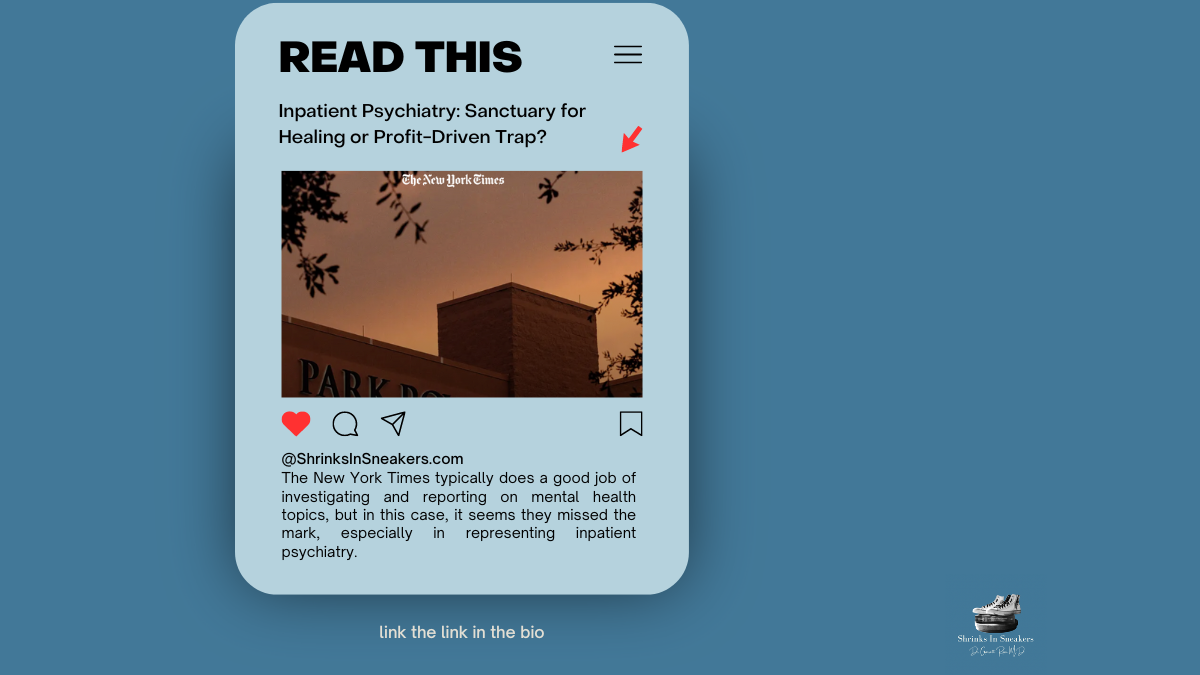
Inpatient Psychiatry: Sanctuary for Healing or Profit-Driven Trap?
The New York Times typically does a good job of investigating and reporting on mental health topics, but in this case, it seems they missed the mark, especially in representing inpatient psychiatry. Inpatient psychiatry is a challenging environment for both patients and physicians like myself. We never want to keep anyone in the hospital who doesn’t need to be there. In fact, when patients accuse me of holding them for financial gain, I tell them that I’m paid the same regardless of the number of cases I manage, and my life is easier with fewer patients. No physician working in inpatient care would ever keep someone confined without a legitimate safety concern for the patient or the community. While no one defends poor practices, and Arcadia may indeed have its issues, the broader implications of articles like this one deserve closer scrutiny. The article lacks detail, avoids expert input from professionals in the field, and fails to account for the fact that dangerousness might emerge during hospitalization, potentially converting a voluntary patient to involuntary status or necessitating a more cautious discharge approach that could save lives.
Here’s the reality: people are admitted to inpatient psychiatric units for a variety of reasons. We can talk all day about the broken U.S. healthcare system and the lack of access to quality outpatient psychiatric care, but fundamentally, there are two main reasons someone ends up on an inpatient unit. First, they are a danger to themselves, and without close monitoring and treatment, they are at high risk of suicide. Second, they pose a danger to others, and without inpatient care, serious harm could come to someone else. We see plenty of cases that meet these clear criteria, and I believe that without our services, many of these individuals would either be dead or in jail. However, there are also other reasons why patients seek inpatient care, and the article’s example of a woman with bipolar disorder needing a medication adjustment is worth exploring.
Why not see an outpatient psychiatrist for medication management? Why seek inpatient care from a doctor who doesn’t know your case? This situation can be dissected further. Suppose this patient, who doesn’t pose a threat to themselves or others, voluntarily enters an inpatient unit for treatment. Medication changes are made, lithium is increased, and as the treating physician, you would need at least 3-5 days for observation and lab work to monitor the effects. Given that this patient could have pursued outpatient treatment, it becomes your responsibility as the inpatient doctor to ensure proper monitoring and follow-up. But let’s say, after admission, you learn that the patient had been suicidal the week prior and had a plan to overdose. Now, there’s new information indicating a greater level of risk. If, after 24 hours, the patient suddenly wants to leave, as the physician, you must consider this new information. You ask to speak to the patient’s family to gather more context, but the patient refuses and demands discharge. In my state, the patient would file a formal 48-hour notice, which allows me 48 hours to assess if they pose an imminent danger. If so, a two-physician commitment process can be initiated.
The point is that treating physicians must weigh numerous safety concerns—such as unfinished medication adjustments, potential emerging risks, and patients’ misunderstanding of the inpatient process. Mental health treatment often takes weeks to months to see full results, and if patients feel significantly better after just a few days, it’s either due to electroconvulsive therapy (ECT) or the placebo effect of being in a hospital setting. I believe it’s crucial for people to understand the role of inpatient psychiatric facilities, and I make it a point to educate my patients about why hospitalization is necessary and what they can expect. Many arrive with false assumptions about what can be accomplished in an inpatient setting.
Link to New York Times Article: https://www.nytimes.com/2024/09/01/business/acadia-psychiatric-patients-trapped.html
-
Mastering the Mind: Strategies for Tackling Anxious Depression
When treating anxious depression, SSRIs and SNRIs may not always provide sufficient relief. In such cases, I consider adding medications like quetiapine, which has a significant effect size for generalized anxiety disorder (GAD) and is FDA-approved as an augmentation strategy for depression at doses of 150–300 mg. However, due to its side effect profile, it’s advisable to limit the duration of quetiapine use when possible.
-
Breaking Free: What to Do When Anxiety Won’t Let Go
The tried-and-true approach of recommending Cognitive Behavioral Therapy (CBT) along with a serotonin reuptake inhibitor (SSRI) or serotonin-norepinephrine reuptake inhibitor (SNRI) doesn’t work for everyone. So, what are the alternatives? One often-overlooked option is hydroxyzine, which has effect sizes (0.4–0.5) similar to benzodiazepines but with a lower risk, particularly in older adults. For those seeking natural remedies, Silexan, available over the counter, is another possibility. Other medications that have shown efficacy in treatment-resistant depression include pregabalin, quetiapine, and eszopiclone. When it comes to social anxiety disorder, I’m a bit old-fashioned but still favor MAOIs in this area.
-
The Power of a Comeback: My Time is Now, and So is Yours
Life is a journey full of ups and downs, and sometimes, we find ourselves at a low point, feeling defeated and uncertain. But remember, it’s not about how many times you fall; it’s about how many times you get back up.
A comeback isn’t just about bouncing back—it’s about bouncing forward. It’s about using your setbacks as a setup for a stronger, wiser, and more resilient version of yourself.
- Believe in Yourself: Trust in your abilities and your potential. You have everything within you to overcome challenges and achieve greatness.
- Set Clear Goals: Define what success looks like for you. Break down your goals into manageable steps and tackle them one by one.
- Learn from the Past: Reflect on what led to the setback. Embrace the lessons learned and use them to fuel your growth.
- Stay Positive: Surround yourself with positivity. Cultivate a mindset of gratitude and optimism, even in the face of adversity.
- Take Action: Don’t just dream about your comeback—take concrete steps towards it every day. Consistency and perseverance are key.
- Seek Support: Lean on friends, family, or mentors who believe in you. Their encouragement can be a powerful motivator.
- Celebrate Small Wins: Acknowledge and celebrate every small victory along the way. Each step forward is progress.
Remember, the greatest comebacks are born from the greatest setbacks. Your story is far from over, and this is just the beginning of a new, exciting chapter. Keep pushing, keep striving, and watch as you rise stronger than ever.
-
Breaking Barriers: Streamlining Clozapine Access for Patients in Need
Happy Friday Everyone, todays post is a topic near and dear to my heart
Clozapine is the most effective medication available for treating schizophrenia. In my work in community mental health, many of my patients could greatly benefit from clozapine, but significant barriers make access difficult. A large portion of my patients are homeless and frequently lost to follow-up, which complicates the already burdensome REMS (Risk Evaluation and Mitigation Strategy) program. To ensure access to this life-saving treatment, adjustments to the REMS program are necessary. One solution could be eliminating the requirement to report completed monitoring and post results on a central database. Additionally, restrictions that delay pharmacies from distributing clozapine should be removed. Finally, we need to reevaluate the frequent and, quite frankly, excessive monitoring of absolute neutrophil counts (ANC). These changes could significantly improve access for patients who need this critical medication.
-
PTSD by Any Other Name: Rethinking the Label to Break the Stigma
An advocacy group has proposed changing the name of post-traumatic stress disorder (PTSD) to post-traumatic stress injury (PTSI) for inclusion in the DSM-5 TR. However, in November 2023, the APA steering committee rejected the proposal, citing insufficient evidence to support the change. Advocates argue that the term “disorder” is both imprecise and carries stigma, which can discourage people from seeking timely care. This delay or avoidance of care can lead to serious consequences, including suicide attempts. The term “disorder” has long been controversial in psychiatry, and I’ve always favored the use of “disease” to help distinguish between true disease processes and challenges of living. I also believe that people may be more likely to seek help if they view the issue as a disease or injury. While this change may not happen soon, maintaining open dialogue about how to encourage treatment is essential.
-
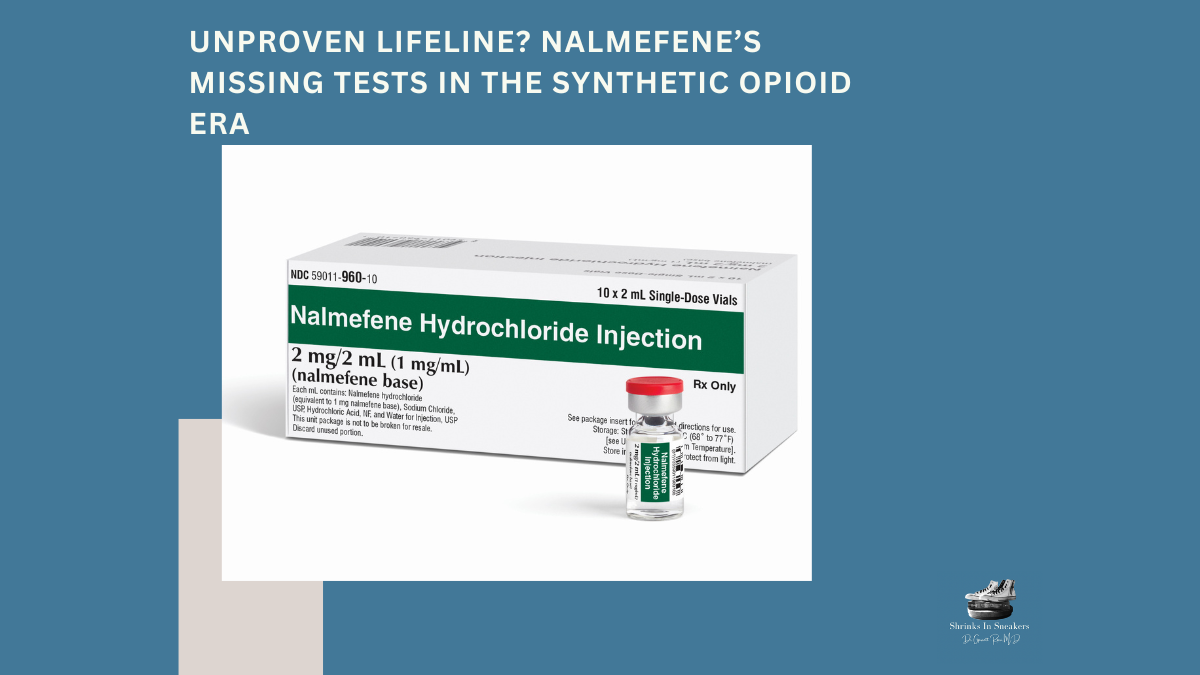
Unproven Lifeline? Nalmefene’s Missing Tests in the Synthetic Opioid Era
It seems we may have spoken too soon about the nalmefene hydrochloride auto-injector for opioid overdoses. It turns out no one really knows if there’s enough clinical data to support its use in the current landscape of high-potency synthetic opioids. That’s a pretty big oversight for a company releasing an opioid reversal agent. There are also concerns about severe and prolonged withdrawal due to its long half-life of 10.8 hours.
And, in a twist of irony, this drug is produced by the same company that devastated countless lives with OxyContin—Purdue Pharma. You have to hand it to them; they really have no shame. While I’m always eager for new tools to save lives, it’s shocking that they didn’t properly test the medication against the very synthetic opioids flooding the market. I guess we’ll soon find out if this new option will be helpful in emergency situations.
-
Oral Extended-Release Ketamine: Beyond the Hype or Just Another Hope?
Psychiatry’s fascination with ketamine continues, despite growing evidence that it may not be the miracle treatment some once hoped for. It’s clear that ketamine is not disease-modifying, meaning patients treated for depression with ketamine can still experience relapses. Even more concerning is that ketamine’s effects are short-lived, with the average time to relapse being just 2-4 weeks.
This brings us to recent studies on oral extended-release ketamine for treatment-resistant depression (TRD). In a proof-of-concept study, twice-weekly dosing of extended-release ketamine showed statistically significant and clinically meaningful improvements in depressive symptoms. The treatment was generally well-tolerated, with a side effect profile that included reduced dissociation and sedation, though there were increases in blood pressure. Having a tablet form of ketamine could make the treatment more accessible, but it also raises concerns about potential abuse and diversion.
In my view, this is another symptom management tool for patients with TRD. However, the challenge remains that patients will likely need to continue ketamine treatment long-term without a clear dosing regimen. Nonetheless, the results were promising enough to lead to a phase-3 trial using 180 mg doses twice daily.
Link to article: https://www.nature.com/articles/s41591-024-03063-x