When treating anxious depression, SSRIs and SNRIs may not always provide sufficient relief. In such cases, I consider adding medications like quetiapine, which has a significant effect size for generalized anxiety disorder (GAD) and is FDA-approved as an augmentation strategy for depression at doses of 150–300 mg. However, due to its side effect profile, it’s advisable to limit the duration of quetiapine use when possible.
Tag: mental health treatment
-
Breaking Free: What to Do When Anxiety Won’t Let Go
The tried-and-true approach of recommending Cognitive Behavioral Therapy (CBT) along with a serotonin reuptake inhibitor (SSRI) or serotonin-norepinephrine reuptake inhibitor (SNRI) doesn’t work for everyone. So, what are the alternatives? One often-overlooked option is hydroxyzine, which has effect sizes (0.4–0.5) similar to benzodiazepines but with a lower risk, particularly in older adults. For those seeking natural remedies, Silexan, available over the counter, is another possibility. Other medications that have shown efficacy in treatment-resistant depression include pregabalin, quetiapine, and eszopiclone. When it comes to social anxiety disorder, I’m a bit old-fashioned but still favor MAOIs in this area.
-

The Power of a Comeback: My Time is Now, and So is Yours
Life is a journey full of ups and downs, and sometimes, we find ourselves at a low point, feeling defeated and uncertain. But remember, it’s not about how many times you fall; it’s about how many times you get back up.
A comeback isn’t just about bouncing back—it’s about bouncing forward. It’s about using your setbacks as a setup for a stronger, wiser, and more resilient version of yourself.
- Believe in Yourself: Trust in your abilities and your potential. You have everything within you to overcome challenges and achieve greatness.
- Set Clear Goals: Define what success looks like for you. Break down your goals into manageable steps and tackle them one by one.
- Learn from the Past: Reflect on what led to the setback. Embrace the lessons learned and use them to fuel your growth.
- Stay Positive: Surround yourself with positivity. Cultivate a mindset of gratitude and optimism, even in the face of adversity.
- Take Action: Don’t just dream about your comeback—take concrete steps towards it every day. Consistency and perseverance are key.
- Seek Support: Lean on friends, family, or mentors who believe in you. Their encouragement can be a powerful motivator.
- Celebrate Small Wins: Acknowledge and celebrate every small victory along the way. Each step forward is progress.
Remember, the greatest comebacks are born from the greatest setbacks. Your story is far from over, and this is just the beginning of a new, exciting chapter. Keep pushing, keep striving, and watch as you rise stronger than ever.
-

Breaking Barriers: Streamlining Clozapine Access for Patients in Need
Happy Friday Everyone, todays post is a topic near and dear to my heart
Clozapine is the most effective medication available for treating schizophrenia. In my work in community mental health, many of my patients could greatly benefit from clozapine, but significant barriers make access difficult. A large portion of my patients are homeless and frequently lost to follow-up, which complicates the already burdensome REMS (Risk Evaluation and Mitigation Strategy) program. To ensure access to this life-saving treatment, adjustments to the REMS program are necessary. One solution could be eliminating the requirement to report completed monitoring and post results on a central database. Additionally, restrictions that delay pharmacies from distributing clozapine should be removed. Finally, we need to reevaluate the frequent and, quite frankly, excessive monitoring of absolute neutrophil counts (ANC). These changes could significantly improve access for patients who need this critical medication.
-
Unvaccinated and Unprotected: Does Skipping the COVID-19 Vaccine Heighten Your Risk for Mental Illness
Since the start of the COVID-19 pandemic, countless studies have explored its impact on mental health. From both the research and my clinical experience, one thing is clear: the pandemic took a toll on people’s mental well-being.
A study published in JAMA Psychiatry dug deeper into this by asking, “How does mental health differ between vaccinated and unvaccinated people who were diagnosed with COVID-19?” The results? Conditions like depression, anxiety, PTSD, addiction, and even self-harm and suicide spiked in the weeks following a COVID-19 diagnosis. Interestingly, the vaccinated group showed lower rates of these issues, while those hospitalized for COVID-19 had longer-lasting struggles with mental health.
The takeaway is clear: getting vaccinated not only protects against the virus but may also reduce the mental health impact of a COVID-19 infection. It’s crucial to continue promoting vaccination, especially among those with pre-existing mental health conditions who are at higher risk.
-
Are all Delusions the Same Across Episodes of Psychosis?
As an inpatient psychiatrist, you encounter a wide array of stories and experiences. Many of my trainees find this to be the most fascinating and engaging part of the job. We have the unique opportunity to delve into the inner workings of the mind and understand the thought processes of patients with serious mental illnesses (SMI). One of the things that often emerges during our evaluations is the presence of various types of delusions. Some are more common than others, with persecutory and grandiose delusions being frequent examples. I often hear patients claim that unknown groups are conspiring to ruin their lives, or a manic patient might declare, “I’m Jesus Christ.”
Over the years, I’ve noticed that these delusions tend to remain consistent, with similar themes recurring during subsequent admissions. In case you’re wondering, I often see the same individuals with the same issues multiple times a year, giving me a wealth of data points to support this observation. This insight is supported by a recent article from JAMA Psychiatry, which found that delusional content remains consistent across episodes of psychosis. This consistency can help us recognize the early stages of decompensation and potentially intervene before hospitalization becomes necessary. For instance, if a patient claims, “I’m Jesus Christ” during one episode, it’s likely they will express the same delusion during future episodes.
Another significant finding from this study is the importance of maintaining the intensity of interventions throughout the follow-up period. Unfortunately, there are many reasons why this doesn’t always happen, but when it doesn’t, poor outcomes are often the result.
-
Major Barriers to psychotherapy treatment
Have you ever had one of those weeks where every patient you see could greatly benefit from psychotherapy, but finding them a therapist seems impossible? There are many barriers to accessing mental health care, including inadequate or nonexistent insurance coverage and a shortage of therapists trained in specific types of therapy. For instance, I’m always on the lookout for specialists in dialectical behavior therapy (DBT), but finding even one has been a struggle. Recently, I’ve seen many patients who would benefit far more from psychotherapy than from medication, yet I haven’t been able to connect them with the quality therapy they need. We talk a lot about helping people, but I’m not seeing the commitment to providing effective treatment for our most vulnerable patients.
-
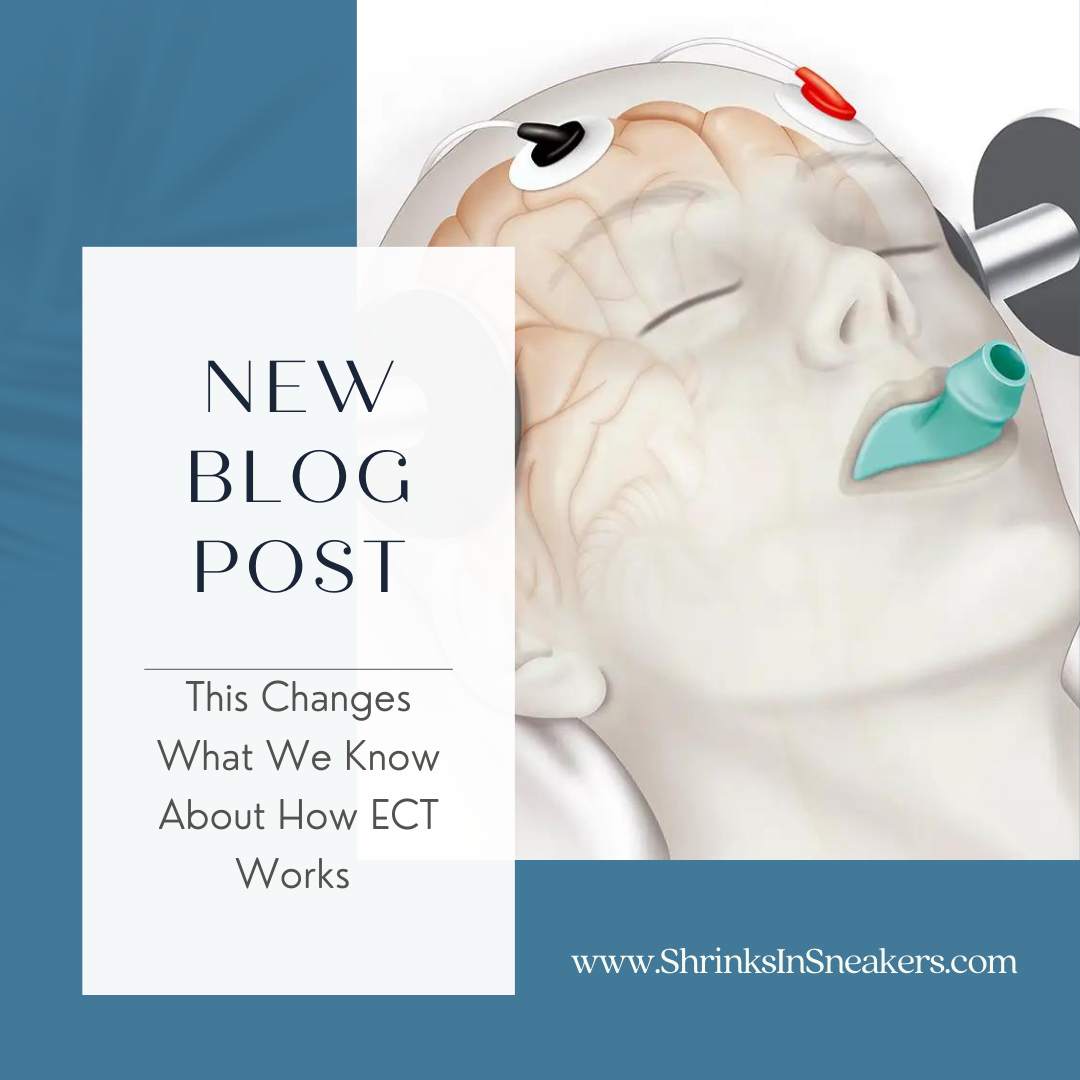
This Changes What We Know About How ECT Works
I’ve had tremendous success with Electroconvulsive Therapy (ECT) in treating resistant depression (TRD). I’ve witnessed remarkable turnarounds, where individuals on the brink of despair have found new joy in life. Such rapid improvements are often not seen with medication alone.
Until now, there have been various theories about how ECT works in treating depression. I’ve always viewed it as a combination of increased neuroplasticity, which allows new, more adaptive connections to form quickly, and a boost in all major monoamine neurotransmitters.
However, new research published in Translational Psychiatry suggests that aperiodic brain activity might be key to the improvements we see with ECT. There’s a significant increase in this type of brain activity after patients undergo ECT, which enhances inhibitory activity in the brain, effectively “pumping the brakes” and alleviating depressive symptoms.
Unfortunately, ECT remains one of the most stigmatized and underutilized treatments in psychiatry. It’s estimated that less than 1% of those with treatment-resistant depression (TRD) receive ECT—a disheartening statistic that contributes to depression’s status as a leading cause of disability.
For patients where medications have repeatedly failed, ECT can be a life-saving treatment. There are many compelling stories of lives transformed by ECT, but the public rarely hears them. We need to create more opportunities to share these powerful success stories.
-
Are Stimulants Neurotoxic?
Introduction:
The diagnosis and treatment of attention deficit hyperactivity disorder (ADHD) is well established in the field of psychiatry. Not only is it well accepted, but ADHD has dramatically increased over the past 10 years. Some would even say it’s an epidemic in its own right. The use of psychostimulants as a treatment is common practice, and today we are here to discuss the risk of neurotoxicity with ADHD medication.
What Are Psychostimulants
Psychostimulants include methylphenidate (MPH) and mixed amphetamine salts such as Adderall. These remain the most effective and widely used medications for the treatment of ADHD. These medications function by blocking the dopamine reuptake transporter and increase dopamine stimulation at the postsynaptic receptors. These medications work to increase attention and reduce impulsivity but the long-term implications of consistent use are largely unknown.
Substance Use and Stimulant Prescribing
Most lines of evidence in the literature indicate that these medications do not promote substance use later in life and may even decrease the potential for future substance abuse. I’ve also found lines of evidence that indicate the opposite, but the general consensus in the field is that there is not increased risk for future substance abuse. We do know that drugs that function in a similar manner to these medications result in molecular and structural changes to neurons. It is unknown if this also occurs with stimulant medications used to treat ADHD.
Neuronal Effects of Amphetamine
Methamphetamine is a known neurotoxin and several studies have indicated this in animal models. Recently exposure to amphetamine has been sown to cause impairments on the development of dendritic branching up to 3 months after stopping methylphenidate. In mice there is evidence that MPH use causes loss of dopamine neurons in the substantia nigra which may increase the risk of Parkinson’s disease. Other groups have shown alterations in nerve growth factors and brain derived neurotrophic factor in the frontal cortex after chronic MPH use. When neurons from the prefrontal cortex are exposed to MPH it alters their electrical activity. MPH was found to reduce electrical activity and it persists in a dose dependent fashion even 10 weeks post exposure. In rats the use of MPH is associated with decreased response to normal stimuli and increased response to adverse stimuli. We need to be careful extrapolating this information to humans as these studies were conducted in animal models.
-
The Experts Guide to Treating Agitation
Treating agitation is a big part of inpatient and emergency psychiatric treatment. In the emergency department agitation accounts for 2.6% of total patient encounters. Knowing which medications to use and how to use them is critically important. Today I’m going to discuss all the options for the treatment of acute agitation in clinical practice.
What is Agitation?
Agitation is an extreme form of arousal that is associated with increased verbal and motor activity that poses a threat to themselves and others. Agitation needs to be recognized immediately and addressed due to the risk of harm to the patient and others.
Verbal De-escalation is Always The First Step
Engaging the patient and attempting to elicit a reason for the agitation should always be attempted first. In many cases patients are hungry, tired, or overly stimulated by the busy inpatient or ED setting. If these interventions are unsuccessful and the patient remains agitated security staff lead by the physician should inform the patient that if the behavior continues medication will be administered for safety purposes.
Thinking About Medication
Sometimes using medication is unavoidable and is required to facilitate a medical evaluation. We need to be mindful of the potential adverse events associated with sedating medication. The most common adverse effects are hypoxia, airway obstruction, QTc prolongation, bradycardia, and hypotension. Patients over the age of 65, alcohol intoxication, and multiple medication administrations in a short period of time increases the risk of adverse events.
Routes of Administration
It’s always best to offer PO (oral) medication prior to using IM or IV medications. In the inpatient setting we do not allow IVs due to the potential risk of self-harm; IM medication is second route of administration commonly used. I will usually use risperidone 2 mg or olanzapine zydis 10 mg because it begins dissolving immediately once the person puts it in their mouth in both cases. Oral medications can be “cheeked” and will also take longer to start working. In general, it’s important to note the onset of PO medication will be slower. Antipsychotic medications and benzodiazepines are commonly used for sedation in acute agitation.
First Generation Dopamine Blocking Medications
These medications have been around for a long time and have a good safety profile when used to treat acute agitation. Some antipsychotics have the risk for more side effects due to their ability to lower seizure threshold, cause hypotension, and have an increased anticholinergic burden.
Haloperidol
This is the go-to antipsychotic for acute agitation. It works by blocking D2 receptors and can be given PO, IM, or IV. Typical dosing is 2.5 to 10 mg with a recommended maximum dose of 20 mg/day. The average time to sedation is 25-28 minutes and the mean total time sedated is 84-126 minutes. The main risk for haloperidol is EPS such as acute dystonic reactions. To avoid this situation, we usually combine Haldol with lorazepam or benztropine/diphenhydramine. Haldol is also well studied and relatively staff for those who are acutely intoxicated with alcohol.
Chlorpromazine
I will usually go to chlorpromazine when I need someone to sleep such as cases of mania with acute agitation. I find it to be a little more sedating and it can be combined with diphenhydramine. Doses can range from 25 mg to 200 mg depending on the level of severity. The maximum dose is 400 mg/day.
Second Generation Dopamine Blocking Medication
Second generation medications have the added advantage of lower risk for QTc prolongation, less sedation, and fewer extrapyramidal symptoms compared to the first-generation options.
Olanzapine
Olanzapine comes in PO, IM, and IV forms, and the typical starting dose is 10 mg. Olanzapine reaches peak concentration in 15-45 minutes and its half-life is 2-4 hours. The incidence of EPS is much lower than injectable haloperidol. There is very rare incidence of QTc prolongation. There is some evidence that 10 mg of olanzapine is more effective than 5 mg of haloperidol for sedation and that most patients are adequately sedated at 15 minutes after administration of 10 mg olanzapine compared to 5 mg and 10 mg of haloperidol.
It’s important to note that multiple studies have demonstrated adverse events when olanzapine is combined with benzodiazepines. Although the risk may be overstated it’s best to avoid this combination unless necessary. Olanzapine is highly anticholinergic and should be avoided in cases where anticholinergic overdose is suspected.
Ziprasidone
Ziprasidone is a second-generation medication that is available in either PO or IM formulations. The PO form of the medication has little utility in acute agitation, but the IM version can be useful. Time to onset of effect is usually 15-20 minutes and it reaches peak concentrations in 30-45 minutes. The duration of sedation is at least 4 hours. Ziprasidone carriers the highest risk of second-generation medications for QTc prolongation
Risperidone
Data for risperidone in acute agitation is limitted. It does have the advantage of coming as an oral disintegrating tablet. In most cases I would administer 2-4 mg depending on the severity of symptoms. It can be a good option for patients with psychotic agitation due to paranoid delusions. It’s a good option for elderly patients and pregnant patients who can take PO medication.
Benzodiazepines
Benzodiazepines are another good choice when it comes to rapid treatment of acute agitation. Benzodiazepines do carry the risk of creating a paradoxical reaction in the elderly, but it’s relatively rare and seen in only 1% of cases. Flumazenil (benzodiazepine blocker) can be used to counteract this paradoxical reaction if needed. There is risk for respiratory depression especially in those who are already on central nervous system depressants. If withdrawal is suspected from benzodiazepines or alcohol, this is the first line option for treatment.
Lorazepam
Lorazepam is available in IV, IM, and PO formulations. The typical dosing is 0.5-2 mg IM or PO. This medication can be given every 30 minutes up to a maximum dose of 12 mg/day. Lorazepam is longer acting than midazolam and has an average time to adequate sedation of 32 minutes.
Midazolam
Midazolam is available in IM formulation and the typical dosing begins at 2-5 mg. The average time to sedation is 13-18 minutes for the IM formulation. When given IM the total time of sedation is between 82-105 minutes. Midazolam offers the advantage over lorazepam because it’s onset of action is faster. Midazolam also works faster than haloperidol or ziprasidone. The duration of sedation is also shorter.
Medication Combinations
In most cases these medications will be used in combination to maximize their effects. The most well-known is the so called B52 which consists of Haloperidol 5 mg, Lorazepam 2 mg, and diphenhydramine 50 mg. The idea here being 50, 5, and 2 are the doses and B52 because it’s like the B52 bombers when it comes to sedation. I also often combine chlorpromazine and olanzapine with 50 mg of diphenhydramine in the IM formulations. For PO risperidone you can combine it with PO lorazepam and diphenhydramine if needed. With ziprasidone I will usually give this one alone without lorazepam or diphenhydramine.
Physical Restraints
The utilization of physical restraints may be necessary when safety is a major concern. In some cases, verbal de-escalation, and medication are not enough. The problem is physical restraints can lead to injury for both the patient and staff. Patients who continue to fight against the restraints can have a complication known as rhabdomyolysis where the muscles are literally breaking down from the person fighting against the restraints. Sedation should always be provided when physical restraints are used. What happens if a person is given high doses of sedating medications and placed in psychical restraints but remains agitated?
Special Cases
It’s rare but I have had two clinical scenarios where an individual was placed in restraints given multiple doses of medications and remained severely agitated. Due to concern for the patient’s safety and risk of rhabdomyolysis I had to transfer each of these cases to the medical floor for IV dexmedetomidine (Precedex) which is commonly used to sedate patients in the intensive care unit who are intubated. After a short course of Precedex treatment each patient’s agitation resolved. There is now a rapidly dissolving film of dexmedetomidine available for acute agitation in bipolar disorder and schizophrenia, so I guess I was ahead of the times when I made these clinical decisions.
Conclusion
Agitation is a complicated and multifactorial process that requires quick action. To maintain safety, agitation needs to be quickly identified and managed. Verbal de-escalation and comfort measures should always be the starting point. If medications are required there are several individual and combinations that can be selected based on the clinical situation. When all else fails physical restraints remain a possibility until medications have had time to reach peak concentrations and effectiveness.