Tag: Psychiatrist

  • How to Change Your Mind: The Current State of Psychiatry and Psychedelics

    How to Change Your Mind: The Current State of Psychiatry and Psychedelics

    There is no hotter topic in the world of psychiatry than the reemergence of psychedelics as therapeutic tools for the treatment of mental illness. When esketamine was approved by the FDA in March of 2019 it opened the doors for medications like MDMA, psilocybin, and mescaline as possible therapeutic agents. 

    I’m excited about these new options for therapy but I also want to make sure the science backs up the personal experiences of individuals who use these medicines in uncontrolled settings. 

    Introduction:

    The psychedelic era was a time of social, musical, and artistic change influenced by the use of psychedelic drugs that occurred between the mid-1960s and mid-1970s. Although this era lasted for some time it largely fell out of favor for legal reasons and wasn’t a topic in modern psychiatric training until just recently. It seems like overnight there are New York times articles, Netflix documentaries, and evening news coverage about psychedelics.

    What’s the story are we ready to prescribe everyone psilocybin and MDMA as a form of mental health treatment? 

    History of Hallucinogens in Medicine

    For over 5 millennia humans have been attempting to alter their state of consciousness. Some have argued it goes even further back to primate ancestors who consumed large quantities of ripe fermented fruit to alter their state of consciousness (drunken monkey hypothesis). I’m not sure how correct this theory is but it’s safe to say psychedelics have been around for a long time. 

    In 1943 Albert Hofmann a chemist by training, invented LSD by accident. He started the research in 1938 and announced that he sampled the chemical in 1943. Not only did he synthesize it, but he was getting high on his own supply. In 1957 this same chemist isolated psilocybin from the hallucinogenic mushrooms.

    In the 1940’s LSD was marketed as a drug to assist psychotherapy, the so-called drug assisted psychotherapy which is making a comeback today. Unfortunately, of the 1000 studies published looking at psychedelics as a model for psychosis and as therapy were small and uncontrolled. 

    In the 1970’s most of these medicines were placed into schedule I status making it exceedingly difficult to study the medicines further for therapeutic effects in a controlled setting. A Randomized controlled trial is considered by many to be the highest standard of scientific evidence. 

    Classes of Hallucinogens 

    For years people thought of psychedelics as LSD or psilocybin, the term now includes other medicines. The term psychedelic is derived from two Greek words meaning mind manifesting. Essentially psychedelic and hallucinogen are being used interchangeably these days but do have separate meanings.

    Classic Hallucinogens 

    -Tryptamines: psilocybin, LSD, and DMT 

    -Phenethylamines: Mescaline 

    Non-Classic Hallucinogens 

    -3,4-methylenedioxymethamphetamine (MDMA)

    -Dissociative Anesthetics: Ketamine, PCP, Dextromethorphan 

    Therapeutic Targets for Psychedelic Use

    Disorders Under Investigation: 

    -Depression 

    -Anxiety

    -PTSD

    -OCD

    -Cancer related stress and psychological issues 

    -Addiction 

    -Smoking cessation 

    -Sexual dysfunction 

    -headaches 

    -inflammatory disorders 

    Maybe the best studied area is in end of life and palliative care settings. 

    Mechanism of Action

    -The primary mechanism of action is 5-HT2A receptor stimulation 

    -5-HT2A is the most abundant serotonin receptor in the central nervous system and cortex of the brain. 

    -Stimulating the 5-HT2A receptors will increase the release of glutamate in the cortex 

    -Stimulation of 5-HT2A receptors in the visual cortex can lead to visual hallucinations. Stimulation in the ventral tegmental area can produce a situation like that of schizophrenia with delusions and hallucinations. 

    -Most atypical antipsychotics bind to and block 5-HT2A receptors and would mitigate the effects of psychedelics 

    Neurobiology

    People often make comments like we don’t know how much serotonin is enough, then conclude that medications do work or the therapies we are using are invalid. That’s because they are thinking about mental illness and these medications too simply. Most psychiatrists do not believe in or talk about the chemical imbalance theory of treating mental illness. We think about mental illness and problems with neural circuits, nodes, and networks. What medications including the psychedelics achieve is an alteration in the connectivity of these networks and the ability to form new connections. 

    We have a default mode network which is famously active when a person is not focused on the outside world and the brain is just daydreaming. What psychedelics do is decrease brain connectivity in this default mode network followed by the establishment of new connections. 

    Hypothetically this rewiring of the brain allows for the replacement of faulty connections resulting in mental illness and the formation of new healthy connections through psychotherapy provided during treatment. This may be why the antidepressant effects last far beyond other interventions with less frequent dosing. 

    There are identifiable changes in network connectivity that coincide with subjective improvement. 

    The Mystical Experience: Is Tripping Required for a Therapeutic Effect

    -There is a mystical experience questionnaire that has been validated and used in these studies. It seems that the more profound the mystical experience the better the treatment effect subjectively 

    -While the spiritual experience many individuals have while taking these medicines is profound and meaningful to the individual, we are not sure that having a “trip” is required to produce a therapeutic effect. 

    Side Effects of Psychedelic Use 

    While some may claim there are no adverse effects from plant-based medicine that is not true. 

    Things like increased blood pressure, berating rate, and body temperature have been reported. 

    -Loss of appetite, dry mouth, sleep disturbance, uncoordinated movements, panic, paranoia, psychosis, and bizarre behaviors 

    Long-Term Effects: 

    Persistent Psychosis: A series of continuing mental problems including 

    -visual disturbances

    -disorganized thinking

    -paranoia

    -mood changes 

    Hallucinogen Persisting Perception Disorder (HPPD) 

    -Recurrences of certain drug experiences such as hallucinations or visual disturbances 

    -These experiences often happen without warning and may occur within days of last use or even years after taking the drug 

    -These experiences can be mistaken for neurological disorders such as strokes or brain tumors. 

    Conclusion

    At this time what we can say about the current state of psychedelics in psychiatry is they are under investigation. We do not know yet if they are safe and effective for treatment of mental illness on a mass scale. We have some encouraging evidence but there is an absence of large randomized controlled trials proving efficacy and safety. Psychedelics are not ready for clinical practice and should not be recommended as a treatment for mental illness until the proper studies have been conducted. 

  • When Serotonin Goes Bad

    When Serotonin Goes Bad

    Many medications that work as so-called antidepressants will increase serotonin by blocking the reuptake pump. In general, we think of increased serotonin in a patient with depression as a good thing, but what happens when increased serotonin goes bad? 

    That is what we are here to talk about today, what happen when there is too much serotonin in the central nervous system?

    Being prescribed too many serotonergic medications can result in Serotonin Syndrome which can range from mild to severe and is potentially fatal. It can present with muscle rigidity, hyperthermia, and altered mental status. 

    When someone has increased muscle tone, and elevated temperature with no other explanation, it’s time to look at their medication list. Medications can increase serotonin release, block reuptake, or directly activate serotonin receptors. Common examples include linezolid, Fentanyl, and dextromethorphan.

    Watching from drug interactions like CYP 450 inhibitors can increase medication levels resulting in serotonin syndrome. Whenever a new medication is prescribed consider doing a drug interaction check to make sure the new medication doesn’t inhibit a critical cytochrome. 

    Mild forms of serotonin syndrome may cause diarrhea or tremor where the more severe cases are more likely to result from a drug overdose. 

    Key Features of Serotonin Syndrome: 

    • Patient is on one or more serotonergic drugs 
    • The onset of symptoms is abrupt usually within 24 hours and symptoms peak rapidly 
    • There is increased tone in the legs more than the arms, tremor and hyperreflexia are present 
    • Vital signs show hypertension, hyperthermia, tachycardia, and tachypnea 
    • Labs can show increased creatinine kinase 

    What is Clonus: 

    • Involuntary, rhythmic muscle contractions. 
    • It occurs more in the lower extremities 
    • To induce clonus, you flex the patient’s foot upward until there is rhythmic beating of the foot and ankle. If the beating continues beyond a couple of beats, it’s abnormal 

    Treatment: 

    • For mild cases discontinue serotonergic medications and check for drug interactions. Use external cooling measures and start benzodiazepines. 
    • For moderate cases where the vital signs are worse and there is spontaneous clonus or agitation: use the same measures as above, increase the frequency and dose of the benzodiazepine, and start cyproheptadine 12 mg followed by 2 mg every 2 hours until improvement is seen followed by 8 mg every 6 hours for maintenance. Cyproheptadine is an anticholinergic, antihistamine, and anti-serotonergic medication 
    • In severe cases, where delirium develops and there is a failure to respond to other measures, admission to the ICU and the use of paralytics with intubation and ventilation are required 
  • Hey Doc, What’s Psychogenic Polydipsia?

    Hey Doc, What’s Psychogenic Polydipsia?

    This is one of the interesting occurrences that can present on the medical floors, emergency rooms, or inpatient units. 

    A patient comes in with an established diagnosis of schizophrenia and is currently taking ziprasidone. The person is constantly asking for glasses of water and drinking water excessively throughout the day. 

    You might be thinking what is the harm in drinking water, isn’t staying hydrated a healthy behavior? 

    …But you order a basic metabolic panel and find the persons sodium is 125 mEq/L. 

    Now the panic sets in, it’s time to worry and the patient continues to complain of feeling thirsty and is noted to be urinating frequently. 

    There are a few possibilities for the persons behavior, but we need to consider psychogenic polydipsia or primary polydipsia. This was first described in the 1930s in patients with schizophrenia who drank water excessively resulting in low serum sodium levels. 

    The cause is unknown, but these patients may have an acquired defect in the hypothalamic thirst regulation. Medications have also been associated with worsening of psychogenic polydipsia. It’s thought to be related to the anticholinergic effects of many of these medications. Examples include carbamazepine, chlorpromazine, oxcarbazepine, haloperidol, and valproate. 

    Psychogenic polydipsia (PP) is common, and it’s usually associated with schizophrenia but can occur in other psychotic, mood, and anxiety disorders. Some users of MDMA also develop PP. 

    PP is a primary problem where the patient is drinking too much water. This results in a dilution of the blood and thus a low sodium level (defined as < 135 mEq/L) and low serum osmolality. The urine will also be dilute < 100 mOsmol/kg with low urine sodium. 

    Two other potential places where we can see polyuria are in cases of hyperglycemia from uncontrolled diabetes and nephrogenic diabetes insipidus. The key distinction in the first case is hyperglycemia. The water is drawn out by osmotic diuresis secondary to excess glucose in the urine. The key labs here are a fasting glucose and a urine analysis which should show hyperglycemia and glucose in the urine. In nephrogenic diabetes insipidus the brain secretes ADH just fine, but the kidney does not respond to it. The urine will be dilute, but the serum sodium level will be high not low separating it from psychogenic polydipsia.

    Treatment includes fluid restriction to 1000-1500 mL/day, this can be difficult to enforce even on an inpatient unit. The person may need to be watched because sources like the bathroom sink or even toilet may be used to consume more water. This is usually enough of a treatment, but should the sodium remain low you can add sodium chloride tablets 1-3 grams daily. 

    In severe cases where the sodium drops below 120 the person can have a seizure. In these cases, it’s best to handle the fluid replenishment on the medical floor with 3% saline. 

    You must be careful not to correct the sodium too rapidly as it can result in the dreaded central pontine myelinolysis which can result in quadriparesis. That’s why we correct the sodium at a rate of no more than 10 mmol/L/24 h or 0.5 mEQ/L/h 

  •  


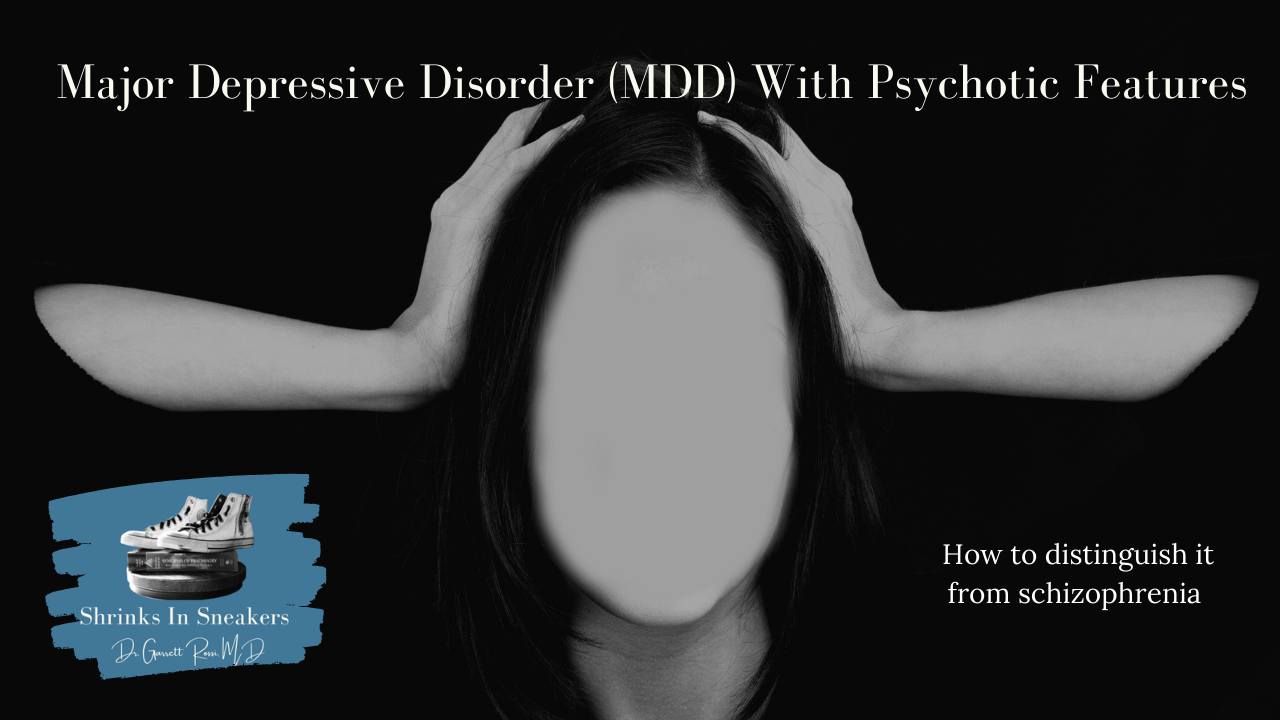
    Major Depressive Disorder (MDD) With Psychotic Features

    This is a diagnosis that I often receive questions about. It can be confusing, how do we know if the person has schizophrenia, schizoaffective disorder, or bipolar disorder with psychotic features? 

    They all have psychotic symptoms such as delusions and hallucinations.

    In this video I’m going to explain how we navigate this diagnostic dilemma. 

    For one to be diagnosed with MDD with psychotic features they must meet criteria for major depressive disorder based on the DSM-5TR. 

    As a reminder, to meet criteria the person must have 5 out of 9 symptoms within a two-week period and at least one symptom must be either depressed mood or loss of interest

    In medical school they teach you the mnemonic SIGECAPS, an interesting fact is this is written the way you would fill out a paper prescription for depression. SIG Energy Capsules which you would give to a person with major depression because of the low energy and loss of interest commonly seen in major depression. 

    Anyway…

    The other criteria include 

    -Weight loss or weight gain 

    -Insomnia or hypersomnia 

    -Psychomotor agitation or retardation 

    -Fatigue or loss of energy 

    -Feelings of worthlessness or guilt 

    -Poor concentration 

    -Recurrent thoughts of death or suicidal ideation 

    So, we have a person who meets criteria for MDD, they have 5 out of 9 symptoms for a two-week period. 

    We should keep in mind it’s important that the person has also suffered some loss of function in their personal or professional life because of the symptoms. This is what makes it a disorder. 

    Now, what if the person also has a loss of reality-based thinking in conjunction with the major depressive episode?

    This will include things like delusions and hallucinations. The delusions can be persecutory in nature or paranoid, but other types may occur too. The persecutory delusions are ones where the person feels attacked or victimized by others. They may even believe people are coming into their home to harm them. This usually presents with the patient reporting things being moved in the home or things being out of place. A common paranoid delusion is one where the person believes they are being followed. This usually presents as a car or person the patient keeps seeing, and they cannot believe that it may just be a coincidence, or someone who travels the same route to work every day.

    Delusions are fixed false beliefs, and although there may be rational explanations for the things going on around them, this is the patient’s reality, and you must be careful when challenging it. The belief is fixed, and That is why presenting evidence contrary to the belief is not effective.  

    The important point here is the psychotic symptoms are only present during the major depressive episode. Treat the depression and the psychotic symptoms resolve. If the psychotic symptoms remain after the major depressive episode is successfully treated, you need to reevaluate the diagnosis.

    This is what separates MDD with psychotic features from schizophrenia. 

    In bipolar disorder with psychotic features, the psychosis often occurs in the manic phase of the illness and has a grandiose theme associated with it. The patient my for example believe they are a prominent religious figure, or the government is plotting against them. 

    We often call the delusions in depressive episodes mood congruent, meaning they are consistent with how the person is feeling. It’s not a far stretch for a person who is severally depressed to feel like people want to harm them. 

    Treatment

    Treatment is well established and consists of an SSRI or other antidepressant medication in combination with a dopamine blocking medication. The other option is electroconvulsive therapy (ECT) when the person is severally depressed not eating, attending to ADLs, or at risk for suicide. 

    Patients should remain on medication for at least 6 months after complete resolution of symptoms. This is very important as relapse has been proven to occur when medication is stopped prior to that time. People can taper off the dopamine blocking medication after 6 months as these tend to have worse side effect profiles. The SSRI should be continued for 1 year at which time you can attempt to taper off or reach a lowest effective dose if symptoms begin to reappear. An index phase of ECT should be completed if that is the treatment of choice which consists of 12 total sessions done either 2 or 3 times per week. 

  • Malingering In Psychiatry

    Malingering In Psychiatry

    • Let’s first define malingering, this is the production of false or grossly exaggerated physical or psychological symptoms motivated by external incentives. 
    • Not all lying involves secondary gain, but ALL malingering does involve secondary gain 
    • Common secondary gains include avoiding military service, avoiding work, financial incentives, avoiding legal actions, and obtaining controlled substances 
    • Feigning mental illness is not the same as malingering because the reason behind the false production of symptoms is not assumed with feigning symptoms. 
    • Factitious disorder is the voluntary production of symptoms, but this is with the goal of assuming the sick role or role of a patient, it’s not done for secondary gain. 

    Consider malingering when….

    -Rare symptoms are present 

    -Improbable symptoms are being reported

    -Rare combination of symptoms are present

    -Reported Vs observed symptoms are not congruent

    Malingered Depression:

    -25-30% of patients who claimed major depression in civil litigation were probably malingering

    -Pay careful attention to facial expressions 

    -Pay careful attention to motor function, psychomotor retardation is an important observable sign

    -If appetite changes are reported look for actual objective weight change 

    -symptoms opposite of depression 

    -blaming others for everything is not the way guilt typically presents in depression, this is externalizing and not taking personal responsibnility

    Malingered Psychosis: 

    -Often in true psychosis people can describe the voice/s, is it loud, soft, male, female, you have some experience of what you heard. When you ask a malingering patient about a voice, they should have some ability to describe what they are hearing, if not consider malingering.

    -If you are suspicious, begin with open ended questions, ask them to describe things in their own words. 

    -Genuine AH are in words or sentences, drug Hallucinations usually occur as unformed noises.

    -The location of the voice inside the head or outside is no longer a good predictor of malingering 

    -Many times the content of voices are derogatory in nature

    -Other signs of malingered psychosis include Vague or inaudible auditory hallucinations, AH not associated with delusions (86% of AH have an associated delusion), no strategies to diminish voices 76% of patients have some coping strategy to diminish the voices. They claim that all instructions are obeyed, the hallucinations are visual alone, seeing little people or giant people for example.

  • Guide To Viewing My Content

    Guide To Viewing My Content

    If you are new to the blog and my social media content, we should start with a brief introduction. 

    My name is Dr. Garrett Rossi, I’m a medical doctor who specializes in adult psychiatry. I’m board certified by the American Board of Psychiatry and Neurology. I’ve practiced in multiple settings including inpatient, outpatient, partial care, assertive community treatment teams, and I provide ECT services.

    I make mental health content on multiple social media platforms and each one has a specific style and type of content. 

    Shrinks In Sneakers YouTube Click Here

    This is where you can find the deep dives on mental health topics including medication reviews, psychiatric diagnosis, and various other topics. Videos can range anywhere from 5-20 minutes and time stamps are available in the descriptions for longer content. 

    Shrinks In Sneakers Instagram Click Here:

    This is where you can find shorter videos and posts on mental health topics. The focus on Instagram is more on mental health advocacy, and myths about psychiatry and mental illness. The content here is shorter but still has a lot of educational value. 

    Shrinks In Sneakers LinkedIn:

    This is where you can find more information about my professional activities. I have information about my advocacy work, professional memberships, publications, and is another good place to follow my work. I make frequent posts here as well. 

    Shrinks In Sneakers Twitter

    Here I’m not very active and haven’t spent much time but I do update blog posts and other relevant information here as well. 

    If you have a question or want to get in touch with me, I am most active on YouTube, LinkedIn, and Instagram. 

    We are building a community where empathy is a central part of the content. The goal is to make psychiatry more accessible, provide education, and reduce stigma associated with mental health treatment. 

  • Shrinks In Sneakers Reunite: Bound by Love for Psychiatry

    Shrinks In Sneakers Reunite: Bound by Love for Psychiatry

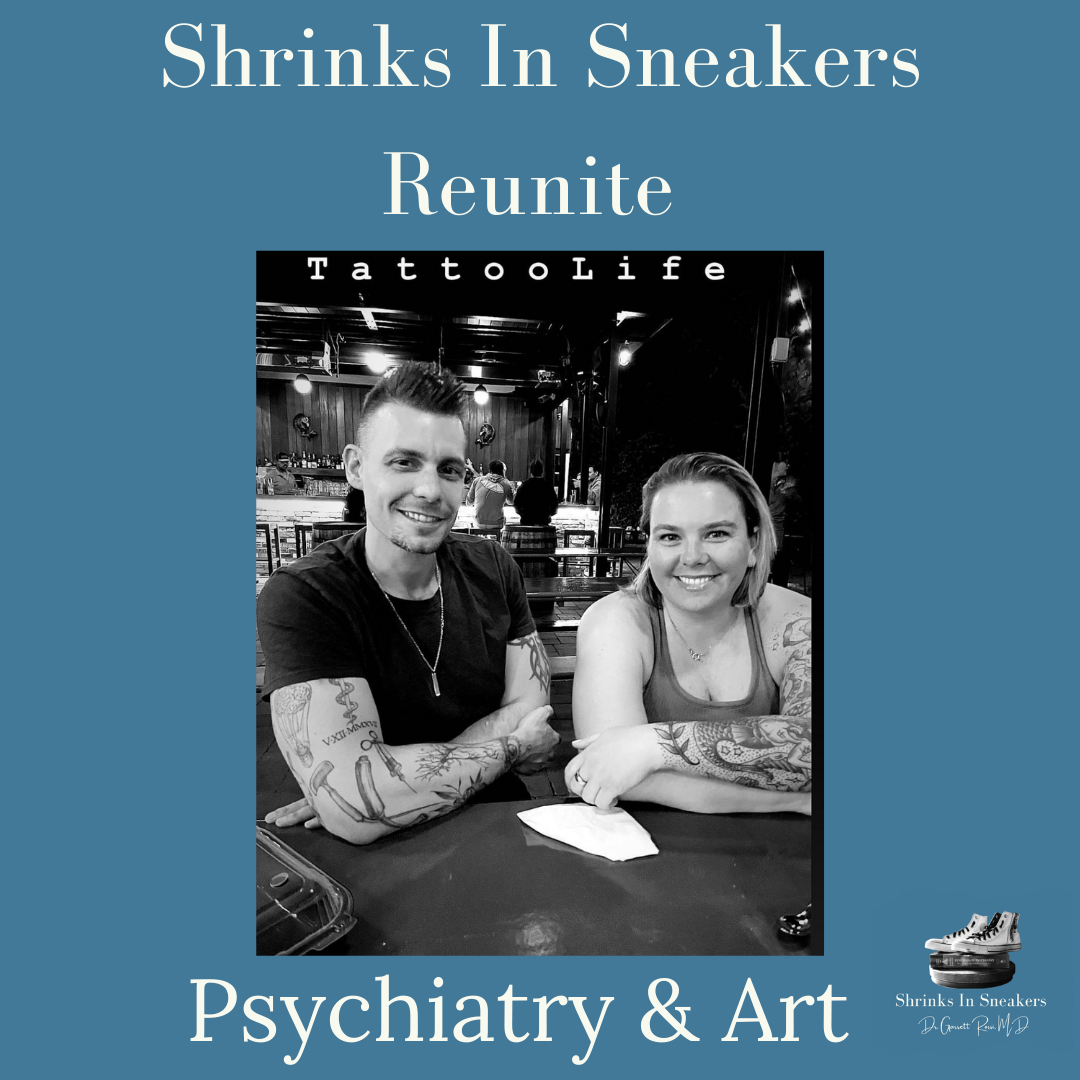
    I think everyone needs a person in their medical training that they bond with and lean on during this difficult period. 

    Medical training has its ups and downs, the process is filled with highest highs and the lowest lows. There were moments that I loved training and there were moments where I hated training. 

    I was lucky enough to find a great person to share these experiences with.  

    We spent many hours discussing psychiatry, what excited us about the field and what worried us about the future. We discussed difficult cases and the drama of residency training. If I ever needed help or someone to cover a call shift last minute, I knew who I could count on.

    I could trust this person to have my back and I would do the same no matter what. 

     I would encourage anyone who is going through this process to find someone who can help them grow as both a physician and a person. 

    It’s always comforting knowing we can all get by with a little help from our friends. 

  • How to Manage Aggression with Psychopharmacology in an Inpatient Setting

    How to Manage Aggression with Psychopharmacology in an Inpatient Setting

    I’m very careful about the content I consume and the resources I use to grow as a psychiatrist.

    When I endorse something like The Psychiatry & Psychotherapy Podcast, you know it’s something I personally use and trust. 


    I had the opportunity to work with Dr. Puder on a recent episode How to manage aggression with psychopharmacology in an inpatient setting. Unfortunately, I got caught up taking care of patients on my inpatient service on the day of the recording and did not get to talk with Dr. Puder and Dr. Cummings.

    I would encourage you to listen to all the episodes, but my personal favorites are the ones with Dr. Cummings. He has a wealth of knowledge and I’ve learned some amazing clinical pearls that I apply in my daily practice. 

    Check out the episode, you will not be disappointed

    https://www.psychiatrypodcast.com/psychiatry-psychotherapy-podcast/episode-145-how-to-manage-aggression-with-psychopharmacology-in-an-inpatient-setting