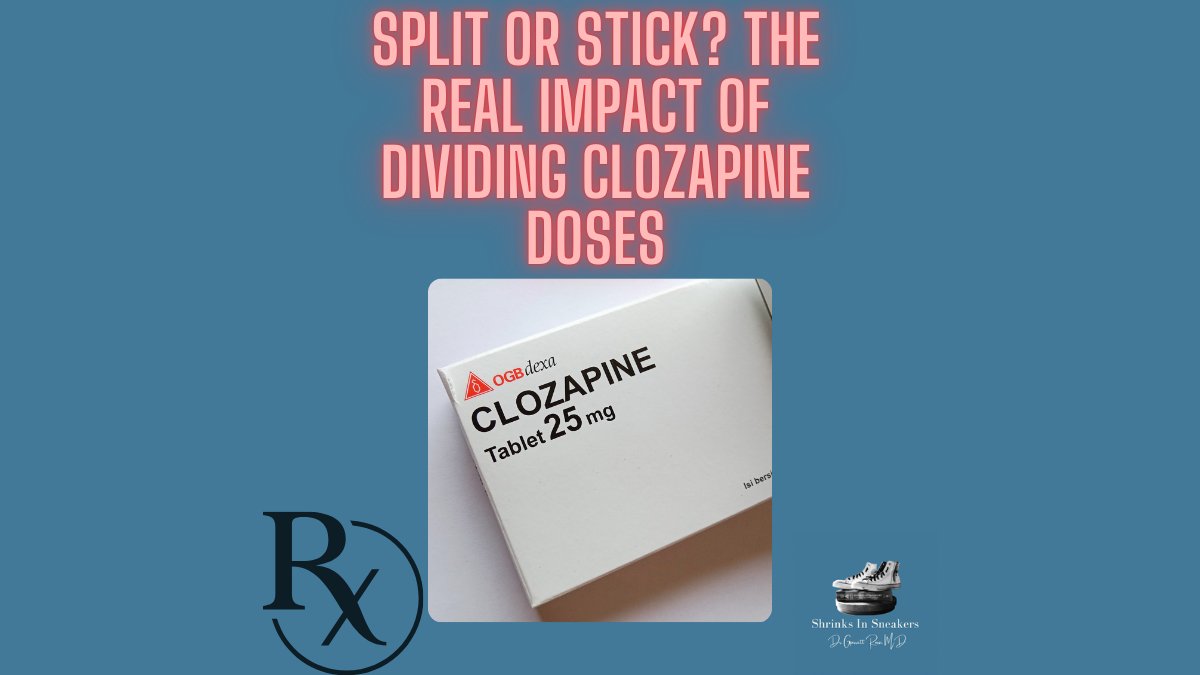
This post comes from a recent discussion I had with my resident about the utility of splitting clozapine doses in a recent case we had.
The evidence on splitting clozapine into multiple daily doses primarily stems from clinical observations and smaller studies rather than extensive, randomized controlled trials (RCTs). Since clozapine has a unique pharmacodynamic and pharmacokinetic profile, standardizing an RCT on dose splitting has been challenging.
Clozapine’s Half-Life and Steady-State Concentration: Clozapine has a long half-life (averaging about 12 hours), meaning steady-state concentrations can be reached without strict multiple dosing. Many patients maintain stable blood levels with once-daily dosing, especially at lower doses.
Dose Splitting and Side Effects: Some smaller studies and clinical observations suggest that splitting doses can help reduce peak plasma levels of clozapine, which can be associated with side effects like sedation, hypotension, and dizziness. In these cases, a split dosing regimen may improve tolerability, particularly in patients who experience significant sedation or orthostatic hypotension with a single daily dose.
Metabolic Side Effects and Compliance: In cases where metabolic side effects are of concern, or in patients who may not tolerate high single doses well, dividing doses could help with tolerability, potentially improving compliance and minimizing adverse effects like sedation or metabolic impact.
Seizure Risk: High plasma peaks with a single large dose may theoretically increase the risk of seizures, especially in patients on higher doses of clozapine. Dividing doses is sometimes recommended as a preventive measure to maintain a more consistent blood level, although robust RCT data supporting this specific benefit is lacking.
While RCT evidence specifically on clozapine dose-splitting remains limited, clinical judgment, patient tolerance, and monitoring of therapeutic blood levels play essential roles in tailoring dose regimens.
The article “Deprescribing Antipsychotics in Patients with Schizophrenia: Findings from a Specialized Clinic” emphasizes a growing interest in reducing or discontinuing antipsychotic medications in patients with schizophrenia, particularly those stable on long-term treatment. While continuous antipsychotic use is common to prevent relapse, concerns about long-term side effects, such as metabolic give us pause and rise concerns.
Key Points:
Benefits of Deprescribing:
Reduction in side effects such as weight gain and metabolic syndrome.
Potential reversal of tardive dyskinesia.
Empowering patients by involving them in shared decision-making, improving adherence and satisfaction.
Risks:
The primary risk is relapse, with studies indicating relapse rates between 20-60% after discontinuation.
Relapse can lead to hospitalization, job loss, and disrupted relationships.
Strategies for Safe Deprescribing:
Individualized Tapering: Gradual reduction in dose is essential, tailored to the patient’s specific needs and history.
Relapse Prevention: Engaging support systems (family, mental health teams), monitoring for early signs of relapse, and incorporating psychosocial interventions.
Ethical Considerations: Balancing patient autonomy with the duty to minimize harm is a challenge. Encouraging patient participation respects autonomy while ensuring they are aware of risks.
Future Directions:
More research is needed on long-term outcomes of deprescribing, particularly in identifying which patients are the best candidates for safe withdrawal.
Clinical guidelines should better integrate recovery-oriented approaches with deprescribing efforts to strike a balance between risk mitigation and promoting patient empowerment
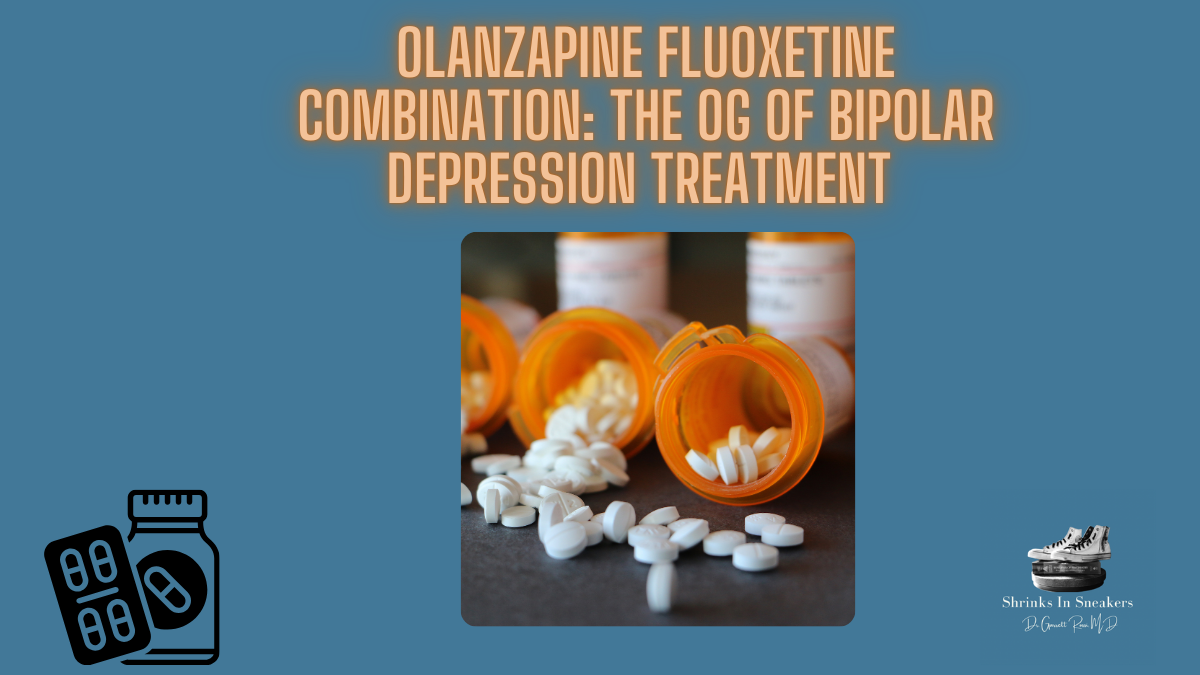
The olanzapine fluoxetine combination was FDA approved in 2003 for the treatment of depressive episodes in bipolar I disorder. In 2009 it was granted approval for treatment resistant depression.
This medication consists of the atypical dopamine blocking medication olanzapine and the SSRI fluoxetine. Many people consider olanzapine to be the best antipsychotic not named clozapine (see my video on the best antipsychotic in the world). This comes from the CATIE study where olanzapine proved to be superior to other medications. It has good efficacy, once daily dosing at night, and low risk for cardiac conduction abnormalities (QTc prolongation). However, the side effects including risk for weight gain and metabolic complications have made it a second line option.
My residents often jump to this medication on the inpatient unit, but I usually tell them to use caution because of the side effects and should it not be effective, it leaves you with clozapine as the next option in terms of effectiveness.
Fluoxetine is an antidepressant that has been around a long time with a broad spectrum of indications. It’s long track record and safety profile makes it a go to antidepressant in both the adult and child adolescent populations. Its main disadvantage is drug interactions.
Dosing
People often think you can make this medication by simply combining olanzapine and fluoxetine and do not believe you need to use the brand name combination pills. I would use some caution with that approach.
When we look at the doses in the combination pill, they are ones that are difficult to make with the current available dosages. For example, olanzapine comes in 2.5 mg, 5 mg, 7.5 mg, 10 mg, 15 mg, and finally 20 mg doses.
The fixed-combination capsule (olanzapine/fluoxetine) comes in 3/25 mg, 6/25 mg, 12/25 mg, 6/50 mg, 12/50 mg. The studies leading to approval of this medication were conducted using these doses in a fixed combination. It’s not clear that dosing each individually is effective.
How to Start the Medication
For bipolar depression the olanzapine fluoxetine combination should be started at 6/25 mg dosed at bedtime. With a target dose of 6-12/25-50 mg depending on clinical response.
Labs prior to starting the medication:
You should have a baseline weight, waist circumference, blood pressure, fasting glucose and lipid profile prior to starting the medication
Cost
The combination pill is more expensive than either medication alone. According to Good Rx The 6/25 mg capsule is $140-$150 per month. This is compared to olanzapine 5 mg which costs $9.00 and fluoxetine 20 mg which costs $4.00
Side Effects
Olanzapine: Most common is somnolence (dose related), dry mouth (dose related), constipation (anticholinergic), weight gain (up to 40% incidence and 10-30 lbs. of weight gain is common), increased appetite, EPS (dose related).
Fluoxetine: Nausea, diarrhea, nervousness, abnormal dreams, weight loss, sweating, tremor, sexual side effects, rash, and headaches. Rare increased risk for bleeding when combined with NSAIDs and hyponatremia in the elderly due to SIADH.
Mechanism of action
Olanzapine: Dopamine D-2 and 5-HT2A antagonist that is metabolized by CYP1A2 and CYP2D6
Fluoxetine: serotonin reuptake inhibitor that is metabolized by CYP2D6 and is an inhibitor of CYP 2C9/2C19 and 2D6 with a half-life of 4-6 days and 9 days for the metabolite norfluoxetine
The half-life is important here because what happens when someone stops taking the medication? The olanzapine has a much shorter half-life and will be cleared from the body more rapidly leaving the person exposed to fluoxetine without a mood stabilizing element possibly inducing mania or worsening mood symptoms. This is something to be mindful of when using this combination.
Studies Showing Efficacy
The studies that resulted in FDA approval for bipolar depression in 2003 were short, 8 weeks in duration. A total of 833 patients with bipolar I depression received either olanzapine alone, olanzapine fluoxetine combination (OFC), or placebo. Patients on OFC and olanzapine alone showed a significant reduction in depressive symptoms compared to placebo as early as the end of week 1 of treatment. By the end of 4 weeks the OFC participants saw significantly more improvement than placebo or olanzapine alone. The superiority continued over the final 4 weeks of the study. By the end 24.5% of patients on placebo met remission criteria, 32.8% of the olanzapine only group achieved remission, and 48.8% of the OFC group achieved remission.
For the 2009 approval of OFC in treatment resistant depression, it was based off two eight-week double blind placebo-controlled studies using doses of 6 to 18 mg for olanzapine and 25 to 50 mg for fluoxetine. 40% of patients receiving the OFC responded to therapy Vs 30% and 26% receiving fluoxetine or olanzapine monotherapy. The starting dose was 6/25 mg and could be titrated to 18/75 mg as tolerated.
Schizophrenia is a complex and debilitating mental disorder characterized by a range of symptoms, including hallucinations, delusions, cognitive deficits, and emotional dysregulation. Despite advancements in antipsychotic medications, many patients experience incomplete symptom relief and significant side effects. As a result, there is a growing interest in alternative therapeutic targets, including the muscarinic acetylcholine receptors (mAChRs).
Muscarinic Acetylcholine Receptors (mAChRs)
The mAChRs are G protein-coupled receptors involved in various central nervous system functions, including cognition, learning, memory, and mood regulation. There are five subtypes of mAChRs (M1-M5), with the M1, M2, M3, and M4 subtypes playing significant roles in modulating neural activity related to schizophrenia.
M1 Muscarinic Agonists
The M1 receptor is primarily expressed in the cortex and hippocampus, regions crucial for cognitive processing. M1 agonists have shown promise in improving cognitive deficits and reducing psychotic symptoms in schizophrenia. Research indicates that M1 activation can enhance cholinergic neurotransmission and modulate glutamate and dopamine systems, potentially alleviating both positive and negative symptoms.
M2 Muscarinic Agonists
M2 receptors are predominantly found in the basal forebrain and play a role in modulating acetylcholine release. Although less studied than M1, M2 agonists may help balance neurotransmitter release, contributing to improved cognitive function and reduced psychotic symptoms.
M3 Muscarinic Agonists
The role of M3 receptors in schizophrenia is not as well understood as M1 and M4 receptors. However, M3 receptors are involved in various physiological processes, including insulin secretion and smooth muscle contraction. Research is ongoing to determine their potential therapeutic benefits in schizophrenia.
M4 Muscarinic Agonists
M4 receptors are highly expressed in the striatum, a brain region implicated in the regulation of motor control and reward processing. M4 agonists have shown potential in reducing dopaminergic hyperactivity, which is associated with positive symptoms of schizophrenia, such as hallucinations and delusions. Additionally, M4 activation may help mitigate side effects associated with conventional antipsychotics, such as extrapyramidal symptoms.
Clinical Implications and Future Directions
The therapeutic potential of M1-M4 muscarinic agonists in schizophrenia is an exciting area of research. Targeting these receptors may offer a novel approach to address the cognitive and negative symptoms of schizophrenia, which are often resistant to current treatments. Ongoing clinical trials and preclinical studies are crucial to understanding the efficacy, safety, and mechanisms of action of these compounds.
Conclusion The exploration of M1-M4 muscarinic agonists represents a promising frontier in the treatment of schizophrenia. By modulating cholinergic, glutamatergic, and dopaminergic systems, these agents have the potential to provide more comprehensive symptom relief with fewer side effects compared to traditional antipsychotics. Continued research and development are essential to bring these innovative treatments to clinical practice, offering hope for improved outcomes for individuals with schizophrenia.
Happy Friday Everyone, todays post is a topic near and dear to my heart
Clozapine is the most effective medication available for treating schizophrenia. In my work in community mental health, many of my patients could greatly benefit from clozapine, but significant barriers make access difficult. A large portion of my patients are homeless and frequently lost to follow-up, which complicates the already burdensome REMS (Risk Evaluation and Mitigation Strategy) program. To ensure access to this life-saving treatment, adjustments to the REMS program are necessary. One solution could be eliminating the requirement to report completed monitoring and post results on a central database. Additionally, restrictions that delay pharmacies from distributing clozapine should be removed. Finally, we need to reevaluate the frequent and, quite frankly, excessive monitoring of absolute neutrophil counts (ANC). These changes could significantly improve access for patients who need this critical medication.
I recently had an interesting discussion with one of our residents about the risk of developing schizophrenia after experiencing substance-induced psychosis. The conversation was sparked by a study based on data from the Danish Civil Registration System. Fun fact: when you see large data sets like this, they’re often from Scandinavian countries.
The study followed 6,788 people who were diagnosed with substance-induced psychosis between 1994 and 2014. They tracked patients until they developed schizophrenia, bipolar disorder, or passed away, using statistical methods to calculate the risk of conversion to a serious mental illness.
A key takeaway: this study didn’t just look at the risk of schizophrenia but also included bipolar disorder and various substances—not just cannabis. Overall, 32.2% of people with substance-induced psychosis went on to develop either schizophrenia or bipolar disorder. Cannabis-induced psychosis had the highest conversion rate, with 47.4% of those cases developing one of these disorders.
Being young and male increased the likelihood of developing schizophrenia, and self-harm after substance-induced psychosis was also linked to a higher risk of both schizophrenia and bipolar disorder.
The big takeaway here? Substance-induced psychosis is closely associated with the development of serious mental illnesses. Follow-up care is essential, and steering clear of cannabis is always a smart move.
As an inpatient psychiatrist, you encounter a wide array of stories and experiences. Many of my trainees find this to be the most fascinating and engaging part of the job. We have the unique opportunity to delve into the inner workings of the mind and understand the thought processes of patients with serious mental illnesses (SMI). One of the things that often emerges during our evaluations is the presence of various types of delusions. Some are more common than others, with persecutory and grandiose delusions being frequent examples. I often hear patients claim that unknown groups are conspiring to ruin their lives, or a manic patient might declare, “I’m Jesus Christ.”
Over the years, I’ve noticed that these delusions tend to remain consistent, with similar themes recurring during subsequent admissions. In case you’re wondering, I often see the same individuals with the same issues multiple times a year, giving me a wealth of data points to support this observation. This insight is supported by a recent article from JAMA Psychiatry, which found that delusional content remains consistent across episodes of psychosis. This consistency can help us recognize the early stages of decompensation and potentially intervene before hospitalization becomes necessary. For instance, if a patient claims, “I’m Jesus Christ” during one episode, it’s likely they will express the same delusion during future episodes.
Another significant finding from this study is the importance of maintaining the intensity of interventions throughout the follow-up period. Unfortunately, there are many reasons why this doesn’t always happen, but when it doesn’t, poor outcomes are often the result.
It wasn’t that long ago when I was sitting in lectures as a first-year psychiatry resident. I learned about the first- and second-generation antipsychotic medications in detail. One commandment that was always preached in my training was to never combine two antipsychotic medications because there is no additional benefit. Today we are here to explore this idea and see if there is truly no additional benefit to using two antipsychotics and explore why there is so much antipsychotic polypharmacy in serious mental illness.
Since most guidelines discourage the use of multiple antipsychotic medications, why are many psychiatrists going against these guidelines? In most cases we are just trying to stabilize patients, get them better, and keep them out of the hospital as the goal is to provide most psychiatric care in the community. To reach these goals a single medication does not always produce the desired results.
Patients that end up on multiple antipsychotics have some unique characteristics. They tend to have more severe psychotic symptoms, are male, unemployed, and younger. Those with frequent inpatient admissions on involuntary status are also more likely to end up on two medications.
What To Do When a Single Medication Is Not Enough?
The use of multiple antipsychotics is an area of limitted research. However, there is a difference between rational polypharmacy and irrational polypharmacy.
We should start this discussion by saying a patient should be started on monotherapy titrated to an effective dose and continued on the medication for 6 weeks prior to making a change. If the first medications fails, then switching to another medication or long acting injectable is a reasonable next step. If after another 6 weeks of treatment the patient remains unstable and symptomatic the technical next step is to start clozapine. There are many reasons why clozapine may not be a good option for a particular patient including the strict requirements for weekly complete blood cell counts CBCs.
Assuming this process is followed and the patient is still symptomatic what’s the next step?
Consider Receptor Binding Profiles
This is the first step in prescribing two medications rationally. Most first-generation medications such as Haldol will bind tightly to D2 receptors and stay bound to the sites longer. Second-generation medications like quetiapine are known to bind to the receptors and quickly dissociate giving an on-off like effect. Tight binding and longer duration of binding can lead to extrapyramidal side effects (EPS), whereas quick on-off medications like quetiapine have limitted EPS risk.
You should also consider other receptors the medication may target such as histamine and muscarinic cholinergic receptors. It would be best to avoid combining two medications that have high antihistamine and anticholinergic activity.
Let’s look at some scenarios where antipsychotic polypharmacy makes sense.
Patients With Acute Agitation
This is a common problem on the inpatient unit. A patient is on a low-potency quick on-off medication like quetiapine but remains symptomatic and is engaging in dangerous behavior.
The addition of a higher potency, higher affinity medication like Haldol makes some sense here. This will control the acute agitation, can be titrated until the psychotic aggression is controlled, and can be stopped as soon as the patient is stable on quetiapine. We can see how the receptor binding profile makes this combination reasonable.
Clozapine Refractory Patients
What do you do when a patient is on the best antipsychotic medication but remains symptomatic?
We do have several lines of evidence that we can look at for this question. One option is to add low dose risperidone. This is a similar idea to adding Haldol to quetiapine. Clozapine has lower affinity for the D2 receptor than risperidone which has much higher affinity for D2 receptors. There were two placebo-controlled trials that support this combination. Before combining medications, I would suggest obtaining a clozapine level to make sure it’s therapeutic.
There are two more recent studies that compared multiple antipsychotic medication combinations and used rehospitalization as a measure of effectiveness. Both studies found a significant reduction in rehospitalization for patients receiving polypharmacy compared to those receiving monotherapy. The best outcome was achieved when clozapine was combined with aripiprazole.
Patient is On a Long Acting Injectable (LAI) but Remains Symptomatic at the Highest Dose
This is a common problem because the doses of LAIs are limitted. For example, the LAI aripiprazole (Aristida) is limitted to a maximum dose of 20 mg/day. The oral formulations of aripiprazole allow for a maximum dose of 30 mg/day. One strategy is to give the injection early. This will usually be done on week 3 for formulations that last 4 weeks. Another option is to add another medication with a different receptor binding profile such as the clozapine aripiprazole combination that was shown to reduce the risk of rehospitalization.
Treatment of Insomnia
The addition of low dose quetiapine to a medication like paliperidone is common in clinical practice. Once D2 receptor blockade has been maximized by reaching an effective dose of paliperidone, considering the addition of as need (PRN) quetiapine for its low potency and sedating properties is reasonable. The medication should be used PRN only and should be removed once the insomnia has resolved. Consider a sleep study if sleep apnea is possible and using other options such as short-term orexin antagonists, melatonin, and sedating antidepressant if appropriate.
Treatment of Antipsychotic Induced Side Effects
I know what you are going to say, adding a medication to treat a side effect of another medication doesn’t make sense. Let’s take an example to illustrate why this makes sense. If a patient is stable on risperidone and is discovered to have an elevated prolactin level you have an obligation to address it. The addition of low dose aripiprazole has been proven to reduce prolactin levels in these cases. Another possibility is using aripiprazole to reduce the metabolic burden of medications such as clozapine. There is much more limited data in this area and I would consider metformin a much better option to start with if antipsychotic induced weight gain is a problem.
In the process of Switching Medication the Patient Achieves Remission
This is another common clinical scenario. A patient didn’t respond to a medication, and you begin decreasing the dose of the first medication while titrating the new medicine. Then suddenly they are better. You don’t know why but they are better than they have ever been and now you are afraid to make any additional changes. Ideally you would finish the process and appropriately titrate the new medicine while discontinuing the ineffective medication. There is no good data to support inadequate dosing of two antipsychotics, and it’s best to continue your taper/titration and reevaluate after it’s complete.
Conclusion
There is still limited data to support the use of multiple antipsychotic medications although it is often seen in clinical practice. There are a few places where the addition of a second medication makes sense, and we can use receptor profiles to help us make rational decisions and avoid excess side effect burden.
This is one of the interesting occurrences that can present on the medical floors, emergency rooms, or inpatient units.
A patient comes in with an established diagnosis of schizophrenia and is currently taking ziprasidone. The person is constantly asking for glasses of water and drinking water excessively throughout the day.
You might be thinking what is the harm in drinking water, isn’t staying hydrated a healthy behavior?
…But you order a basic metabolic panel and find the persons sodium is 125 mEq/L.
Now the panic sets in, it’s time to worry and the patient continues to complain of feeling thirsty and is noted to be urinating frequently.
There are a few possibilities for the persons behavior, but we need to consider psychogenic polydipsia or primary polydipsia. This was first described in the 1930s in patients with schizophrenia who drank water excessively resulting in low serum sodium levels.
The cause is unknown, but these patients may have an acquired defect in the hypothalamic thirst regulation. Medications have also been associated with worsening of psychogenic polydipsia. It’s thought to be related to the anticholinergic effects of many of these medications. Examples include carbamazepine, chlorpromazine, oxcarbazepine, haloperidol, and valproate.
Psychogenic polydipsia (PP) is common, and it’s usually associated with schizophrenia but can occur in other psychotic, mood, and anxiety disorders. Some users of MDMA also develop PP.
PP is a primary problem where the patient is drinking too much water. This results in a dilution of the blood and thus a low sodium level (defined as < 135 mEq/L) and low serum osmolality. The urine will also be dilute < 100 mOsmol/kg with low urine sodium.
Two other potential places where we can see polyuria are in cases of hyperglycemia from uncontrolled diabetes and nephrogenic diabetes insipidus. The key distinction in the first case is hyperglycemia. The water is drawn out by osmotic diuresis secondary to excess glucose in the urine. The key labs here are a fasting glucose and a urine analysis which should show hyperglycemia and glucose in the urine. In nephrogenic diabetes insipidus the brain secretes ADH just fine, but the kidney does not respond to it. The urine will be dilute, but the serum sodium level will be high not low separating it from psychogenic polydipsia.
Treatment includes fluid restriction to 1000-1500 mL/day, this can be difficult to enforce even on an inpatient unit. The person may need to be watched because sources like the bathroom sink or even toilet may be used to consume more water. This is usually enough of a treatment, but should the sodium remain low you can add sodium chloride tablets 1-3 grams daily.
In severe cases where the sodium drops below 120 the person can have a seizure. In these cases, it’s best to handle the fluid replenishment on the medical floor with 3% saline.
You must be careful not to correct the sodium too rapidly as it can result in the dreaded central pontine myelinolysis which can result in quadriparesis. That’s why we correct the sodium at a rate of no more than 10 mmol/L/24 h or 0.5 mEQ/L/h
Major Depressive Disorder (MDD) With Psychotic Features
This is a diagnosis that I often receive questions about. It can be confusing, how do we know if the person has schizophrenia, schizoaffective disorder, or bipolar disorder with psychotic features?
They all have psychotic symptoms such as delusions and hallucinations.
In this video I’m going to explain how we navigate this diagnostic dilemma.
For one to be diagnosed with MDD with psychotic features they must meet criteria for major depressive disorder based on the DSM-5TR.
As a reminder, to meet criteria the person must have 5 out of 9 symptoms within a two-week period and at least one symptom must be either depressed mood or loss of interest.
In medical school they teach you the mnemonic SIGECAPS, an interesting fact is this is written the way you would fill out a paper prescription for depression. SIG Energy Capsules which you would give to a person with major depression because of the low energy and loss of interest commonly seen in major depression.
Anyway…
The other criteria include
-Weight loss or weight gain
-Insomnia or hypersomnia
-Psychomotor agitation or retardation
-Fatigue or loss of energy
-Feelings of worthlessness or guilt
-Poor concentration
-Recurrent thoughts of death or suicidal ideation
So, we have a person who meets criteria for MDD, they have 5 out of 9 symptoms for a two-week period.
We should keep in mind it’s important that the person has also suffered some loss of function in their personal or professional life because of the symptoms. This is what makes it a disorder.
Now, what if the person also has a loss of reality-based thinking in conjunction with the major depressive episode?
This will include things like delusions and hallucinations. The delusions can be persecutory in nature or paranoid, but other types may occur too. The persecutory delusions are ones where the person feels attacked or victimized by others. They may even believe people are coming into their home to harm them. This usually presents with the patient reporting things being moved in the home or things being out of place. A common paranoid delusion is one where the person believes they are being followed. This usually presents as a car or person the patient keeps seeing, and they cannot believe that it may just be a coincidence, or someone who travels the same route to work every day.
Delusions are fixed false beliefs, and although there may be rational explanations for the things going on around them, this is the patient’s reality, and you must be careful when challenging it. The belief is fixed, and That is why presenting evidence contrary to the belief is not effective.
The important point here is the psychotic symptoms are only present during the major depressive episode. Treat the depression and the psychotic symptoms resolve. If the psychotic symptoms remain after the major depressive episode is successfully treated, you need to reevaluate the diagnosis.
This is what separates MDD with psychotic features from schizophrenia.
In bipolar disorder with psychotic features, the psychosis often occurs in the manic phase of the illness and has a grandiose theme associated with it. The patient my for example believe they are a prominent religious figure, or the government is plotting against them.
We often call the delusions in depressive episodes mood congruent, meaning they are consistent with how the person is feeling. It’s not a far stretch for a person who is severally depressed to feel like people want to harm them.
Treatment
Treatment is well established and consists of an SSRI or other antidepressant medication in combination with a dopamine blocking medication. The other option is electroconvulsive therapy (ECT) when the person is severally depressed not eating, attending to ADLs, or at risk for suicide.
Patients should remain on medication for at least 6 months after complete resolution of symptoms. This is very important as relapse has been proven to occur when medication is stopped prior to that time. People can taper off the dopamine blocking medication after 6 months as these tend to have worse side effect profiles. The SSRI should be continued for 1 year at which time you can attempt to taper off or reach a lowest effective dose if symptoms begin to reappear. An index phase of ECT should be completed if that is the treatment of choice which consists of 12 total sessions done either 2 or 3 times per week.