Tag: psychosis

  • Malingering In Psychiatry

    Malingering In Psychiatry

    • Let’s first define malingering, this is the production of false or grossly exaggerated physical or psychological symptoms motivated by external incentives. 
    • Not all lying involves secondary gain, but ALL malingering does involve secondary gain 
    • Common secondary gains include avoiding military service, avoiding work, financial incentives, avoiding legal actions, and obtaining controlled substances 
    • Feigning mental illness is not the same as malingering because the reason behind the false production of symptoms is not assumed with feigning symptoms. 
    • Factitious disorder is the voluntary production of symptoms, but this is with the goal of assuming the sick role or role of a patient, it’s not done for secondary gain. 

    Consider malingering when….

    -Rare symptoms are present 

    -Improbable symptoms are being reported

    -Rare combination of symptoms are present

    -Reported Vs observed symptoms are not congruent

    Malingered Depression:

    -25-30% of patients who claimed major depression in civil litigation were probably malingering

    -Pay careful attention to facial expressions 

    -Pay careful attention to motor function, psychomotor retardation is an important observable sign

    -If appetite changes are reported look for actual objective weight change 

    -symptoms opposite of depression 

    -blaming others for everything is not the way guilt typically presents in depression, this is externalizing and not taking personal responsibnility

    Malingered Psychosis: 

    -Often in true psychosis people can describe the voice/s, is it loud, soft, male, female, you have some experience of what you heard. When you ask a malingering patient about a voice, they should have some ability to describe what they are hearing, if not consider malingering.

    -If you are suspicious, begin with open ended questions, ask them to describe things in their own words. 

    -Genuine AH are in words or sentences, drug Hallucinations usually occur as unformed noises.

    -The location of the voice inside the head or outside is no longer a good predictor of malingering 

    -Many times the content of voices are derogatory in nature

    -Other signs of malingered psychosis include Vague or inaudible auditory hallucinations, AH not associated with delusions (86% of AH have an associated delusion), no strategies to diminish voices 76% of patients have some coping strategy to diminish the voices. They claim that all instructions are obeyed, the hallucinations are visual alone, seeing little people or giant people for example.
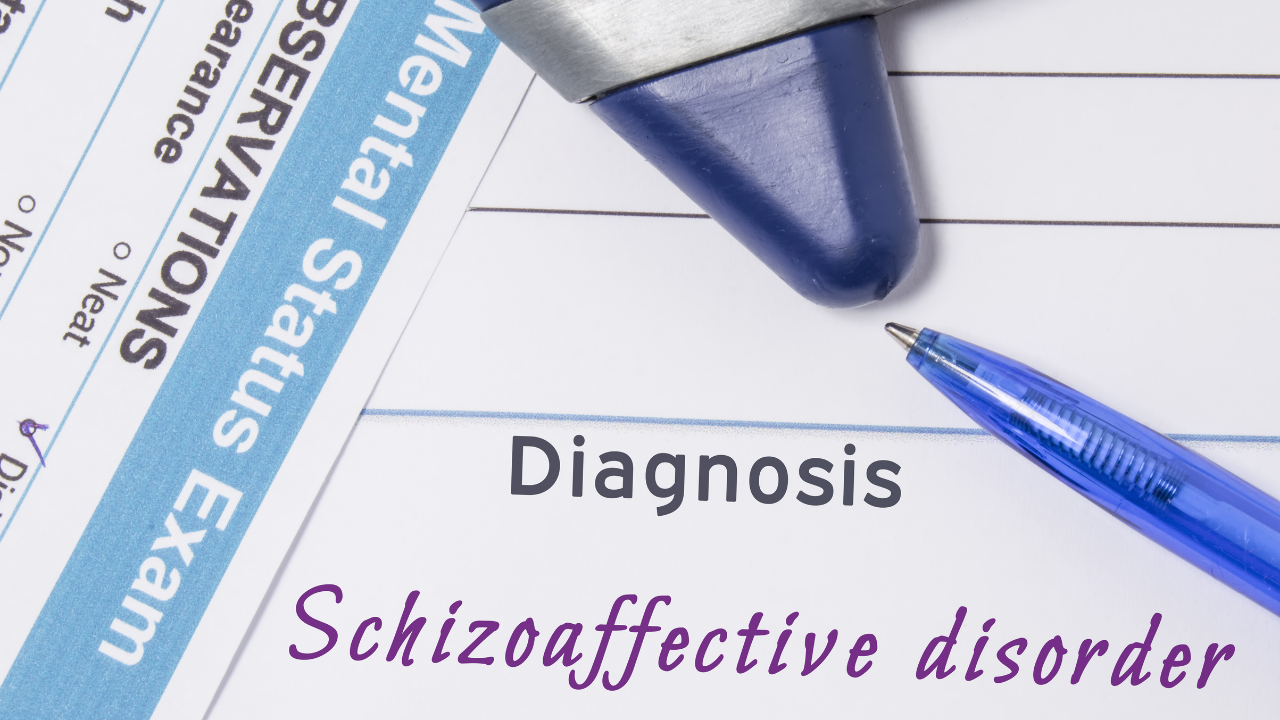

  • Schizoaffective Disorder: A Confusing Diagnosis

    Schizoaffective Disorder: A Confusing Diagnosis

    Introduction: 

    • Schizoaffective disorder has features of both schizophrenia and mood disorders (bipolar and depression). 
    • Two sub types: depressed type and bipolar type 
    • The diagnosis can get complicated because primary mood disorders can have psychotic features (MMD with psychotic features or bipolar disorder with psychotic features), patients with schizophrenia can have mood symptom most commonly depression. 

    Epidemiology:

    • The lifetime prevalence is less than 1%, the most recent data indicates 0.3% but I would say there is a range between 0.5-0.8%
    • More women have the depressed type greater than 2:1 ratio 
    • Equal number of men and women have the bipolar type 
    • The cause of schizoaffective disorder is unknown. It may be a type of schizophrenia, a type of mood disorder, but most likely it’s a spectrum that combines all these things.
    • Schizoaffective disorder has a better prognosis than schizophrenia but a worse prognosis than primary mood disorders. 
    • Patients are said to have a nondeteriorating course and respond better to lithium than patients with schizophrenia. 

    Diagnosis:

    • Schizoaffective disorder combines the features of both schizophrenia and affective mood disorders. 
    • If the mood is primarily manic, it’s called schizoaffective disorder bipolar type 
    • If the mood is primarily depressed it’s called depressed type 
    • The mood component should be present for the majority > 50% of the total illness 
    • You must have a two-week period where psychotic symptoms and are present in the absence of mood symptoms

    Treatment:

    • Treatment will depend on the predominant symptoms. If the patient has more mania than a mood stabilizer will be used (e.g., lithium) 
    • For psychotic symptoms, dopamine blocking medications will be used (e.g., risperidone) 
    • For depressive symptoms serotonin reuptake inhibitors will be used (e.g., sertraline)
  • Diagnosis Depression: Major Depressive Disorder (MDD) With Psychotic features

    Diagnosis Depression: Major Depressive Disorder (MDD) With Psychotic features

    In the last post we covered MDD and we introduced the specifiers. In this post I will talk about MDD with psychotic features. 

    You may have guessed already, but what separates this disorder from MDD is the presence of delusions, and hallucinations along with symptoms of major depression. Fairly simple, right?

    First, we need to define psychotic symptoms. 

    In general, we can think about the following symptoms: 

    1. Delusions: which can be defined as fixed false beliefs. Something that the person believes despite evidence to the contrary. 
    2. Hallucinations: A hallucination is a sensory perception in the absence of external stimuli. There are several types including auditory (most common, consists of hearing a voice or several voices), visual, olfactory (smell), tactile (touch), and gustatory (taste). 
    3. Disorganized speech or behavior: This is an indication of the persons thought process. If the person is not thinking in a clear logical manner their though process may be difficult or impossible to follow for an outside observer.  

    These psychotic symptoms can be congruent with the depressed mood (content is consistent with depressive thoughts) or mood incongruent (content is not consistent with typical depressive thoughts). Mood congruent psychotic symptoms will consist of depressive themes such as guilt, death, poor self-worth, and punishment. Mood incongruent symptoms include things such as delusions of control, thought broadcasting, or thought insertion. Both mood congruent and incongruent themes can occur in the same episode.  

    Another key point is the psychotic symptoms only occur during a depressive episode. They are not present when the patient is not depressed. Once psychotic symptoms appear with an episode of depression, they tend to be present on subsequent episodes. 

    In the next post we will cover atypical features of depression. Please like, comment, and share the content. Feel free to offer suggestions for future posts.