The tried-and-true approach of recommending Cognitive Behavioral Therapy (CBT) along with a serotonin reuptake inhibitor (SSRI) or serotonin-norepinephrine reuptake inhibitor (SNRI) doesn’t work for everyone. So, what are the alternatives? One often-overlooked option is hydroxyzine, which has effect sizes (0.4–0.5) similar to benzodiazepines but with a lower risk, particularly in older adults. For those seeking natural remedies, Silexan, available over the counter, is another possibility. Other medications that have shown efficacy in treatment-resistant depression include pregabalin, quetiapine, and eszopiclone. When it comes to social anxiety disorder, I’m a bit old-fashioned but still favor MAOIs in this area.
Tag: depression
-
Breaking Barriers: Streamlining Clozapine Access for Patients in Need
Happy Friday Everyone, todays post is a topic near and dear to my heart
Clozapine is the most effective medication available for treating schizophrenia. In my work in community mental health, many of my patients could greatly benefit from clozapine, but significant barriers make access difficult. A large portion of my patients are homeless and frequently lost to follow-up, which complicates the already burdensome REMS (Risk Evaluation and Mitigation Strategy) program. To ensure access to this life-saving treatment, adjustments to the REMS program are necessary. One solution could be eliminating the requirement to report completed monitoring and post results on a central database. Additionally, restrictions that delay pharmacies from distributing clozapine should be removed. Finally, we need to reevaluate the frequent and, quite frankly, excessive monitoring of absolute neutrophil counts (ANC). These changes could significantly improve access for patients who need this critical medication.
-

Oral Extended-Release Ketamine: Beyond the Hype or Just Another Hope?
Psychiatry’s fascination with ketamine continues, despite growing evidence that it may not be the miracle treatment some once hoped for. It’s clear that ketamine is not disease-modifying, meaning patients treated for depression with ketamine can still experience relapses. Even more concerning is that ketamine’s effects are short-lived, with the average time to relapse being just 2-4 weeks.
This brings us to recent studies on oral extended-release ketamine for treatment-resistant depression (TRD). In a proof-of-concept study, twice-weekly dosing of extended-release ketamine showed statistically significant and clinically meaningful improvements in depressive symptoms. The treatment was generally well-tolerated, with a side effect profile that included reduced dissociation and sedation, though there were increases in blood pressure. Having a tablet form of ketamine could make the treatment more accessible, but it also raises concerns about potential abuse and diversion.
In my view, this is another symptom management tool for patients with TRD. However, the challenge remains that patients will likely need to continue ketamine treatment long-term without a clear dosing regimen. Nonetheless, the results were promising enough to lead to a phase-3 trial using 180 mg doses twice daily.
Link to article: https://www.nature.com/articles/s41591-024-03063-x
-
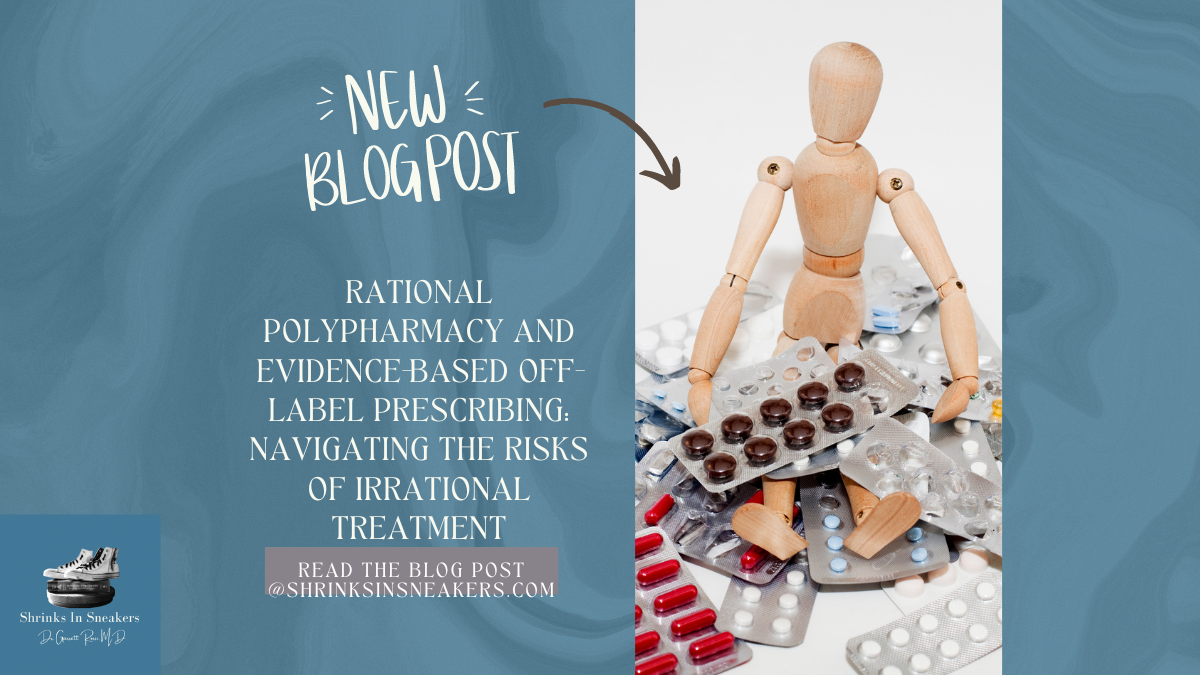
Rational Polypharmacy and Evidence-Based Off-Label Prescribing: Navigating the Risks of Irrational Treatment
Today’s post is more of a clinical reflection. I’ve been sharing a lot about research studies lately, but I want to pause and talk about polypharmacy in psychiatry and off-label prescribing. Have you ever been in a situation where a patient comes in, and as you review their medications, you see they’re taking a benzodiazepine for anxiety, an antidepressant for depression, a dopamine blocker for psychosis, and a mood stabilizer for mood swings? Maybe even a stimulant for ADHD is thrown in the mix. While I say that with some humor, in reality, this is a common scenario. As an educator, it’s crucial to discuss rational polypharmacy and evidence-based off-label prescribing, as well as the dangers of irrational, off-evidence prescribing.
There are times when using more than one dopamine-blocking medication is necessary in the short term—I’ve done it myself to achieve short-term stabilization—but it would never be my long-term plan. Treatment resistance is another situation where off-label medication, if supported by evidence, could be beneficial. However, if none of these justifications apply and the patient isn’t improving, yet they’re on a potentially risky combination of medications, this is the moment to reconsider the diagnosis. It may sound surprising, but misdiagnosis in psychiatry happens often. If the patient isn’t getting better, it could be because you’re treating the wrong condition.
It’s also possible that you’re addressing a disorder that isn’t the primary issue. For example, a patient being treated for ADHD may have attention and impulsivity problems, but these could actually stem from an underlying bipolar disorder. Since symptoms in psychiatry frequently overlap across multiple disorders, it’s essential to maintain a diagnostic hierarchy in your mind. Sorting out which disorder should be prioritized can often resolve other symptoms that might be masquerading as a different psychiatric condition.
So, if treatment isn’t working and the medication list keeps growing, consider that there may have been a mistake in the diagnosis, or that the focus has been on the wrong condition. Often, many symptoms are driven by a more serious underlying disorder, like bipolar disorder.
-
Unvaccinated and Unprotected: Does Skipping the COVID-19 Vaccine Heighten Your Risk for Mental Illness
Since the start of the COVID-19 pandemic, countless studies have explored its impact on mental health. From both the research and my clinical experience, one thing is clear: the pandemic took a toll on people’s mental well-being.
A study published in JAMA Psychiatry dug deeper into this by asking, “How does mental health differ between vaccinated and unvaccinated people who were diagnosed with COVID-19?” The results? Conditions like depression, anxiety, PTSD, addiction, and even self-harm and suicide spiked in the weeks following a COVID-19 diagnosis. Interestingly, the vaccinated group showed lower rates of these issues, while those hospitalized for COVID-19 had longer-lasting struggles with mental health.
The takeaway is clear: getting vaccinated not only protects against the virus but may also reduce the mental health impact of a COVID-19 infection. It’s crucial to continue promoting vaccination, especially among those with pre-existing mental health conditions who are at higher risk.
-
Delirium Dilemma: Can Orexin Drugs Be the Game-Changer?
As a psychiatrist, I’ve done countless consults, and one of the most challenging things to explain is that delirium is caused by an underlying medical condition—not a psychiatric one. There’s no specific psychiatric medication to directly treat delirium. Instead, treatment focuses on environmental adjustments, like placing a clock in the room, displaying the date clearly, and providing frequent reorientation to help ground the patient.
One area where psychiatry might make a difference, though, is in addressing sleep issues. Many patients with delirium also have irregular sleep patterns, which is why melatonin is often suggested. However, when orexin antagonists like Suvorexant came on the market, they offered improvements in both sleep quality and quantity without the risky side effects of benzodiazepines and Z-drugs. These medications became a potential option for preventing and possibly treating delirium in various forms.
Recently, Suvorexant underwent a phase-3 trial for delirium prevention, but the results weren’t as promising as hoped. While the Suvorexant group did show a lower incidence of delirium in older hospitalized adults compared to the placebo group, the difference wasn’t statistically significant. On the bright side, the drug was linked to significantly lower delirium rates in patients with hyperactive and mixed subtypes of dementia, which may open doors for further exploration in these specific cases.
Link to the study: https://jamanetwork.com/journals/jamanetworkopen/fullarticle/2822422
-
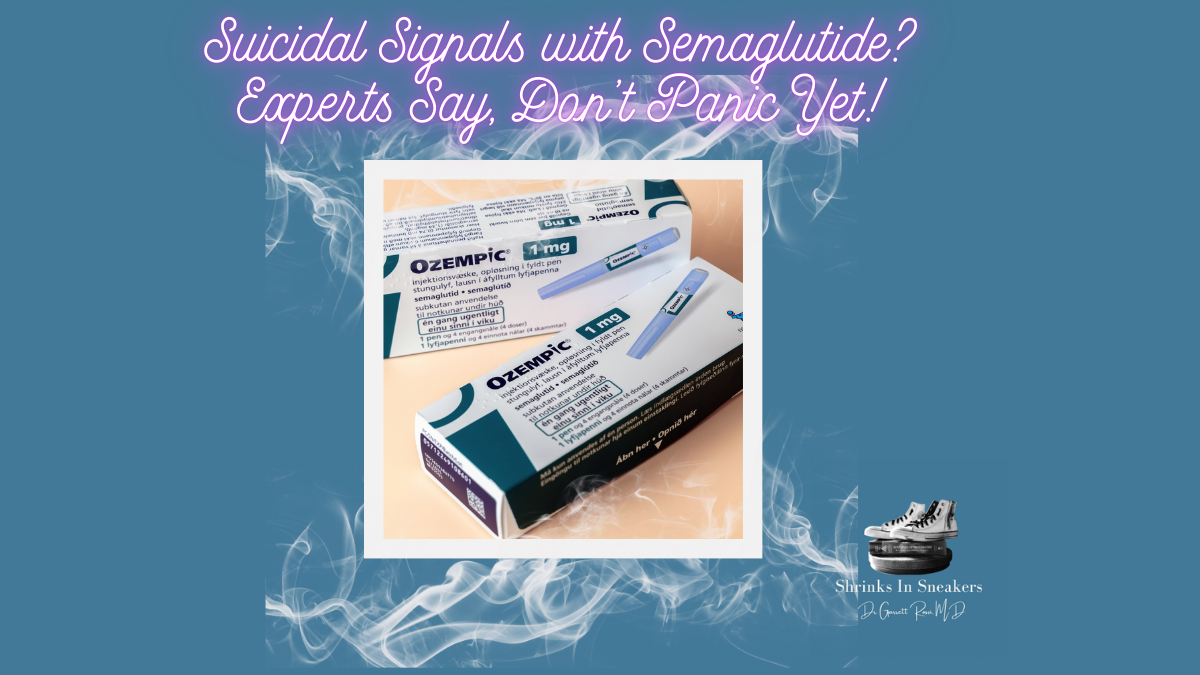
Suicidal Signals with Semaglutide? Experts Say, Don’t Panic Yet!
I recently had a case involving a person with no prior history of mental illness who suddenly developed acute suicidal thoughts. The only recent change in their life was starting a glucagon-like peptide-1 (GLP-1) agonist for diabetes. They reported noticeable mood changes and even suspected the medication was the cause based on their own experience. While we can’t draw any definitive conclusions about causation at this point, it’s reasonable to advise people, especially those with a psychiatric history, to carefully monitor for mood changes and suicidal thoughts when starting this type of medication.
-
From Trip to Trigger: The Schizophrenia Risk After Substance-Induced Psychosis
I recently had an interesting discussion with one of our residents about the risk of developing schizophrenia after experiencing substance-induced psychosis. The conversation was sparked by a study based on data from the Danish Civil Registration System. Fun fact: when you see large data sets like this, they’re often from Scandinavian countries.
The study followed 6,788 people who were diagnosed with substance-induced psychosis between 1994 and 2014. They tracked patients until they developed schizophrenia, bipolar disorder, or passed away, using statistical methods to calculate the risk of conversion to a serious mental illness.
A key takeaway: this study didn’t just look at the risk of schizophrenia but also included bipolar disorder and various substances—not just cannabis. Overall, 32.2% of people with substance-induced psychosis went on to develop either schizophrenia or bipolar disorder. Cannabis-induced psychosis had the highest conversion rate, with 47.4% of those cases developing one of these disorders.
Being young and male increased the likelihood of developing schizophrenia, and self-harm after substance-induced psychosis was also linked to a higher risk of both schizophrenia and bipolar disorder.
The big takeaway here? Substance-induced psychosis is closely associated with the development of serious mental illnesses. Follow-up care is essential, and steering clear of cannabis is always a smart move.
Link to the article: https://psychiatryonline.org/doi/10.1176/appi.ajp.2017.17020223
-
Hands Off the Hand Sanitizer: It’s Not a Cocktail
Have you ever noticed that hand sanitizer is sometimes locked up in certain areas of the hospital? The reason for this is that individuals with severe alcohol use disorder may attempt to drink it. One of the highest blood alcohol levels (BAL) I’ve ever encountered came from a patient who found an unlocked dispenser, opened it, and consumed an entire bottle of sanitizer. Their BAL was an alarming 600 when we tested them. This highlights the dangers and societal impact of risky alcohol consumption—something I’ve witnessed firsthand in the inpatient setting.
-
20 Seconds or 60 Seconds: One Doubles Your Chances of Remission
In ECT, there’s a common saying that “nothing good happens after 1 minute.” However, recent data suggests that nothing good happens if a seizure lasts less than 20 seconds either. Patients whose seizures lasted 30 seconds or longer during their first ECT session were more than twice as likely to achieve remission by the end of treatment compared to those with seizures under 20 seconds. Seizure durations around one minute appeared to provide the best chances for remission.