Tag: depression

  • 🚨 Five Things That Will Guarantee Unhappiness, Depression, and AnxietyĀ 

    🚨 Five Things That Will Guarantee Unhappiness, Depression, and Anxiety 

    From a psychiatrist’s perspective, if you want to be miserable, just focus on these:

    1ļøāƒ£ Materialism šŸ’°šŸ“±šŸš— ā€“ The more you obsess over what you have (or don’t have), the more dissatisfied you’ll be. Nothing external ever fills the internal void.

    2ļøāƒ£ Society’s Definition of Success šŸ“ˆšŸŽ“šŸ† ā€“ Chasing achievement based on external validation will leave you constantly feeling behind. The finish line always moves.

    3ļøāƒ£ Vanity & Appearance šŸ’„šŸ’ŖšŸ“ø ā€“ If your self-worth is tied to body shape, beauty, or attractiveness, you’ll never feel ā€œgood enough.ā€ Looks fade. Confidence lasts.

    4ļøāƒ£ Money šŸ¦šŸ’µšŸ“Š ā€“ There will always be someone richer. If wealth is your purpose, you’ll forever be chasing the next dollar instead of fulfillment.

    5ļøāƒ£ Status & Social Hierarchy šŸ‘‘šŸŽ­šŸ“£ ā€“ Measuring your worth by your rank in society, work, or even spirituality will keep you trapped in comparison. The ego is never satisfied.

    These are simple truths we all know… but knowing and living them are two entirely different things. šŸ’”

    #MentalHealth #PerspectiveShift #FulfillmentOverComparison

  • 🚨 New Study: Cannabis Use Disorder Linked toĀ 3X Higher MortalityĀ in Hospital & ER Patients

    🚨 New Study: Cannabis Use Disorder Linked to 3X Higher Mortality in Hospital & ER Patients

    A major new study has uncovered a staggering risk: Patients diagnosed with Cannabis Use Disorder (CUD) in hospitals or ERs had nearly THREE TIMES the mortality rate over the next five years compared to those without the disorder.

    šŸ”Ž Key Findings:

    šŸ›‘ Patients with CUD had a significantly higher risk of death within five years.

    šŸ›‘ Cannabis use was associated with worse health outcomes, even after adjusting for other factors.

    šŸ›‘ Findings challenge the assumption that cannabis is a ā€œharmlessā€ substance.

    šŸ’” Why This Matters:

    As cannabis use becomes more common and legalized, we can’t ignore the potential long-term health consequences—especially in vulnerable populations. This study raises urgent questions about how cannabis impacts physical and mental health in the long run.

    šŸ“¢ What do you think? Should we be taking Cannabis Use Disorder more seriously in medical settings? Drop your thoughts below! šŸ‘‡

    šŸ”— https://jamanetwork.com/journals/jamanetworkopen/fullarticle/2829914

    #Cannabis #PublicHealth #Addiction #ER #Medicine #addictionmedicine #addiction #cannabisusedisorder #addictionpsychiatry #medical #doctor #medication #marijuana

  • 🚨 Cannabis & Brain Function: Short- & Long-Term Effects You NEED to Know 🚨

    🚨 Cannabis & Brain Function: Short- & Long-Term Effects You NEED to Know 🚨

    Cannabis use is everywhere, but do we truly understand its impact on the brain? šŸ¤” A growing body of research reveals short- and long-term effects that can’t be ignored. Let’s break it down:

    🧠 Short-Term Effects
    šŸ”¹ Impaired memory & attention
    šŸ”¹ Slower reaction time
    šŸ”¹ Altered judgment & coordination
    šŸ”¹ Increased anxiety or paranoia (in some users)

    But here’s where it gets even more concerning…

    🧠 Long-Term Effects (Especially with frequent or early use)
    šŸ”» Structural brain changes in memory & executive function areas
    šŸ”» Persistent cognitive impairment in heavy users
    šŸ”» Increased risk of psychiatric disorders (psychosis, depression, anxiety)
    šŸ”» Lower IQ in adolescent-onset users

    šŸ’” The Takeaway? While cannabis has potential therapeutic uses, chronic or early use can have lasting effects on brain function—especially in young people. Understanding these risks is crucial as legalization expands.

    šŸ”¬ Have you seen changes in cognition or mental health in cannabis users? Let’s discuss below! šŸ‘‡ #Cannabis #BrainHealth #Neuroscience #MentalHealth

  • šŸ“ŒĀ CANMAT Guidelines for Depression: 2023 Update

    šŸ“ŒĀ CANMAT Guidelines for Depression: 2023 Update

    TheĀ Canadian Network for Mood and Anxiety Treatments (CANMAT)Ā released updated guidelines in 2023 for the management ofĀ Major Depressive Disorder (MDD), reflecting recent advancements in the field.

    Key Updates in the 2023 CANMAT Guidelines:

    1. Personalized Care Approach:
      • Emphasis onĀ shared decision-making, considering patient values, preferences, and treatment history to tailor individualized treatment plans.
    2. Updated Treatment Recommendations:
      • Psychological Therapies: Continued endorsement of therapies like Cognitive Behavioral Therapy (CBT) and Interpersonal Therapy (IPT) forĀ mild to moderate depression.
      • Pharmacological Treatments: Introduction of newer antidepressants and updated recommendations based on recent evidence.
      • Neuromodulation: Expanded guidance on treatments such asĀ Transcranial Magnetic Stimulation (TMS)andĀ Electroconvulsive Therapy (ECT), especially for treatment-resistant cases.
    3. Lifestyle and Complementary Interventions:
      • Recognition of the role ofĀ exercise,Ā nutrition, andĀ sleepĀ in managing depression.
      • Evaluation ofĀ complementary and alternative medicineĀ approaches, providing guidance on their efficacy and safety.
    4. Digital Health:
      • Assessment ofĀ digital interventions, including online therapy platforms and mobile applications, as supplementary tools in treatment plans.
    5. Management of Inadequate Response:
      • Strategies for addressingĀ partial or non-responseĀ to initial treatments, including augmentation and combination therapies.

    These updates underscore the importance of a collaborative and individualized approach in managing MDD, integrating the latest evidence to optimize patient outcomes.

    For a comprehensive overview, refer to the full publication: 

    pubmed.ncbi.nlm.nih.gov

  • šŸ“ŒĀ CANMAT Guidelines for Depression: Evidence-Based Treatment Strategies

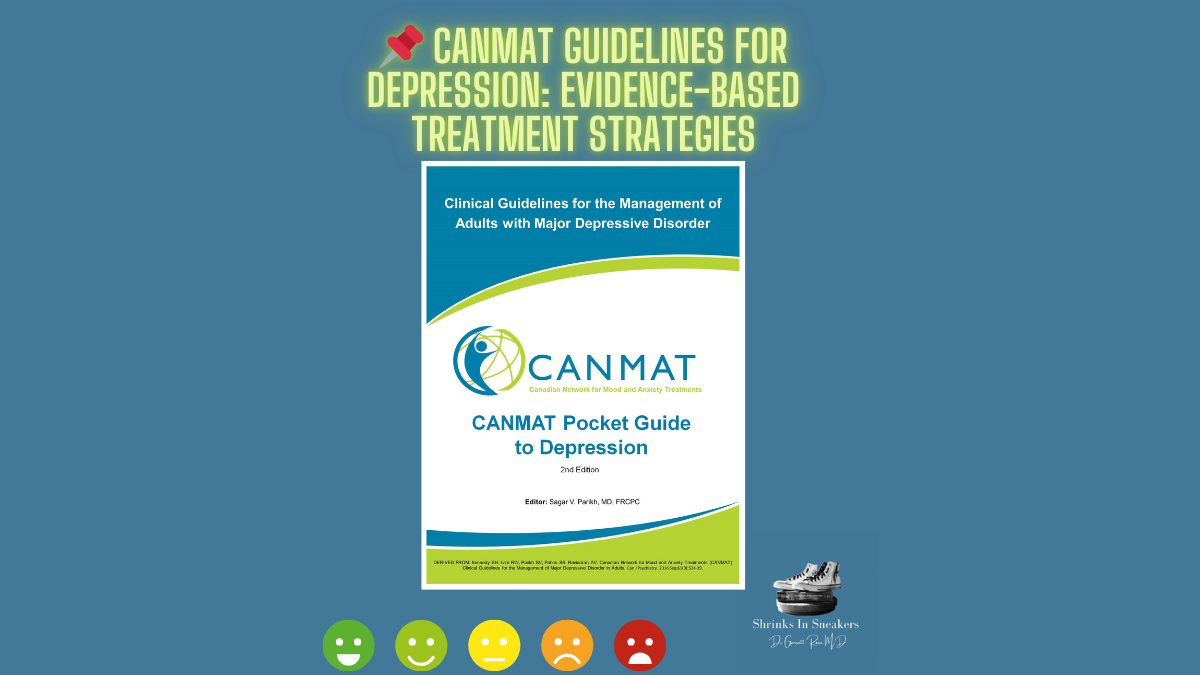
    šŸ“ŒĀ CANMAT Guidelines for Depression: Evidence-Based Treatment Strategies

    TheĀ CANMAT 2016 guidelinesĀ remain one of the most comprehensive, evidence-based frameworks for treatingĀ major depressive disorder (MDD). These guidelines emphasize aĀ stepwise, individualized approachĀ based on efficacy, safety, and patient preference. Here’s a breakdown of the key recommendations:

    šŸ”¹ First-Line Treatments

    āœ… Psychotherapy ā€“ Cognitive Behavioral Therapy (CBT), Interpersonal Therapy (IPT), and Mindfulness-Based CBT are recommended, especially for mild to moderate depression.
    āœ… Pharmacotherapy ā€“ SSRIs, SNRIs, bupropion, mirtazapine, and vortioxetine are all first-line antidepressantsbased on efficacy and tolerability.
    āœ… Neurostimulation ā€“ Electroconvulsive Therapy (ECT) and Repetitive Transcranial Magnetic Stimulation (rTMS) are considered first-line for severe or treatment-resistant depression (TRD).

    šŸ”¹ Second-Line Treatments

    šŸ”ø Other antidepressants ā€“ Tricyclics (TCAs), trazodone, moclobemide, and some atypical antipsychotics (e.g., quetiapine XR, aripiprazole, brexpiprazole)
    šŸ”ø Adjunctive strategies ā€“ Lithium, atypical antipsychotics, or combination antidepressant therapy for partial responders
    šŸ”ø Ketamine/esketamine ā€“ Emerging evidence for TRD

    šŸ”¹ Third-Line & Beyond

    šŸ”¹ MAOIs (reserved for treatment-resistant cases)
    šŸ”¹ Novel agents (psilocybin, anti-inflammatory treatments) – Experimental but promising

    šŸ’” Key Takeaways
    šŸ”¹ Personalized treatment is essential – factors like symptom profile, comorbidities, and patient preference influence the best approach.
    šŸ”¹ Combination strategies (meds + psychotherapy) often yield superior outcomes.
    šŸ”¹ Treatment-resistant depression requires a multimodal approach, including augmentation, switching strategies, and neurostimulation options.

    The CANMAT guidelines are a critical resource for clinicians, offering a structured approach to optimizing depression treatment. What are your go-to strategies for managing MDD? Let’s discuss!

    #DepressionTreatment #Psychiatry #CANMAT #MDD #Psychopharmacology

  • šŸ’ŠĀ Antidepressants Prescriptions in the U.S. a Balanced Approach?Ā šŸ¤”

    šŸ’ŠĀ Antidepressants Prescriptions in the U.S. a Balanced Approach?Ā šŸ¤”

    Evidence Supporting Overprescription

    1. Prescribing Without Meeting Diagnostic Criteria
      • AĀ 2011 study published inĀ Health AffairsĀ found thatĀ only 38.4% of patients prescribed antidepressants met criteria for major depressive disorder (MDD), based on the National Ambulatory Medical Care Survey. Many prescriptions were given for milder depressive symptoms or anxiety disorders, suggesting potential overprescription.
      • Subclinical Depression: Some prescriptions were issued for symptoms that did not meet the diagnostic threshold for any psychiatric disorder.
    2. Primary Care Prescribing Patterns
      • Antidepressants are frequently prescribed inĀ primary care settings, where diagnostic accuracy may be lower than in psychiatric settings.
      • AĀ 2020 review inĀ JAMA Internal MedicineĀ highlighted thatĀ primary care physicians write 79% of antidepressant prescriptionsĀ in the U.S., and these are often issued without consultation with a mental health professional.
    3. Off-Label Use
      • AĀ 2016 study inĀ JAMAĀ PsychiatryĀ found thatĀ 30% of antidepressant prescriptions are for off-label indicationsĀ like insomnia, chronic pain, or fatigue, despite limited evidence supporting their efficacy for many of these uses.
    4. Prolonged Use
      • Many individuals take antidepressants for extended periods without regular reassessment. AĀ 2019 study inĀ The British Journal of PsychiatryĀ noted thatĀ long-term antidepressant use often continues without clear ongoing benefit, raising questions about whether prescriptions are monitored effectively.

    Evidence Suggesting Appropriate or Underprescription

    1. Untreated Mental Illness
      • TheĀ World Health Organization (WHO)Ā estimates that nearlyĀ 50% of individuals with depression in high-income countries, including the U.S., do not receive treatment.
      • AĀ 2017 study inĀ JAMA PsychiatryĀ found that many individuals with severe depressive symptoms go untreated, particularly in low-income or minority populations.
    2. Misperceptions of Overprescription
      • AĀ 2020 meta-analysis inĀ The Lancet PsychiatryĀ showed that antidepressants are highly effective for moderate-to-severe depression, and their increased use could reflect improved treatment of these conditions rather than overprescription.
      • Increased public awareness of mental health has led to more people seeking care, which may explain higher prescription rates.
    3. Use in Non-Psychiatric Disorders
      • Antidepressants, particularly SSRIs and SNRIs, are evidence-based treatments for anxiety disorders, PTSD, OCD, and some chronic pain conditions. Their prescription for these conditions might be misinterpreted as “overprescription.”

    Balancing Perspectives

    The evidence suggests a mixed picture:

    • On one hand, antidepressants are sometimes prescribedĀ without meeting diagnostic criteriaĀ or forĀ off-label usesĀ with weak supporting evidence.
    • On the other hand, a significant proportion of individuals withĀ moderate-to-severe depression or anxiety remain untreated, indicating possibleĀ under prescriptionĀ in certain populations.

    Scientific Consensus

    The issue may stem less from overprescription overall and more from suboptimal prescribing practices, including:

    • Prescribing antidepressants where psychotherapy or other treatments might be more appropriate.
    • Inadequate follow-up or reassessment of long-term users.
    • Limited mental health training for primary care providers, who are often the frontline prescribers.
  • The U.S. Withdrawal from the WHO: What It Means for Global Health šŸŒ

    The U.S. Withdrawal from the WHO: What It Means for Global Health šŸŒ

    The U.S. is officially withdrawing from the World Health Organization (WHO)—a move with far-reaching consequences for global health, research, and disease prevention. Here’s why this matters:

    šŸ”¹ Pandemic Preparedness šŸ¦ : The WHO coordinates global responses to pandemics. Without U.S. support, funding gaps could slow future outbreak responses.

    šŸ”¹ Vaccine & Drug Research šŸ’‰: The U.S. plays a key role in funding and collaborating on medical breakthroughs. Withdrawing could disrupt research efforts in areas like HIV, TB, and malaria.

    šŸ”¹ Health Security Risks šŸšØ: Global health threats don’t respect borders. A weaker WHO means less surveillance and slower containment of emerging diseases.

    šŸ”¹ Loss of Influence šŸ‡ŗšŸ‡ø: The U.S. has historically shaped global health policies. Leaving the WHO could reduce its ability to set standards and priorities.

    The long-term impact of this decision remains uncertain, but one thing is clear: global health is interconnected, and a fractured response benefits no one.

    What do you think about this move? Drop your thoughts below. ā¬‡ļø #GlobalHealth #WHO #PublicHealth

  • šŸ’ŠĀ Are Antidepressants Overprescribed in the U.S.? šŸ¤”

    šŸ’ŠĀ Are Antidepressants Overprescribed in the U.S.? šŸ¤”

    The question of whether antidepressants are overprescribed in the United States is complex and depends on how “overprescription” is defined.

    Arguments Suggesting Overprescription

    1. Broad Diagnostic Criteria:
      • The criteria for diagnosing conditions like major depressive disorder (MDD) can be broad, potentially leading to overdiagnosis and, consequently, overprescription.
    2. Prescribing Practices:
      • Primary care physicians write most antidepressant prescriptions, often without thorough psychiatric evaluation.
      • Some prescriptions are written for mild cases of depression or subclinical symptoms where psychotherapy or lifestyle changes might suffice.
    3. Off-Label Use:
      • Antidepressants are frequently prescribed off-label for conditions like insomnia, chronic pain, or anxiety, contributing to their high utilization.
    4. Pharmaceutical Influence:
      • Aggressive marketing by pharmaceutical companies has historically played a role in increasing antidepressant use.

    Arguments Against Overprescription

    1. Underdiagnosis and Undertreatment:
      • Despite high prescription rates, many individuals with diagnosable depression or anxiety disorders go untreated, particularly in underserved populations.
      • Stigma and access barriers often prevent people from seeking care.
    2. Increasing Mental Health Awareness:
      • Growing awareness of mental health issues may explain rising prescription rates, as more people seek help for legitimate conditions.
    3. Non-Psychiatric Indications:
      • Antidepressants are also effective for non-depressive disorders, like obsessive-compulsive disorder (OCD), post-traumatic stress disorder (PTSD), and chronic pain, which justifies some of their broader use.

    Data on Antidepressant Use

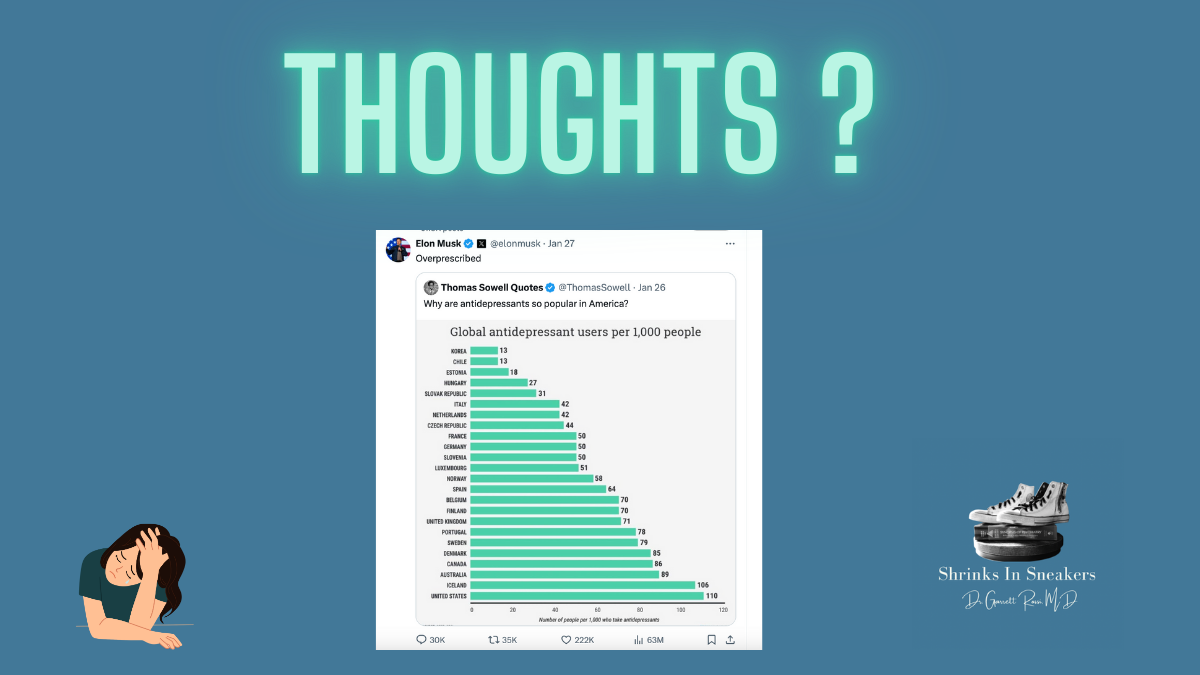
    According to surveys, about 1 in 8 Americans aged 18 and older take antidepressants, and usage is particularly high among women, especially those aged 40–59. While this might seem like a high prevalence, it may also reflect greater recognition and treatment of mental health issues.

    Key Considerations

    • Patient-Centered Care: The decision to prescribe antidepressants should be tailored to the individual, based on a comprehensive assessment of their symptoms and needs.
    • Access to Alternatives: Many individuals lack access to evidence-based non-pharmacological treatments like psychotherapy due to cost, availability, or stigma, making antidepressants a more feasible option.
    • Role of Education: Educating both prescribers and patients on appropriate use can reduce potential overprescription.
  • Post-SSRI Sexual Dysfunction (PSSD): An Emerging Concern

    Post-SSRI Sexual Dysfunction (PSSD): An Emerging Concern

    Antidepressants, particularly selective serotonin reuptake inhibitors (SSRIs), have been a cornerstone of treatment for mood and anxiety disorders for decades. However, as their use has become more widespread, concerns about their side effects—particularly those related to sexual health—have grown. A new wave of attention has focused onĀ Post-SSRI Sexual Dysfunction (PSSD), a phenomenon in which sexual side effects persist even after the discontinuation of SSRI medications.

    What is PSSD?

    It is well-established that up to 50% of patients taking SSRIs experience some degree of sexual dysfunction while on the medication. These effects are usually thought to be transient, resolving within weeks or months after stopping the drug. However, PSSD represents a different and more troubling pattern: persistent sexual dysfunction lasting three months or longer after discontinuing the medication.

    Patients with PSSD frequently report symptoms such as:

    • Genital anesthesiaĀ (reduced or absent genital sensation).
    • AnorgasmiaĀ (inability to achieve orgasm).
    • Loss of libidoĀ (reduced or absent sexual desire).

    In men, erectile dysfunction and ejaculatory issues are common, while women often report reduced arousal and difficulty achieving orgasm. Unlike transient sexual dysfunction, the hallmark of PSSD is its persistence long after the drug has been stopped.

    The Challenge of Evidence

    The evidence supporting PSSD as a formal diagnosis remains limited and primarily consists of:

    • Case reports
    • Case series
    • Observational data, often derived from internet forums and patient advocacy groups

    While these sources highlight distressing patient experiences, they fall at the bottom of the evidence hierarchy. Without randomized controlled trials or large-scale cohort studies, it is impossible to definitively establish causation between SSRI use and PSSD. This lack of robust evidence complicates efforts to understand the true prevalence, biological mechanisms, and risk factors for PSSD.

    Potential Biological Basis

    The exact mechanism of PSSD remains unclear, but hypotheses include:

    1. Serotonin neurotoxicity: Excessive serotonin signaling may lead to long-lasting changes in the central or peripheral nervous systems.
    2. Dopamine suppression: Chronic serotonin elevation may inhibit dopamine pathways, which play a critical role in sexual function.
    3. Receptor desensitization or downregulation: Long-term SSRI use may alter serotonin and other neurotransmitter receptors in ways that persist after discontinuation.

    None of these theories have been definitively proven, and more research is needed to uncover the underlying pathophysiology.

    Prevalence and Diagnosis

    The true prevalence of PSSD is unknown due to the lack of large, high-quality studies. However, anecdotal reports suggest it may be rare but severely impactful for those affected.

    Currently, there are no standardized diagnostic criteria for PSSD. The most common approach involves:

    1. A history of SSRI use.
    2. Persistent sexual dysfunction lastingĀ three months or moreĀ after discontinuing the medication.
    3. Symptoms such as genital anesthesia or nipple insensitivity, which are more specific to PSSD compared to general sexual dysfunction.

    What to Do if You Suspect PSSD

    For clinicians and patients encountering persistent sexual dysfunction, it’s essential to first explore modifiable and reversible causes of sexual dysfunction:

    • Lifestyle factors: Obesity, smoking, poor cardiovascular health, and sedentary behavior can contribute to sexual dysfunction.
    • Endocrine issues: Low testosterone or other hormonal imbalances should be evaluated.
    • Medications: Drugs such asĀ finasterideĀ (for hair loss) andĀ isotretinoinĀ (for acne) are also associated with persistent sexual dysfunction and may confound the diagnosis.

    If PSSD remains the primary suspected diagnosis, a timeline of symptoms is crucial. Note when the antidepressant was started, when sexual dysfunction began, and whether the symptoms improved or worsened after stopping the drug.

    The Bottom Line

    PSSD is an evolving area of concern in psychiatry and pharmacology. While current evidence does not definitively prove a causal relationship between SSRIs and persistent sexual dysfunction, the growing number of reports warrants further investigation. Until higher-quality studies emerge, clinicians should approach this condition with empathy and caution.

    Patients experiencing sexual dysfunction should work closely with their healthcare providers to rule out reversible causes and explore management options. For now, the best strategy is awareness, vigilance, and a patient-centered approach to treatment planning.
  • Can β-Blockers Really Delay the Onset and Progression of Huntington’s Disease?

    Can β-Blockers Really Delay the Onset and Progression of Huntington’s Disease?

    Huntington’s disease (HD) is a devastating neurodegenerative disorder that affects individuals and their families on multiple levels. Over the years, I’ve worked with many patients suffering from HD, and it’s difficult to overstate the physical, cognitive, and emotional toll this disease takes. Beyond the progressive motor dysfunctions that eventually rob patients of their independence, the neuropsychiatric symptoms, including severe depression, irritability, and even psychosis, can be equally debilitating. Tragically, suicide risk in this population is alarmingly high, particularly in the early stages when patients are still aware of their prognosis.

    One of the greatest challenges we face in treating Huntington’s disease is the lack of disease-modifying treatments. While therapies exist to help manage symptoms, such as tetrabenazine for chorea or antidepressants for mood disturbances, these interventions only address parts of the disease. To date, there has been little that offers hope for slowing its relentless progression.

    However, a recent article published in JAMA titled ā€œĪ²-Blocker Use and Delayed Onset and Progression of Huntington Diseaseā€ has introduced a glimmer of hope. The study explored the potential role of β-blockers in altering the course of HD. These medications, commonly prescribed for hypertension and cardiac conditions, may also have neuroprotective properties. According to the study, β-blocker use was associated with delayed onset and slowed progression of Huntington’s disease. The study analyzed data from a cohort of over 1,000 patients, utilizing longitudinal assessments to measure disease onset and progression. Statistical analysis revealed a significant reduction in the rate of disease progression among patients taking β-blockers compared to those who were not, with a hazard ratio of 0.78 (95% CI, 0.65–0.92; p < 0.01). This is a groundbreaking finding because it suggests a readily available and widely used class of medications could have a profound impact on a previously untreatable condition.

    The way β-blockers work to slow the progression of HD isn’t entirely clear, but it’s thought they might help by reducing brain inflammation and preventing damage caused by overstimulated nerve cells. Furthermore, they could potentially mitigate some of the psychiatric symptoms seen in HD, such as aggression and anxiety, by dampening the overactivity of the sympathetic nervous system.

    For those of us who work closely with this patient population, findings like these provide a much-needed sense of optimism. If future research confirms these results, we may see a shift in how HD is managed. Imagine being able to tell a patient, “We have a medication that might slow this disease’s progression.” That could be life-changing for so many individuals and their families.

    This study is an important reminder that even in diseases where hope seems scarce, progress is being made. For me, it reinforces why we never stop searching for answers—because even small steps forward can eventually change lives in ways we never imagined. It also underscores the importance of continued research and innovation in the field of neurodegenerative disorders. For patients with HD, their loved ones, and the clinicians who care for them, this kind of news is invaluable.

    What are your thoughts on the use of β-blockers for HD? Have you seen this approach applied in your practice or with your patients? Let’s continue the conversation and keep hope alive for those impacted by this challenging disease.