Tag: psychotropics

  • The Best Antipsychotic Medication in The World 

    The Best Antipsychotic Medication in The World 

    Introduction:

    I’ve said it before in previous videos, older medications are more effective and newer medications have fewer side effects. 

    The advent of SSRIs in the late 1980’s and early 1990’s was largely driven by safety and not efficacy. The same is true for antipsychotic medications. This may be the reason most people haven’t even heard about Clozapine (brand name Clozaril). 

    Efficacy

    Clozapine is the single most effective antipsychotic available, and it works in treatment resistant schizophrenia where no other medication is proven to be effective. 

    The results speak for themselves, 30% of previously treatment resistant patients experience symptom reduction within 6 weeks and that number jumps to 60% after 6 months of treatment. 

    Clozapine has a slew of additional benefits including mood stabilizing prosperities (it can be used in bipolar disorder), reduction in psychogenic polydipsia and the hyponatremia associated with it, reduction in hostility and aggression, reduction in the risk of suicidal ideation, improvement in substance use, and it may even help patients quit smoking a difficult task in schizophrenia. 

    So why are most schizophrenic patients not on this medication if it’s so great? 

    Side effects, side effect, side effects

    -Sedation: feeling tired this can largely be mitigated by dosing the medication at night before bedtime. 

    -Tachycardia: It’s worth getting an EKG in patients with preexisting heart conditions or those at high risk due to hypertension and hyperlipidemia 

    -Sialorrhea: excessive saliva production leading to drooling, no one wants this 

    -Dizziness

    -Constipation: this should be addressed immediately if a patient complains about it as it can lead to serious complications. In many cases Senna and Colace will do the trick

    -Orthostatic hypotension 

    -Weight gain 

    Serious and potentially fatal Side effects include: 

    -Agranulocytosis: decreased absolute neutrophil count which can result in increased risk for serious infection and the reason everyone on the medication gets weekly blood draws for the first 6 months 

    -Seizures: clozapine is known to lower the seizure threshold 

    -Myocarditis: inflammation of the heart usually due to a viral infection 

    The risk for agranulocytosis is highest when starting treatment, usually during the first year of treatment (0.8%) and the maximum risk is between 4 and 18 weeks (when 77% of cases occur), although it can still occur at any point in the treatment.

    Agranulocytosis

    Monitoring is thus very important, and each patient must be registered in the Risk Evaluation and Mitigation strategy (REMS) data base before starting the medication. 

    A CBC with differential must be drawn to calculate the absolute neutrophil count prior to starting treatment and then weekly for the first 6 months. Then monitoring continues every 2 weeks for the next 6 months and finally monthly after the first year of treatment. 

    If agranulocytosis occurs stopping clozapine allows majority of cases to recover within 14 days. 

    Now that we know that this medication is very effective but comes with a high side effect burden a natural next question might be why does the medication work? 

    Mechanism of Action

    Clozapine has very low affinity for the D2 receptors which is unique as most other antipsychotics will bind strongly to D2 receptors. Clozapine had far greater D1 and D4 binding affinity, blocking both receptors. 

    Clozapine also has significant activity at other neurotransmitter sites. It blocks alpha receptors which may be the reason for orthostatic hypotension. It blocks histamine H1 receptors resulting in sedation and weight gain. It blocks 5-HT2A serotonin receptors and is highly anticholinergic resulting in constipation and urinary retention. 

    It has two unique properties; it influences the glutamate system by altering NMDA receptor sensitivity and increases the release of brain derived neurotrophic factor BDNF. 

    Metabolism And Drug Interactions

    Clozapine is primarily metabolized by CYP450 1A2 and 3A4 and cigarette smoking will cause a reduction in clozapine levels due to induction of CYP 1A2. 

    Before Starting the Medication

    Before starting clozapine, the ANC must be above 1,500. If neutropenia develops treatment will depend on the severity of the drop. 

    Mild Neutropenia: ANC 1,000-1,499, you would continue treatment and check an ANC three times weekly until it reaches 1,500. 

    Moderate Neutropenia: ANC between 500 and 999, stop treatment and check the ANC daily until it reaches 1,000 then 3 times weekly until it reaches 1,500 then weekly for 4 weeks before returning to the patients prior monitoring schedule. 

    Severe Neutropenia: ANC less than 500, stop treatment and check an ANC daily until it’s 1,000 then 3 times weekly until it’s 1,500. The patient should not be rechallenged without a hematology consult and clear benefits that outweigh the risks. 

    Dosing

    Clozapine can be started at 12.5 to 25 mg at bedtime. The dose can be increased 25 mg/day inpatient and 25 mg per week in the outpatient setting as tolerated. 

    You can overlap prior treatment with another antipsychotic and tapper the old medication once clozapine dose reaches 100 mg or more. 

    Plasma Levels

    Clozapine dose should be based on serum levels, with a target blood level of 200 to 300 ng/ml. If there are still symptoms present the target serum level is 450 ng/ml. There are no benefits to serum levels above 900 ng/ml. 

  • Everything You Need to Know About Trintellix (Vortioxetine)

    Everything You Need to Know About Trintellix (Vortioxetine)

    Introduction:

    Vortioxetine is sold under the brand name Trintellix, and Brintellix and it’s approved for use in major depressive disorder. The name was changed to Trintellix in the U.S. due to confusion with Brillinta an anti-platelet medication. It was studied in generalized anxiety disorder (GAD) at lower doses, but the quality of the evidence is poor and does not appear to improve symptoms or quality of life in patients with GAD. 

    I want to make a quick point before going into the details about the medication. When I say the effect size is moderate and Vortioxetine does not perform better than other options for depression, I’m not saying in an individual case that it may not outperform other antidepressants that the person has tried in the past. It very well might for that individual. I’m talking about on average in large sample sizes, Vortioxetine does not outperform other medications according to the current literature. It’s also not a go to medication for treatment resistant depression, the literature does not support this either.

    The one place Vortioxetine does seem to stand out is cognitive function. Multiple studies have shown this medication to improve cognitive dysfunction associated with depression. It also appears to improve cognitive function in geriatric depression but failed to show any benefit in neurocognitive disorders like Alzheimer’s disease. It was also looked at as a potential treatment for attention deficit hyperactivity disorder (ADHD) but failed to show an adequate benefit in trials. 

    Mechanism of Action and Receptor Targets

    This medication falls into a class known as serotonin modulators and stimulators. It is thought to work by several different mechanisms:

    -Serotonin reuptake inhibitor

    -5-HT1A agonist (may diminish sexual side effects) 

    -5-HT1B partial agonist 

    -5-HT1D, 5-HT3 (may enhance noradrenergic and cholinergic activity that improves cognition while reducing nausea), and 5-HT7 antagonist (pro-cognitive and antidepressant effects) 

    The most robust action is on serotonin reuptake and 5-HT3 antagonism, while the other interactions are considered minor. 

    Target Affinity Ki (nM)Action 
    SERT1.6Inhibition 
    NET113Inhibition 
    5-HT1A 15Agonist 
    5-HT1B33Partial agonist 
    5-HT1D 54Antagonist 
    5-HT2C180 
    5-HT3A3.7Antagonist 
    5-HT719Antagonist 

    Metabolism

    Vortioxetine is metabolized by CYP2D6, 3A4/5, 2C19, 2C9, 2A6, 2C8 and 2B6, the half-life is 66 hours and it’s dosed one time per day. Reduction is dosing may be needed for patients taking strong CYP2D6 inhibitors (e.g. bupropion).

    Dosing:

    -5-20 mg/day 

    -Tablets come as 5 mg, 10 mg, and 20 mg 

    -The initial dose for depression is 10 mg which can be increased as needed to a maximum dose of 20 mg daily. 

    -For GAD does were kept lower 5-10 mg/day range 

    -Can be taken with or without food 

    -It can be stopped without a tapper 

    Side Effect:

    Common side effects include nausea, vomiting, constipation, sexual dysfunction, weight gain is unusual but possible. Nausea and sexual dysfunction were the most common side effects; all other side effects were reported in less than 10% of cases. 

    Sexual dysfunction was found in both the plebe group and the treatment arm. The incidence was 14-20% for placebo and 16-34% for those in the treatment arm.

    Rare life-threatening side effects include seizures, induction of mania and suicidal ideation. 

    Avoid using tramadol as it can increase the risk of seizure, and do not combine with MAOIs as this can result in serotonin syndrome. 

    It’s generally not recommended in pregnancy. 

    Conclusion

    While this medication may be helpful for some individuals there is no evidence to support its use in treatment resistant depression or other disorders outside of the primary indication major depressive disorder. There does seem to be a benefit for patients who have significant cognitive dysfunction as a result of depression and maybe that is where this medication best fits into a treatment plan. The main side effects are nausea and sexual dysfunction which are common with all antidepressant options. You must also consider the cost of the medication in comparison to duloxetine which outperformed Vortioxetine in some clinical trials.

  • Guide To Viewing My Content

    Guide To Viewing My Content

    If you are new to the blog and my social media content, we should start with a brief introduction. 

    My name is Dr. Garrett Rossi, I’m a medical doctor who specializes in adult psychiatry. I’m board certified by the American Board of Psychiatry and Neurology. I’ve practiced in multiple settings including inpatient, outpatient, partial care, assertive community treatment teams, and I provide ECT services.

    I make mental health content on multiple social media platforms and each one has a specific style and type of content. 

    Shrinks In Sneakers YouTube Click Here

    This is where you can find the deep dives on mental health topics including medication reviews, psychiatric diagnosis, and various other topics. Videos can range anywhere from 5-20 minutes and time stamps are available in the descriptions for longer content. 

    Shrinks In Sneakers Instagram Click Here:

    This is where you can find shorter videos and posts on mental health topics. The focus on Instagram is more on mental health advocacy, and myths about psychiatry and mental illness. The content here is shorter but still has a lot of educational value. 

    Shrinks In Sneakers LinkedIn:

    This is where you can find more information about my professional activities. I have information about my advocacy work, professional memberships, publications, and is another good place to follow my work. I make frequent posts here as well. 

    Shrinks In Sneakers Twitter

    Here I’m not very active and haven’t spent much time but I do update blog posts and other relevant information here as well. 

    If you have a question or want to get in touch with me, I am most active on YouTube, LinkedIn, and Instagram. 

    We are building a community where empathy is a central part of the content. The goal is to make psychiatry more accessible, provide education, and reduce stigma associated with mental health treatment. 

  • 

    New Treatment for Acute Agitation

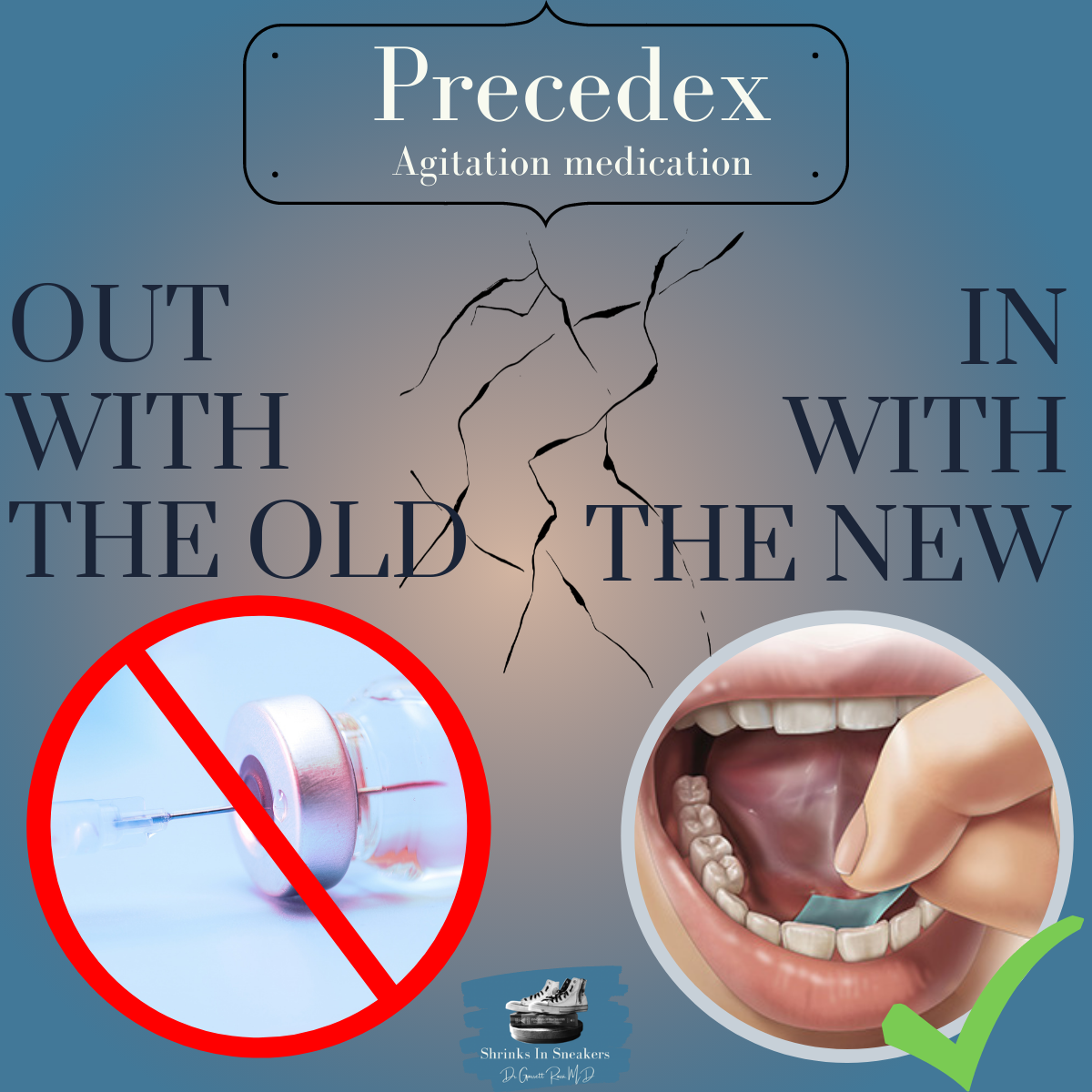
    The FDA has approved dexmedetomidine sublingual film for the treatment of agitation associated with schizophrenia or Bipolar I/II disorder in adults.  

    When agitation and aggression are severe, swift resolution of the situation is required.

    Introduction:

    Since the advent of chlorpromazine in the 1950’s pharmacological intervention has been a mainstay in these acute situations. In many cases the combination of haloperidol, lorazepam, and diphenhydramine, the so called B-52 are administered intramuscularly when quick resolution of agitation is required for the safety of the person and staff. 

    But what happens when these methods fail to provide adequate relief and person remains agitated?

    There are few options available outside of the dopamine blocking medications and benzodiazepines. 

    I’ve been in situations as an early career psychiatrist where I’ve had to treat severe agitation that is unresponsive to the traditional methods of treating agitation. 

    After multiple medications failed to adequately treat the agitation, I called the medical floor to transfer the person for a Dexmedetomidine (precedex) drip. This is a medication I’ve seen work well in the ICU setting with agitated delirium. 

    But drips are complicated to use and require careful monitoring on the medical floor. I was thinking it would be great if there was an option that did not require IV placement or transfer to the medical floor. 

    Mechanism of Action:

    Recent studies have looked at sublingual Dexmedetomidine as a potential new treatment for agitation. 

    Dexmedetomidine is an alpha-2 noradrenergic agonist approved by the FDA for IV sedation and analgesia and limitted to 24 hours. It induces sleep by activating alpha-2 presynaptic receptors reducing norepinephrine release. Both sedation and awakening are rapid, and the medication is safe but does require monitoring of blood pressure and heart rate. 

    Phase 3 Clinical Trial Results:

    A phase 3 clinical trial of 120 micrograms and 180 micrograms of sublingual dexmedetomidine was compared to placebo in patients with bipolar disorder. They used the excited portion (PEC) of the PANSS to measure efficacy and found a response beginning at 20 minutes and continuing to 120 minutes at both doses. 90% of participants in the 180 microgram and 76% in the 120 microgram groups achieved a response. No significant adverse events occurred in the treatment groups.  

    Hsiao JK. Sublingual Dexmedetomidine as a Potential New Treatment for Agitation. JAMA. 2022;327(8):723–725. doi:10.1001/jama.2021.21313

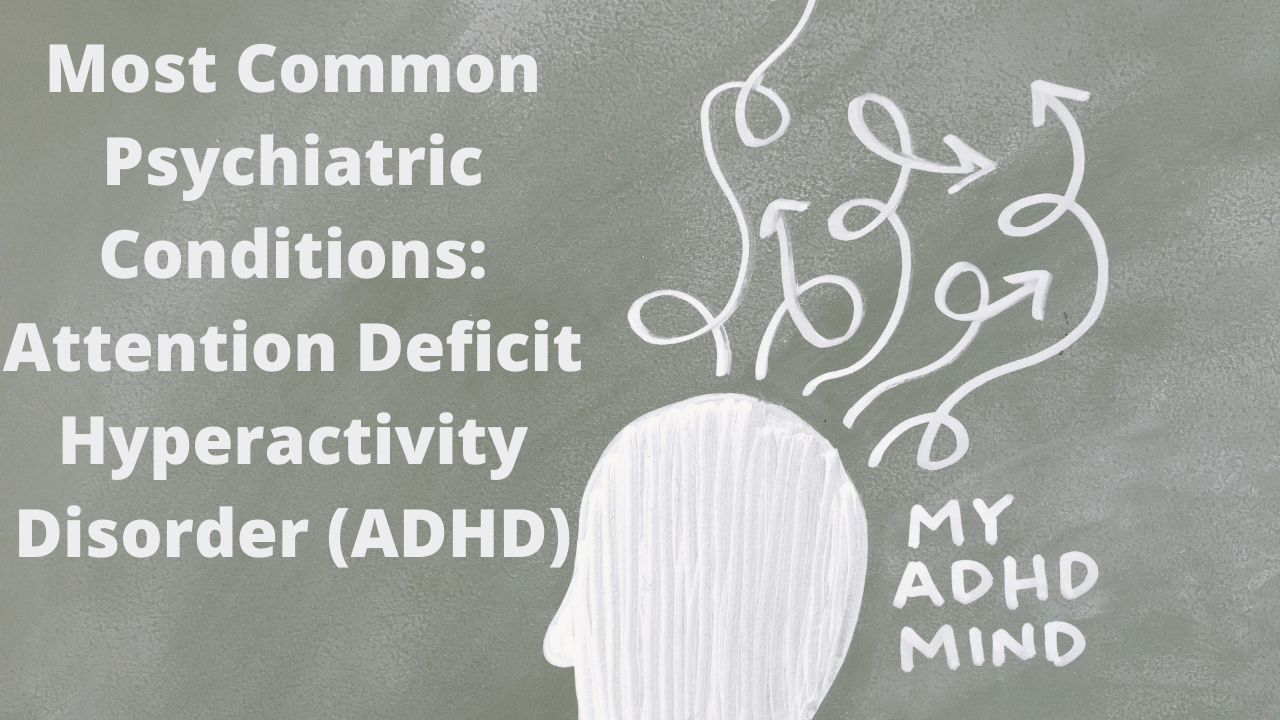
  • Attention Deficit Hyperactivity Disorder (ADHD)

    Attention Deficit Hyperactivity Disorder (ADHD)

    Diagnosis

    -ADHD is the most common physiocratic disorder in children. 

    -Its prevalence is 5-11% in school-aged children 

    -It often presents with a classic triad of inattention, hyperactivity, and impulsivity 

    – However, it can present as mixed, or primarily inattentive or hyperactive 

    -Symptoms must include at least 6 signs of inattention and/or six signs of hyperactivity/impulsivity for 6 months. 

    -For patients 17 years and older on 5 symptoms are required 

    Symptoms of inattention include

    -failure to pay close attention 

    -difficulty sustaining attention on tasks or activities 

    -failure to listen when spoken to 

    -difficulty organizing tasks 

    -avoidance of activities that require mental effort 

    -losing things necessary for tasks or activities 

    -distractibility and forgetfulness in daily activities 

    Symptoms of hyperactivity

    -fidgeting with hands or feet 

    -inability to sit still 

    -running around when not appropriate 

    -difficulty engaging quietly in activities 

    -feeling on the go or driven by a motor 

    -talking excessively 

    Symptoms of Impulsivity

    -answering questions before they are completely asked 

    -having trouble waiting ones turn 

    -interrupting others 

    The pattern of behavior must be more severe and occur more often than in other children of the same age. The symptoms of the disorder must be present before the age of 12 years. The diagnosis can be made after 12 years of age but there must be evidence of symptoms before the age of 12. The last important point is the symptoms must occur in two different settings (e.g., home and school). 

    Many patients may be familiar with screening scales like the Vanderbilt or Conners which can be used to help confirm the diagnosis usually one is completed by the parent the other by a teacher. 

  • Most Commonly Prescribed Psychiatric Medications: Desvenlafaxine/Pristiq

    Most Commonly Prescribed Psychiatric Medications: Desvenlafaxine/Pristiq

    Desvenlafaxine is the active metabolite O-desmethylvenlafaxine (ODV) of venlafaxine and is formed as a result of CYP450 2D6. It shares many of the same properties as venlafaxine. 

    • It’s FDA approved for Major depressive disorder 
    • Mechanism of action: This medication will boost the neurotransmitters serotonin, norepinephrine, and dopamine. It does so by blocking the serotonin reuptake pump, the norepinephrine reuptake pump, and increases dopamine in the frontal cortex because dopamine is largely inactivated by the norepinephrine reuptake pump in the frontal cortex. 
    • The dosing is a little easier than venlafaxine. You can start with 50 mg/day with a maximum dose of 100 mg/day. In some cases, doses of 400 mg/day have been shown to be effective but there is increased risk for side effects at higher doses. 
    • Desvenlafaxine is more potent at the serotonin transporter but has greater norepinephrine transporter inhibition relative to venlafaxine. This is one advantage along with lower does required to achieve that inhibition. 
    • These tablets should not be broken, crushed, or chewed, it will alter the controlled release.
    • It has some of the same issues as venlafaxine when it comes to withdrawal or discontinuation. It can be difficult to taper off and may require starting fluoxetine prior to tapering. 
    • Blood pressure must be monitored regularly during treatment.
    • Most common side effects include: nausea (most common 12%), dizziness (8%), increased sweating (6%), constipation (5%).
    • Other side effects: decreased appetite, decreased libido, erectile dysfunction, abnormal dreams, tinnitus, vertigo 
    • I’ve had many questions about combining this with mirtazapine. It can be combined with mirtazapine. Trazodone and bupropion are other popular medications to combine with desvenlafaxine if monotherapy does not result in remission. 
    • Desvenlafaxine offers some benefits over venlafaxine including more consistent plasma levels due to lack of metabolism by CYP 2D6, it has more potent action at the norepinephrine transporter than venlafaxine. It may be a better option if you are targeting the norepinephrine system. 
  • Most Commonly Prescribed Psychiatric Medications: Trazodone

    Most Commonly Prescribed Psychiatric Medications: Trazodone

    • The only FDA approved use of trazodone is for depression. However, this medication is rarely prescribed for this purpose. The higher dose requirements and lower affinity for the serotonin transporter allows the side effect profile to make the medication intolerable for most patients. 
    • The most common way it’s used is as an adjunctive therapy for sleep disturbances secondary to depression. 
    • The mechanism of action is blockade of serotonin 2A receptors and blockade of the serotonin reuptake pump. 
    • Dosing: To take advantage of the sedating properties you want to use a lower dose. A dose of 25-150 mg/night is appropriate. For depression the dose must be much higher anywhere from 150-600 mg/day 
    • For depression start with 150 mg/day in divided doses (short half-life) and increase every 3-4 days by 50 mg/day as needed to a target dose of 400 mg/day. For insomnia start with 25-50 mg/night and increase as tolerated to a target dose of 50-150 mg/night. That same target range of 50-150 mg/day can be used if trazodone is being added as an adjunct therapy for depression. 
    • It’s very important to start low and go slow when increasing the dose. Patients can have carryover sedation, ataxia, and intoxicated like feeling if titrated too rapidly. 
    • Do not stop the medication prematurely. In difficult to treat patients’ higher doses may be required 150-300 mg or up to 600 mg in some cases. 
    • It’s ideal to try and limit dosing to once nightly at bedtime to avoid daytime sedation 
    • Notable Side effects: Nausea, vomiting, constipation, dry mouth, dizziness, sedation, fatigue, headaches, life threatening side effects include priapism (1 in 8,000 men), seizures, activation of suicidal ideation in patients under 24 years of age.
    • The onset of therapeutic actions for insomnia should be immediate once an adequate dose is reached. There is no evidence of tolerance, abuse potential, or withdrawal
    • Therapeutic action for depression is delayed by 2-4 weeks if it’s not working by 6-8 weeks consider a dosage increase or switch depending on dosage reached 
    • Trazodone offers a nonaddictive option for insomnia treatment and can be used as an adjunct for depression treatment. It’s less likely than other antidepressants to cause sexual dysfunction. It may be less likely to precipitate hypomania or mania and may have some benefit for treating agitation and aggression associated with dementia. 
  • Most Commonly Prescribed Psychiatric medications: Seroquel or Quetiapine

    Most Commonly Prescribed Psychiatric medications: Seroquel or Quetiapine

    • Quetiapine offers some benefits over other dopamine blocking medications. It has a much lower risk for EPS and a broad spectrum of effects. The main limitations are weight gain, sedation, and orthostasis. The extended-release formulation offers a once nightly dosing that can reduce daytime sedation. 
    • It has a number of FDA approved indications including use in schizophrenia, bipolar disorder, bipolar depression, and major depression as an adjunct 
    • It’s mechanism of action is blocking dopamine D2 receptors which targets positive symptoms of psychosis and serotonin 2A receptors which enhance dopamine release in certain regions of the brain reducing motor side effects and possibly improving cognitive side effects. It’s effects on depression and bipolar depression may be related to 5HT1A partial agonist activity, norepinephrine reuptake blockade, and 5HT2C and 5HT7 antagonist properties.
    • Clinically quetiapine is often underdosed and stopped or switched before an adequate trial is completed. Higher doses generally achieve greater response for manic or psychotic symptoms. 
    • For schizophrenia start with 25 mg BID or 300 mg XR QHS. Target doses 400-800 mg/day 
    • For bipolar start with 50 mg BID or 300 XR QHS. With a target dose of 400-800 mg daily for mania and 300 mg/day for depression (studies indicate that 600 mg was not better for depression than 300 mg)
    • For depression start at 50-100 mg/day in divided doses with a target of 150-300 mg/day (data indicates that 150 mg and 300 mg do equally well so either dose is appropriate depending on patient response) 
    • You can increase the dose 50-100 mg/day every 1-4 days to a target dose 
    • The max daily dose in adults is 800 mg/day, occasionally patients may require 800-1,200 mg/day for psychosis or mania 
    • Monitoring is similar to other dopamine blocking medications, specifically fasting blood glucose and lipid profile, BMI, blood pressure 
    • Side effects include sedation, hypotension, dry mouth, dizziness, constipation, weight gain and fatigue. Watch for orthostatic hypotension at high doses or with rapid titration. There is essentially no motor side effects or prolactin elevation. 
    • For XR formulations do not crush or chew them, if a patient has been off the medication for more than 1 week you want to restart as if initial therapy. Quetiapine has some abuse potential reported in the literature particularly in incarcerated populations 
    • In the initial studies with beagle dogs cataracts developed but human studies have not shown this association 

  • The Only Medication Proven to Reduce Suicide

    The Only Medication Proven to Reduce Suicide

    As a psychiatry trainee you will never forget that the two medications that reduce suicide are lithium and clozapine. In the case of clozapine, it has been shown in RCTs to reduce suicidal thoughts but not necessarily completed suicides. Lithium on the other hand has RCT data that indicates it reduces suicidal thoughts as well as completed suicide.

    Lithium has anti-suicidal effects even at low doses. Lithium’s anti-suicidal effects are beneficial for both unipolar and bipolar depression. Unlike standard antidepressants that can increase the risk of suicide specifically in younger patients under the age 24, lithium has a prophylactic effect to prevent suicide. 

    While lithium overdoses can be fatal, this outcome is less likely given the anti-suicidal properties of this medication. We should not avoid prescribing it for this reason. 

  • New medication Monday: Combination Dextromethorphan and Bupropion AXS-05

    New medication Monday: Combination Dextromethorphan and Bupropion AXS-05

    The result of research to develop a nonaddictive cough suppressant produced dextromethorphan. It was FDA approved in 1954 but the pharmacology of this cough suppressant is complex. It functions as an uncompetitive NMDA-glutamate blocker (thin ketamine), sigma-1 stimulator, and serotonin reuptake inhibitor. It should start to become clear why there is renewed interest in this medication. 

    Bupropion functions as a selective norepinephrine/dopmaine reuptake inhibitor. It’s currently used to treat depression, seasonal affective disorder, and nicotine dependence. Recent research suggests it acts as a potent inhibitor of cytochrome P450 2D6 (CYP2D6). Understanding the cytochrome P450 system is not a primary concern here but this enzyme metabolizes dextromethorphan. 

    The combination of these two drugs dextromethorphan 45 mg and bupropion 105 mg two times per day is AXS-05. The proposed mechanism is prolongation of dextromethorphan activity by CYP2D6 inhibition with the added benefit of norepinephrine/dopamine reuptake inhibition. 

    A phase-3 RCT of AXS-05 in patients with MDD outperformed placebo and improved depression scores over 6 weeks.