Tag: psychotropics

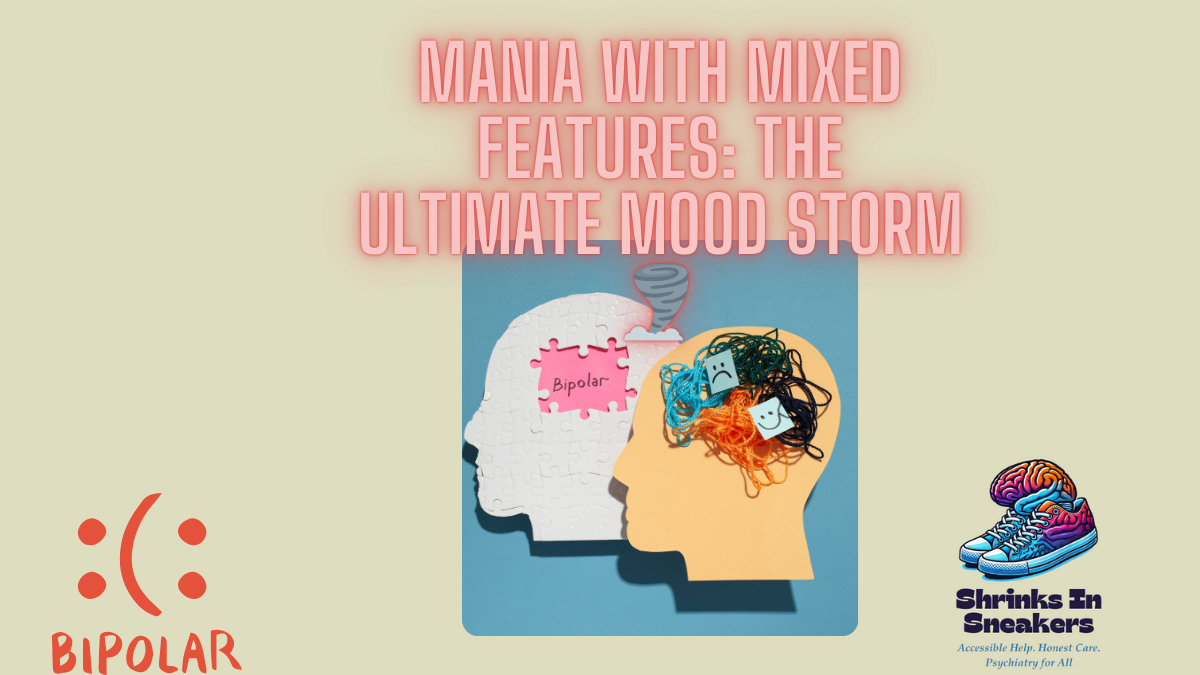
  • 🚨 Mania with Mixed Features: The Ultimate Mood Storm 🌪️

    🚨 Mania with Mixed Features: The Ultimate Mood Storm 🌪️

    Bipolar mania is intense—but when mixed features are present, it’s a whole different beast. Imagine sky-high energy ⚡ + crushing despair 😞 at the same time. That’s mixed mania—one of the most challenging and high-risk mood states in psychiatry.

    🔍 What Does It Look Like?

    ✅ Racing thoughts 🏎️ + Hopelessness 😔
    ✅ Insomnia for days 🌙 + Feeling exhausted 😴
    ✅ Irritability 🔥 + Tearfulness 😢
    ✅ Grandiosity 👑 + Suicidal thoughts 🚨
    ✅ Restless energy ⚡ + No pleasure in anything ❌

    🚑 Why It’s High Risk

    Patients with mania + mixed features have:
    ⚠️ Higher suicide risk than pure mania
    ⚠️ More agitation & impulsivity
    ⚠️ Less response to traditional mood stabilizers

    🛑 Treatment Challenges

    ❌ Antidepressants can worsen symptoms
    ✅ Mood stabilizers (lithium, valproate) & atypical antipsychotics (quetiapine, olanzapine, lurasidone) are key
    ✅ Careful monitoring is essential

    💡 Takeaway: Mixed mania isn’t just “agitated depression” or “irritable mania”—it’s a unique, dangerous mood state that requires urgent intervention. Recognizing it early can save lives.

    Have you encountered mixed mania in practice? Let’s discuss! 👇

  • 🔍 Suicide & Psychosis: What We Can Learn from Recent Research

    🔍 Suicide & Psychosis: What We Can Learn from Recent Research

    A new study sheds light on suicide risk in patients with psychotic disorders, comparing those with recent-onset schizophrenia or other psychotic disorders to those with longer illness duration. The findings offer critical insights for clinicians and mental health professionals.

    🚨 Key Takeaways:

    📌 Early Illness = Higher Risk: Patients within the first five years of their illness had higher suicide rates, emphasizing the need for intensive early intervention.

    📌 Common Risk Factors: Across both groups, depression, prior suicide attempts, and substance use were major red flags.

    📌 Different Patterns: Those with recent-onset psychosis were more likely to have rapid illness progression, while those with longer illness duration often had chronic distress and social isolation before suicide.

    📌 Missed Opportunities? Many had recent healthcare encounters before suicide, highlighting potential gaps in risk assessment and intervention.

    🛑 What This Means for Us:
    🔹 Early-phase psychosis care should prioritize suicide prevention.
    🔹 Screening for depression, substance use, and prior attempts is essential.
    🔹 More proactive intervention is needed, especially after hospital visits.

    This study reinforces what many frontline clinicians already suspect—suicide prevention in psychosis requires urgent, tailored strategies. How can we improve early detection and support for at-risk patients? Let’s discuss. 👇

  • The Pill Won’t Solve It All 💊🚫

    The Pill Won’t Solve It All 💊🚫

    When every problem you face has been treated exclusively by a pill, you start to believe that the answer to all your struggles lies in finding the right one. 🤔💡

    With this mindset, you will never be well. 🧠❌

    It’s no different than someone searching for the perfect car 🚗 or the dream home 🏡 to fix their life. Sure, it might bring temporary relief, but in the end, it steals your power, leaving your happiness dependent on external factors you can’t control. 🎭🔗

    True healing starts when you reclaim your own agency. 💪🔥

  • Semaglutide (#Ozempic / #Wegovy) Reduced Alcohol & Nicotine Use in a First-of-Its-Kind RCT

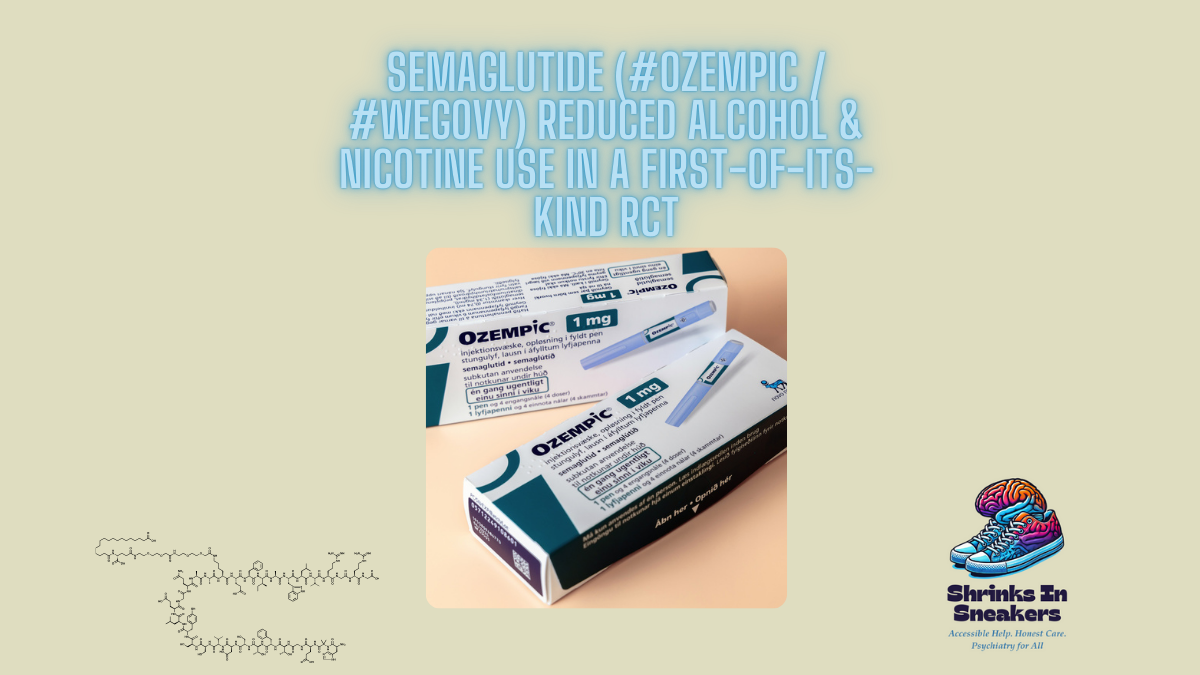
    Semaglutide (#Ozempic / #Wegovy) Reduced Alcohol & Nicotine Use in a First-of-Its-Kind RCT

    📉 In a randomized trial with 48 patients diagnosed with #AlcoholUseDisorder, semaglutide significantly lowered alcohol intake in a controlled lab setting.

    🚬 Interestingly, nicotine consumption also decreased.

    💉 Low doses (0.25-1 mg/week) were used over 9 weeks—much lower than standard obesity or diabetes dosing.

    🔬 More research is needed, but this adds to growing evidence that GLP-1 agonists may impact addictive behaviors.

    Link to article: https://pubmed.ncbi.nlm.nih.gov/39937469/

  • 🚨 New JAMA Study: Cannabis Legalization & Schizophrenia

    🚨 New JAMA Study: Cannabis Legalization & Schizophrenia

    A groundbreaking study just dropped in JAMA Psychiatry, shedding light on the link between cannabis use disorder (CUD) and schizophrenia following cannabis legalization.

    📊 Key Findings:

    • Higher rates of schizophrenia diagnoses were observed in young men with CUD after legalization.
    • The association was strongest in males aged 18–24, a group already at high risk for schizophrenia onset.
    • No significant changes were found in individuals without CUD, reinforcing concerns about cannabis as a potential trigger in vulnerable populations.

    🧠 What This Means:
    Cannabis legalization doesn’t just increase access—it may be shifting the trajectory of severe mental illness in at-risk groups. While correlation ≠ causation, this study adds weight to the argument that heavy cannabis use isn’t harmless, especially for young people with genetic or neurodevelopmental vulnerabilities.

    ⚖️ Clinical & Policy Implications:

    • Should we rethink cannabis policy in light of these findings?
    • Do we need stronger public health messaging about the psychiatric risks of heavy cannabis use?
    • How can we better screen and intervene early for CUD in young men?

    As psychiatrists, we see these cases firsthand—the young man with new-onset psychosis, the family blindsided, the struggle to regain lost cognitive and social function.

    This study is a wake-up call. Legal ≠ safe for everyone.

    What are your thoughts? Should legalization come with more psychiatric safeguards? Drop your insights below. ⬇️

  • 🚨 Double Trouble? The Evidence on Combining Z-Drugs & Benzos 💊⚡

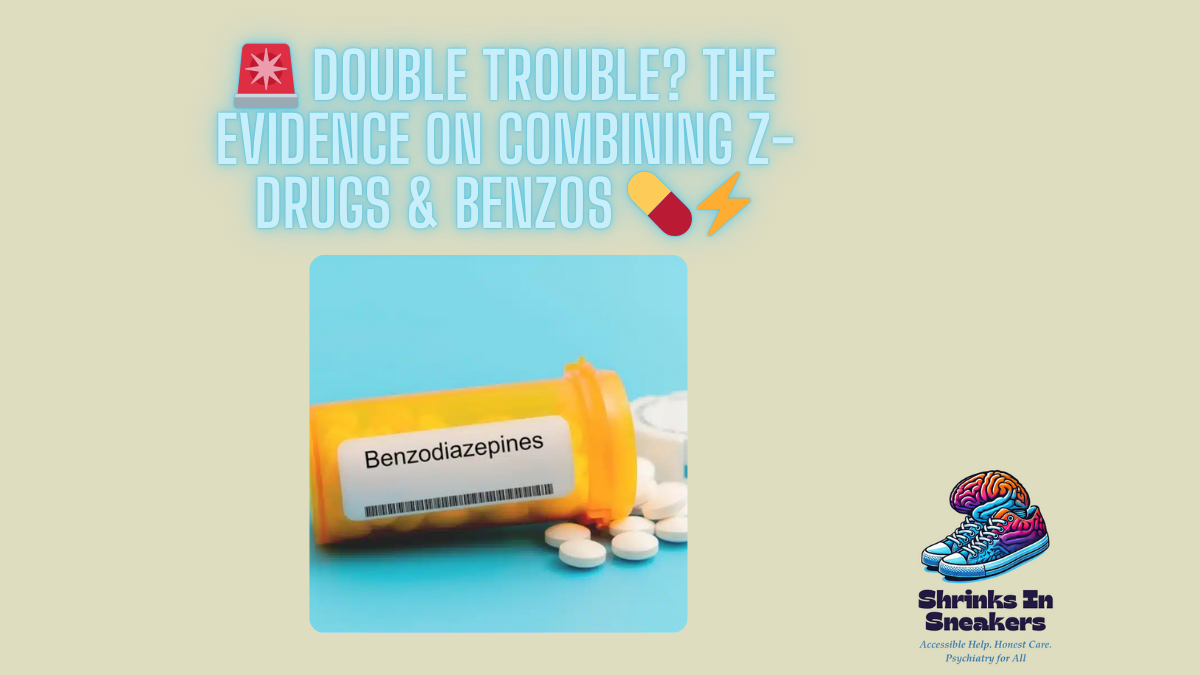
    🚨 Double Trouble? The Evidence on Combining Z-Drugs & Benzos 💊⚡

    If you live long enough, you’ll see some crazy stuff 🤯. I believe in the art of psychopharmacology 🎨💊, and I’m a gunslinger who enjoys pushing the limits 🔫—but some things are just plain nuts. Buckle up for this one… 🚀⚡

    There is limited high-quality randomized controlled trial (RCT) evidence supporting the combined use of benzodiazepines and Z-drugs (zolpidem, eszopiclone, zaleplon). Most studies on these drug classes focus on their use individually for insomnia or anxiety, and guidelines generally discourage their concurrent use due to concerns about additive sedative effects, increased risk of dependence, cognitive impairment, falls, and respiratory depression.

    RCT Evidence on Combination Use

    1. Eszopiclone + Clonazepam for PTSD-related Insomnia (Open-Label + RCT Data)
      • A small open-label study followed by an RCT (n = 45) examined whether adding eszopiclone to clonazepam for PTSD-related insomnia provided additional benefits.
      • Results showed that while sleep latency and duration improved slightly with combination therapy, adverse effects (e.g., sedation, next-day drowsiness) were more pronounced.
      • Conclusion: Modest benefits in sleep but significant risks.
    2. Zolpidem + Diazepam for Insomnia in Anxiety Disorders (Crossover RCT, n = 30)
      • A crossover RCT investigated whether combining zolpidem (10 mg) with diazepam (5 mg) improved sleep quality in patients with generalized anxiety disorder.
      • The combination improved sleep efficiency compared to diazepam alone but led to increased daytime drowsiness and mild cognitive impairment.
      • Conclusion: Minimal additional sleep benefit with worsened side effects.
    3. Eszopiclone + Lorazepam for Acute Mania (Adjunctive RCT, n = 60)
      • In a study of patients with acute mania receiving standard treatment, those given eszopiclone in addition to lorazepam had better subjective sleep outcomes.
      • However, no significant differences were found in mania symptom reduction, and the combination increased next-day sedation.
      • Conclusion: Sleep improvement but with notable sedation risks.

    Meta-Analyses & Guidelines

    • No major meta-analyses support combination use.
    • Clinical guidelines (e.g., APA, ASAM) strongly discourage combining these drugs due to risks of dependence, respiratory depression, and falls, particularly in older adults.

    Summary

    RCT evidence on combining benzodiazepines and Z-drugs is sparse and suggests only marginal sleep benefits with increased risks of sedation, cognitive impairment, and dependence. Guidelines advise against their concurrent use outside of specific, short-term clinical scenarios.

  • 🚨 New Study: Cannabis Use Disorder Linked to 3X Higher Mortality in Hospital & ER Patients

    🚨 New Study: Cannabis Use Disorder Linked to 3X Higher Mortality in Hospital & ER Patients

    A major new study has uncovered a staggering risk: Patients diagnosed with Cannabis Use Disorder (CUD) in hospitals or ERs had nearly THREE TIMES the mortality rate over the next five years compared to those without the disorder.

    🔎 Key Findings:

    🛑 Patients with CUD had a significantly higher risk of death within five years.

    🛑 Cannabis use was associated with worse health outcomes, even after adjusting for other factors.

    🛑 Findings challenge the assumption that cannabis is a “harmless” substance.

    💡 Why This Matters:

    As cannabis use becomes more common and legalized, we can’t ignore the potential long-term health consequences—especially in vulnerable populations. This study raises urgent questions about how cannabis impacts physical and mental health in the long run.

    📢 What do you think? Should we be taking Cannabis Use Disorder more seriously in medical settings? Drop your thoughts below! 👇

    🔗 https://jamanetwork.com/journals/jamanetworkopen/fullarticle/2829914

    #Cannabis #PublicHealth #Addiction #ER #Medicine #addictionmedicine #addiction #cannabisusedisorder #addictionpsychiatry #medical #doctor #medication #marijuana

  • 🚨 Cannabis & Brain Function: Short- & Long-Term Effects You NEED to Know 🚨

    🚨 Cannabis & Brain Function: Short- & Long-Term Effects You NEED to Know 🚨

    Cannabis use is everywhere, but do we truly understand its impact on the brain? 🤔 A growing body of research reveals short- and long-term effects that can’t be ignored. Let’s break it down:

    🧠 Short-Term Effects
    🔹 Impaired memory & attention
    🔹 Slower reaction time
    🔹 Altered judgment & coordination
    🔹 Increased anxiety or paranoia (in some users)

    But here’s where it gets even more concerning…

    🧠 Long-Term Effects (Especially with frequent or early use)
    🔻 Structural brain changes in memory & executive function areas
    🔻 Persistent cognitive impairment in heavy users
    🔻 Increased risk of psychiatric disorders (psychosis, depression, anxiety)
    🔻 Lower IQ in adolescent-onset users

    💡 The Takeaway? While cannabis has potential therapeutic uses, chronic or early use can have lasting effects on brain function—especially in young people. Understanding these risks is crucial as legalization expands.

    🔬 Have you seen changes in cognition or mental health in cannabis users? Let’s discuss below! 👇 #Cannabis #BrainHealth #Neuroscience #MentalHealth

  • 📌 CANMAT Guidelines for Depression: 2023 Update

    📌 CANMAT Guidelines for Depression: 2023 Update

    The Canadian Network for Mood and Anxiety Treatments (CANMAT) released updated guidelines in 2023 for the management of Major Depressive Disorder (MDD), reflecting recent advancements in the field.

    Key Updates in the 2023 CANMAT Guidelines:

    1. Personalized Care Approach:
      • Emphasis on shared decision-making, considering patient values, preferences, and treatment history to tailor individualized treatment plans.
    2. Updated Treatment Recommendations:
      • Psychological Therapies: Continued endorsement of therapies like Cognitive Behavioral Therapy (CBT) and Interpersonal Therapy (IPT) for mild to moderate depression.
      • Pharmacological Treatments: Introduction of newer antidepressants and updated recommendations based on recent evidence.
      • Neuromodulation: Expanded guidance on treatments such as Transcranial Magnetic Stimulation (TMS)and Electroconvulsive Therapy (ECT), especially for treatment-resistant cases.
    3. Lifestyle and Complementary Interventions:
      • Recognition of the role of exercisenutrition, and sleep in managing depression.
      • Evaluation of complementary and alternative medicine approaches, providing guidance on their efficacy and safety.
    4. Digital Health:
      • Assessment of digital interventions, including online therapy platforms and mobile applications, as supplementary tools in treatment plans.
    5. Management of Inadequate Response:
      • Strategies for addressing partial or non-response to initial treatments, including augmentation and combination therapies.

    These updates underscore the importance of a collaborative and individualized approach in managing MDD, integrating the latest evidence to optimize patient outcomes.

    For a comprehensive overview, refer to the full publication: 

    pubmed.ncbi.nlm.nih.gov

  • 💊 Antidepressants Prescriptions in the U.S. a Balanced Approach? 🤔

    💊 Antidepressants Prescriptions in the U.S. a Balanced Approach? 🤔

    Evidence Supporting Overprescription

    1. Prescribing Without Meeting Diagnostic Criteria
      • 2011 study published in Health Affairs found that only 38.4% of patients prescribed antidepressants met criteria for major depressive disorder (MDD), based on the National Ambulatory Medical Care Survey. Many prescriptions were given for milder depressive symptoms or anxiety disorders, suggesting potential overprescription.
      • Subclinical Depression: Some prescriptions were issued for symptoms that did not meet the diagnostic threshold for any psychiatric disorder.
    2. Primary Care Prescribing Patterns
      • Antidepressants are frequently prescribed in primary care settings, where diagnostic accuracy may be lower than in psychiatric settings.
      • 2020 review in JAMA Internal Medicine highlighted that primary care physicians write 79% of antidepressant prescriptions in the U.S., and these are often issued without consultation with a mental health professional.
    3. Off-Label Use
      • 2016 study in JAMA Psychiatry found that 30% of antidepressant prescriptions are for off-label indications like insomnia, chronic pain, or fatigue, despite limited evidence supporting their efficacy for many of these uses.
    4. Prolonged Use
      • Many individuals take antidepressants for extended periods without regular reassessment. A 2019 study in The British Journal of Psychiatry noted that long-term antidepressant use often continues without clear ongoing benefit, raising questions about whether prescriptions are monitored effectively.

    Evidence Suggesting Appropriate or Underprescription

    1. Untreated Mental Illness
      • The World Health Organization (WHO) estimates that nearly 50% of individuals with depression in high-income countries, including the U.S., do not receive treatment.
      • 2017 study in JAMA Psychiatry found that many individuals with severe depressive symptoms go untreated, particularly in low-income or minority populations.
    2. Misperceptions of Overprescription
      • 2020 meta-analysis in The Lancet Psychiatry showed that antidepressants are highly effective for moderate-to-severe depression, and their increased use could reflect improved treatment of these conditions rather than overprescription.
      • Increased public awareness of mental health has led to more people seeking care, which may explain higher prescription rates.
    3. Use in Non-Psychiatric Disorders
      • Antidepressants, particularly SSRIs and SNRIs, are evidence-based treatments for anxiety disorders, PTSD, OCD, and some chronic pain conditions. Their prescription for these conditions might be misinterpreted as “overprescription.”

    Balancing Perspectives

    The evidence suggests a mixed picture:

    • On one hand, antidepressants are sometimes prescribed without meeting diagnostic criteria or for off-label uses with weak supporting evidence.
    • On the other hand, a significant proportion of individuals with moderate-to-severe depression or anxiety remain untreated, indicating possible under prescription in certain populations.

    Scientific Consensus

    The issue may stem less from overprescription overall and more from suboptimal prescribing practices, including:

    • Prescribing antidepressants where psychotherapy or other treatments might be more appropriate.
    • Inadequate follow-up or reassessment of long-term users.
    • Limited mental health training for primary care providers, who are often the frontline prescribers.