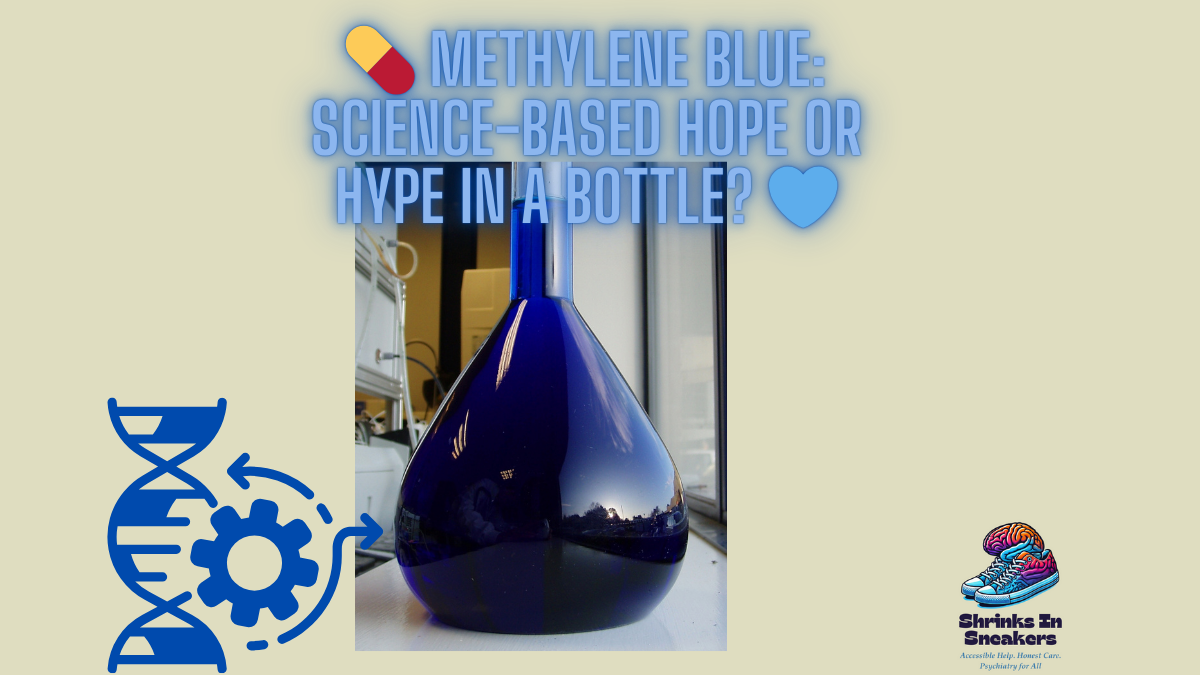
As someone who supports thoughtful use of complementary and alternative medicine, I absolutely believe that compounds like SAMe or St. John’s Wort can offer meaningful benefits—when used appropriately and supported by evidence. But with the rise of anti-aging influencers, we’re seeing a familiar pattern: mechanistically promising compounds getting pushed far ahead of the science.
Methylene Blue is a perfect example.
🧬 Mechanistic appeal:
- Enhances mitochondrial respiration
- Acts as a redox mediator to reduce oxidative stress
- May support autophagy and protein homeostasis
- Studied for cognitive enhancement and neuroprotection
Sounds great on paper—and some early research is encouraging. But…
⚠️ Here’s the caution:
- Most data is from animal studies or in vitro experiments
- Human trials for cognitive or anti-aging outcomes are small, inconsistent, and early-stage
- Long-term safety at “biohacker” doses remains largely untested
Many people are understandably drawn to the promise of longer, healthier lives, but often at the cost of embracing interventions before we truly understand their risks, benefits, or limitations.
Even if the science makes theoretical sense, biology doesn’t always behave the way our models predict.
Let’s stay open—but also skeptical. Not everything that sounds too good to be true ends up being true.
Leave a Reply