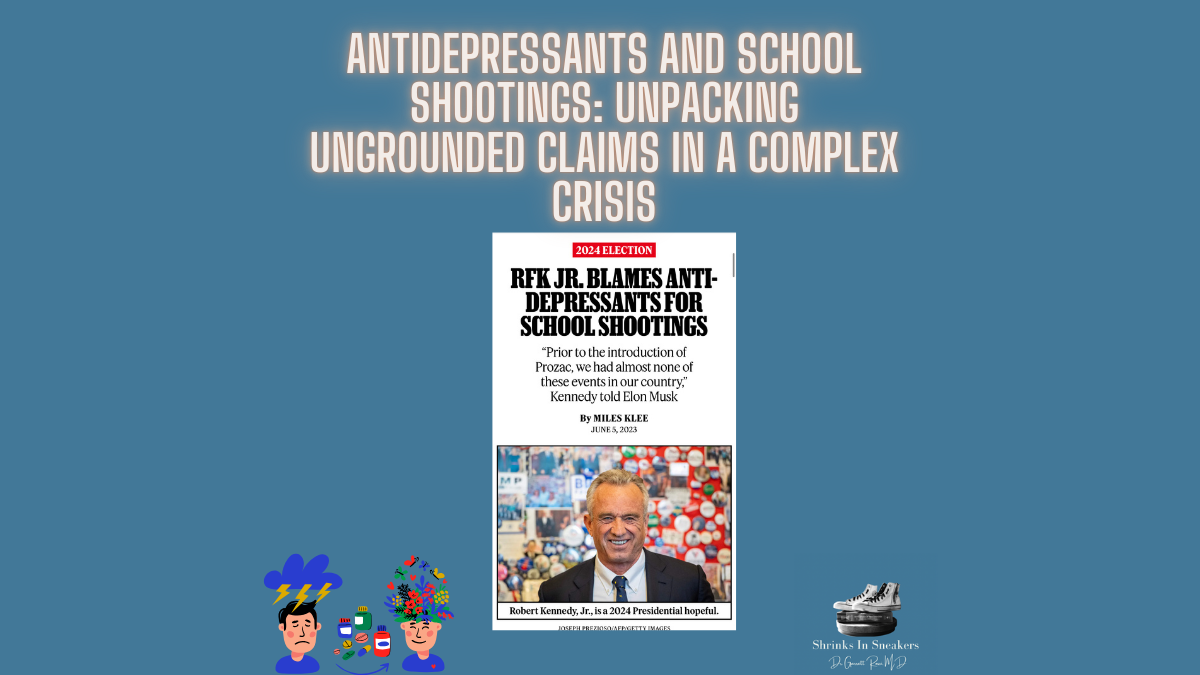
In times of societal turmoil, it’s natural for people to search for reasons behind tragedies. However, as scientists and clinicians, it’s our duty to address myths with evidence and guide public discourse toward meaningful solutions. Linking antidepressants to school shootings oversimplifies a multifaceted problem, diverts attention from real issues, and perpetuates harmful misconceptions.
Understanding the Evidence
1. FDA Warnings and Black Box Labeling
- In 2004, the FDA introduced black-box warnings on antidepressants, citing an increased risk of suicidal thoughts and behaviors in individuals under 25 during the early stages of treatment.
- While well-intentioned, this warning has inadvertently reduced antidepressant use in some cases, leading to untreated depression and potentially worse outcomes.
2. Aggression and Behavioral Changes
- Rare case reports describe paradoxical effects like increased irritability or aggression, but these reports are anecdotal and often involve patients who may have undiagnosed conditions, such as bipolar disorder.
- Case reports represent the lowest level of scientific evidence. They highlight rare phenomena but cannot establish causation.
3. Lack of Causal Evidence
- Comprehensive studies and meta-analyses have consistently failed to find a causal link between antidepressants and violent behavior.
- On a broader scale, antidepressant use is associated with reduced rates of violent crime and suicide, underscoring their therapeutic benefits in managing mental health conditions.
4. School Shootings: A Multifactorial Crisis
- These tragic events are exceedingly rare and result from a confluence of factors, including access to firearms, social isolation, trauma, and untreated psychiatric illnesses.
- Simplistic narratives blaming antidepressants ignore the broader societal and systemic issues at play.
5. Public Concern and Media Narratives
- High-profile cases have sometimes involved individuals prescribed antidepressants. However, media narratives often amplify anecdotal links without rigorous scientific backing, fueling public fears unnecessarily.
Current Recommendations
- Clinicians continue to weigh the risks and benefits of antidepressants, particularly in younger populations, while emphasizing close monitoring during treatment initiation.
- Effective treatment typically combines medication with psychotherapy, a holistic approach proven to reduce risks and improve outcomes.
Call to Action
Rather than succumbing to fear-driven narratives, we must focus on evidence-based solutions for mental health care, responsible gun ownership, and addressing social determinants of violence. Antidepressants save lives when used appropriately and should not be scapegoated for society’s broader challenges.
By addressing myths with facts, we can foster more informed and productive discussions on preventing violence and supporting mental health.
Leave a Reply