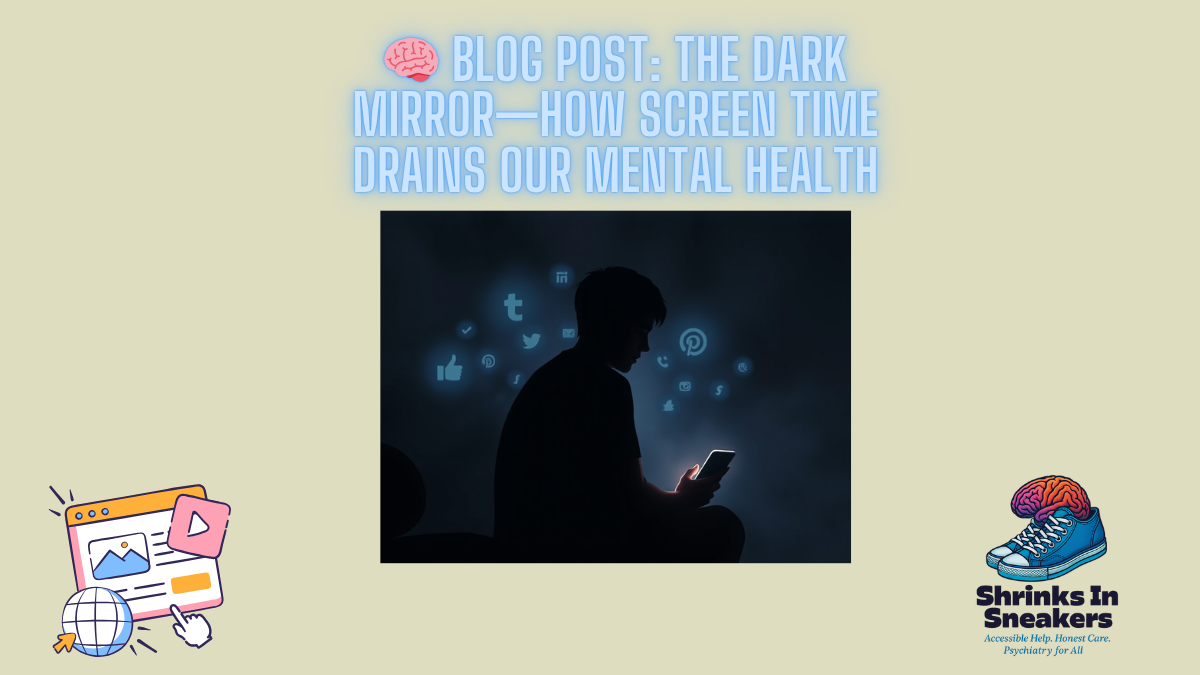
It’s no secret that screen time affects our mental health—but we still underestimate just how deeply it cuts.
As a psychiatrist, I find myself glued to my phone far more than I’d like. I’m not scrolling TikTok—I’m answering emails, responding to messages, and compulsively checking patient updates. Yet, even in this “productive” digital use, I feel drained. The compulsion to keep checking leaves me feeling hollow and anxious.
Now imagine that same digital pull in the hands of a developing mind.
A recent study in JAMA examined over 4285 adolescents and found a clear link: teens with high levels of addictive digital media use were significantly more likely to report depression, anxiety, and suicidal thoughts.
The connection isn’t surprising. Much of what’s consumed online isn’t educational or uplifting—it’s filtered perfection, highlight reels, and influencer fantasy. The more time spent scrolling, the easier it is to feel like you’re falling behind in life, socially or emotionally.
It’s telling that Steve Jobs famously limited his own children’s access to screens, despite pioneering the very technology we now feel chained to.
This isn’t about demonizing devices—it’s about reclaiming our attention and protecting mental space, especially for young people.
We need digital hygiene just like we need physical hygiene. That means:
- Setting screen-time boundaries
- Promoting offline connection
- Reframing how we compare ourselves to curated content
Mental health isn’t just shaped in the therapy room—it’s shaped by the world we scroll through every day.
Leave a Reply